This fall, The Center of Excellence in Leadership of Learning at the University of Indianapolis is offering a Science of Learning Micro-Credential. When I saw information about it over the summer, I immediately signed up. I have long been fascinated by the human brain’s learning process. That makes sense, as I was reminded in a recent professional development session, because learning is the top value I selected when reading “Dare to Lead” by Brené Brown.
This Micro-Credential has an engaging format, comprising a total of 8 asynchronous modules and 4 synchronous learning opportunities. InnerDrive, a mindset coaching company based in the United Kingdom, presents the asynchronous learning. The company works closely with education. The first module of learning focused on Cognitive Load Theory, which I have previously written about (you can find those posts here, here, and here).
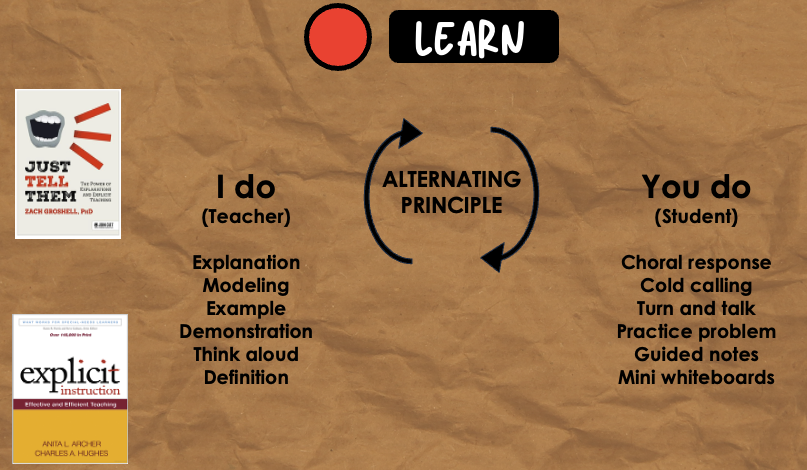
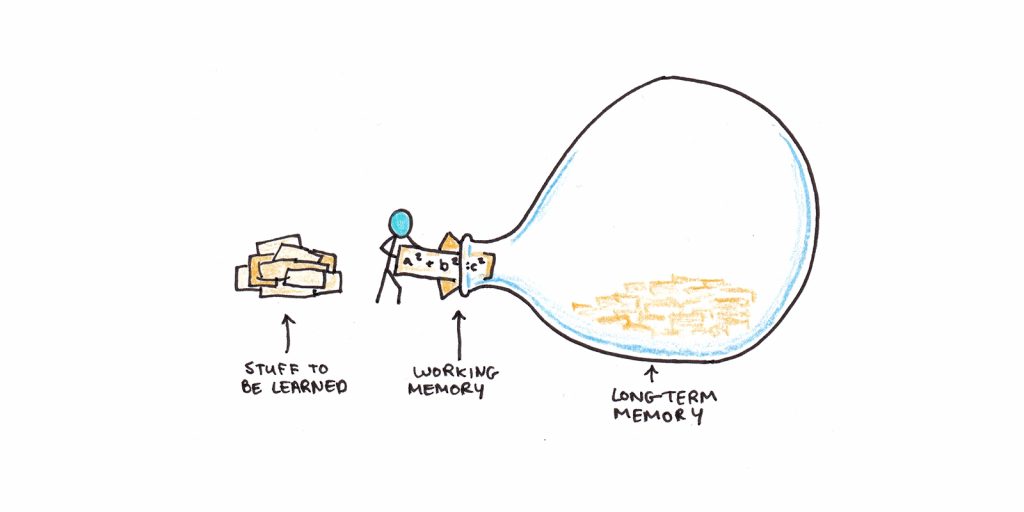
If you haven’t learned about Cognitive Load Theory, it’s based on the idea that our working memory has a limited capacity (for most people, approximately 4-7 pieces of information), while our long-term memory is very large – potentially even unlimited. During the first asynchronous module, InnerDrive presented an interview with Zach Groshell. He is a teacher, instructional coach, educational consultant, and author. I’ve referenced him and his book Just Tell Them in past posts.
He describes Cognitive Load Theory and the process of moving information from working memory to long-term memory as a bottleneck. If we define learning as creating a change in long-term memory, then our job as educators is to determine how to address that bottleneck.
Credit: Scott H. Young, Cognitive Load Theory and its Applications for Learning
Research tells us that there are several ways to address the concept of the bottleneck:
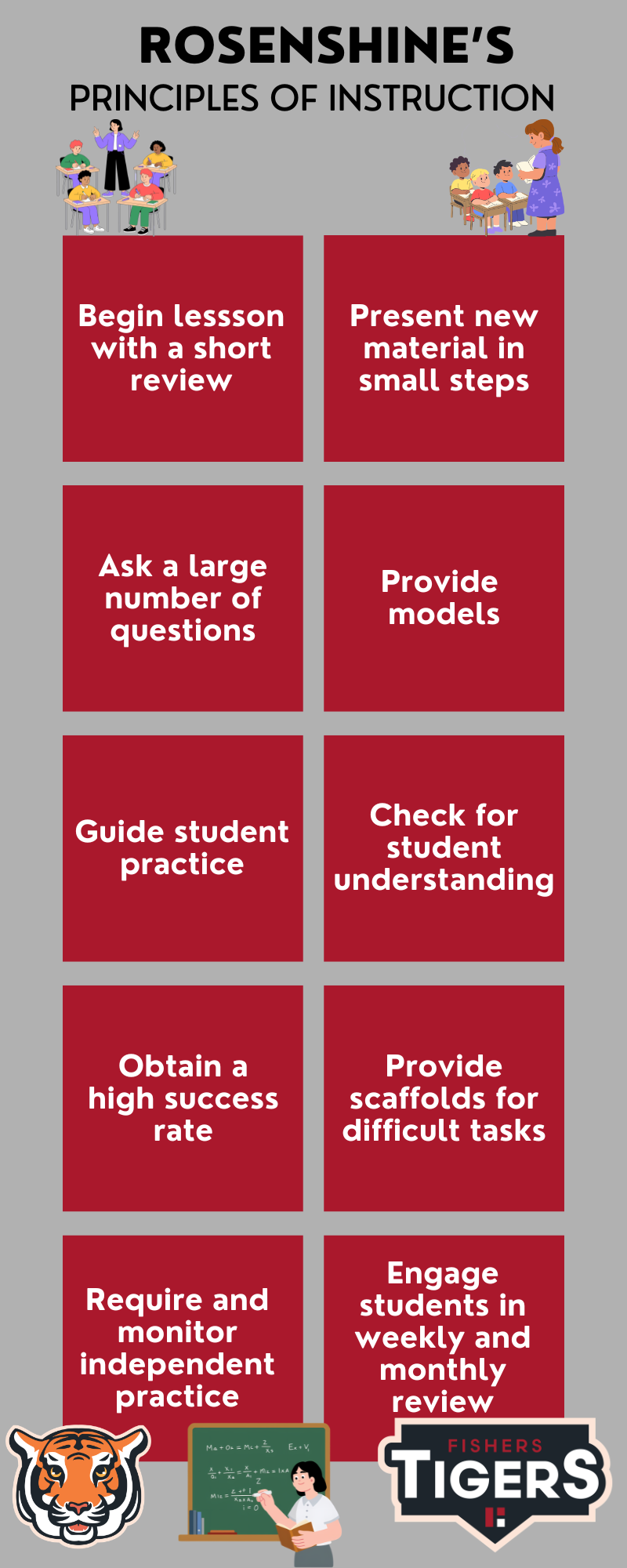
Break learning into smaller bits: If you chunk information, you’re able to take complex ideas into smaller and more digestible steps. That might include starting with simple examples and then gradually adding complexity. Alternatively, you might use a worked example where you show step-by-step most of the problem, leaving students to complete the last portion on their own. Or you might scaffold learning by providing support like a sentence starter or graphic organizer, and you fade the scaffolds over time.
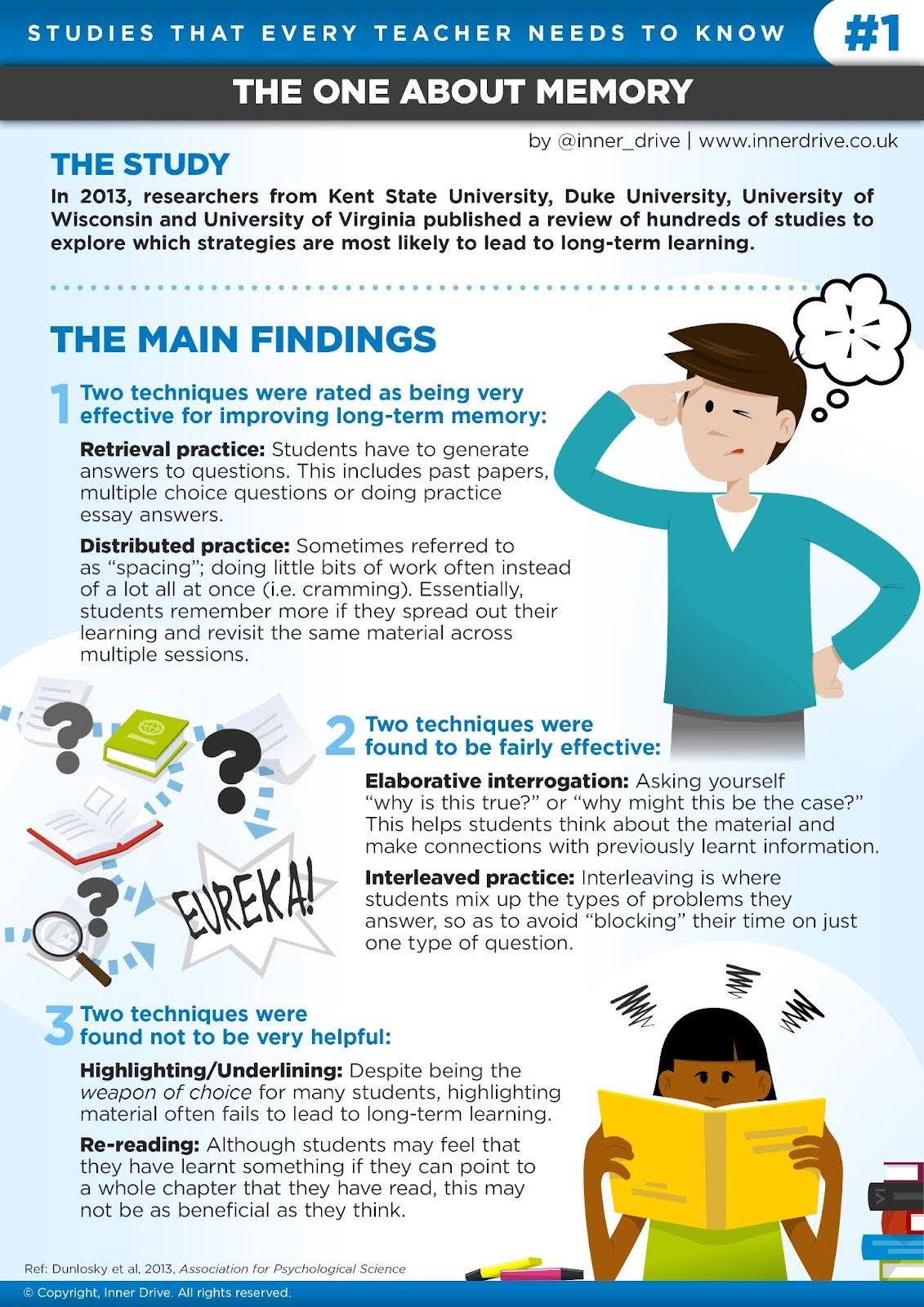
Remember that busy does not equal learning: As I mentioned earlier, learning is about making a lasting change to long-term memory. One of the realities of education is that sometimes we focus more on what students are doing than what they are learning. Cognitive science tells us that utilizing retrieval practice, promoting connections between topics of learning, utilizing spaced practice, and creating opportunities for students to utilize self-explanation out loud or in writing.
Success drives motivation: All humans gravitate towards assistance and support. When we feel successful in a learning environment, we strive to learn more. I don’t know about you, but I love to utilize YouTube as a learning tool. I can’t tell you how many of my YouTube searches involve fixing something. The other day, I was told that one of my brake lights had gone out on my truck. I spent about 5 minutes trying to figure out how to access the brake light, and finally pulled out my phone, watched a 30-second clip, and had the brake light replaced in under 2 minutes. Because of that success, I feel comfortable trying to learn more through a video format again. As teachers, it’s essential to find ways to help our students achieve success within the classroom setting. That maintains their motivation in the learning environment.
Understanding how the human brain learns is a key part of supporting students. We need to focus on the key points of learning. It’s what we’re here for!
My computer has a sticker that says, “Wake Up and Work Out.” I live by that mindset. If I get up and work out before doing anything else, I’ve banked at least one win for the day. That means even if everything else goes crazy (like the recent day when our internet service was out almost ALL day, on a day we were supposed to be doing our state assessment), I have something to feel good about while dealing with the stress of the day.
If you don’t work out consistently, you may not be familiar with all the acronyms used in various workout designs. From HIIT and LISS to EMOM and AMRAP, you might need a cheat sheet to comprehend the terminology. However, today, I want to concentrate on the concept of AMRAP, and I assure you I will relate it back to education.
AMRAP stands for “as many reps as possible” or “as many rounds as possible.” This is a workout structure where you set a timer and either complete as many reps as possible of a specific exercise or as many rounds as possible of a series of exercises. AMRAP is a high-intensity workout that many use to boost cardiovascular fitness, but it can also lead to increases in strength and muscular endurance, high calorie burn, and more.
So, how does that relate to education? There is a quote that is often attributed to Confucius: “I hear and I forget. I see and I remember. I do and I understand.” This quote is on my mind because I’ve been reading a lot of writing and studies about cognitive psychology. What’s that, you ask? In the book Do I Have Your Attention? by Blake Harvard, he says that cognitive psychology “offers insights into how people learn and what makes for more effective and efficient learning.” Kirschner, Sweller, and Clark suggest that “learning is a change in long-term memory.”
I recently wrote a post on cognitive load theory, one of John Sweller’s key works. In Cognitive Load Theory, he explains that the brain can only hold a small amount of information in working memory. This limitation is a bottleneck, affecting what can be transferred from working memory into long-term memory. You see, information in working memory typically remains there for about 30 seconds, but as teachers, we want our students to retain that information for much longer than that. So, how do we transfer information from working memory to a student’s long-term memory? I wish I could tell you that this would happen automatically, but I’d be lying if I did. Our memory requires processing power to store information in long-term memory. As teachers, some strategies require our students to engage with the information presented in the classroom. Usually, that involves them applying the information in some way. Maybe they are identifying the correct vocabulary term or practicing some sample problems from the math skill.
The connection between working memory and long-term memory resembles a line with arrows pointing in both directions. When we are exposed to something new, it initially resides in our working memory. As we engage with that skill, it transitions into long-term memory; however, initially, there is no strong connection between working memory and long-term memory. Imagine a new trail in the woods that has not been frequently traveled. Yet, the more we are asked to utilize that information stored in long-term memory, the stronger the connection becomes. Picture a wide, paved trail ready for use by many people. For our students, the more we encourage them to remember and accurately apply information in class or on homework, the stronger their memories develop, making it easier to retrieve that information later.
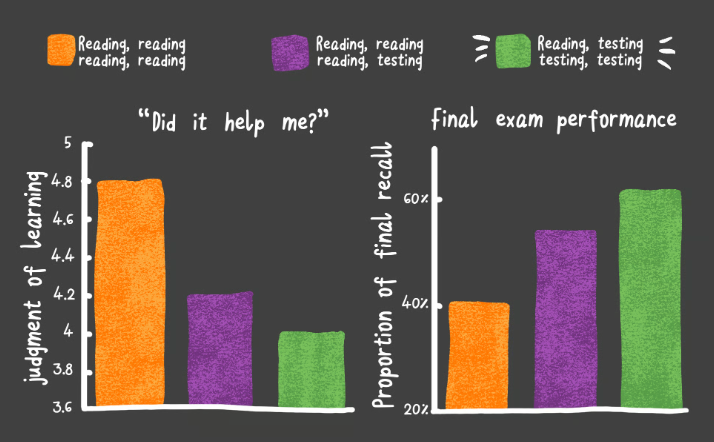
Cognitive psychology suggests that creating a wide trail between working and long-term memory involves the elaborate rehearsal of information. This process is known as retrieval practice. The easiest way to explain it is that we ask our students, in some manner, to retrieve information from their memory. Students need to use their brains to recognize or recall information and then apply it appropriately. Cognitive psychology indicates that, as a study skill, retrieval practice is a more powerful learning tool than rereading text, notes, or highlighting.
Sometimes this retrieval practice happens immediately. Imagine that you introduce a vocabulary word that is written on the board: “This word is compulsory. What word?” Then you might do something to teach the meaning of the word: “When something is required and you must do it, it is compulsory. So if something is required and you must do it, it is ________.” At the blank, you would signal students to fill in the blank. Then, you might give examples and non-examples of the word, asking students to give a thumbs up or thumbs down to let you know if compulsory is being used correctly. Finally, you might close this activity by checking for understanding: “Many things become compulsory. What is something you can think of that is compulsory?” This activity requires students to retrieve information based on your instruction immediately.
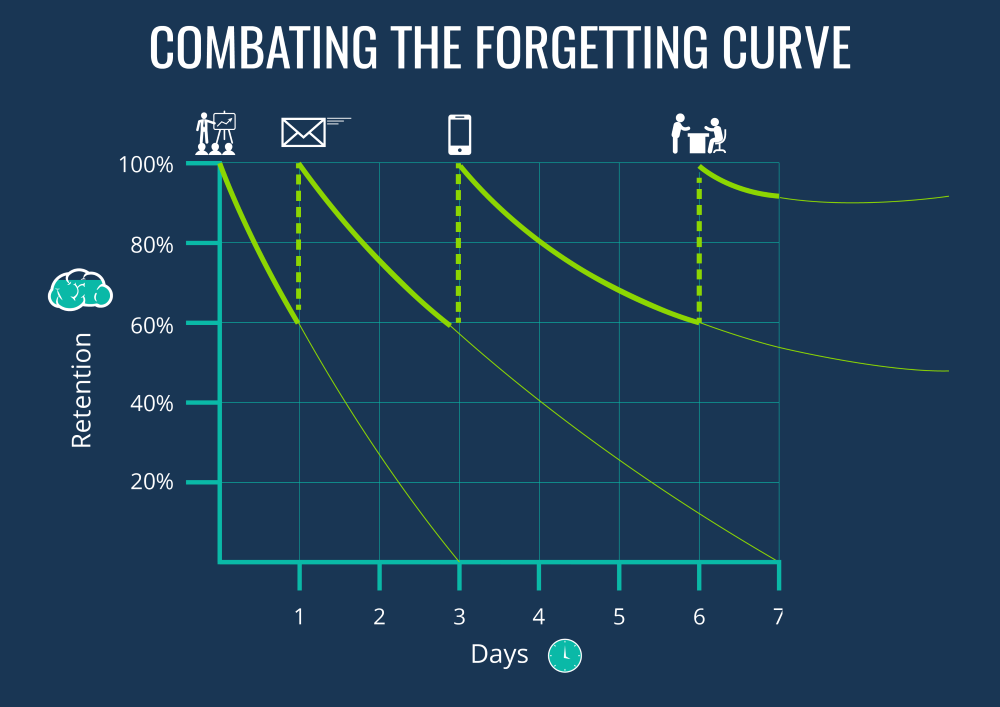
This work does a great job of creating that initial weak path. However, to strengthen that path, we need to use a strategy called “spaced practice.” With spaced practice, we have our students revisit key ideas repeatedly over multiple days. In Do I Have Your Attention?, Harvard suggests a couple of strategies that involve spaced practice. One way is through an activity that closely resembles something many teachers use – it’s a variation on the exit ticket, called an entrance ticket. It could be part of your “warm-up” at the beginning of a lesson, but it should include a retrieval practice activity from yesterday’s lesson or from your current unit at the start of today’s lesson. By doing this, you create a window of time for your students to forget a little. They then must pause and reflect on what was covered in class the previous day, which establishes a stronger connection between working memory and the location of that information in long-term memory.
Harvard also employs a spaced practice activity called “Last Lesson, Last Week, Last Month.” In this, your warm-up will include a question from yesterday’s lesson, as well as one from a lesson last week and one from a lesson last month. This spaced practice helps students not only strengthen the connections between working and long-term memory but also encourages them to recognize how what they studied last week or last month contributes to their current understanding. This is especially true in math class, but can be true in other subjects as well.
For both of these spaced practice activities, I would encourage students to first try to answer from memory, then highlight their answer in one color. Next, I’d let them refer to their notes or book to modify and improve the answer, then highlight that new answer in a different color. Finally, they could consult with a peer to see if that feedback could help them refine their answer and highlight that in a third color. Ultimately, they should have the best possible answer, while also recognizing what they knew entirely on their own. The questions that required support from the book or a peer to arrive at a solid answer indicate concepts they need to study and develop further. At the elementary level, we might also use this as a formative assessment to determine which students need more teacher support on specific topics.
By creating situations where our students can repeatedly practice the essential skills we have identified, we help them strengthen the pathways between working memory and long-term memory, allowing for better recall of that information or skill the next time they need it. Students get as many reps as possible, strengthening the connection between working and long-term memory, allowing them to access those skills more easily every time they need to.
As a teacher, what do you define your primary purpose as? We all know that a lot goes into supporting our students – we’ve been trained in SEL, Restorative Practices, Crisis Intervention, Maslow’s Hierarchy of Needs, and that list could go on. In addition to the training we’ve had, we have supervisory roles; we communicate with families, we manage our classrooms, we document student attendance, we collaborate with our colleagues, and we may even support students by organizing extra-curricular activities. Again, this list of additional duties could go on!
However, I would define our primary purpose as facilitating learning. If I were writing the job description for a teacher, the first bullet point would be “Plan, prepare, and deliver engaging lessons aligned with curriculum standards.” A second bullet point might be “Differentiate instruction to meet the needs of all students and ensure high levels of learning for all.” In addition, it’s important to remember that great teachers deliver the content and inspire curiosity, critical thinking, and a love for lifelong learning.
For a while now, the sign right outside of my office has said the following:
We must all commit as teachers: “If they didn’t learn it, then I didn’t teach it well enough.” Yes, we all want our students to be happy and to have fun. But we also need to ensure that they are learning. This may be a bit of a mindset shift, but that’s what is required for all students to achieve at the levels that we know they are capable of.
How often have you been sitting with someone, maybe in a meeting or even a conversation among friends, and you didn’t feel like you understood what they were discussing? What does that feel like? It has happened to me. My career path has been in education, so get me around a group of teachers or other educators, and I can make small talk all evening. But occasionally, I will be in a social situation where everyone there has been in the business world. They start talking about something relating to their business, and suddenly, I’m stuck in a conversation where I don’t understand what they are discussing or have nothing to add. I almost feel lost. While I can ask questions to learn more, it’s not a great feeling. But it’s essential to remember that for some of our students who haven’t learned what we expect them to know, that is what they feel like when they sit in our classrooms each day. Yes, they may be happy to be with friends, to have chances to socialize, or to go to recess. But should we settle for that being the times they feel happy at school?
If, as teachers, we spend all our time focused on making sure our students are happy, that takes away from our time to ensure that they are learning at the levels we need all students to achieve. I also find that when we worry about making sure they are happy, we will likely find excuses for not achieving where we hope they’d be. Remember that we only have 6 hours daily to help move our students forward.
Like me, I’m sure you have seen those lightbulb moments for students when something truly clicks. What was the facial expression of a student at that moment? It’s typically a massive smile for two reasons: first, they feel proud of themselves, and second, they are happy that they now “get it.” On the other hand, no amount of positive feelings due to SEL or other social justice type work will make them feel good when they realize they don’t get what you are teaching. They’ll feel lost, just like we do in those social situations I mentioned above.
I sometimes worry that we lower our standards for one reason or another. It never comes from wanting to negatively impact our students; I’m sure it comes from wanting to show them that we care. Eventually, our students will realize that they don’t get it, and the odds are that they will not feel good about themselves when that happens.
We must commit to pushing our students to mastery. Each of us must look at each student and think to ourselves that because of the work we are going to do with them, they will learn, they will find success, and that will bring about the greatest happiness of all.
Some of you may not know this about me, but many of the core memories from my pre- and teen years relate to my time as a Boy Scout. I attended weekly meetings with my troop; we had campouts throughout the year; each summer, we went to a scout camp; and every other year, there was a high adventure trip. Eventually, I worked my way up the ranks from Scout to Eagle, the highest rank available in scouting. One of the things that has to happen for a scout to advance in rank is to earn merit badges.
A merit badge is a chance for a scout to learn about things they are interested in. Topics include sports, crafts, science, trades, business, and future careers. Currently, there are more than 135 merit badges for scouts to earn. One of the most challenging merit badges I earned was the Orienteering merit badge. With that badge, we learned to use a topographic map and a compass to get from one point to the next. We learned the terrain features of the map, translated them to the environment we were in, and used that knowledge to navigate from point to point. Think of it a bit like a scavenger hunt! Orienteering comes from the word orient, which means finding your position or direction.
But Brian, what does this have to do with learning here at school? Well, recently, we started a Cluster of Professional Development around writing, with a particular focus on adding evidence and elaboration to our students’ pieces. We are engaged in this work because data has shown us that students consistently struggle with this area on our state summative assessments. Last year, only 17% of our students showed proficiency in evidence and elaboration.
As we began planning for this professional development, one thing we did was examine our standards to truly understand where our students needed to be by the end of each grade level. For our students to reach proficiency by grades 3 or 4, steps have to be in place as foundations for learning in kindergarten, first grade, and second grade (see a recent post, The LEGO Conundrum, for more on this approach).
The analogy I’m thinking of related to orienteering is that our standards are a bit like the end point on a map. But if I took you into the woods, handed you a map and a compass, showed you where you needed to get to on the map, and gave you no other information, would you be able to orienteer your way to that location? I’m guessing that for most of us, the answer is no. Why not? We don’t know where we are starting.
I’ve been chatting with teachers about our current cluster and observing classes in writing tasks. We’re doing a great job of staying focused on where our students need to be. There’s a clear understanding of the success criteria for each grade. However, I’m starting to have concerns that we might need to work a little more on understanding where our students are right now. We need to orient ourselves to the starting point.
Just as you wouldn’t be able to orienteer your way to the endpoint on a map without knowing where you are starting, how can we hope to move our students to the standard if we don’t know where they are right now? We must orient our teaching to our students’ present levels.
You see, we (educators) do a great job of thinking about learning progressions in math. We have also grown in our knowledge of learning progressions in foundational literacy skills. But there is also a learning progression in writing skills. As a classroom teacher working to support my students’ writing growth, I must know more than just where I need to get my students. I need to start with where they are.
If we start by thinking about writing as a progression, we begin first with letter formation and handwriting fluency. Then, we work up to explicit spelling instruction. Next, we support students in building sentences, starting with simple sentences and then using sentence-building charts to add more detail to the sentence structure. From there, we progress to a basic paragraph with a topic sentence and supporting details. Then, we can use graphic organizers, color-coded paragraphs, or paragraph frames to help students in multi-paragraph writing. Over time, we slowly pull back those scaffolds for students to do these parts independently.
But here’s the thing: if I were a second-grade teacher, and I asked my students to create multi-paragraph pieces of writing when they are currently still at the simple sentence level, and I only focus on trying to get them to write multi-paragraph writing, they will break down. They will reach frustration. They will believe they are not a good writer.
In math, we meet students where they are in the progression. We must do the same for our writers. If you are looking for a great resource to support your understanding of writing progressions, check out this fantastic resource from Reading Rockets called “Looking at Writing.” You can work through the progressions, beginning with Pre-K writing through grade 3. There are writing samples, suggestions for the next steps, and ideas for instructional strategies to move students forward in their learning.
Awareness of progression is key to orienting our students toward successful growth.
What are your thoughts? How have you used progressions of learning to support student growth? Let us know your thoughts in the comments below!
Last week, we began a new round of professional development. One of our School Improvement Goals is to increase the number of students proficient in evidence and elaboration in their writing. In our most recent round of ILEARN testing (the test used in our state to check student proficiency in math and ELA in grades 3-8), only slightly more than 17% showed proficiency in this area. Our working theory is that by helping our students expand their sentences, add more details, and ensure that those details stay on topic, we will also see improvement in other areas of the written portion of the test.
But I also know that when I bring together a group of teachers ranging from kindergarten to fourth grade, some may have difficulty connecting to the data they see on the screen because “we don’t teach those standards.” To help get thinking about each person’s critical role in moving our students towards proficiency, we did an activity with one of my all-time favorite toys, LEGO! Each group received a box with a Minifigure inside, and then we put the following directions on the screen:
We asked one person to follow a step in the directions, revealing them one at a time and then passing the Minifigure to the next person. Once all tables had completed their Minifigures, we displayed the question: Which step could you skip and still have a completed Minifigure? The team reached a consensus that there were no steps we could forget and that we still had completed Minifigures.
So then, we showed this:
I know the font is tiny, so don’t feel you need to zoom in. This is a vertical articulation guide for the essential writing standards for grades K-4. At first glance, without even digging into what they say, you might notice that they become more detailed as the grades advance. When we looked at this with our staff, several noted that they built upon one another. Suppose you were to look at the third row related to writing informative pieces—every grade level talks about being on a topic or having a central idea, and every grade level has something about including details, but the requirements and expectations of each grade level become more detailed.
The analogy we made as we discussed this is that we think of the writing process as a stairstep. Each grade level has a target level of proficiency. If one grade level does not hit their proficiency level, the work of the following grades becomes more challenging because they have to play “catch-up” with their students.
The State of Indiana has provided rubrics that are written based on the academic standards, and they are broken down into the different categories that students are assessed on during the writing portion of the ILEARN assessment. They include three focus areas – organization, evidence and elaboration, and conventions. So, we started by looking at the rubric section based on evidence and elaboration (our goal area). Unfortunately, since the ILEARN rubric only includes grades 3-8, we didn’t have a clear rubric for grades K-2 in this area. So, our leadership team had done some prework. We dug into the standards and rubrics from grades three & four and then walked the rubrics back, referencing what was included in the standards in each grade level, to create a simple bullet-pointed rubric for all grades K-4.
What we came up with was something that looked like this:
Next, we sent each grade level team to dig into their standards, the academic frameworks put together by the state, and the prework our lead team had done. We then took time to define success criteria. We asked ourselves, “What should my students’ writing look like to show they have met proficiency in the areas we’ve identified?” To ensure we clearly understood what proficient writing should look like, we utilized the Vermont Writing Collaborative writing samples, which had been scored based on common core standards. These standards are very close to the ones that we use in Indiana. My favorite thing about these samples is that when you look at the scored samples, there is information on the page about why they fall into the category they did on the rubric. Then, the person who scored it wrote a short section called “Final Thoughts,” which helped us better understand what to look for to show proficiency on the standard.
Moving forward, we will use these rubrics and success criteria to identify where our students currently fall in evidence and evaluation on a cold write (a piece of writing that our students have not had any direct instruction or support to write) and then plan instructional strategies that will support their needs. It was important to us to look at cold writes instead of a piece that the students may have been working on as part of a current unit because that will give us an idea of what our students can do entirely on their own without any direct teaching to support the writing process.
Much like building a LEGO, the writing process is a step-by-step learning process so that students may grow in the vertical articulation of the standard. No step can be missed for our students to get to proficiency. The scores on the ILEARN assessment are often tied to the classroom or grade level that took the assessment. I want our teachers to be fully aware that without the foundational steps that must happen in kindergarten, first grade, and second grade, our students will never get to proficiency in grades three & four. Those scores represent our work to build a student as a writer. If you skip a page in your LEGO instructions, you will encounter problems later in the build. At the same time, if we miss a step in building proficient writers, our students will struggle as they age.
What are your thoughts? Have you, like me, ever been leading a professional development and felt like some weren’t fully engaged because the data “wasn’t from their grade level?” Have you ever been the one who disengaged? How might you think differently about your role moving forward? Let us know your thoughts in the comments below!
I’ve recently been reading the book Just Tell Them: The Power of Explanations and Explicit Teaching by Zach Groshell. I see it as something of the convergence of the work from John Sweller on Cognitive Load Theory and the work from Anita Archer on Explicit Instruction. I’ve been really enjoying the book, and I highly recommend it as a way to reflect on how you explain your instruction to your students. Plus, it’s a speedy read!
I often think of people as either novices or experts, almost as if they are binary. But what I hadn’t thought about carefully enough that Groshell calls attention to is that the transition from novice to expert really exists along a continuum. The reminder about the needs of learners based on where they are in the learning process was probably one of the greatest aha moments for me. Let’s dig into that a little bit.
As a former science teacher, I will use an example of something that I often felt all of my students came to me as something of a novice at: using the triple beam balance to measure the mass of objects. We would learn this skill early in the year because many of the labs we would do throughout the year would require using the balance and getting accurate mass measurements. In case you’ve forgotten what a triple beam balance looks like, the ones we used in my classroom were practically identical to this:
When we learned to use the triple beam balance, I would often take one of our balances, show our students how to “zero” the balance, and then take a random object to find the mass. To build background knowledge, we’d talk about how many people had ever used a scale that you had to move the weights (when I was in the classroom, most doctor’s offices still had that type of scale, not the digital ones that are everywhere now). Then, I’d explain how the balance is similar.
To allow everyone to see the process, I’d place the balance on my document projector and use it like a camera to project the steps on the screen for all to see. First, I’d take my object and place it on the pan. Then, I’d explain that you start by moving the 100 g mass. Once it gets to the point where the balance goes down, you go back to the previous notch. Then, you move to the 10 g mass. Once the balance goes down, you go to the previous notch. Finally, you slide the 1 g marker until the balance is zeroed or the marker on the right points to the 0 mark. That would tell us that the object’s mass is the same as the mass we moved on the balance’s three beams. We would then add up the 100 g mass, the 10 g mass, and the 1 g mass rounded to the nearest tenth of a g. We’d do a couple more examples with objects I had on or around my desk. I might have students say what step to do next, but I was still moving the masses on the balance, although they could see it on the screen.
After a few samples, I’d have one member of the table group come and get a balance with a few objects on a tray to bring back to their table. Then, I’d set them free. And that is where I made my mistake. Invariably, table groups would have a hard time. One group would have an issue, so I’d have to answer those questions. While I was helping that group, other groups would have problems, but with nobody to help, learning would break down, and engagement would break down. The different groups were entirely disengaged when I finished with the first or second group. Potentially, there were behavior issues. Kids were frustrated because they “couldn’t get it.” I would see kids from across the room doing things in the wrong order but couldn’t do anything about it because I was stuck at this table helping this group.
In retrospect, I see the error of my ways. I went directly from the “I do” modeling portion of my lesson to the “You do” portion. I skipped the “We do” portion and jumped directly from the novice to the expert stage, but my students weren’t yet experts. Insert face palm emoji here!
If I could go back, I’d do the task differently. I’d still model the task in the “I do” stage the same way. Nothing seems wrong there. However, I need to strengthen the “We do” portion of the lesson. To do that, each tray would have identical objects. That way, I would know they had the same mass. This would allow me to do a completion problem, where a portion of the task is shown to them, and then they need to finish the final step to find the answer. For the triple beam balance, I’d show them (and have them follow along on their own balance) what to do with the 100 g mass, then the 10 g mass, and then have them use the 1 g mass to find the result. We’d use something like a whiteboard to write our answers, then use a “3… 2… 1… show me” to quickly check how people did. I’d be able to see if any groups were way off that needed additional support, if we were ready to pull back on support as a class, etc. Over time, I’d fade the support, adding more steps they would complete on their own, eventually getting to the point that students were working in their groups, finding the mass of objects they selected around the room, and then having me check their work.
Chances are, this process would take more than one day to play out, but by following a similar process, I’d build a stronger understanding of the task at hand. What I found in my old methods was that I often had to reteach the triple beam balance every time we used it because the methods I used never got my students to master it in the first place. By taking a little more time the first time and ensuring we all get to mastery, we might not have to spend as much time on a reteach the next time we pull out the triple beam balances.
Do you ever find that with something you teach, you have to reteach every time you come back to it? Maybe you need to rethink the gradual release of the task in your teaching to get your students to mastery in the first place.
This is a sign of our rush to get to letting the students “do the work.” And trust me, I get it! We want them to be able to do it! But what is the cost of letting them do it if they cannot do it correctly? They might practice incorrectly and solidify their understanding of an incorrect method, making your job harder to reteach. Or they might become frustrated and just start to believe “I’m not a ____ person” (fill in the blank with the appropriate subject area). By remembering this concept of the novice to expert continuum, slowly fading our support, and providing models that students can go back to, they are better able to figure it out.
My favorite suggestion from this section of Groshell’s book was the idea of a completion problem. Imagine math class with a problem that takes 4 steps to solve. In a completion problem, you model steps 1 through 3 for your students and then ask them to do step 4 on their own. After you have mastered that step, you fade the support by modeling steps 1 and 2, asking the students to do steps 3 and 4 independently. With mastery, you fade to only modeling the first step. Eventually, you get to the point where you do not complete any of the steps because your students know how to do the entire process. When we explicitly teach math (or anything), it becomes easy for our students. If you have students take pictures of these models, or you take pictures on your own and then put them on Canvas for your students, they now have a resource they can return to any time they need to remember how it’s done. I loved this idea – I often modeled problems. I frequently asked students to tell me what to do. But I never went to the level of thought that Groshell went to here. I hope it’s an aha for you too!
So, what is a takeaway for you? What might you try to do differently in your classroom due to this post? How will you think of your students a little differently now that you know about the idea of the novice to expert continuum? Share your thoughts in the comments below!
Have you ever had moments in your life where something seemed to be coming at you from multiple directions? That’s how I learned about my all-time favorite television show: Breaking Bad. Numerous friends from different backgrounds talked about it sometime during the second season, and I decided to give it a chance. I was hooked. That’s also how I came across the book Game of Thrones. I knew the books before they were ever a series on HBO, but again, several people who knew me recommended them to me, so I gave it a shot, and I was hooked.
That’s kind of what happened over break with Cognitive Load Theory. Don’t get me wrong, it’s not a new topic to me; it’s something I’ve heard of and am aware of, but I’m not sure that it was something I could have explained well or taught to someone else. But over break, I was scrolling through social media with my feet propped up on the couch. During an afternoon, I saw references to John Sweller and Cognitive Load Theory from several different people I follow who are not connected in any way other than being educators. Their posts led me to a couple of articles, a fantastic graphic that I’ll share below, and a podcast that I’ll also share below. However, the post that stood out the most to me was the quote below from Dylan Wiliam. It made me stop what I was doing and really take note:
I mean, when the guy who’s known for introducing the concept of “assessment for learning” says that something is the single most important thing for teachers to know, it gives me pause. So, while it was a break, and I know I encourage you all to take a break, I always find ways to fill at least a little of my break with learning. Let me share some of it with you.
So, first of all, let’s get a working definition: Cognitive Load Theory (CLT) explores how the cognitive load, or mental effort required to process information, impacts learning. According to Jamie Clark (@XpatEducator), “To learn something new, knowledge must first be processed in working memory (WM) before being transferred and stored in long-term memory (LTM) in the form of ‘schemas.’ If WM is overloaded, there is a greater risk that the content being taught will not be understood by the learner.”
So imagine that our brain has something like a “mental backpack” with limited space to carry things. CLT helps us determine how to pack that backpack best so you (or your students) don’t get overwhelmed. This is particularly important to remember in elementary schools because students’ working memory capacity is still developing.
So, let’s talk about the different types of cognitive load. There are three main types:
Intrinsic Load: This is the inherent difficulty of the material. For example, learning to add single-digit numbers has a lower intrinsic load than multi-digit subtraction with regrouping. Higher intrinsic loads are unavoidable at times, but we make them manageable by breaking them into smaller chunks and using scaffolding to support learning.
Extraneous Load: This is an unnecessary mental effort caused by how information is presented. For example, overly busy worksheets, changing the directions on each assignment, or giving verbal instructions while students are focused on reading can create distractions. Reducing extraneous load frees up mental space for actual learning. This makes me think of the book EduProtocol Field Guide by Marlena Hebern & Jon Corippo. They utilize a concept of learning frames or protocols that any curriculum can be plugged into to make the content engaging and more accessible for learners.
Germane Load: This is the productive effort students use to connect and organize new information into meaningful patterns. Activities like practicing or applying knowledge creatively (especially after a solid understanding of the foundational skills) increase germane load and lead to deeper learning.
OK, now that we understand what CLT is and the different types of load that impact learning in our classroom, the next question is, what do we do to support our students? Well, we must understand that working memory in students, especially young ones, is limited. Most learners can juggle only 4-5 pieces of information at once. But for some of our students, even that would be a stretch. There are a few things we can do to support learning in our classroom:
Simplify and scaffold: Break your lesson into small steps and introduce each concept individually. Then, gradually, increase the complexity. Go through the “I do, We do, You do” cycle with each level of complexity. This builds mastery in each of the steps. For example, when teaching place value, ensure your students understand the tens and ones place entirely before moving on to the hundreds place.
Use visual aids: Pictures, charts, and diagrams help offload some mental work from working memory to the visual system. Anytime you can add a visual, it will support your students’ working memory.
Provide clear instructions: Give concise, step-by-step directions and check for understanding before moving on. It’s good practice to plan your directions so you can be sure they are clear and concise. We are all tempted to sometimes give directions while students are in the middle of something. Most students will not hear or process the direction you just gave.
The next thing we want to consider is to minimize the extraneous load. Remember, this is the unnecessary mental effort that can sometimes be caused by how information is presented.
Declutter your teaching materials: Try to avoid overly decorative slides, worksheets, and visuals, and take a moment even to scan your classroom walls. Too much visual stimulation creates mental noise that can add to a student’s cognitive load. I know that sometimes we like things to look pretty and cute, and those motivational posters are fantastic, but too much is a form of distraction. Try to stick to the essentials that directly support the learning objectives or your current units and skills.
Align instruction and tasks: If you’re explaining a concept, ensure your students are focused on listening and not distracted by writing or unrelated activities. Phrases like “Apples up,” “pencils down,” or “all eyes on me” can help keep students focused on your explanation and not some other task.
Create quiet and well-lit learning environments: Minimize background noise and distractions, especially during independent work time. Low lighting can have a calming effect at moments, but during work time, low light can increase cognitive load because it is difficult to read text on a page when there isn’t enough light. That is why there are state laws and standards about the possible light levels within a learning space (hence the new lighting installed not that long ago).
After thinking about the extraneous load, we want to optimize the germane load. Students use this productive effort to connect and organize new information into meaningful patterns. It’s about practicing and applying skills to create deeper learning. Things we might do to help with this optimization include:
Connect to prior knowledge: Use your students’ knowledge to build a new understanding. For example, in math, you might review skip counting before leading into a lesson on multiplication. Or use experiences that your students may have had in their lives to help build background knowledge before reading a story.
Encourage reflection: Take time for students to reflect on their learning. This could be in a whole class setting, in a think, pair, share, or even in a journaling activity. Prompts like “What did you notice?” or “Can you explain this in your own words?” help to deepen understanding. Some other reflection questions might include “What is one thing you learned today that you didn’t know before?” or “What was the most important thing we talked about today? Why?” or “What part of today’s lesson felt easiest for you? What felt hardest?” There are a ton more potential questions that could be used for reflection, including ways to connect to prior knowledge (how does this connect to something we learned earlier?), evaluating effort and strategy (was there a step that you found tricky? how did you figure it out?), highlighting growth (what made you feel proud about yourself today?), encouraging curiosity (what is one thing you’re still wondering about?), building social and emotional awareness (how did you feel during this activity? why?), or looking ahead (what do you think we might learn next?).
Practice, practice, practice: Repetition solidifies learning, but it needs to be varied to maintain engagement. Maybe you start with direct instruction, then some practice on whiteboards that students hold up for you to check, and then you could move into some partner or small-group work. Maybe there could be some flashcards, or the skill could be practiced in some game format. By varying the format, you ensure that students have plenty of opportunities to practice the skill and solidify learning, but those opportunities are varied enough that they can maintain engagement.
So, let’s discuss some age-appropriate supports. Obviously, each child has different needs, but in general, there are some developmentally expected abilities in terms of CLT based on a child’s age range.
In primary grades (K-1), we want to use concrete, hands-on materials as much as possible. At this age, students are still developing their abstract thinking skills, and manipulatives provide tangible ways to explore concepts.
As you plan lessons, think about how and where you can add hands-on materials to any lesson. This might include counting bears, unifix cubes, pattern blocks, playdough, counters, letter tiles, and magnetic letters. These objects allow students to manipulate a concrete object to support their thinking and reduce their cognitive load. Next, we want to keep activities short and focused. The attention spans of 5 and 6 year olds may only last 5-10 minutes, so a mini-lesson may only be 5-7 minutes, followed by a hands-on activity of about 10 minutes, and then ending with a quick share out or reflection of 3-5 minutes. Whenever possible, incorporate play-based learning. I had a professor at IU who must have used the phrase “learning is social” a million times in my classes with her. Young children naturally learn through exploration and play. It keeps them engaged while reinforcing skills. You might use role-playing games to practice social skills or set up themed learning opportunities, like the “grocery store” for math or a provocation for a writing station in literacy. Young students also thrive on routines and predictability (let’s be honest, I do, too!). Having predictable routines helps reduce anxiety and allows students to focus on learning. Things like a visual schedule, consistent transition signals, and a routine for the beginning and close of the day help reduce cognitive load because students will know what to expect and when to expect it.
In the upper elementary grades, students develop greater independence, cognitive abilities, and social-emotional needs. However, they still thrive with a certain level of structure and engagement. So, let’s consider a few ways we can support our upper elementary (2-4) students.
One of the first and most important ways to support students with their cognitive abilities is to encourage active participation. Students at this age can participate in discussions and collaborative activities, which deepen their understanding. You can do this through think-pair-share activities that help engage all students in discussion or incorporate hands-on projects. Another way to involve students in classroom participation that may not always seem like a direct connection is through classroom jobs or leadership roles, which help students feel responsible. We also want to promote critical thinking in our students. They are ready to analyze, compare, and apply rather than memorize facts. Open-ended questions that require reasoning push students to use critical thinking skills, such as “Why do you think that happened?” or “What would you have done differently?” Scaffolding and gradual release will also help build independence in our upper elementary students. Things like modeling a skill (writing a strong topic sentence, for example), guided practice side-by-side either individually or in a small group through a problem as students try it themselves, and then independent practice where students try things on their own, gradually increasing the complexity as they gain confidence are all ways to support students growth in independence.
Upper elementary students also need a lot of help to develop executive functioning skills. Directly teaching organizational strategies, like using planners to keep track of materials, assignments, projects, or take-home/bring-back folders, will help. Teaching students how to take an enormous task and break it into smaller steps helps them learn about creating checklists or understanding the steps needed to meet a goal. Things like timers and schedules can help students learn to manage transitions better and be able to focus on work during their in-class time.
As my readers know, most of my time and thinking is spent in the elementary realm, but I know that there are a few of you who read this who come from the middle and high school levels. I don’t know that I have direct recent experiences that I can give you, but I found what seemed like a great article from Edutopia with some concepts that seemed to apply much more to the secondary level. You can see that post here.
On the other hand, if you’re interested in this stuff and, like me, find understanding how the brain works absolutely fascinating, I found this Classroom Practice Guide from the New South Wales Government titled “Cognitive load theory in practice.” I did a scan, not a full read, but it seems like a great resource to learn more. You can find that here.
As with anything, our work in meeting the needs of our students means that we need to pay attention to signs of cognitive overload – things like frustration, disengagement, or difficulty recalling prior lessons. If students show signs of cognitive overload, it’s time to make some adjustments. Simplify, slow down, or provide additional support as needed. When you keep the concepts of cognitive load theory in mind, you set your students up for better opportunities for learning and growth. This will help them move towards proficiency, which allows them to meet the goals we have set as a school.
Finally, there are a couple of resources – first is kind of like a cheat sheet graphic that you could download and print to use as a guide. Maybe keep it near your planning materials as a reminder of how you can maximize and optimize learning in your classroom. The second is a great podcast that was shared with me that digs into CLT a little deeper in a conversational format if that is more your jam than reading!
Click on the Podcast logo above for a recent episode of the Critically Speaking podcast. This episode is about math education in particular, but it hits on concepts of cognitive load theory based on the work of John Sweller. This conversation between Terese Markow and Dr. Anna Stoske hits on a wide range of issues around a decline in math education and has some key takeaways that support direct instruction and the need for foundational skills to get to higher-level thinking.
As a classroom teacher, I remember spending chunks of time with my students. We’d read, sometimes me to them, sometimes them to me, sometimes to each other, and sometimes on their own. Then, I would do some comprehension activity—maybe some questions to answer, a written response, or something similar. This is how I was trained then, so it’s what I did. I thought I was doing good work.
However, in the past couple of training sessions with LETRS, my thinking has been challenged to move students to true comprehension. There was so much more that I could have been doing throughout the reading process to help build higher thinking skills for my students. So let’s dig into some of the things we can do Before, During, and After reading to support building reading comprehension (you can reference the planning checklist below).
Before:
First, we need to establish a purpose for reading—why have we selected this text? What should our students take away? Is there a lesson to be learned? This helps us define the why behind the reading for our students.
Identify text structure – Is this an informational piece? A narrative? What do your students need to know about the text structure to be able to attack it?
Prepare background knowledge – As you look at your text, what do you think your students need to know to comprehend this text? Is there information they may not have already been exposed to?
Select vocabulary – As you preread the text, consider what words your students need to know to comprehend the text. Focus on the Tier 2 words.
Finally, Identify Challenging Language – What language might be challenging for students when pre-reading the text? Are there phrases that could be difficult to understand? Are words used in unusual ways? Mark those spots during your pre-read to be prepared to discuss them during the read-aloud.
During:
We should be sure to Plan Questions & Anticipate Student Questions intentionally – As you pre-read your read-aloud text, have a stack of sticky notes nearby. Mark spots in the text where you will pause to check for understanding. Are there parts that might be tricky to understand? Language that you might want to highlight? And be ready to address spots where students might ask you questions – maybe a place where something confusing happens. By taking the time to prepare, you can ensure that the questions you ask during the reading are more than surface-level questions but comprehension questions that push your students to higher levels of thinking.
Next, Use text structure to organize thinking – graphic organizers like a story framework, a web diagram, a cause/effect map, or a Venn diagram are just a few examples of the types of graphic organizers that can help students track the plot of a narrative story, or organize the information in an informational text.
After:
Once you finish the reading, some things to consider with students include: Was the purpose met & did the students’ thinking change? These questions can help you evaluate students’ understanding of the text. Do you need to reread portions of the story? Is there something unclear? This might help illuminate a need to go back into the text.
Finally, Assessment: Can students express takeaways? Use text evidence? This is where we can evaluate the big ideas and long-term understanding that students take from a text. Did they get the lesson we wanted them to learn when we established the purpose? Can they point to evidence in the text to support their thinking? These are key signs of true comprehension.
If you are like me, you probably wonder when I have time to do that. I read aloud every day! Sometimes, multiple times a day. You’re right! Trying to do this with every text would be very difficult. But that is where the power of teams comes in. When you work as a team and plan units together, you can select common read-alouds. If you have the same 8-10 read-alouds (maybe more, maybe less) in a week across your team, each person can prep 2-3 of these a week, and you can share. Think of the read-aloud library you could build as a team during a school year.
You might choose to do this with the actual books with markings in the book, or if you are a more digital native, you could create shared folders, and your read-aloud notes and outlines could live there. And what if you expanded the creation of the read-aloud library across the school? In a school of 20 teachers, doing two books weekly, that’s 40 books per week, and over 1,400 books in a school year that could be shared for read-aloud purposes. Work smarter – not harder.
So let me leave you with this – remember that building reading comprehension is more than asking questions when you finish the reading. It’s a constant process. If you use your read-aloud as I did, without any prep and mainly as a throwaway time, learn from me and do better. Those 10-15 minutes a day can be such rich opportunities for teaching, but it takes planning and prep to make it so. Please work with your team, or we can work across the school to build a shared read-aloud library that we can all access to benefit our students!
At a recent Collaboration Network for the Indiana Literacy Cadre, we discussed the pivotal role of assessments in the Multi-Tiered Systems of Support (MTSS) process. Our session, led by Tracy Hastings, the Executive Director of Education and Early Literacy Initiatives from the Ivy Tech Community College, was a massive support for understanding the different types of assessments and their role. We discovered that assessments are not just tools for evaluating students but also for guiding the next steps in instruction.
One of the resources she shared with us is this chart:
LD@school, a project of the Learning Disabilities Association of Ontario, created the chart. What I love is that it breaks down the different types of assessments and their uses. As a reminder, assessments are about more than just evaluating a student. They are also tools that teachers should use to help guide the next steps in instruction.
Let’s examine each assessment type and its uses, starting with Universal Screeners. These assessments are typically used three times per year (beginning, middle, and end) to identify students or systems that are at risk. These brief assessments measure a student’s performance on a standardized scale. They often give us scores in a percentile range and are given to all students. Screeners can be used to help catch students who are struggling early. One misconception about universal screeners is that the data may be used to help us group students with similar scores for an intervention. The problem is that a Universal Screener often checks various skills, and two students with similar scores have very different needs for intervention. You can think of the universal screener as being like a blood pressure or temperature check. These might tell a doctor that something is wrong, but not what is wrong. When planning tiered interventions for students, you need more information than just the universal screener. Universal screeners can also help identify some potential issues with the core curriculum to ensure that it meets the needs of all students. Our district uses DIBELS and NWEA MAP assessments as universal screeners, although other districts might use Acadience, Aimsweb, FastBridge, or easyCBM.
As I said, the Universal Screener may give us an idea that a student is at risk, but that’s not enough information to know how to solve that problem. Just like how your doctor might do more tests if your blood pressure or temperature is too high or too low, when a Universal Screener tells us that a student is struggling, we next need to do some Diagnostic Assessments to learn more about the child’s needs. A diagnostic will help us to pinpoint specific areas of difficulty. We only use these assessments with students who are at risk to help us identify what the problem is and what intervention or differentiated instruction would best support the learner. Sometimes, we might be tempted to give all the diagnostics to all our students to know more about them. The problem is that it would take too much time from our Tier 1 instruction to do this. If a school’s Tier 1 instruction is where it needs to be, we should only see about 20% or less of our students falling in the at-risk category.
Recently, I’ve been having a lot of conversations about making sure that what we do to support our learners in Tier 2 or Tier 3 is making sure that we are in alignment – meaning that the needs of the child and where they fall in the progression of skills are in alignment with the intervention or differentiated instruction. That way, we know that we are meeting the needs of the child in front of us. Based on the diagnostic, you may find that two students with very similar scores on the Universal Screener have vastly different needs once you do the diagnostic assessments. We’ve been using the CORE Phonics Survey, the LETRS Spelling Assessment, and the PAST in our building. Other diagnostics might include the Really Great Reading Phonological Awareness Survey or the Acadience Comprehension, Fluency, and Oral Language Diagnostic.
Two more types of assessments are considered assessments for learning. First, there’s progress monitoring. These assessments are generally given weekly or bi-weekly and help track student progress and the effectiveness of interventions. Since they are given regularly, they can allow teachers to adjust interventions or increase the intensity of support quickly. If we find students have made progress, we might gradually reduce the intervention or shift to a different intervention that moves them along the learning progression. The last assessment for learning I will discuss here is formative. These assessments are what we use to have ongoing feedback during instruction. This might include things like quizzes, discussions, and exit tickets. These assessments allow us to make sure our Tier 1 instruction is effective for all our learners.
I wanted to dig into assessments today because we must understand the reason for and value of each of the various types of assessments for learning. As educators, we must be prepared to use multiple tools to identify what is causing students to struggle and how well our interventions or instruction meets their needs. Hopefully, this post will provide you with a better understanding of the different types of assessments which in turn will help you find better alignment in your MTSS process. If you don’t know what may be available in your district, there should be people you could turn to for support. In our building, the literacy coach is an excellent resource. If you don’t have a literacy coach, a school psychologist might be another person to help you understand how you might best support your learners. By utilizing assessments these various assessments, you can create a data-informed MTSS framework that meets the various needs of all students.
So again, let’s go back to the analogy of the visit to the doctor’s office:
Universal Screeners: The things they do at every appointment for every patient, check you blood pressure and temperature, use the oximeter to measure pulse and oxygen saturation, etc. These things may be a sign of general health, or a sign of a potential problem.
Diagnostic: When the doctor notices a problem, they may order some additional tests. Things like an EKG, or a blood test, will give the doctor additional information to help identify the problem.
Formative: These are the check-ups along the way after you’ve been given a treatment plan. Your doctor might schedule a few follow-ups to see how things are going.
Have you had previous experiences with these various types of assessments? What have you noticed? How have diagnostics helped you improve your support for students? Let us know in the comments below!
If you are a parent of a school-aged child, some version of this recent conversation with my daughter has probably happened to you:
Me: What did you learn in your chemistry class? (replace with whatever subject fits)
High Schooler: Nothing new…
It’s not uncommon for parents to feel uneasy when they see their children spending so much time at school, feeling bored and uninspired.
But let’s consider that view for a second. First, every teacher I know (and I know a lot of them) strives to create engaging and exciting lessons to deliver their curriculum. And while I’m not trying to say that a student’s opinions aren’t valid, teachers plan the best they can to meet their students’ needs.
Let’s take a moment to consider some cognitive science and its implications for education and schools.
As many of you know, I used to be a coach, working as a head basketball coach and an assistant football coach. One of the things I consistently told my players was taken from one of my previous coaches, and it had to do with the two things that every player can control: their attitude and their effort. Even the best motivational speech by a coach will not change a player’s attitude or effort if they don’t strive for their best. The same exists in all aspects of life. We can all control our attitude and our effort.
In education, many people see motivation as something someone does for them – generally, the teacher motivates a student. As a former science teacher, I loved to introduce my students to the spectral salts lab we did by using a Bunsen burner and different salts to change the color of the flame. The wow factor would get kids’ attention through situational interest. But it is not a permanent type of attention, which we might call personal interest. I realized that individual interest is not just a fleeting moment but a crucial factor in sustaining motivation. No matter how many times I changed the color of the flame if personal interest wasn’t there, that student would struggle to learn the scientific concepts.
Situational interest may initially draw a child into an activity. This interest develops when teachers introduce the wow factor. But it’s important to note that motivation, the driving force behind sustained learning, comes from personal interest, a deeper and more lasting form of engagement. This is where educational research comes in to help us understand and foster personal interest in students.
Personal interest is highly correlated to a sense of success. We become more motivated to do something as we become better. There are two main implications of this. First, while it is great for a teacher to focus on making something enjoyable, that does little to build motivation or personal interest. To build motivation, we must create chances for students to find success and feel like they are improving.
The other implication is that motivation is an intrinsic skill that can be developed through choosing the right attitude and exerting effort. As many of you know, I love to cycle. It’s a rare weekend day that I’m not out of my bike on some country backroad in central Indiana. It’s not unusual for me to spend several hours on a ride. However, that wasn’t always true. When I started cycling more seriously, my first rides were typically less than 10 miles and maybe only a little over half an hour. I added miles as I got stronger and felt successful at those distances. I’d feel more successful, so I’d challenge myself more. It felt challenging, but I was motivated by my interest in continually improving. Eventually, I got to a point where I was a strong enough cyclist to ride in the RAIN (Ride Across Indiana). This one-day ride starts in Terre Haute and goes to Richmond, a distance of 160 miles. The training and the ride were both incredibly challenging, but the motivation I had to accomplish something drove me to put forth the effort.
The same is true for learning. Students can use the skills they learn from school to work hard on a subject, which will improve their understanding and increase motivation. But just like training for a long ride, this takes sustained efforts that will feel difficult at times. We need to focus on the success we find as we learn and achieve more.
While people may have personal interests and preferences, they also have tremendous control over their motivation. For this reason, I don’t believe it’s ever appropriate to tell someone, “Oh, you just aren’t a math person.” (Or again, replace math with whatever subject fits best).
So, let’s talk about how educational research ties into all of this. One way that teachers support students’ study skills is through a process called “spaced practice.” Cognitive science supports this concept as a way of learning material. It says that if we want to learn something new, we should break it up over time and return to it regularly rather than trying to learn it all in one block. This is why many of the curriculum resources used in schools these days involve spiral review – this creates a spaced practice that supports brain science around learning.
The other huge effect on learning related to cognitive science is the idea of “retrieval practice.” This concept tells us that once we have learned something, a great way to embed that learning in our long-term memory is to retrieve it from our memory and do something with it.
What does that mean in the classroom? This means that we should constantly return to concepts already taught, which is especially valid in subjects where current learning builds on previous knowledge. Math is an excellent example of this, and it’s also important to think about our essential standards and how we might create spaced practice and retrieval practice of those topics. Thinking about foundational learning skills in the elementary classroom, this is why short mini-lessons on things like structured literacy that move quickly and cycle through multiple skills quickly help our students stay engaged in the learning.
What might this mean for families at home? Instead of spending hours working on something like memorizing letters and sounds or math facts, we might spend 5-10 minutes, possibly a few times a day, and repeatedly return to similar skills. Last year, when helping my daughter learn her Spanish vocabulary, we became huge fans of flashcards. We’d use them to review and create two stacks – the words she knew and the ones we still needed to learn. When we reviewed, we’d spend more time on the words she still needed to learn, but in every session, we’d return to the words she knew. This spaced retrieval practice helped solidify the words in her brain and became a study skill that she could eventually implement independently and with her friends at school. Before long, she no longer needed my support because she had the strategies to help herself learn.
By returning to a topic, we help embed the idea so that our students can use it fluently. In a topic such as learning times tables, we need our students to not just get to the point where they get most things right but to get to a point where they can’t get them wrong.
However, these cognitive learning skills in spaced and retrieval practice sometimes make students feel like they aren’t learning anything new. But that’s what’s supposed to happen! If classes were always teaching students new things, the learning would be highly ineffective, and students would remember very little and apply even less.
It’s important to remember that most of the skills we teach in schools are not concepts that come naturally. Most people will automatically learn to speak and understand the language they are around most, a skill the human brain has evolved to do. But we have not evolved to learn math, reading, or writing. These are skills that require hard work and practice. There is no way to avoid that.
So when students complain that they aren’t doing anything new, help them understand that doing things again and again is how we learn. Just like I never would have been able to ride 160 miles on my first day of cycling, our students are not masters of new learning after one day of practice. There is always room to make sure that what we do is exciting and engaging, but some of that engagement has to be brought by the student in the form of trying their best to learn the new thing.
Our job as a school is to kindle the fire for learning in our students. They have to create a lasting fire.
What are your thoughts? Do you have any connections to how spaced practice helped you learn or improve at something? Could you share with us in the comments below?