How many times have you messed up? Forgotten something at home? Been a couple minutes late to a meeting? Have you ever paid a bill late? Or have you ever done something that hurt a close friend? If you’re anything like me, you can probably identify some examples of times that you have messed up, both professionally and personally. Now pause and think – as an adult, what has been the reaction of other adults? I find that more often than not, the adults we are around are quick to accept our apologies and move on (although we might have to pay a late fee on that bill!)
I know that there are times that as a classroom teacher, there were students who would manage to make my life difficult. Maybe they came to class unprepared. Maybe they spent too much time chatting with their neighbors. Other times the behavior was a lot more serious – acting out in major ways, knocking over a chair, throwing a desk, etc. I know that I sometimes took that behavior personally.
As teachers, sometimes it is hard for us to show the same level of grace to our student’s tough behaviors that we might show to an adult who makes mistakes (I know, the behaviors are different, but the emotional and cognitive coping skills of an adult are way different than a kid in our classroom).
Here’s the reality that I think we can all agree on – teaching is an emotional gig! You get invested in your students. You hope for the best from them. You pour your time and energy into them. You celebrate the smallest of victories. And yet, at times, the response we get just doesn’t quite live up to our expectations. Sometimes we feel disappointed, upset, or even hurt by how kids act in our classroom.
So, when a student become dysregulated, it can be frustrating for us as the adult in the room. Real quickly, in case dysregulation is a new term for you, let me define it for you:
Dysregulation: An emotional response that does not fall within the conventionally accepted range of emotive responses. These emotions can be internalized by our students, which causes them to appear withdrawn, shut down, or non-engaged. For other students dysregulation will manifest as externalized behaviors such as acting out, being emotional, and trouble calming down. Some students may show a combination of internalized and externalized behaviors.
A couple years ago, I wrote a post on adult responses to dysregulation. You can see that post here. In this post, there is a link to a document that can serve as a really solid reminder of how to respond when students are dysregulated.
It can be so tempting at times to take a student’s dysregulation personally. But we have to remember the acronym Q-TIP – Quit Taking It Personally! When our students are flipping their lid, we might wonder “Why are they doing this to me?” The fact is, most of the time, this behavior has nothing to do with us. It could be that they are hungry, or tired, or thirsty. Maybe they had an argument with mom right before getting on the bus. Maybe someone hurt them.
I believe that part of working with kids is being able to give a kid a clean slate every day. Each morning, you and that student need to start refreshed and ready for the day. And here’s the thing, kids can sense it in your para-verbal and non-verbal cues. The tone of your voice during your first interaction, the body language when the student enters the room, both can impact how the day is going to go with that student. And as a former colleague of mine pointed out to me earlier this week, sometimes that reset to a clean slate might need to be more often than just the beginning of the day. Sometimes the clean slate comes into play after returning from lunch for the second half of the day. Sometimes it might even be after every transition!
Students who have been through trauma are often the ones that are most likely to carry out those difficult behaviors. They are also the ones who are most sensitive to what the adult who’s “in charge” is doing, because that’s how they have learned to keep themselves safe. It’s their survival mode. The single most important way to help our students who have been in trauma? The love and support of a caring and trusted adult.
Think about the students in your class? Who are the ones that most need that clean slate? Once you have those students in mind, challenge yourself to become that caring and trusted adult for them. Be that person they know they can turn to and confide in. Be that person who will be there even when they act like they don’t want you to. That’s what our kids with challenging behaviors need most!
Last week I was scrolling through Twitter, and I came across the tweet below from Will Richardson:
When kids finish high school, what % of what they need to know to succeed in life do you think they actually take with them? And if that % is low, (which, as you might guess, I think it is) what are the implications for the systems and practices we currently employ? #justaskin
As with many of the things that Will posts to Twitter, this one caused me to pause and think for a little bit. I even chose to click the like button, and then retweet it to my own followers. I think the reason that this resonated with me is when I reflect on my educational philosophy, my mindset has always been that my role as a teacher was not to make sure that every one of my students could memorize and regurgitate the materials I taught them. More importantly, I wanted to be sure that my students, if ever faced with a problem that required they know something that would have been covered in my class, are able to find the information they needed and solve that problem.
The thing that I think I figured out early in my career is that our as our world has changed in the digital age, the people who are most successful are not always the people with the fancy degree or the people who know all the facts. Instead, our society was shifting to value people who can achieve in terms of “soft skills.” (I’m not sure that I love that phrase because it implies that these skills are not necessary) Thomas Friedman has thoughts on this as well:
A few years ago I ran across a survey from the National Association of Colleges and Employers (NACE) called the Job Outlook survey. The most recent version that I can find is the 2020 edition (click here to read more about that survey). I’ve written about versions of this survey a couple of other times on this blog (see this post or this post to learn more), so it’s interesting to see how the ratings change over time. The results of the survey lists the attributes that employers are seeking, and the percentage of respondents who answer favorably to the attribute. Here’s the top six rating for the most recent version:
So that brings me back to the quote from Will Richardson at the top. None of us can know what the future will bring for society as a whole, or for each individual student in our classrooms. But the data from businesses out there who are preparing for that unknowable future has been pretty consistent of late. The attributes listed in the results of the NACE Job Outlook survey don’t say anything about content knowledge. Instead they continue to look for employees that bring these soft skills to their workforce. So I’d say that there are some heavy implications for the systems and practices that are currently employed in education.
That leads to some questions for all of you who are here – if content knowledge is not king for the success of most of our students, what are you going to do from your position to disrupt the status quo of education? If you’re a teacher, how might this change your planning practices? Your feedback to students? The things you value for grading purposes? If you aren’t in a classroom role, but work in education in some other way, how might this information change the priorities that you focus on? And if, like me, you are a building level administrator, what are you going to do to impact the actions that teachers are taking within your school?
And we also have to address the elephant in the room when we talk about shifting learning from our traditional factory model to the types of schools that our students really need: standardized testing. Most of the attributes that employers are looking for are not something that our students can show on any form of standardized testing. If we know that to be the case, why is it that we continue to judge ourselves personally based on the outcome of what we all know is a snapshot picture of a child’s learning. While it has always been my goal to have my students as prepared as possible for a standardized test, I have never allowed that to be the soul judge of success for any of my students (or for me). As we know, our students are much more than a test score. Your classroom is so much more than a test score. Our schools are so much more than a test score.
So I really do encourage you to reflect on the skills and attributes that our students need in order to be successful, then think about the teacher moves you can make in your classroom to help them be prepared for their unknown future!
Recently I was doing my morning workout in the basement. I know that many people prefer to listen to music when they are working out, but for me, I lean towards podcasts. I think that when I’m tuned in to the podcast mentally, the time seems to go faster, which makes the workout seem easier! On the morning I’m thinking of, the next podcast in the feed was The Innovator’s Mindset Podcast from George Couros. In this episode George was talking to Katie Novak. George and Katie are co-author’s of the book Innovate Inside the Box. I loved that book, so I knew I was going to enjoy the podcast. You can check out the podcast on YouTube here.
Recently, I’ve had several conversations with people about the changing world in education. I’ve seen tweets and heard podcast conversations that talk about how education cannot go back to what it was in a pre-Covid world. I’m pretty sure that I agree with that. But I’m also pretty sure that for a lot of people (myself included), we’re not quite sure what that means. In this episode of the podcast, George and Katie were talking about Universal Design for Learning (UDL). As I listened, I started thinking that maybe UDL could be the key to the type of changes we need to create the schools that students need.
For years on this blog, I’ve made reference to the Best Practice Model that was created by Hamilton Southeastern Schools. You can check it out below. Some of the things that stand out to me from the best practice model are the idea of student voice and choice, authentic learning, access and equity, and applying knowledge.
The reality is that in a traditional education system, what some might refer to it as the factory model, some students are excluded from learning (I’ve written more about the factory model here). If you are a teacher who does mostly whole group lecture style teaching, students who have auditory processing issues are not able to access your learning. I recall during my college career going into one of my first lecture style courses. On the first day, our professor told us that the seats we were sitting in were our assigned seats for the semester. I had chosen a seat about halfway back. This professor was a huge fan of lecture, but also wrote a lot on the chalkboard. At the time I didn’t have glasses, but after a few classes, I realized that I could hardly read what he was writing and I walked out of class each day with a headache. I was talking with my parents about it one day and my mom asked when was the last time I’d had my eyes checked. It had been a while! I scheduled an appointment and found out that I needed glasses. Once I got a pair of glasses the problem was solved!
Just like providing glasses to a student with vision problems helps them to access the learning, UDL provides better access to all students because it is more inclusive. Now some of you may be saying that you aren’t ready to do something new in your classroom. What Katie shared during the podcast is that UDL isn’t so much something that you do, but is more a set of principles or beliefs. There are 3 primary beliefs about UDL:
We have to embrace variability – In a previous post, I wrote about some of my take-aways from the book The End of Average by Todd Rose. In that book he talks about how there is no such thing as an average person, instead, each person is “jagged” meaning that each of us may have strengths or weaknesses that are physical, mental, emotional, etc. Our students come to us with jagged learning profiles. Just because a student is strong in math, doesn’t mean that they will be strong in all areas. Similarly, just because a student is weak in math doesn’t mean that they are weak in all areas. So in practice for us, that means that students may have different needs at different times. In my glasses experience above, if I had chosen a seat closer to the front, I may not have become aware of my vision issue until some later time. The tenets of UDL suggest that whenever possible, we let our learners choose/create their own environment. I’ll share more about these thoughts later.
Really firm goals with flexible means – When you take a look at your academic standards, you’ll find that for the most part, your standards are really open. This means that you have a lot freedom in how you go about meeting the goals for academic needs. With that in mind, we can think about how we might provide multiple pathways to meet the goal. All students will most likely have the same goal, but they may take a variety of paths to get there and show you what they know.
Value expert learning – One of the goals of UDL is to get our students as close to being an expert in their learning as possible. I know that for each of us, we get to be experts in the things that we are passionate about, the things that we feel are most important. Think about how you feel about the words professional development. In my experience, when it’s being done to us, we aren’t huge fans, but when we have choice and voice in our development, we probably learn a lot more. By providing students the flexibility that we talked about in the last bullet point, our students are able to meet goals that you set for them while becoming more of an expert in topics that are important to them.
Now, the reality is that this doesn’t just happen automatically. In the beginning we have to provide a lot of scaffolding and support. In your classroom, when you are starting in on some UDL practices, you might share the goal of your lesson, provide some choices, and then support them while they learn. So here’s an example that I might use if I were to go back to the days of being a 6th grade science teacher:
Goal: Design models to describe how Earth’s rotation, revolution, and tilt cause seasons (The Earth and Space Science Indiana Academic Standards actually includes much more, but this is enough for one goal).
Provide Choice: We could provide choices in how students go about learning or we could provide choice in how students show what they know. First, I’d share with students that they could learn about these topics from a variety of resources I provided them. One option might be the science textbook. I’d also pull a wide variety of books from the library that could serve as resources. Next, I’d have a curated list of websites that might help students. I’d also provide some videos from YouTube, or podcasts on those topics that would help students who are auditory or visual learners. Depending on the topic, there might be other options that could be provided for learning about the topic. As for students showing what they know, for this project I might suggest that students could create sketch that represented their learning, or they might choose to build a physical model. Another option is that students could create a video to share what they have learned. One time, I had a student who created an amazing picture book to teach about the water cycle, and I could see some creative student doing something similar on how the seasons work. Depending on the topic you are studying, there could be a multitude of ways for students to show what they know.
Set Them Free: Here’s the thing about work like this, once we set the students free, our role has just shifted from being the keeper of the knowledge to the facilitator who comes side by side. It’s challenging work, but the challenge comes from having to think on your feet in the moment instead of building really specific lessons and plans in advance. It means creating a system to make sure that you are checking in with your students (there’s always that one kid that manages to slip through the cracks and get to the end of the project/unit without doing any work if we don’t have a system). I’ve seen teachers have a clip chart that students have to update that shows what they are working on. I’ve seen teachers with a chart that they carry around while they wander the room, and make notes on students regularly. I used a spreadsheet to track my student’s progress with a row for each student, and a column for each day, then I’d make anecdotal notes each time I checked in with my students. You could choose whatever system works for you (and it might take some experimentation to find what will work best!).
In the beginning, you as teacher need to be the one to provide your students with options. Think of it as a menu – students can pick their learning style and their performance task. As students become more proficient, you may back off of the choices, saying something like “Here are some ways you might learn about the topic, but you can always suggest others” or you might say “what were some of the ways you learned when we were doing our project on the seasons?” When I did projects like this, I’d provide a menu of potential ways for students to show their learning, but also allow students to make suggestions. As you and your students become more comfortable with UDL, you’ll eventually get to the point of saying:
Here’s the goal…
How do you want to learn it?
How do you want to show what you know?
Let’s create a rubric together…
Later in my teaching career, I started doing things similar to this without even knowing that I was implementing UDL. And what I found is that the more choices I gave students, the less “work” I had to do. It’s not that I got to just sit back and put my feet up on my desk, but when we were engaged in UDL type projects, what I was doing was much more of a problem solve in the moment mindset as opposed to having to plan for the entirety of the unit. So near the end of the podcast something George said had me nodding along:
If you’d like to know more about UDL, there are some excellent resources to be found on the website for CAST. Check out their information on The UDL Guidelines here. I agree with the statement that we can’t go back to learning the way it was. Our students have changed, and we have changed. This is a chance to help create major shifts in the education world. Many of our students have been struggling in the factory model of education for quite some time. Shifting the way we teach, providing our learners more choice, and maybe even engaging in some of our own choice based learning will help make a difference for your students today and on into the future, and create the schools that we need.
Over the past couple of years, I’ve gotten away from the idea of setting New Year’s resolutions. Making a list of things I want to accomplish in the year was something that would take up time in the month of December, and then by February, I had forgotten what most of them were. I stopped seeing what the value of resolutions were. In the book One Word that Will Change Your Life, Jon Gordon talks about how identifying a single word for the year. Through selecting just one word, you are able to provide greater focus and clarity for your goals. If you then filter your decisions throughout the year based on the mindset created by that word, you make decisions that better align with your true purpose. In a short video on the concept of One Word (you can find the video here), Gordon says that the word should be “What’s going to drive you to be your best this year?”
Over the past couple of years, I’ve participated in this in either a personal or public way of selecting a word of the year. You can read about my 2018 effort here. Then, last year I selected the word why:
After reading Start With Why by Simon Sinek, I knew that it was so important for us to make sure we had a clear definition of the why behind what we do. Throughout the year, in meetings with teachers, colleagues, and in moments of reflection by myself, I paused to ask why, and encouraged others to reflect on why. What it has led to for me is a solid understanding of why I do the work that I do as a principal, and some solid ideas on where we need to go next.
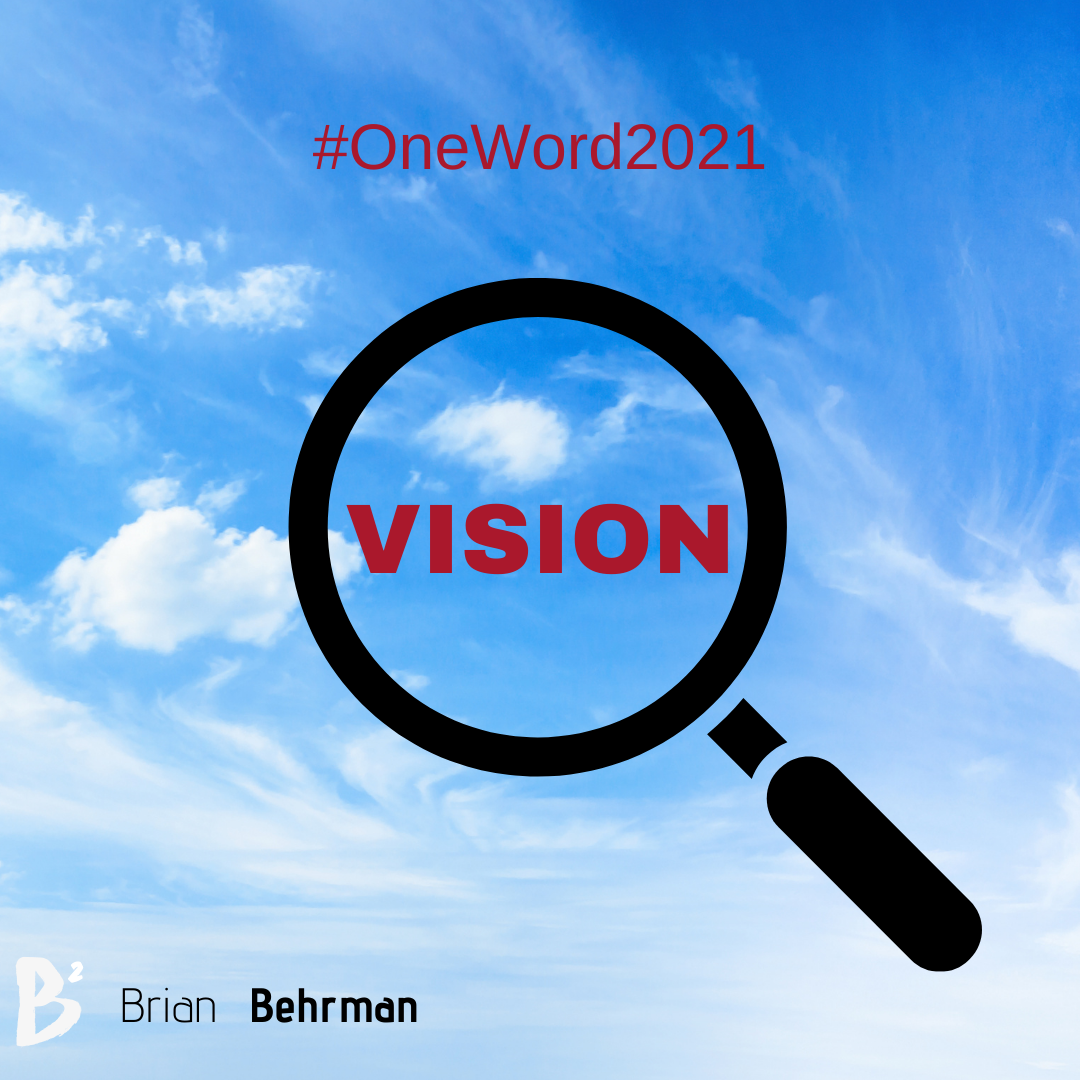
So, that leads me to this year. My #OneWord2021 is VISION.
A true vision is an inspirational statement of an idealistic future. It may not be exactly where we are right now, but it helps our community know where we are going. It has to have clear purpose and include well defined words that our community understands and will rally around. And most importantly, we have to understand that it will take time to get there (some of the best are mapped out over the next 15 to 20 years).
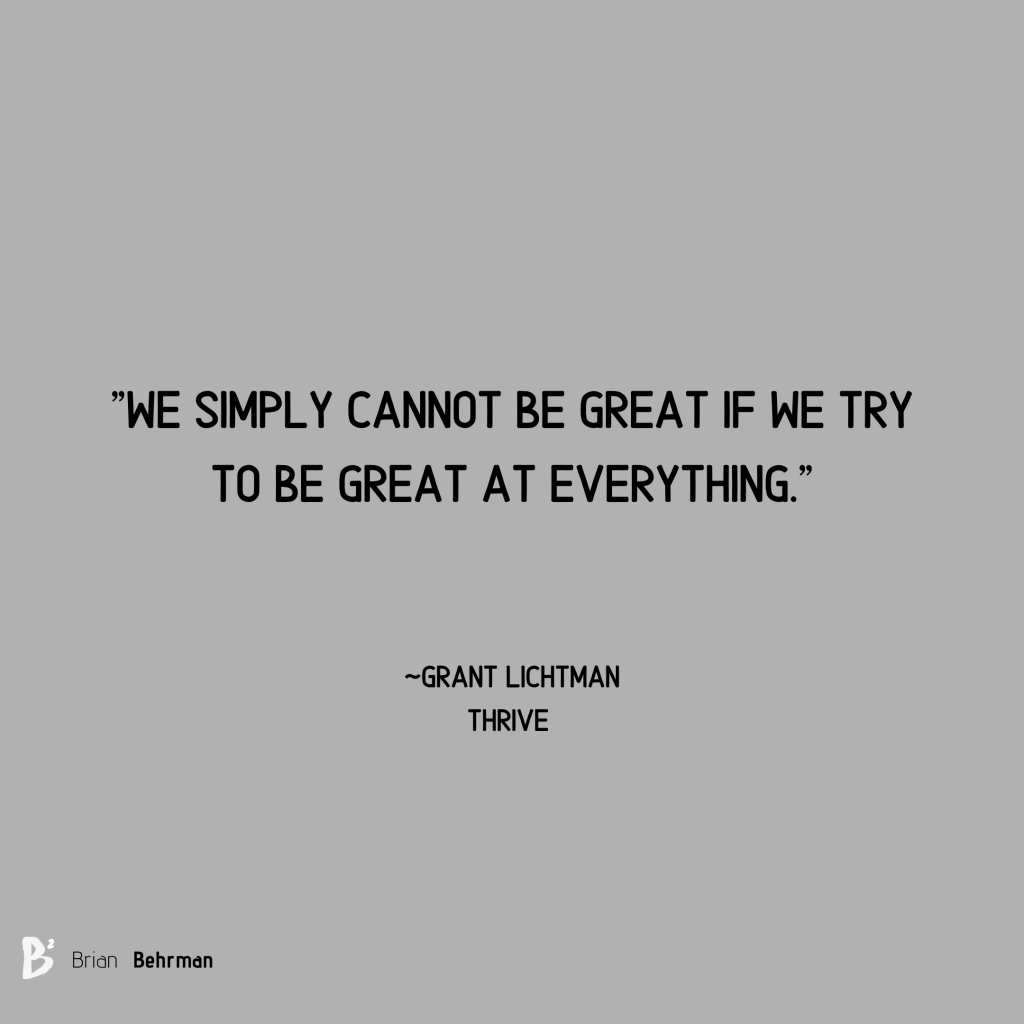
As a relatively new principal, I think it is so important for us to all be on the same page for the work we are doing in our building. We spent lots of time in 2020 identifying our why, and now it’s time to take that understanding so that we can build a shared Vision of Teaching and Learning for Fishers Elementary School. In Thrive: How Schools Will Win the Education Revolution, author Grant Lichtman says:
“In well-aligned schools, teachers and administrators, who are the deliverers of the learning experience, not only understand the vision and mission of their school, but they have had a hand in crafting it.” (emphasis is the author’s)
Thrive: How schools will win the education revolution, p.8, (2020)
Earlier this week I sent a newsletter to our staff sharing the quote above and the work that our school leadership team has been doing to get us to the point of being ready to create a shared vision of learning. We are now seeking volunteers to be a part of the Vision Setting Team. My goal as we move forward in this work will be to get input from our staff, from our parents, and from our students. Not only will this team help in creating the vision, but they will be responsible for creating the action steps we will take as a school to implement the vision, as well as some plans for targets to measure our success.
In the video referenced above, Jon Gordon says that distractions are the enemy of greatness. Setting a long list of goals and resolutions has not worked for me, but the #OneWord is something that I can definitely get behind! Vision will be the word that will drive my work for this school year. It will keep me focused on how to best serve the students, staff, and community at Fishers Elementary School.
So now I ask you, what’s your #OneWord2021? What’s the thing that will drive your work for the coming year? If you’re seeking some resources, do a quick search on google or YouTube, there are a ton of options. And if you think you’d like to do this with your students, you could check out this lesson plan on Common Sense Education: One Word Project. Once you’ve selected your own #OneWord, share it out. Use social media, put it in an email to your team or some friends, or just jot it on a notecard to keep it close by. This year, I even decided to create a MudLOVE custom bracelet with VISION on it (you can design your own here). That way I can have the constant reminder of my priorities every time I glance at my wrist! Just do something to hold yourself accountable to your word!
During one of my master’s classes, my professor taught us about Edward de Bono’s work on the Six Thinking Hats. We learned about the fact that different people have different personalities, thinking styles, and perspectives. When you seek feedback from someone, and you know what hat they typically wear, it will help you to understand the type of feedback they are likely to share, and by getting feedback from different perspectives you will be able to examine the problem and possible solutions from a variety of viewpoints. I found a short article on De Bono’s Six Thinking Hats here.
The knowledge from this task has led me to believe that in order to be able to work with someone, lead someone, or even work for someone, it is important to understand where they are coming from, and what they need.
In my classroom as a teacher, this meant building relationships with my students so that I understood how to motivate them, how to pick them up when they were feeling down, or how to support them so that each student could be their best self. Initially I started with anecdotal notes on my students where I’d jot down things I learned about my students as I got to know them better. Over time it advanced to an actual spreadsheet where I could put notes into different columns that represented different categories. Not only did this knowledge about my students help me in the building of relationships, it also allowed me to know who my potential experts might be for a topic we were learning about.
I carried this knowledge into my leadership role. In a previous post (It’s all about Relationships), I wrote about the “Coffee Chats” I held in order to get to know the members of the Fishers Elementary staff. I wanted to know what drove them as a teacher, what they loved about teaching, and most importantly, what goals did they have. Just like with my students, knowing the members of our staff in a meaningful way helps me to be able to better serve and support them.
Recently, my assistant principal suggested that the members of the leadership team at our school should do some work to learn more about our strengths. She suggested that we use the Gallup CliftonStrengths. This assessment helps to identify and rank the order of the 34 CliftonStrengths themes. We then worked with a coach to learn about how the various strengths in these themes interact with one another. After meeting with our coach, I walked away with a better understanding of the strengths, triggers, growth opportunities, and needs for the members of our leadership team. In the long run, this knowledge will help us to be better at project management with the tasks we’re working on.
Then, this week I was listening to a recent episode of the George Couros podcast where he interviewed Laurie McIntosh. The conversation covered some great things, but what stood out to me was when she was talking about the concept of “D.N.A.” which stands for “Dreams, Needs, and Abilities” (you can find a link to the podcast here). Laurie is a kindergarten teacher, and she shared her use of DNA inventories in her classroom. For each student, she asks her kids to tell her their Dreams, Needs, and Abilities. She then posts each student’s picture with their DNA attached. As Laurie says “knowing this information about me will help me connect with you and will positively impact my learning.” While I loved gathering the information in my notes and spreadsheets for my own knowledge, I never thought of making that knowledge public. Not only are other adults able to learn about the DNA of each student in the class, but students are able to learn about each other’s DNA. In retrospect, I wish I had thought of a way to make what I knew about my students more public!
Whatever your role in education, pause for a moment to think about how the knowledge of what makes someone tick might help you better be able to work with, support, or lead that person. It’s powerful stuff! As I write this, it’s got me thinking about what I need to do to better know the people I work for and with. What are their Dreams, Needs, and Abilities? How would that help me be a better leader or colleague? And how can we share this among the whole staff, not just with one another!
As a side note – as I was completing this post today, I ended up on the blog post from Laurie McIntosh where she talks about DNA. As I was reading the post, I saw a picture of a bulletin board in her classroom where she posts the pictures of her students and their DNA. I stopped and looked at it, thinking it was so familiar. Then I realized why – one of the first-grade teachers in my building is already collecting and posting the DNA of her students. I walk past the bulletin board daily, but somehow in listening to the podcast I did not make the connection. I just had to go tell the teacher about it!
In one of my posts from earlier this fall, I wrote about the work we have been doing to set a vision for teaching and learning at Fishers Elementary School. You can check out that post (Setting a vision) if you’d like to know more about the work we’re doing. With our process, one of the things we want to think about is how do we make sure that whatever the vision is, it becomes ingrained as part of what we do. In the book Thrive, Grant Lichtman talks about the importance of both “short-term goals of this generation of students and the longer-horizon challenges that will face those yet to attend.” Lichtman goes on to discuss the value of building a mission and vision that will last long beyond the time that I’m here as the principal.
That’s a heavy idea to think about. I’m a first-year principal. I still feel like I’m just getting my feet wet, and now I’m being challenged to think about what learning will look like here at FES when I’m no longer here? In fact, in the book Lichtman talks about identifying aiming points that reflect the best version of our school in 10 to 20 years.
The reality is that in the world we are living in, change is inevitable, and the change cycle in most parts of the world just keeps moving faster. But change in schools seems to be on a different time scale. There are classrooms that you walk into today that feel and act much like the classroom I was in as an elementary student in the 1980s. We still have a structure to our day that is much the same (arrive, go to class, related arts, lunch, recess, back to class, head home). We are still grouping kids primarily by age, no matter what their variability may be in preparedness for the subjects we’re teaching. (In previous posts I’ve talked about this variability, probably most clearly in this blog: ‘What is the “average” student? Part II’) And for the most part, we still expect students to attend school from kindergarten to 12th grade, and much of what we are doing during that time is to then prepare students to go to college (with little attention paid to students who might not want/need to attend college for the future they have chosen).
So, what are some of the guiding lights that I believe will help to show where we’re trying to go? Three things stand out to me, in no particular order…
Integrated Subject Matter – For years in education, we have been putting subjects into their little buckets. There’s math time, there’s reading time, there’s writing time, not to mention all the other subject areas that we learn in school. But the thing is, they all go together. When was the last time you did math just to do math? Yesterday I had to do some math to figure out percentages so that I had data for a meeting I was preparing. That data then went into a report I created, and later talked about while presenting. At FES, we will create integrated learning opportunities for students so that they see that reading, writing, math, and all other forms of learning act in service of one another. We will research models of integrated learning that are working in other schools to create a system that will work for FES.
Cross Grade-Level Collaboration – The only times in my life where the majority of the people that I worked with were all the same age as me was during my time as a student in the K-12 classroom. In the real world, I have had colleagues who were older than me, younger than me, and some who were the same age as me. Depending on the context of my career, there are times where I walk into the room as one of the experts on a topic, others where I may be knowledgeable but still have more to learn, and other times still where I am the novice learner. I think that schools, especially elementary schools, could do a better job of differentiating learning for students by working across grade levels. If there is a first-grade student who is capable of working on the same math that a third-grade teacher is teaching, why do we keep them in the first-grade classroom? And if the second-grade class has been doing a lot of research on rocks and minerals, why can’t they share that knowledge with the fourth-grade class that’s about to embark on a unit in geology. Here at FES, we will create the conditions that allow students to learn from one another and with one another, even if they are not in the same class or grade.
High-quality project-based learning – Several years ago, while teaching 6th-grade social studies, it was a couple of weeks before winter break and we had reached our unit on Ancient Rome. We had just done a relatively traditional unit on Ancient Greece, and I was not excited to try to do things the same way. I began looking at the materials I had available for our unit, and I noticed that there was information on lots of interesting topics – clothing, games, architecture, food, and so much more. I decided that we were going to do things differently. I spent a day doing a quick introductory activity to the period and geography that we were going to be studying, and then I set them free. Students were challenged to pick whatever topic they were interested in, do some research on it, and then come up with some way to share what they had learned with others. I fully expected at the end that I would end up with a whole bunch of posters with information, or students creating power points, but that’s not what happened. One student asked if she could create a picture book about her topic. Another student wanted to take class time to teach students the popular game that kids played during the time. Another student built a working, scaled-down model of a Roman aqueduct. Another student designed and made an outfit similar to what a child from Ancient Rome might wear. And when we got to the end of the unit and I gave the unit test, average scores were higher than most tests I gave that year. (Reflection: I probably didn’t need to do the test to assess the learning of my students, but in the time I was working, we still had a traditional report card and I needed grades in the grade book – that’s a whole different issue and conversation) At FES, we will create conditions where high-quality project-based learning is the norm when we talk about what learning will look like at Fishers Elementary School.
Along with these guiding lights, we are currently gathering data in the form of a survey from our school community, both teachers and students, to help identify what it is that we value about FES, as well as what might make us even more valuable to our community. These guiding lights will help us to continue to revamp our mission and vision for learning. In the coming months I look forward to working with a team of stakeholders to analyze the responses we have received, finalize our mission, and then begin the task of identifying the strengths we already have as well as the learning we will need to do to continue to grow.
I’ve never been a fan of having people around me who “go along to get along.” While it may make for a simple existence, it doesn’t do anything to push thinking. As I’ve shared previously, I was brought into the principal role at my building in the middle of the last school year. Our building was fully staffed at the time. Picking the people who I would be working with wasn’t an option.
Luckily, I quickly came to realize that I was surrounded by a team that I could trust to give me real feedback. As a new principal, working at a new level, I knew that my primary purpose was to learn. I spent time with members of our district administrative team to get up to speed on elementary school goals and initiatives – some of which were pretty different than the goals and initiatives we had been working on in my assistant principal role in the intermediate grades.
I began meeting regularly with my assistant principal and teacher development specialist (something like a curriculum coach) to learn more about the specific work we were doing in our building. I also started joining in on as many of our grade level PLC meetings to hear about the work happening in our classrooms. During these meetings, I made it a point to listen a lot, ask some questions, and learn as much as I could. As much as possible, I tried to avoid sharing opinions until others had the first opportunity to share their thinking. And when we got to the point of my sharing of opinions, I always asked for feedback from those I was with. I like to ask follow-up questions like “what are we not thinking of?” or “what have we missed?” These questions help make it clear that I don’t see myself as the end all be all expert in the room.
Matt Miller (@jmattmiller) said during a conference I attended that “The smartest person in the room is the room.” I think we all grow to be stronger when we can have honest discussions, share opinions, and discuss/defend our points of view. Ultimately the buck stops with me in making the decisions in my building, but as much as is possible, I want to seek ideas and feedback from the others that I work with.
This is a culture shift for some. I remember working as a teacher in buildings where I felt my opinion wasn’t important and didn’t matter to the leadership of the building. It caused me to stay silent when I did have ideas. But that’s not a culture that causes all of us to grow and excel. As the line goes, “Iron sharpens iron.” We make our whole culture stronger when people feel that they are able to offer opinions and that those opinions are valued. We make each other stronger when we have to explain, and possibly defend our own opinions.
One of the things that I don’t think we do very well in education is to feel safe to express opinions, to discuss those opinions, and then to try to come to a consensus about what is best for our students. I think there are very few people who come into education who operate from a place of debate or skepticism. Most educators tend to have been the “teacher’s favorite” type of student (and that not a bad thing, because that makes you good at what you do). But often those teacher’s favorite students are in that category because they do as they’re told, they follow directions, they don’t act up.
What I hope to see from the people I work with is a willingness to stand up for the things that matter most to them. You don’t like something about your curriculum? Ok, let’s talk about it as a grade-level team. What might make it better? How could we take what we have and make it something that you feel you can work with more successfully? These discussions may not always result in the exact change that you are hoping for, but it also might lead the others you’re working with to think in a new way.
And what I hope that the people who work with me see is that I ask a lot of questions, not because I think something is being done wrong, or because I think there is a better way, but rather I want to understand the thinking that led to your decision process. When we ask questions of one another, we aren’t doing it to challenge one another, we’re doing it to learn from one another and to push each other’s thinking.
If you’re in a position of leadership (and when you are in education, anyone can lead in a variety of ways), work to develop a culture where questions are the norm, where making one another better is the expectation. Don’t choose to be around people who will follow you blindly. Find your people who will help to push your thinking. The work you do can help each of you grow in your craft.
In my many years of working in education, one thing that I have learned again and again is that we have to be flexible in what we do. At any given time, I walk in with a list of items on my to-do list, as well as a list of current projects that I’m working on. But sometimes something happens in the day that leads me to have to adjust on the fly.
When I was in the classroom, I remember times when my lesson plan went out the window due to something that occurred in the world that morning or the night before. Other times I might have been forced to adapt my plans because I woke up sick and needed to adjust to sub plans. Or maybe there was a situation where a teammate wasn’t there and the classroom was uncovered, so we had to split the students among our teams.
As an administrator, that happens as well. Sometimes things happen that are beyond your control. I remember a time when I was supposed to be leading professional development with a group of teachers, but as I was about to walk out of the office, an upset parent walked in who needed to speak to me. At that moment, I felt it was best to take the time to meet with the parent rather than head to the PD. While it was an inconvenience for the teachers, everyone was understanding.
Last week we had a couple of days where our art teacher had to be out, and we weren’t able to find a substitute teacher to cover the classroom. I went through the normal process, checking in with various people about when / if they’d be able to help cover some or all of the day. On one of the days, it quickly became apparent that there was nobody to “cover the class.” Rather than spinning my wheels trying to piece together a possible schedule, I just decided to step in and cover the class. While I didn’t have anything on my calendar that couldn’t be adjusted, it definitely meant that I needed to be flexible for the day.
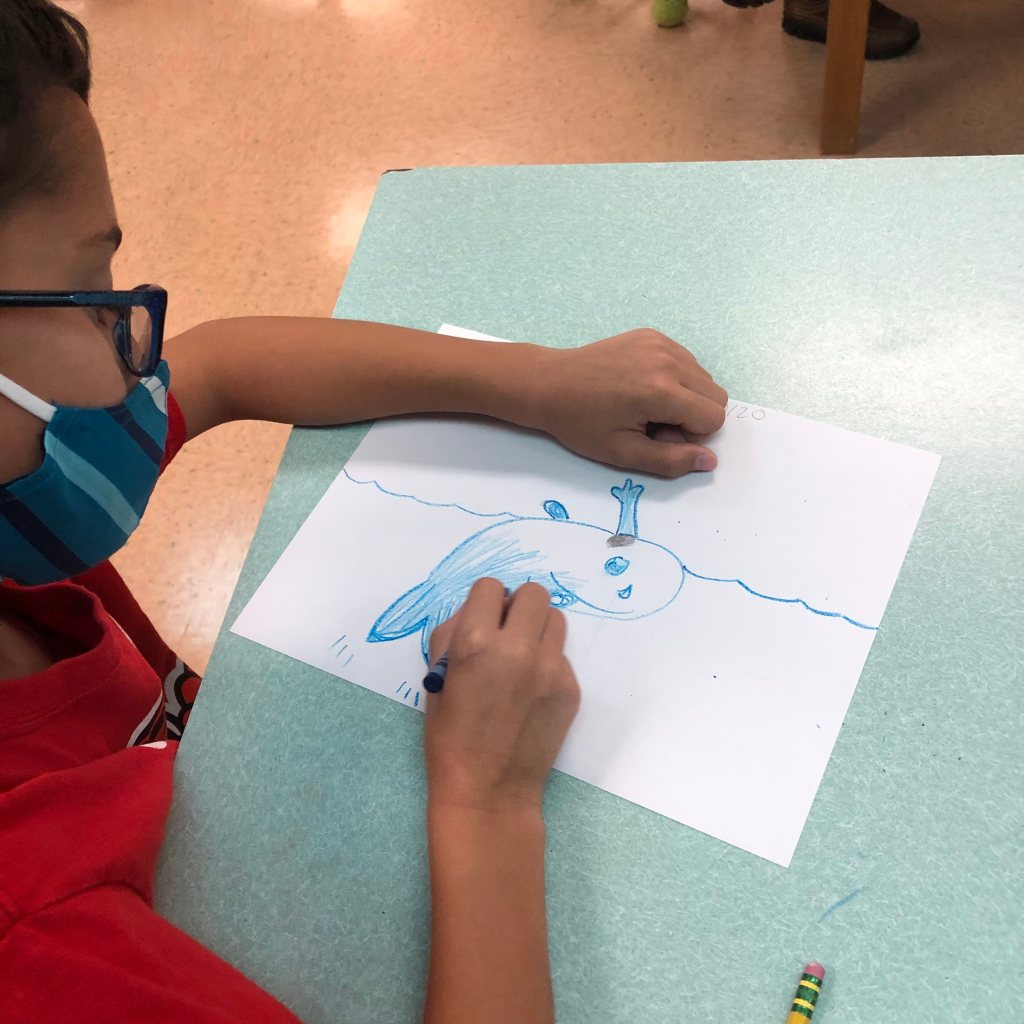
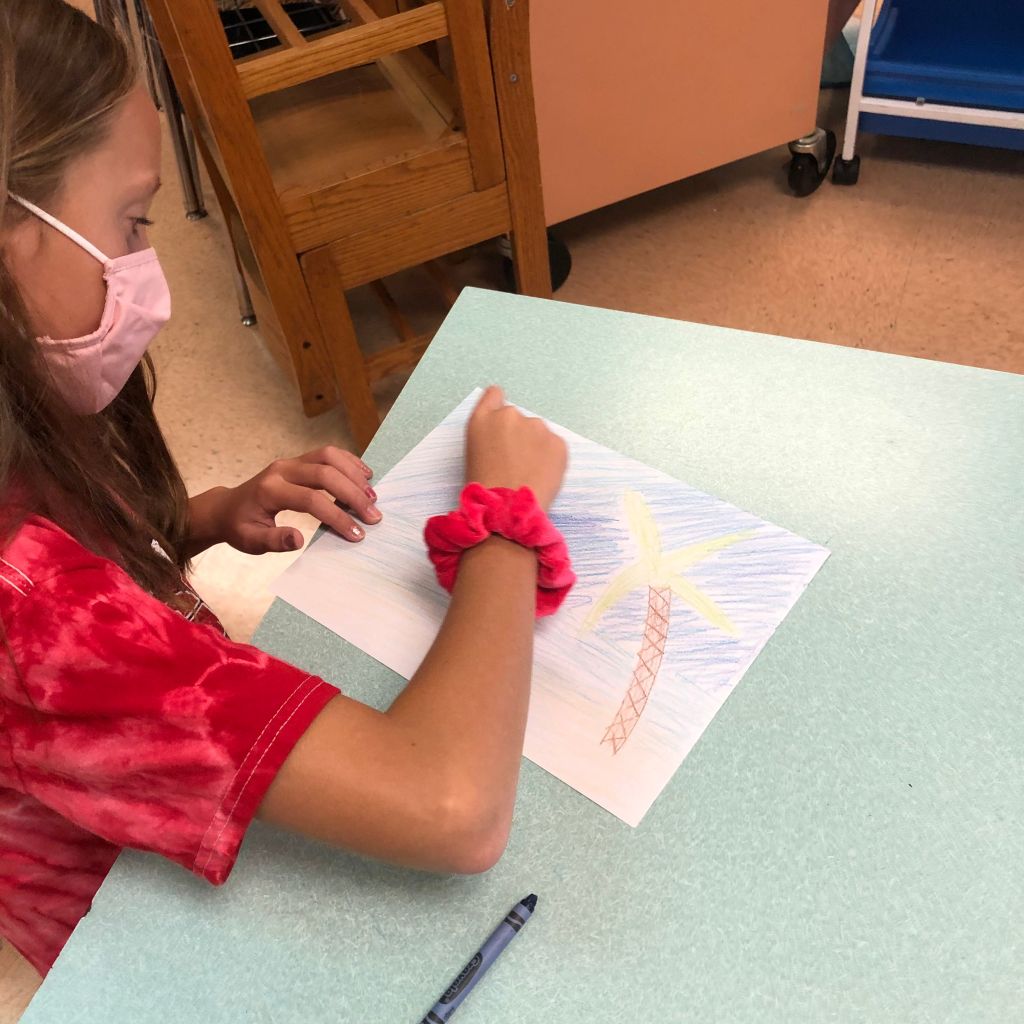
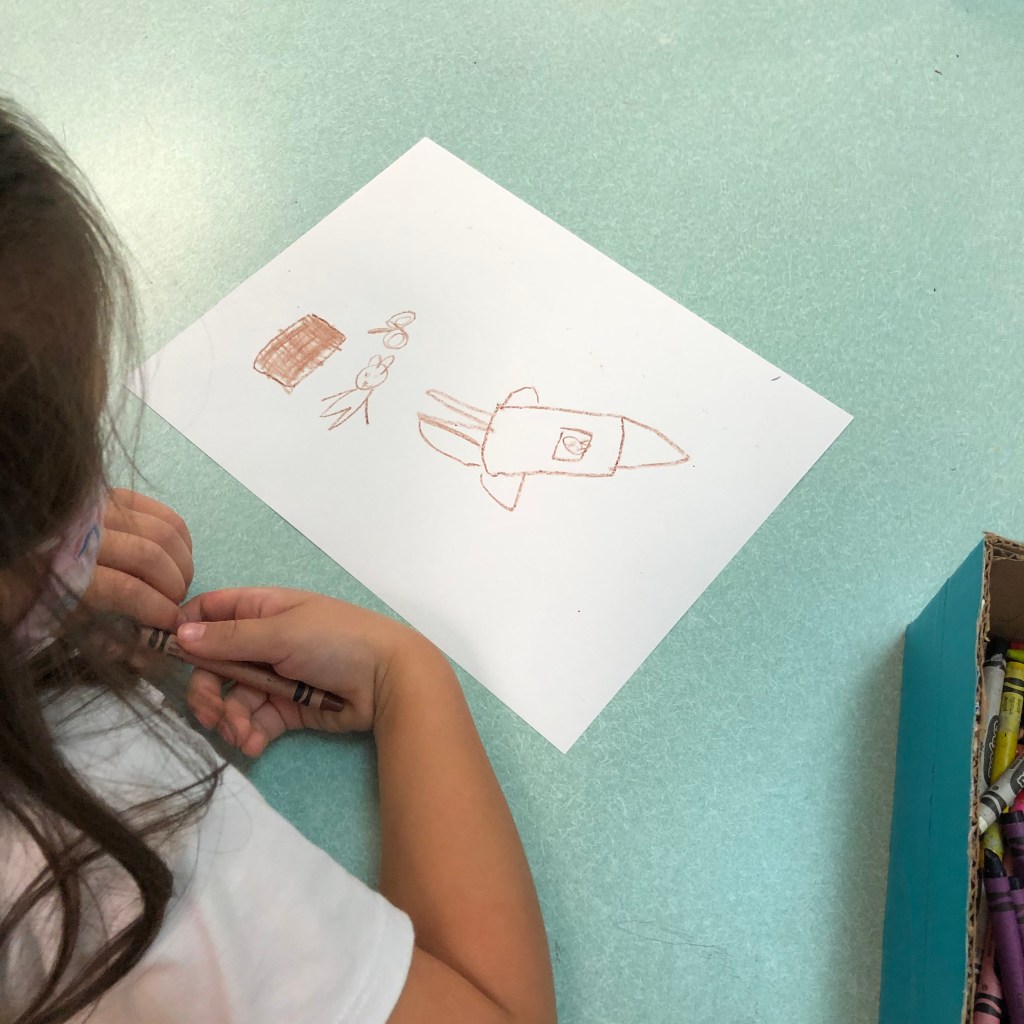
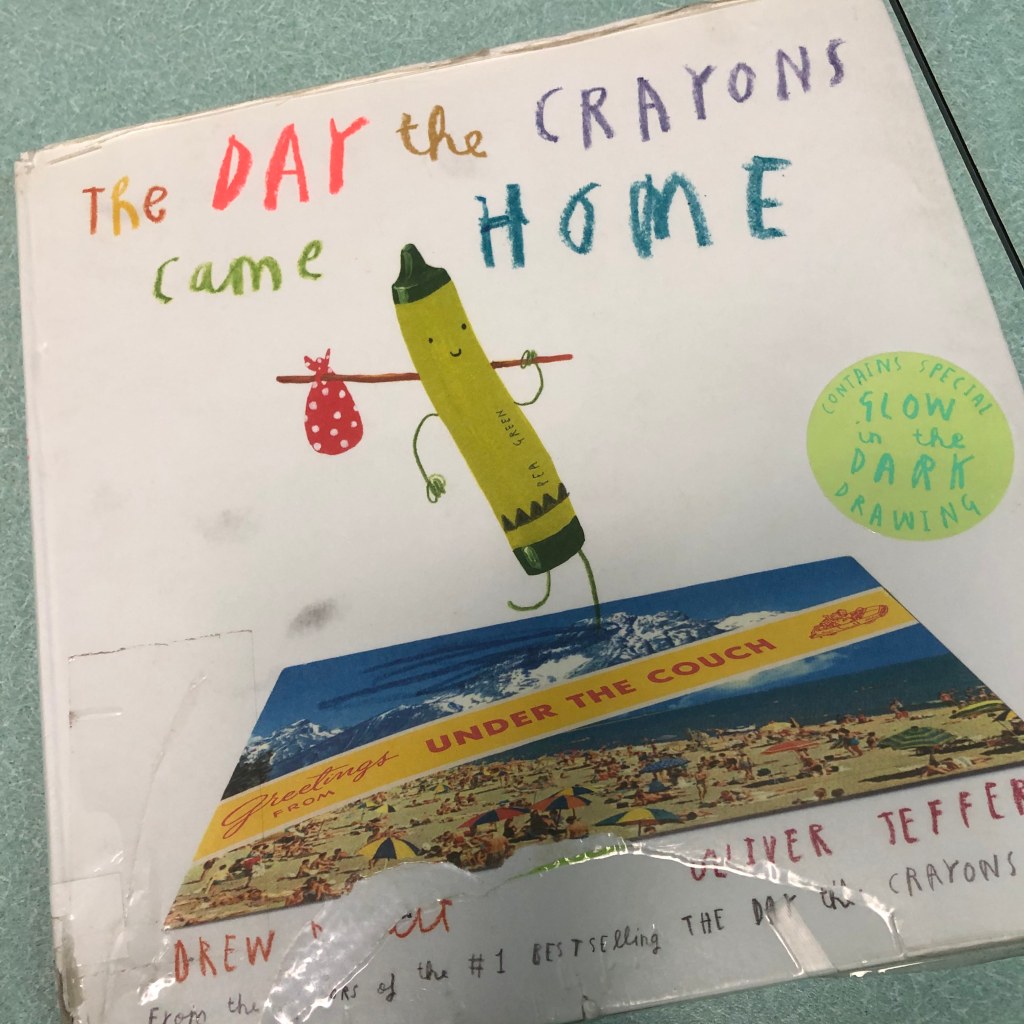
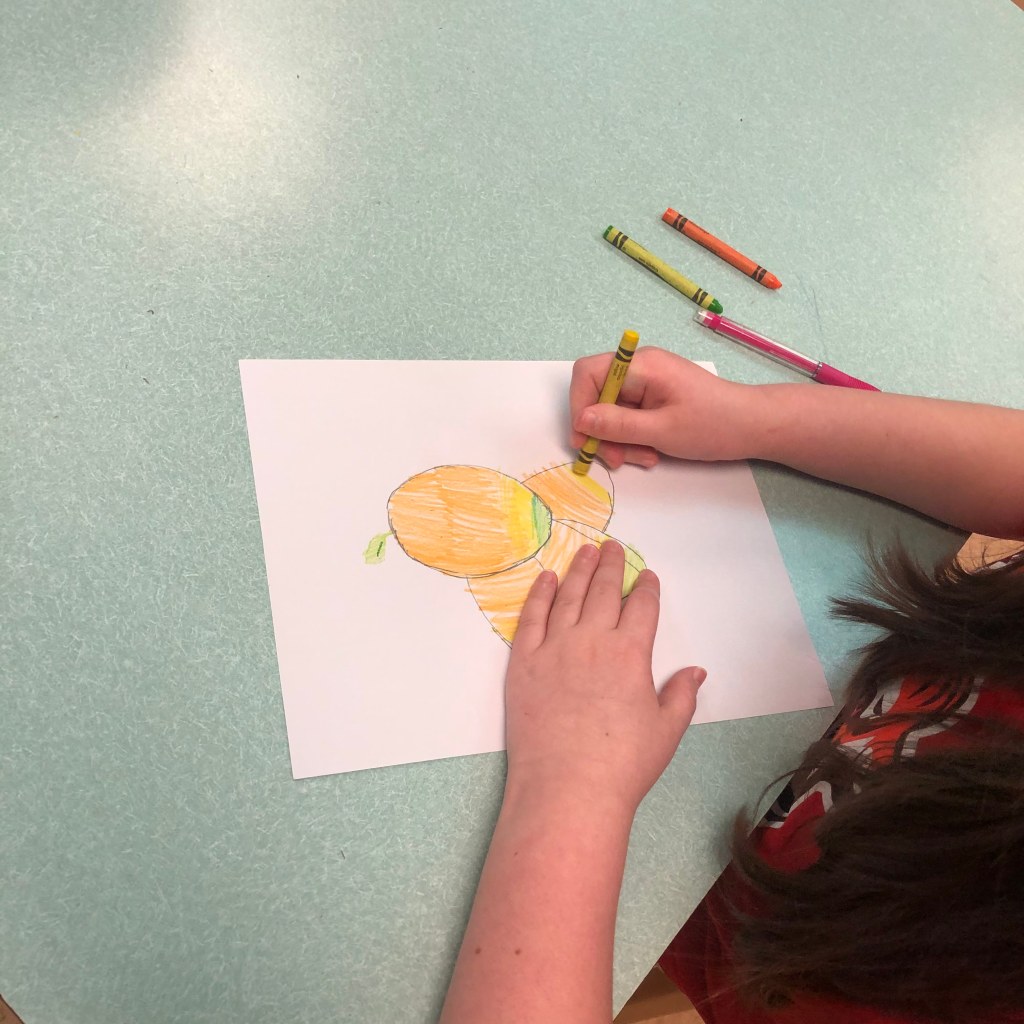
Our art teacher left emergency sub plans, and they certainly would have worked, but I also wanted to see if I could come up with something a little more creative. I went over to our library and found the book The Day the Crayons Came Home by Drew Daywalt. If you’ve never seen the book, each page is a postcard from Duncan’s crayons who have been lost about talking about the fun they’ve had together, where they were lost, and that they wanted to come back. After reading the story, each student was encouraged to pick a crayon color from the crayon box and create something with that color. Students who finished their artwork were then encouraged to write a note from the crayon to Duncan.
While this was certainly not the day I had planned, it was the way the day needed to go. And as principal, there are things that may not be a typical part of your day, but you just step in because it’s what the school needs. And as an added bonus, I can tell you that I had a ton of fun being with our students helping with the art class throughout the day!
It would have been easy to have a mindset of frustration about the inconvenience that this created in my day, but the truth is, someone had to be the art teacher for the day, and there was nobody else to do it. Sometimes part of being a leader is stepping up and taking on things that nobody else can do. Sometimes you just have to do it!
In my first ever interview for an administrative position, one of the questions I asked of the interview team was “What does the typical day look like?” The members of the team briefly looked around at each other, and with a laugh, one said “There is no typical day.” I have found this to be so true.
Every day I walk into the building with a targeted to-do list. But the task of leading a school involves lots of people. And a big part of those people is the kids that walk into the building each day. And when people are involved, things happen, among our staff and students, that may require my immediate attention. So, with that knowledge, I have to recognize that my to-do list is always a moving target. Some days, I can be focused primarily on the things that are on that list, and I walk out of the building feeling like I accomplished a lot and did good work. Other times, I find that there are so many things that come up during the day that I’m unable to do any of the things on my list, and I walk out of the building at the end of the day feeling like I was run over by a truck and wondering what just happened.
What this means is that I have to work to identify my vital function. When I look at my role, the vital function that I keep coming back to is one of communication – I am the chief communicator for Fishers Elementary School. I communicate with our staff about how to best accomplish our goals while meeting the needs of our students. I communicate with our students through things like the morning announcements, times I visit the classroom, and the multitude of other times I get to interact with them. And I communicate with our families and communities to share important updates about what’s happening on the daily at our school.
On my bulletin board in my office there hangs an index card with the quote “How do we make great learning go viral?” It’s a reminder to me that I have the privilege to walk into all of the learning spaces of our school and share the amazing things that are happening to our community within our school, and the community beyond our school.
So, with an identified vital function, the next step is to narrow my focus. If it’s one of those days I referred to above where I feel like I’m being pulled in a hundred different directions, I have to be able to ask myself “what is the main thing?” that will help me to accomplish my vital function. Sometimes that question allows me to zoom from the 30,000-foot view to the 10,000-foot view. And that’s still not zoomed in enough, so I look at my new list of tasks and say, “what is the main thing here?” and can get a lot more granular.
Sometimes some things are on my initial list that still have to happen today, but they don’t fall into that more focused version of my to-do list. This is when it’s time to delegate.
Last week I had a morning meeting with our 3rd and 4th-grade team. They had concerns about their report card for quarter 1 this year (For some context depending one when you are reading this, it’s the fall of 2020. We are in the middle of Covid-19 life. Students were learning virtually for the first month of school, then we were in a 50/50 model, and just before the end of the grading period, we will be returning to school with almost all our students learning in-person, although there is still an option for virtual learning for families who want to do so. A complicated time!). As I was walking with my assistant principal to this meeting, one of our teachers came walking out of her room just in front of us. She had injured the top of her head by hitting it after bending over to pick something up. I knew we needed to check on her but also knew almost a dozen people were waiting on me for a meeting. I knew that our nurse was in the office already, so delegated – our AP walked the teacher down to the office to see the nurse while I continued to our meeting. I asked our AP to keep me informed of what was going on with the teacher because I was concerned about the health of our teacher, but when I weighed the tasks on my list, I knew that taking care of this teacher was something that could be delegated at that moment while being prepared to be the lead communicator in the room for our discussion on the report card was part of my vital function.
One of the things that I have come to realize in the past 10 months of being a building principal is that there’s always something for me to do, and sometimes there are a bunch of somethings that need to be done. And while there are things that require my attention, there are also things that I have to trust the team that’s around me to make the best call on. I’ve long believed that part of leadership is knowing your strengths and weaknesses and surrounding yourself with people who will support you in your areas of weakness. Luckily I am in a position where I have a ready-made team that is willing and able to step in and take charge in situations that fall into their areas of strength, and I’ve consistently made it clear that I trust them to make judgment calls, even in a sticky situation.
As a building principal, the leadership of our building falls on me, but I can’t do it all. And that recognition is part of what makes my leadership work for our team. For our team to be great, we all have to play our part.
In my last post, I spent some time talking about the strategies I used to build relationships with the staff of my school after I transitioned into the role of principal of Fishers Elementary School. After spending that time listening to our staff, it was clear that there was a lot of energy, a lot of ideas, and a willingness to grow. But what it seemed was lacking was a clear direction. During an early meeting with the staff, we started talking about the process of building a vision of learning for Fishers Elementary School. We all agreed that there needed to be one, and that it needed to start with each one of us – our beliefs, ideas, and personal passions about teaching and learning.
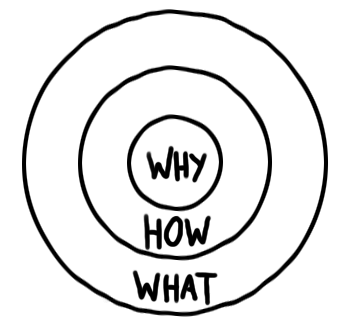
In order for someone to understand what they are doing, they have to also be really clear on the how and why that goes with that what. Simon Sinek has a book and a TED Talk titled Start With Why (the book is a quick and easy read, or you can check out the talk here). In both, he shares the idea of The Golden Circle. In both the book and the talk, he explains that the people and companies who are the most successful have a really clear definition of their Why, and then work their way out on the Golden Circle. But most companies or organizations start with the what and work their way in. I felt that if we wanted to have a really clear understanding of what we were trying to accomplish at FES, we needed a clear definition of our why.
For our January staff meeting, I planned, then presented my own version of an Ignite session (if you’ve never done this, it’s a 20 slide presentation, where the slides automatically shift every 15 seconds) titled “My Why” (I wrote a post about it a while ago – you can read about it here). I then encouraged everyone to take some time in the coming weeks to think about their own why.
At our next staff meeting, we came together again. It was a chance for us to all reflect on our personal why. I encouraged everyone to sit in a grade level team, and with that team, they had a short amount of time to discuss and define a shared why. We then used a collaborative powerpoint document, where each team created their own slide. The work around defining our why was so important in helping all of us to be really clear on our beliefs about education and learning. It’s the why that drives what we do, not the other way around.
As we were spending time talking defining our why, we also talked about the importance of a shared vision. A Vision for Learning for FES that is written by one person based on their beliefs is not going to be meaningful to all the stakeholders. We started talking about who else we needed to get input from. In these conversations, we knew we wanted the thoughts of our students, we wanted the thoughts or our families, and if possible, we wanted the thoughts of our community. We wanted to make sure that whatever our Vision for Learning was to be included in the ideas of multiple stakeholders.
In February, we were planning to gather the thoughts about learning from our community. It was a couple of days before an upcoming PTO meeting and I was sitting in the conference room with my leadership team. As we were talking, someone pointed at a bulletin board in the room and said “Well, we already have a vision statement right here.” I was floored. “You mean I’ve been here for almost 3 months, and I’ve talked with all of you about developing a vision, and nobody told me that there was already one on a bulletin board?” (OK, maybe my fault for not noticing.)
But what I quickly came to realize is that the vision that was on that bulletin board was nothing but words on a wall to most of the people in the building. They did not feel that the vision that was on the wall accurately reflected them. I’m not exactly sure who all was involved in the writing of that vision, but it wasn’t a shared vision. It didn’t drive the decisions that we made about learning in our building. It was just words on a wall.
To gather some thoughts, we started with 4 questions. Those questions were driven by the book Thrive by Grant Lichtman and included:
We asked these questions first in a staff meeting, and then in our PTO meeting. The thoughts we gathered were so impressive!
These responses were collected during a staff meeting and then a PTO meeting on March 11th. When we collected these thoughts, we did not fully grasp what was about to happen in our world. On March 13th, we let out of school earlier than scheduled for spring break due to concerns about the risks of Covid-19. We taught from home for a week, then had a 2-week spring break during which the governor of Indiana announced that schools would not reopen.
After spring break, we transitioned to what I would call emergency remote learning. It was nothing close to the ideal learning environment for our students. Initially, when this transition happened, I had big plans. I thought we could still do our work on the Vision of Learning for FES virtually. But what I quickly found is that we weren’t ready for that. Most of us were barely able to tread water to meet the learning needs of our students. In January, my goal was to have a well-defined vision for learning before the start of this school year. By April, it was clear we needed to hit the pause button on that work.
So now, I sit here at the start of September. Students start in our building tomorrow. So much of our mental energy has been devoted to the logistics of opening a school in the middle of a global pandemic. But, my assistant principal, our teacher development specialist, and I are once again reading Thrive. In talking through the first section, we all feel like we’re currently at the point where we need to identify our value proposition – what is the thing that makes us valuable to our community? In the coming couple of weeks, I will be working on writing this up for our school community. I’ll share with our teachers, I’ll share with our PTO, and I’ll share it here, to seek feedback on our value at Fishers Elementary School. That will move us one step closer on the path of a clear Vision for Learning.








 The View from 518