
In past posts, I’ve shared a bit about the Cognitive Science Microcredential I earned through the Center for Excellence in Leadership and Learning. Cognitive science is all about understanding how our minds work. The main point of the microcredential is to know how people learn best and then apply that understanding to support the work we do in the classroom. Today, I want to focus on the concept of Retrieval Practice.
What is retrieval practice? Have you heard the phrase? Jot what you think it is on a post-it, or define it out loud for yourself. Once you’ve done that, read on.
If you actually took the time to define retrieval practice, you just participated in a form of it. It’s sometimes also called the testing effect, and it’s any activity that forces you to generate an answer to a question. It can take on many forms, such as using released repository items to practice a skill, reviewing with multiple-choice questions, or something as simple as quizzing a partner as a form of study.
Retrieval practice has been consistently shown to improve students’ retention and recall (with long-term benefits for enhanced performance on summative exams). See the graphic below for some of the research findings:
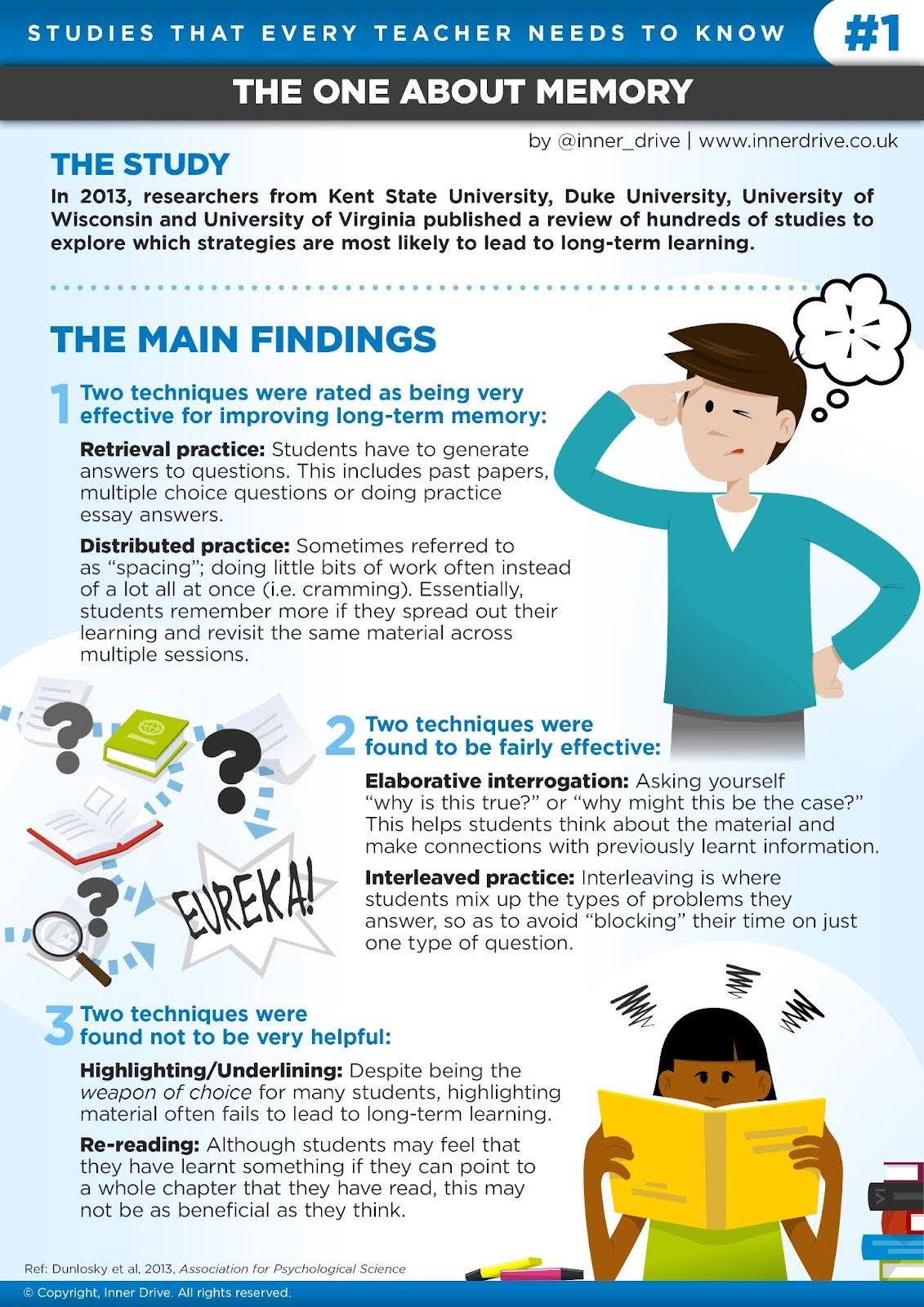
Some of the best research on studying strategies has found some interesting things. First of all, most preferred study methods (rereading, reviewing notes, etc.) are not as effective for authentic learning of the material. Those strategies can be good for cramming, but over time, that information is lost. The truly best options for studying or reviewing are something like participating in practice tests. The research in the What Makes Great Teaching Report states that “having to generate an answer to a question or procedure, or having to retrieve information – even if no feedback is given – leads to better long-term recall than simply studying.”
Why do researchers believe this happens? First, they note that students who have done practice tests or true retrieval practice while studying report that it helped them learn (92%) and made them feel less nervous about summative exams (72%). Another benefit of retrieval practice is that it enhances memory during stressful situations. Too much stress can reduce memory and impair focus, but using retrieval practice consistently reduces that impact because answering questions in a practice situation already stresses you out, reducing the impact during the summative assessment.
Yet another benefit of retrieval practice is that it helps you identify what you do or don’t know. Students (and teachers) have concrete information about what they truly know. By understanding the gaps in knowledge, future review can be more effective.
Possibly the most interesting thing about retrieval practice is that it is so much more powerful than students think. Results from a 2006 study by Henry Roediger and Jeffrey Karpicke titled “Test-Enhanced Learning: Taking Memory Tests Improves Long-Term Retention” gave two interesting views of the role of retrieval practice on student learning. See the chart below for results:
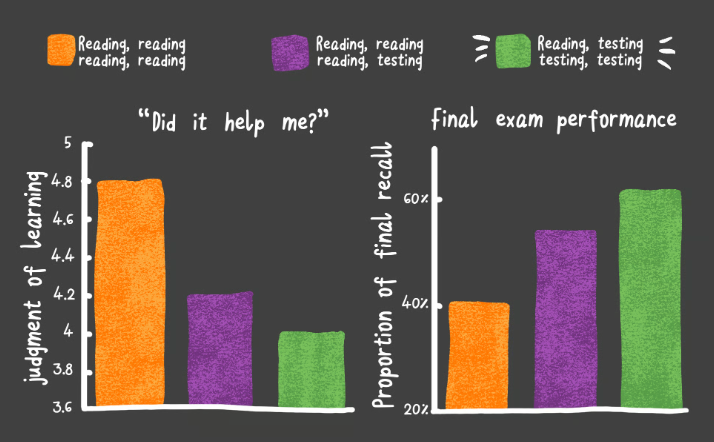
What I find most interesting about this data is that a student’s opinion of what would help them learn the material had an inverse relationship with their actual performance on the summative assessment.
The orange bar to the left shows that more students thought that reading and rereading as a study tool would help them the most. However, when looking at the assessment data, students who read the material once and then took practice tests for review had the strongest long-term recall.
This is retrieval practice in action!
So, how can we embed retrieval practice into our formative assessment? There are a few ways we can harness the testing effect to the benefit of our learners:
Past Papers: Past papers are examples of previous quizzes or exams. This could be an alternate version of the assessment provided by your curricular resources, or it could be done by utilizing the released item repository to practice items of similar rigor and level as what will be seen on the summative assessment.
Multiple Choice Questions: Early in the studying process, multiple-choice tests and quizzes can be a valuable way to determine whether students can identify the correct answer from a set of options. This can help you identify the types of questions or problems that students still need support with.
Written Answers: A short written response to a higher-order question can help students craft a fluent response by drawing on the many pieces of information available to them. Answering an essay from multiple sources requires analysis, which improves retention more than simply sharing isolated facts.
Answering Questions Aloud: Replying to a question aloud makes you think about the question and then reflect on the information you have learned to craft a verbal answer. Related research indicates that reading aloud is more beneficial for long-term learning than reading in silence, as it engages more of our senses.
Testing Yourself with Flashcards: Using flashcards for review is a great way to identify what you know and what you still need to review.
Having Someone Ask You Questions: Sharing answers to questions someone asks you helps you discover how well you understand the material.
Based on what you’ve learned here, what are some steps you could take in your classroom in the next couple of weeks to bring retrieval practice into the learning environment? It could be as simple as asking students to “think, pair, share” a description of what your class did yesterday in math as you are leading into your mini-lesson. It could be taking a moment at the end of a lesson to review the key takeaway that students should have. Asking them to stop and jot the most important thing is a great example of retrieval practice at the end of a lesson.
These strategies will solidify learning within your setting, leading to greater growth and mastery! Take a look at the examples of retrieval practice above. What can you bring to your classroom to help students solidify learning in the next week? Make a note of it, and be sure to add it to your practice next week!
 The View from 518