As a teacher, what do you define your primary purpose as? We all know that a lot goes into supporting our students – we’ve been trained in SEL, Restorative Practices, Crisis Intervention, Maslow’s Hierarchy of Needs, and that list could go on. In addition to the training we’ve had, we have supervisory roles; we communicate with families, we manage our classrooms, we document student attendance, we collaborate with our colleagues, and we may even support students by organizing extra-curricular activities. Again, this list of additional duties could go on!
However, I would define our primary purpose as facilitating learning. If I were writing the job description for a teacher, the first bullet point would be “Plan, prepare, and deliver engaging lessons aligned with curriculum standards.” A second bullet point might be “Differentiate instruction to meet the needs of all students and ensure high levels of learning for all.” In addition, it’s important to remember that great teachers deliver the content and inspire curiosity, critical thinking, and a love for lifelong learning.
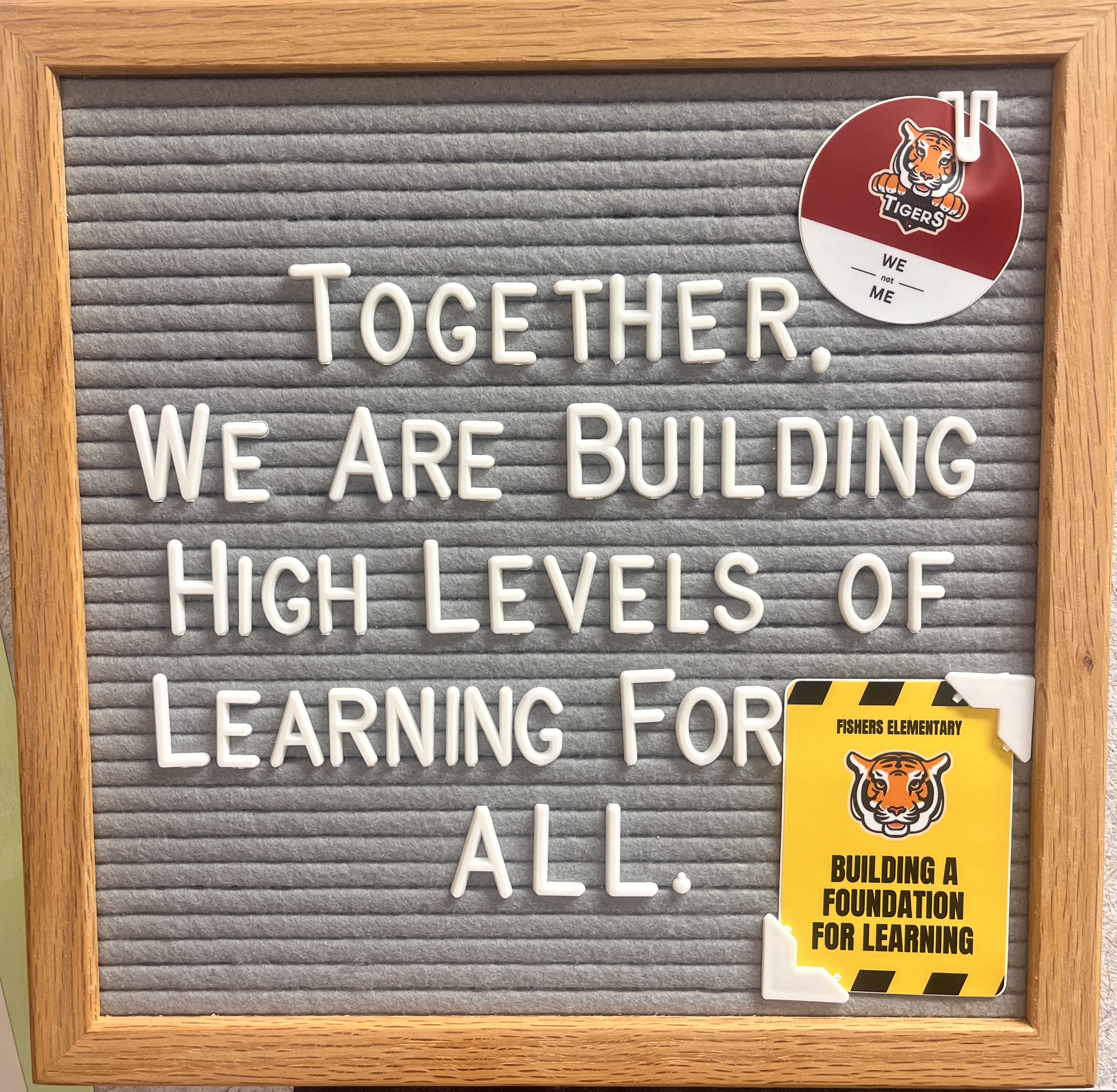
For a while now, the sign right outside of my office has said the following:
We must all commit as teachers: “If they didn’t learn it, then I didn’t teach it well enough.” Yes, we all want our students to be happy and to have fun. But we also need to ensure that they are learning. This may be a bit of a mindset shift, but that’s what is required for all students to achieve at the levels that we know they are capable of.
How often have you been sitting with someone, maybe in a meeting or even a conversation among friends, and you didn’t feel like you understood what they were discussing? What does that feel like? It has happened to me. My career path has been in education, so get me around a group of teachers or other educators, and I can make small talk all evening. But occasionally, I will be in a social situation where everyone there has been in the business world. They start talking about something relating to their business, and suddenly, I’m stuck in a conversation where I don’t understand what they are discussing or have nothing to add. I almost feel lost. While I can ask questions to learn more, it’s not a great feeling. But it’s essential to remember that for some of our students who haven’t learned what we expect them to know, that is what they feel like when they sit in our classrooms each day. Yes, they may be happy to be with friends, to have chances to socialize, or to go to recess. But should we settle for that being the times they feel happy at school?
If, as teachers, we spend all our time focused on making sure our students are happy, that takes away from our time to ensure that they are learning at the levels we need all students to achieve. I also find that when we worry about making sure they are happy, we will likely find excuses for not achieving where we hope they’d be. Remember that we only have 6 hours daily to help move our students forward.
Like me, I’m sure you have seen those lightbulb moments for students when something truly clicks. What was the facial expression of a student at that moment? It’s typically a massive smile for two reasons: first, they feel proud of themselves, and second, they are happy that they now “get it.” On the other hand, no amount of positive feelings due to SEL or other social justice type work will make them feel good when they realize they don’t get what you are teaching. They’ll feel lost, just like we do in those social situations I mentioned above.
I sometimes worry that we lower our standards for one reason or another. It never comes from wanting to negatively impact our students; I’m sure it comes from wanting to show them that we care. Eventually, our students will realize that they don’t get it, and the odds are that they will not feel good about themselves when that happens.
We must commit to pushing our students to mastery. Each of us must look at each student and think to ourselves that because of the work we are going to do with them, they will learn, they will find success, and that will bring about the greatest happiness of all.
Last week, we began a new round of professional development. One of our School Improvement Goals is to increase the number of students proficient in evidence and elaboration in their writing. In our most recent round of ILEARN testing (the test used in our state to check student proficiency in math and ELA in grades 3-8), only slightly more than 17% showed proficiency in this area. Our working theory is that by helping our students expand their sentences, add more details, and ensure that those details stay on topic, we will also see improvement in other areas of the written portion of the test.
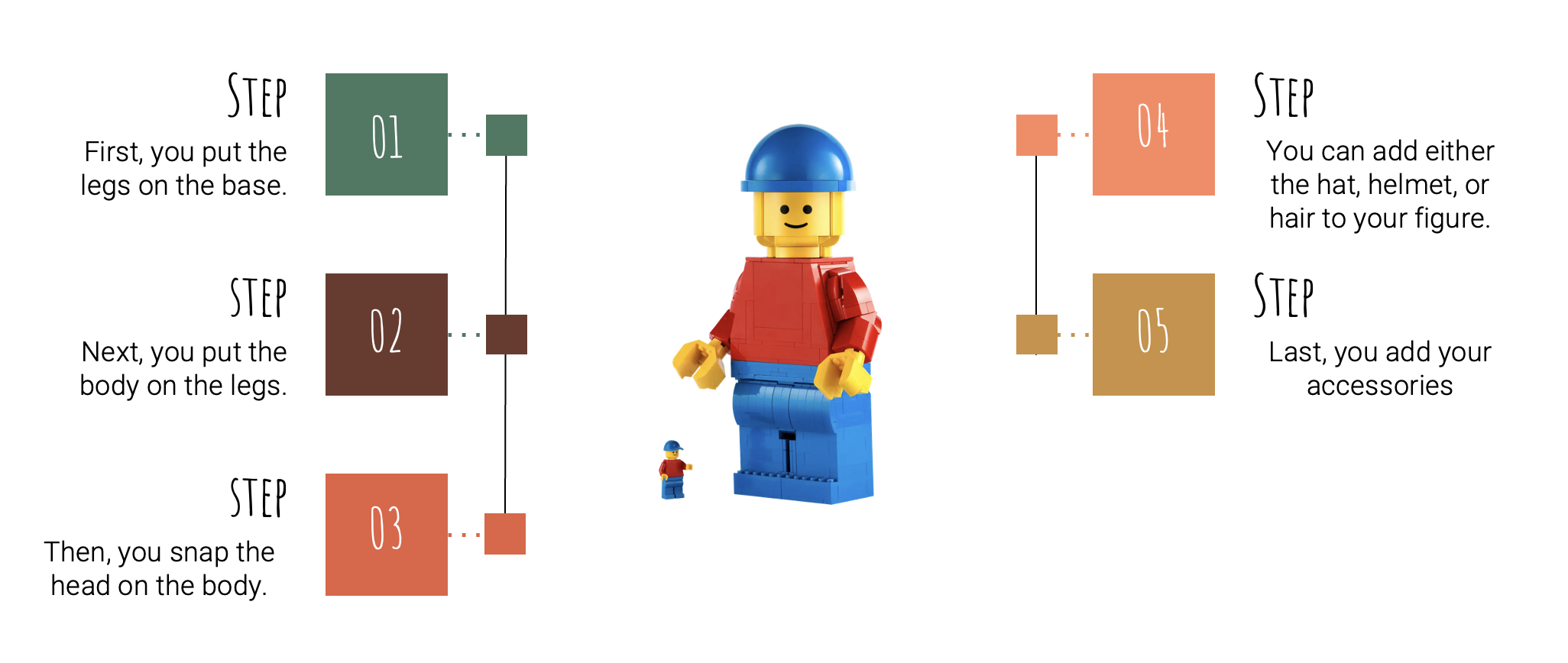
But I also know that when I bring together a group of teachers ranging from kindergarten to fourth grade, some may have difficulty connecting to the data they see on the screen because “we don’t teach those standards.” To help get thinking about each person’s critical role in moving our students towards proficiency, we did an activity with one of my all-time favorite toys, LEGO! Each group received a box with a Minifigure inside, and then we put the following directions on the screen:
We asked one person to follow a step in the directions, revealing them one at a time and then passing the Minifigure to the next person. Once all tables had completed their Minifigures, we displayed the question: Which step could you skip and still have a completed Minifigure? The team reached a consensus that there were no steps we could forget and that we still had completed Minifigures.
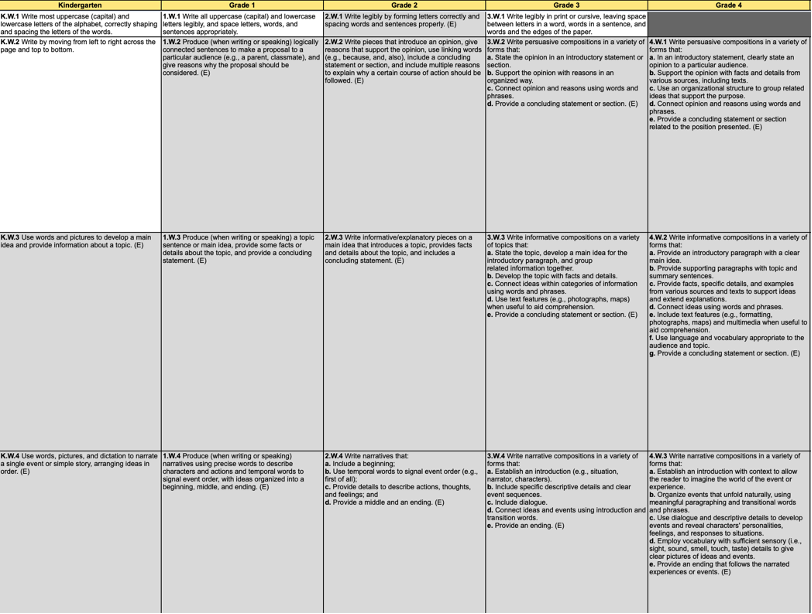
So then, we showed this:
I know the font is tiny, so don’t feel you need to zoom in. This is a vertical articulation guide for the essential writing standards for grades K-4. At first glance, without even digging into what they say, you might notice that they become more detailed as the grades advance. When we looked at this with our staff, several noted that they built upon one another. Suppose you were to look at the third row related to writing informative pieces—every grade level talks about being on a topic or having a central idea, and every grade level has something about including details, but the requirements and expectations of each grade level become more detailed.
The analogy we made as we discussed this is that we think of the writing process as a stairstep. Each grade level has a target level of proficiency. If one grade level does not hit their proficiency level, the work of the following grades becomes more challenging because they have to play “catch-up” with their students.
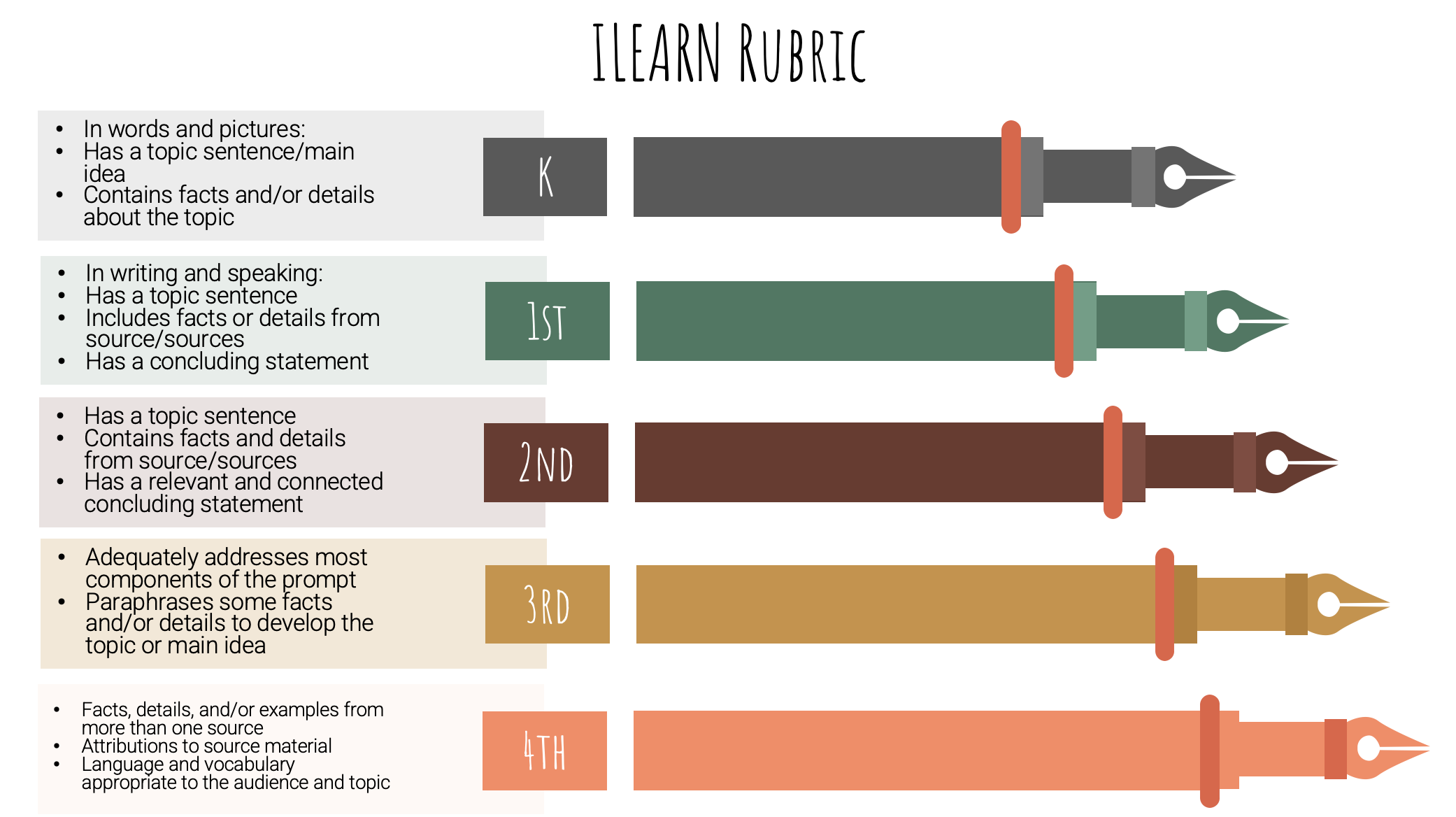
The State of Indiana has provided rubrics that are written based on the academic standards, and they are broken down into the different categories that students are assessed on during the writing portion of the ILEARN assessment. They include three focus areas – organization, evidence and elaboration, and conventions. So, we started by looking at the rubric section based on evidence and elaboration (our goal area). Unfortunately, since the ILEARN rubric only includes grades 3-8, we didn’t have a clear rubric for grades K-2 in this area. So, our leadership team had done some prework. We dug into the standards and rubrics from grades three & four and then walked the rubrics back, referencing what was included in the standards in each grade level, to create a simple bullet-pointed rubric for all grades K-4.
What we came up with was something that looked like this:
Next, we sent each grade level team to dig into their standards, the academic frameworks put together by the state, and the prework our lead team had done. We then took time to define success criteria. We asked ourselves, “What should my students’ writing look like to show they have met proficiency in the areas we’ve identified?” To ensure we clearly understood what proficient writing should look like, we utilized the Vermont Writing Collaborative writing samples, which had been scored based on common core standards. These standards are very close to the ones that we use in Indiana. My favorite thing about these samples is that when you look at the scored samples, there is information on the page about why they fall into the category they did on the rubric. Then, the person who scored it wrote a short section called “Final Thoughts,” which helped us better understand what to look for to show proficiency on the standard.
Moving forward, we will use these rubrics and success criteria to identify where our students currently fall in evidence and evaluation on a cold write (a piece of writing that our students have not had any direct instruction or support to write) and then plan instructional strategies that will support their needs. It was important to us to look at cold writes instead of a piece that the students may have been working on as part of a current unit because that will give us an idea of what our students can do entirely on their own without any direct teaching to support the writing process.
Much like building a LEGO, the writing process is a step-by-step learning process so that students may grow in the vertical articulation of the standard. No step can be missed for our students to get to proficiency. The scores on the ILEARN assessment are often tied to the classroom or grade level that took the assessment. I want our teachers to be fully aware that without the foundational steps that must happen in kindergarten, first grade, and second grade, our students will never get to proficiency in grades three & four. Those scores represent our work to build a student as a writer. If you skip a page in your LEGO instructions, you will encounter problems later in the build. At the same time, if we miss a step in building proficient writers, our students will struggle as they age.
What are your thoughts? Have you, like me, ever been leading a professional development and felt like some weren’t fully engaged because the data “wasn’t from their grade level?” Have you ever been the one who disengaged? How might you think differently about your role moving forward? Let us know your thoughts in the comments below!
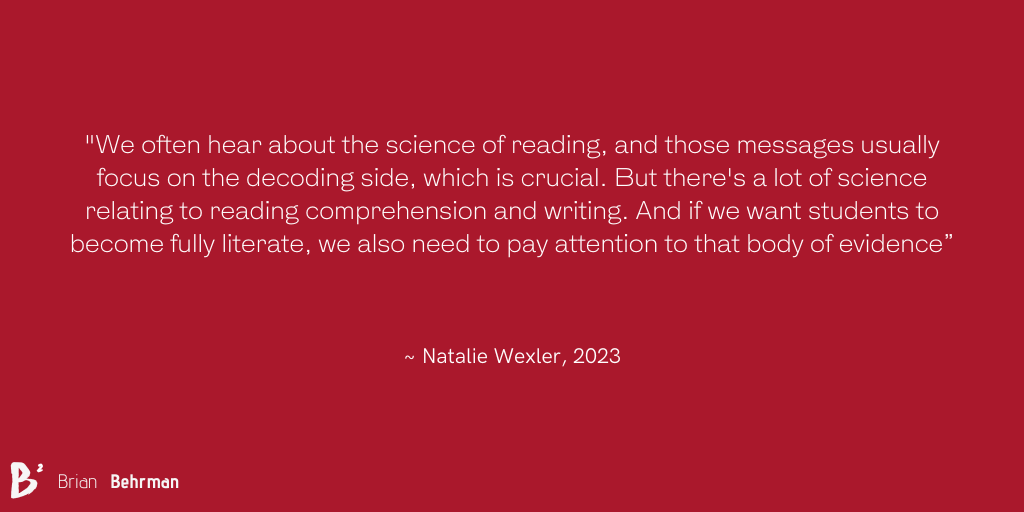
In last week’s post, I began to really dig into the concept of the purpose of reading. With our work around Science of Reading, we have really spent a lot of time, especially in our early grades, focused on structured literacy and skills like phonemic awareness, phonics, and decoding, but as Natalie Wexler reminds us:
What I was focused on in my last post (which you can see here) is digging into the idea that the ultimate purpose of reading is to comprehend the words that are on the page. At a conference I recently attended, Anita Archer shared the four things that all students must be able to do in order to comprehend:
Read the words accurately and fluently.
Understand the meaning of the words.
Have adequate background knowledge.
Focus attention on critical content.
Last week, I focused on the idea of accuracy and fluency. Today I’ll be digging into the idea of understanding words. In future posts, we’ll dig into building background knowledge and focusing on critical content.
As you know, I always love to understand the why behind what we do, so what does the research say about understanding the meaning of the words in relation to comprehension? I think we can all agree that vocabulary is related to reading comprehension. In fact:
“…one of the most eduring findings in reading research is the extent to which students’ vocabulary knowledge relates to their reading comprehension.”
~Osborn & Hiebert, 2004
I think we’d all agree that for our students to be able to read fluently, they need to know the words that they are reading. When our students don’t know the meaning of a word they are decoding during text reading, they must use context to figure out what the words mean. This added cognitive load takes away from fluency – one of the things that must be in place for solid reading comprehension.
There are several ways we can make sure that our students have that strong foundation in their vocabulary. Anita Archer suggests the following checklist to help build vocabulary:
Use high-quality classroom language.
Consistently use academic language.
Read narrative and informative read-alouds in primary grades.
Promote wide independent reading.
Teach word learning strategies (context clues, morphemes, and resources like dictionaries, thesauruses, etc.).
Explicitly teach critical vocabulary terms.
Over the years, I’ve spent time sharing about the work of John Hattie. His research says that vocabulary programs have an effect size of 0.67 (that’s pretty high, and definitely above the “hinge” point). In fact, Bob Marzano says:
“Direct vocabulary instruction has an impressive track record of improving students’ background knowledge and comprehension of academic content.”
So, what might a vocabulary instructional routine look like? This is the format that Archer suggests – just like with any other part of the five pillars of reading, it should be systematic and explicit. To do that, we should introduce the word, introduce the word’s meaning, illustrate the word with an example (and non-examples when it’s helpful), and then check for understanding. Let me take you through those steps a little more in-depth:
Step 1: Introduce the pronunciation of the word: You should display the word in some way, maybe on the screen, written on the board, or on chart paper. Then, read the word to the students and have students repeat it. With multi-syllabic words or more difficult words, repeat it several times. You might also have students read the word by parts, tap the word, etc.
Step 2: Present a student-friendly explanation: Tell the students an explanation, or have the students read an explanation with you. This might include using the word in a sentence, providing synonyms or antonyms, etc.
Step 3: Illustrate the word with examples: You might use concrete examples like having an object or acting the word out. You might use a visual example like an image or picture. Or you might use a verbal example to explain the word.
Step 4: Check students’ understanding: You might choose to do this in a few ways. You could ask deep processing questions, give the students think time, and then ask partner A to tell partner B. You might have students discern between examples and non-examples, so you might share a sentence and then ask students to say whether it is an example of the word or not. A third way you might check for understanding is to have students compare the vocabulary term with another term. You might have partner A share examples of ways the words are similar, and partner B share examples of ways the words are different.
Linnea Ehri tells us that if words have been read before and stored in memory, prediction strategies are not required for a reader to decode. When we can introduce difficult vocabulary words to our students in an explicit way before teaching, then our readers are better able to focus on their primary task in reading, comprehension.
What strategies have you tried in building vocabulary with your students? What has worked well? What hasn’t? Let us know your thoughts in the comments below!
At the beginning of the month, I had the privilege to attend The Reading League’s 7th Annual National Conference in Syracuse, NY. I went with several others from our district. The goal of the conference is to develop a deeper understanding of the science of reading and learn about the implications for teaching and learning. In the coming weeks/months, I look forward to sharing with you some of my key takeaways from this conference. There were several amazing presenters!
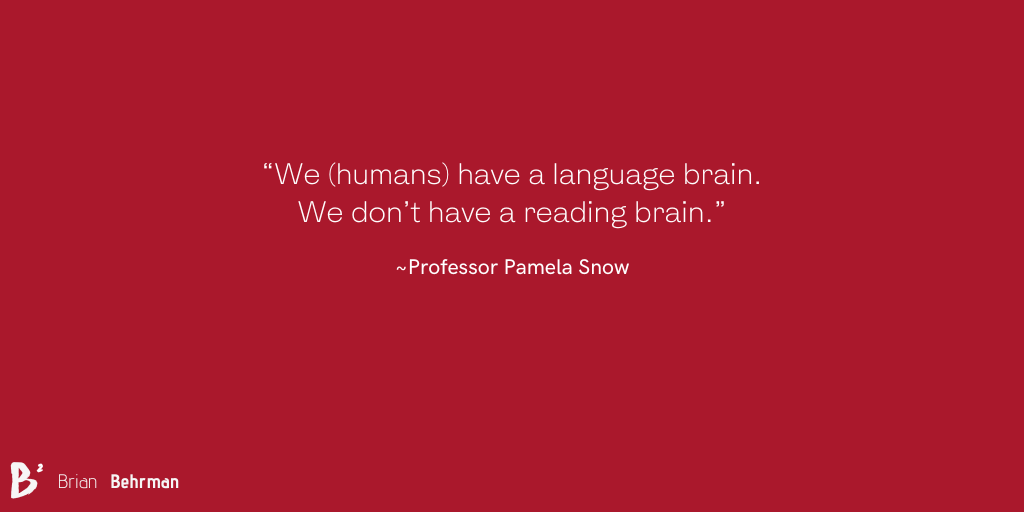
One of the first sessions I attended was led by Pamela Snow. She is a Professor of Cognitive Psychology Much of her work is centered around the early transition from language to literacy and the ways this transition is supported in the classroom. In that session, she reminded me of something that I shared in our recent PD on the Science of Reading – Human brains weren’t originally meant to be a reading brain.
The chart below was one she shared during her presentation and served as a good reminder that less than 3% of human existence includes the use of written language.
What’s important for us to keep in mind given this information is the reminder that Language is a paradox (this theory comes directly from Pamela Snow) – “Humans have evolved a special facility for oral language, such that it is innate (biologically primary). We have a “language instinct.” However, it is highly vulnerable to a range of developmental conditions (e.g. hearing impairment, intellectual disability, autism spectrum disorder, brain injury, or developmental language disorder). For humans, language is highly sensitive to environmental exposure.”
At times, when a reader is struggling with transitioning from an oral language structure to learning to read a written language structure, or as a student expands their reading skills beyond the oral language skills they have been exposed to, students may struggle with their reading. Literacy (reading and writing), builds upon oral language skills (vocab, speaking/conversation skills, syntax, phonological/phonemic awareness). When students lack language comprehension (remember the reading rope?), they will struggle to read fluently, which will impact their reading comprehension.
Readers with strong oral language abilities are more likely to develop strong reading abilities. Those strong reading abilities in turn will increase a reader’s vocabulary and background knowledge, which will further strengthen their reading abilities.
So what does this mean in practice? It means that our classrooms need to not only be a literacy-rich environment (lots of reading and writing), it also needs to be an oral language-rich environment (listening and speaking). Whenever possible, for all levels of readers, we can strengthen oral language skills by building opportunities for conversation, narrative discourse (think storytelling), procedural discourse (explaining a procedure), and expository discourse (informative or persuasive). Ultimately we can think of the oral language as the engine of literacy skills, while high-quality instruction in language development and reading is the fuel for success.
What are some of the ways you support oral language in your classroom? Share your thoughts and ideas in the comments below!
Far too often in education, we spend time thinking about a question. It’s a question that will sometimes cause stress. It will sometimes lead us to look for new programs or resources. And at times, it creates overwhelm because we then feel like there is too much to do. The question I’m thinking of is “What more should we be doing?”
Depending on your perspective, that question may not feel like that big of a deal. But here’s the issue, if we always ask about what we should be doing more of, we end up with so much to do that we aren’t able to do any of it well. We can’t sustain the practice. Adam Welcome loves to talk about how schools in general are really good at collecting programs and things, but they are really bad at getting rid of those programs or things that are obsolete. This is something that I have definitely noticed (I have seen your pile of textbooks from 3 adoptions ago that you just can’t bring yourself to get rid of!).
The other issue I see with asking about what more we can do is that it leads us to a deficit mindset. That’s the thinking that leads us to only focus on the things that aren’t going well or the things that we can’t do enough of. Deficit thinking leads to a sense of hopelessness before we have even started anything.
One of the pain points that I have noticed in my time as a leader is that every spring and summer, I spend time with our leadership team. We look at the data we have, the growth we’ve made, and the areas to target for continued growth. Based on that information, we develop a school improvement plan that is focused entirely on the data that we can connect to the learners that we know in our building. Then, invariably, we come together at a beginning of the year administrative meeting, and there seems to be some new initiative or some new curricular resource that must be added to our plans. When that happens, the intentional design of the school improvement plan that was developed as part of our thoughtful work must be either revamped or potentially scrapped for a period of time.
I do have one quick caveat since I know that some of the people who read this blog are colleagues of mine, or maybe even are among the group that sometimes brings those initiatives to us… Oftentimes those initiatives involve us in doing good work that is for the benefit of our students, but it sometimes feels for the leaders in the buildings that we have now been given one more new thing to cram into the already busy schedule of the school year PD plan.
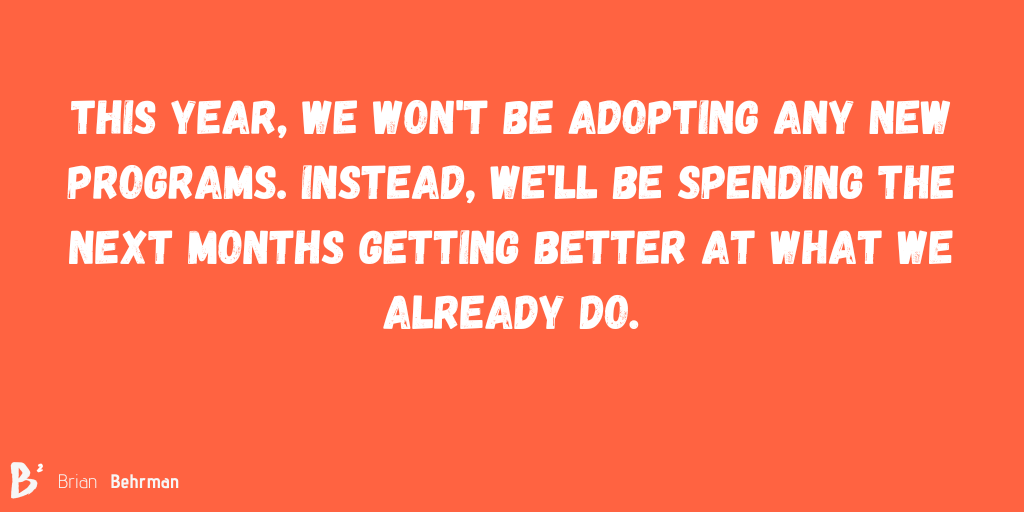
So, imagine if you could, hearing the following statement at your back-to-school meeting:
Much like Chris Lehmann, I believe that “Schools are better when they create spaces and expectations for reflection.” A formalized process for reflection is a necessity. This reflection can certainly occur as an individual, but I think the power of the reflection comes from when you are able to chat with others about what happened in your classroom, how the students responded to the learning opportunity, and what your data shows you about student learning and growth.
This is why I see such value in the PLC process. It’s the perfect place for the reflective process to take place. The four key questions of the PLC guide us toward reflection on a question that is much better than the one I mentioned at the beginning. Instead of asking ourselves “What more can we be doing?” we should be asking “How can we do what we’re already doing, better?”
Think about the power of that mindset shift with your team. Instead of coming into a PLC meeting with a deficit mindset that might imply that we don’t yet have the tools to be successful, we come in with the belief that within our team, we have the answers to help ourselves improve. That’s collective teacher efficacy at work.
And here’s the reality of this process. Sometimes we will start with reflective practices, we will begin by trying to problem-solve within our team, and we may find that the tools we have available to us are not working. This is where things get exciting for me. Now, your PLC team can begin some work in action research. Do some professional reading, ask for help from an administrator, work with your curriculum coach, or collaborate with another team that might not be having the same problem as you. Whatever you do, find a way to keep trying until you find something that does work for your students. Again, this is not about finding something new, it’s about refining something that we were already doing, but wasn’t working as well as we’d like it to be.
Another thing to keep in mind: as you begin to refine your processes, be sure to identify the pieces that you feel are already going well. Having an idea of the things that are working will help us feel more comfortable as we make shifts in the areas that aren’t working as well. Also, keep in mind that if you try to solve too many problems at one time, you probably aren’t going to solve any of them. Pick one area of growth to focus on and stay focused on that. Remember what your team’s limitations are for time and energy!
So, the next time you are together with your team and able to reflect on what’s been happening, be sure to focus on the question “How can we do what we’re already doing, better?”
How do you think that might shift the conversations in your work? As you reflect on what you can do better, how might you use that to set your own short- or long-term goals for your own learning and growth? Share your thoughts in the comments below!
I try not to spend too much time sharing about the #educelebrities that I follow, or have had the privilege to meet, but for this week’s post, I’m back again with some more thoughts based on the day I spent recently with Cornelius Minor. One of the things he talked about was something he phrased as “The Power of the Rerun.” As a child of the 80s (I try not to date myself too much, but it’s my reality), reruns were a regular occurrence. Saturdays would often mean getting up, grabbing a bowl of cereal, and turning on cartoons. Unlike you millennials who might be reading or the Gen Z / post-millennials that we’re teaching, when you turned the TV on, you watched what was available. There were no streaming options. We couldn’t find what we wanted to watch on YouTube. Sometimes that meant watching an episode of GI Joe that you’d seen what felt like hundreds of times.
I have to be honest; I’ve always enjoyed reruns of shows. There are episodes of Friends that I have literally seen more than a hundred times, and yet I still laugh (pivot). I don’t know if I want to admit how many times I have watched the entire Breaking Bad series (probably still my favorite series of all time!), but I will share that it’s a lot!
What I love about rewatching a show is that often, I notice things I didn’t notice the first time. Maybe there’s a character that didn’t seem that important on the first watch that I now know is important later in the show. Or I might notice something that I missed in the background of a shot because I was so focused on the main action the first time. The rewatch allows me to dig a little deeper.
Now, I’m sure there are some that are wondering what in the world reruns of TV shows have to do with an education blog. This is where Cornelius comes in. While talking to us about ways we might model specific skills, he talked about the benefit of doing a reread of a text that was previously shared in class. The first pass of a story is a great time to introduce a concept or idea. If you are doing a lesson on character analysis, you might read a text where you want your students to notice what characters do over and over, so you read that text and ask students to pay attention to the actions of a specific character and ask them to think about what this teaches them about this character. That may meet a standard for you, but you recognize that your class seems to show clear understanding, or maybe even mastery right away. That might mean a reread of the book is a great time to do some deeper thinking about the text.
You see, once you’ve read a text one time, you have done most of the heavy lifting. The understanding of the story is already there. Vocabulary words have been defined and used in context. All your students have an initial understanding of what will happen in the story, so now we can go deeper.
Recently in our building, we’ve been spending a lot of our time in Professional Development focused on the power of the PLC. We’re really digging into each of the 4 key questions of the PLC. If you aren’t sure what those questions are, these are them:
What do you want your students to know? (This one’s about knowing our standards, having a map, and identifying priorities)
How will we know they know it? (This is all about how we formatively assess our students along the way, or how we summatively assess at the end of a unit so that we are ensured of student learning)
What will we do if they don’t know it? (This is about what strategies might we try during a reteach to reach a student who didn’t understand the first time)
What will we do if they do know it? (This is about how will we enrich the learning of students who seem to have already mastered the standard or skill)
So, when we think about the rerun of a text, it’s a great opportunity to approach skills that will enrich our students. What is the next level of the standard you are trying to teach? You might check the vertical alignment of your standard so that you know what your students will be expected to know or be able to do next year. During a rerun, you can push your students to a higher depth of knowledge because there is already an initial understanding.
I’d love to hear about other ideas related to the concept of a “rerun” in reading. Have you ever used this strategy? How did it go? What worked well? What would you think about differently? Share your thoughts in the comments below!
When I was younger, I used to love to watch the television show Unsolved Mysteries. I still remember sitting in our basement with the TV on, trying to figure out about these strange things that happened in our world. It was probably during the same phase in my life when I loved books like Scary Stories to Tell in the Dark. I loved these types of things for a while until I didn’t. I don’t know if any of the rest of you went through a phase like that where horror and mystery were exciting. At the point I’m at in my life now, I don’t need fear like that – I have zero desire to read a scary story, or watch a horror movie… I can’t even get into the true crime fad that so many others I know love.
But it’s interesting to think about how much fear can impact us in our day-to-day lives. Most people, like me, have decided that they don’t want to put themselves in situations where they feel scared. That is something that is also true for many of our students too – they don’t want to go outside of their comfort zone, and often will do whatever it takes to avoid a feeling of shame or embarrassment. In fact, sometimes the behaviors that we see that seem outside the norm are actually related to their efforts to avoid shame and embarassment.
I think sometimes that fear of trying something new comes from a feeling of cognitive dissonance. You may know that phrase, but to make sure we’re all on the same page, cognitive dissonance is defined as having inconsistent thoughts, beliefs, or attitudes, especially as relating to behavioral decisions and attitude change. It’s not just our students who will try to avoid feeling embarrassed – many adults will do it too. It could be relating to something in our personal life, or it could have to do with trying that new classroom practice that feels a bit out of our comfort zone.
I’ve said it before, and I’ll say it again: I believe that all schools are learning organizations. Part of what makes a school a learning organization is that all the people who come here – students, teachers, staff members, parents, etc., can learn something while they are here. So, let’s dig into that idea of learning for teachers and staff members.
A previous administrator that I worked with used to talk about being on the “growing edge.” To be on the growing edge, you must feel a little bit uncomfortable. Think about schooling – what it looks like today is different from what it looked like when I was in school, and that is different from what it looked like when my parents were in school. A schoolhouse is a place of innovation. As we learn more about how kids learn, we implement new strategies and see if they help our students. These small changes over the course of many years are part of what has caused the school to look so different than in the past. The more we know about how kids learn, the greater impact we can have on their learning moving forward.
And the things we do in our classroom, that are considered “best practice” are meant to put our students on their own growing edge. In a place where there is some feeling of being uncomfortable, they also must work to figure it out. In a lot of ways, our efforts to move our students to higher levels of thinking is considered best practice because it helps push students beyond their comfort zone. It helps them create new neural pathways in their brain, and suddenly they have learned something new!
But here’s one of the things I’ve noticed – so often we as educators will learn about something new relating to student learning, but we hesitate to implement it. Maybe we want to start implementing Universal Design for Learning, or maybe we have seen some amazing examples of Project-Based Learning out there on social media. As an educator, it might be something we’re curious about, but at the same time are relatively early in the learning process. This is where the fear of teaching can sometimes come in. Does this sound familiar: 1) I’m curious about a new strategy; 2) I have done a little bit of learning about the topic; 3) I want to try, but I’m just not sure where to start; 4) I’m worried it won’t go well; 5) I put that idea on the shelf and go back to what’s comfortable.
The thing I know about most teachers is that there are some personality traits that are similar. One of those similarities has to do with a desire to make sure that whatever we put in front of our students is as close to perfect as possible. I’m sure that there are times that I felt that way, and probably held back on some of my more creative and innovative ideas because they didn’t seem quite perfect. What I’ve learned is:
Here’s the challenge we face as educators – innovative ideas help to push learning forward for our students, but our own perfectionism might get in the way of trying something that would be a benefit for our kids. How do we balance the need for innovative ideas with our personal feelings that our school or our classroom needs to be perfect?
I challenge you to take a moment to reflect on some of your new ideas that you might have been hesitating to try. Pick one and give it a try. What’s the worst that happens? If the lesson is a flop, you can use it as a chance to model for your students that imperfection is ok. And if the lesson goes well, you might find some ways to take that idea, do it again in the future, and make some small changes to make it better.
Learning is all about being on the growing edge. Part of that cognitive dissonance comes from doing the things that scare us before we feel they are perfect. But, it’s how we learn, it pushes learning for our students, and it models risk-taking, which is something we are constantly asking our students to do!
If you’re anything like me and live in a world surrounded by elementary education, you have certainly heard about the “Reading Wars.” If you aren’t sure what that is, it’s basically a back-and-forth debate among many educators about what is the best way to teach students to read. A quick Google search will show that articles about the reading wars have been in existence for years. In a search today, I see reference to Horace Mann arguing a whole language approach in the 1800s, or Rudolf Flesch arguing in support of systematic and sequential phonics instruction in 1955. Since the 1980s, the debate has gone back and forth between explicit phonics instruction as compared to a whole-language approach. I learned to read in a school that bought into a whole language approach, but I know I had friends who struggled to learn to read that way. Personally, I started my career as a teacher in a school that utilized the Four Blocks Literacy Framework. For years as a classroom teacher, I referred to Guiding Readers and Writers by Irene Fountas and Gay Pinnell constantly (my version is marked up, dog-eared, and tabbed from years of use). Most recently, the buzz has been around The Science of Reading, which refers to the research of cognitive scientists on how we learn to read and what is needed to reach a level of proficiency.
Now, I must be completely honest here, I feel I am relatively early in my learning about the Science of Reading, and that’s not really what this post is about. I’ve been doing a lot of reading on the topic because I want to be knowledgeable, and as a former science teacher, I believe in the importance of learning from the most recent research available.
What I have learned about the Science of Reading drove me to a book by Mark Seidenberg called Language at the Speed of Sight. Seidenberg is a cognitive neuroscientist (in case you need a definition, cognitive neuroscience is the study of the biological processes that underlie human cognition – in simpler words, it’s the study of how people learn). His research has been focused on learning and early childhood development. While there are many directions that I could choose to dig deeper based on this book, the piece I want to examine first revolves around the role of teacher education as a potential lever to lead to further growth in the reading proficiency of students.
Before I dig too deeply into that, I want to say something first – I’m not sure how much I buy into the whole “Reading Wars” argument. I don’t know how we grow together in our learning when we equate something to a war. In general, based on my studies of history, there are no winners in a war. Ultimately, as an educator, I am constantly trying to grow so that I may have a greater impact on my students. One of the things that I have noticed as I dig deeper into articles and research on the “Reading Wars” is that it seems that there is little willingness to find a middle ground. People are entrenched in their beliefs about what is right and what is wrong. I have long believed in the power of growing together. At times I read and research topics I don’t completely agree with because if someone believes in that thing so strongly, maybe there is something I can learn from them, and often, I do learn something. That idea of being better together does not seem to really be in existence from the two sides of the “Reading Wars” argument.
There was something that Seidenberg said near the end of the book that stood out to me. In Chapter 12, he talks of “the absence of a strong commitment to basic science as a source of evidence within the culture of education…” He goes on to argue that this absence of science has potentially had detrimental effects on reading education. So often in education, decisions about teaching and learning are made in the classroom by teachers who truly believe that the steps they are taking will support students. Those decisions might be based on feeling, experience, or something that is working for a colleague. What Seidenberg argues is that those decisions need to be based more in the realm of science and research. But in most Schools of Education, prospective teachers were not taught to cultivate a “scientific ethos” that allows them to be able to identify meaningful and recent research, and then make teaching moves based on what the science says. I’d argue that unless you have an advanced degree in education, you probably haven’t learned a lot about how to seek out research-based tools and interventions. I know that before my master’s program, I don’t think I had a solid footing in what it meant to be an educational researcher.
I’m not ready to say that I completely agree/buy into all that Seidenberg shares about education, but I will say that this scientific ethos does seem to be lacking in some schools of education. Part of this point from Seidenberg relates to the fact that so much of what schools of education focus on is developing philosophical beliefs in educators. I know for a fact that one of the courses I took required me to write a philosophy of education. I don’t recall much work on learning how to be an educational researcher until I was forced to research while completing my master’s program.
Many in education, myself included, have defined teaching as heart work and referred to it as a craft. But as I dig more into an understanding of cognitive psychology and the study of how people learn, there are certainly some long-held beliefs of my own that I’m being forced to reflect upon because the research tells me I might be wrong. We probably can’t get by purely on feeling and heart and craft. Those things are a piece, but we also need to have a solid grounding in the science of learning as well.
So, there’s a question that I’m left to continue to reflect upon: What if educators saw education as science, in addition to craft? I believe there are some important areas that all of us as educators might be able to learn and grow.
Part of the role of educators is to figure out how to support our students who are not growing as learners in the way that we might hope they would. Maybe they are reading at a level that we consider below proficiency. When this happens, as teachers, we put into place interventions to support our students. Too often, it seems to me, we put in place an intervention based on what we “feel” might work best. But we do so without making sure that the intervention is research-based, and at times without making sure that the intervention supports the area of weakness for that student. I think that part of why this might happen is that many educators were not trained to look at the research.
In addition, many of us may not know how to do our own action research on strategies we try within a classroom. In action research, you identify a question or problem, test out a strategy, gather data, and determine if it works. In true action research, there is a phase of literature review where we try to gain a deeper understanding of research that may have already been done that is tied to our question or problem. This is where I think that sometimes action research falls apart because many educators haven’t been trained in the process of reviewing research. Our background gave many of us a solid background in philosophy, but not as solid of a background in research.
And here’s the issue – learning to do this takes time! It isn’t insurmountable, but on top of all the other things that are on the plate of teachers, it is challenging.
As I continue to reflect on these points, I’m challenging myself to find ways to support teachers in their efforts to learn about research. I’ll be looking for ways to share knowledge and provide sources of quality research. Luckily, we live in a day and age where Google allows us to find scholarly articles quickly and easily on just about any topic in education. Hopefully, through this continued exposure, we can expand our knowledge as researchers. In addition, I’ll be seeking opportunities to help guide teachers through action research of our own.
I’m curious to hear from you – what is your experience with education research? On a scale of 1 to 5, how well prepared do you feel you were to do your own research on educational tools, interventions, and strategies? If that number is lower than you’d like, what do you plan to do so that you know the decisions you make in the classroom are rooted both in research and science, as well as feelings and experience?
About a month ago, the Indiana Department of Education put on the Get Your Lead On (GYLO) conference for leaders all over the state. I heard about it, thought it looked interesting and signed up as soon as possible. I am a big fan of the learning that happens at events like this – there are keynote-style presentations, break-out sessions, and then a closing session. And of course, there’s also the time to chat with others in between sessions – those are some of my favorite moments (and best learning moments) at any conference! The first thing that I’ll say about GYLO is that it was fun!
One of the speakers that day was Todd Nesloney. I first heard of Todd as an author when I was introduced to the book Kids Deserve It! He was a teacher, elementary principal, and is now the Director of Culture and Strategic Leadership for the Texas Elementary Principals and Supervisors Association. He led the second session of the day all about Literacy.
As an elementary principal, I see literacy as the key to everything we do at school, which was in line with what he had to share. In today’s post, I want to share with you some of what I learned from Todd, as well as some next steps that I want to lead in our building.
First and foremost, Todd made it quite clear that he sets the expectation that he will celebrate reading in all that he does. Let’s take a moment to reflect on how much we use reading and writing in our daily lives – from the start of my day check-in with my to-do list to some bedtime reading, text is something that I see constantly, and it’s going to be something that our students will use throughout their lives as well. Even more reason to put literacy front and center in our schools! One of the ways that he celebrated literacy during the day was that he took small moments out of each of his presentations to do a quick book talk. He’d share a title, a bit about the author, and a bit about the story. I walked out of the day with several new items in my Amazon cart!
Next, he talked about ways that he would celebrate reading as a leader. The bullet points below are just a few of the ideas he had. I encourage you to think about how/what you might implement in your setting to celebrate reading.
What we’re reading – When Todd was an administrator, he created a graphic in Canva that he then printed out for every staff member. At the top it said “What is Mr. Behrman reading?” then there was some space, and then at the bottom, it said, “What are you reading?” The document was laminated. If you wanted to, you could print out a picture of the book cover, or you could just use a dry-erase marker to write the title of the book. This was for all staff members, not just teachers. He included secretaries, custodians, cafeteria staff, and more! This is something I hope to get rolling at my school soon!
Book Talks – Todd started adding short book talks to the morning announcements. In time, he asked teachers to share their own little book talks for the announcements. Eventually, they got to the point that students were creating book talks on the things they were reading. What better way to celebrate the reading that was happening than allowing students to share the books they loved!
Reading Photo Wall – Each time a student finished a book, they could bring their book down to Todd’s office. He’d take their picture, print it out, and then hang it on the reading wall in the cafeteria. It made reading visible to all students. What if you did this within your own classroom? Or on the wall right outside of your classroom?
Guest Readers – Anytime someone visited Todd’s school, they were asked to bring a book along. Before they did anything else, Todd would take them to a classroom and have them read their book. If someone forgot, they’d go to the library to pick out a book! A variation of this is the mystery reader. As a teacher, you can ask parents to sign up for a day to come and read. Have them share a few clues about who they are so the class can try to guess. Then, on the day of the reading, the class can find out of their guesses were correct or not.
Email signature – Those of you who are reading this blog and who receive emails from me may have noticed I already implemented this. At the bottom of my email signature, I added a place that says “What I’m currently reading:” Then I went online, copied an image of the cover of the book, and pasted it into my signature. If you notice that the same book is in my email signature for more than a few weeks, let me know you noticed! That means I’m not reading enough!
There were a ton of other ideas shared during this hour-long session, and while I’d love to share more of them, I think this is a great place to stop for now. One thing I would leave you with was what Todd shared about high-interest books:
One of the most difficult conversations for me to have with a student is when we are in the library, and I offer to help a student find a book, and when I ask them what they want to read they say something like “I need a level L book.” Where is the celebration for reading that comes from that? As a fifth grader, I read Garfield books like crazy, but wouldn’t challenge myself. My 6th-grade teacher allowed us to pick what we wanted, and I read a ton of Stephen King books. Something about the suspense kept me engaged, and I read more that year than I ever had before. Because my teacher allowed me to pick a book I loved, I became a reader who always had at least one book to read at any given time (currently I’m reading 4 different books, and will pick up a different title depending on my mood).
What are your thoughts? Do you have ways to celebrate reading that are not included here? Let us know in the comments below. We can all learn from one another!
Earlier this week, I was walking into our central office and ran into one of the other principals in our district. We were chatting about how things were going, and I just loved her response. First, she said, “I’m doing really good right now!” Then she said:
It felt like a breath of fresh air at the moment. I think we all know that the reality of working in a school can invariably lead to negative conversations. If you spend much time in the teacher’s lounge or the workroom it almost seems inevitable that you’ll get sucked into a negative mindset. That’s why Crystal’s statement above stood out to me so much. We all know that it’s easy to find things to complain about. The question is, do we put those complaints out in the world, or do we choose to hold on to them? Think about the impact of holding our complaints to ourselves!
Obviously, there are things that need to be complained about – so long as we come at it with a mindset of problem-solving. When someone comes to me seeking a solution to a problem they are dealing with, I often ask them what ideas they might have. Instead of getting sucked into a conversation about the problem, we work to create a meaningful solution.
But sometimes we run into another teacher who chooses to continue to go down that path of negativity. It seems to be unavoidable. And no matter how much we try to shift into problem-solving mode, the negativity just keeps flowing. How might we respond?
We all know that there’s at least one person that just never seems to be pleased – kids aren’t great, parents aren’t great, the admin isn’t great, but complaining about any or all of them can be good – at least for that person. When I think of my past, there have been some people like this that I’ve worked with. And the reality is, maybe it’s not a person at school. When I think back on those people from my past, I could almost always identify something positive about them, but I also knew that they could steal my joy! In fact, one of my previous administrators said to me once, “If you tell that person to stop being a joy stealer, I’ll give you a Starbucks gift card” after I was seeking advice on what to do.
For most of us, when we see the joy stealer coming, we’ll just try to avoid them. Or worse yet, we might even engage in some of those negative conversations. We probably know it’s not right, but as the saying goes, “It’s easier to go along to get along.” A lot of the time, we go along because we don’t know what else we could do or say. Todd Whitaker has some thoughts on how you might respond to these joy stealers, or as he calls them “Negative Nelly (or Nelson).” In the book The Ten-Minute Inservice, Whitaker has a section all about improving school climate. One of the chapters is called “Dealing with Negative Co-Workers.” Here are a couple of his suggestions with some additional thoughts from me:
“I love that student.” There is nothing that takes the air out of the sails of a joy stealer more than saying that you love the student they are trying to complain about. Even if you don’t really know the student, you’ve just let the joy stealer know what your beliefs are about students. Conversation over.
Then there’s the situation where a teacher seeks out the teachers of his/her former students to “warn them.” So, what could you say? Here’s the response Whitaker offers: “Thank you so much for telling me about these students. These kinds of students are the reason I became a teacher. You obviously must care about these students a lot to have taken time out of your busy schedule to speak with me about them. I’m so glad they are in my classroom. They definitely need loving caring teachers like you and me. I’ll keep you posted on their progress.” Think about how that might diffuse your joy stealer!
Gossip – the joy stealers always seem to be in the know of all the gossip. If they come up to share, you can always say “I’d love to chat, but I’m in a rush. See you later.” Then, walk away. If this is how we all respond to the joy stealer, they can’t spread the gossip. Or maybe they’ll go try to find an ear that will listen.
I often find that joy stealers like to spend time complaining about parents as well. A great response might be to say, “Our students are so lucky to spend so many hours with positive people like us.” Again, total deflation for the joy stealers.
As you reflect, do a quick self-assessment. Where do you find yourself on the scale of joy stealing? Are you a total Negative Nelly (or Nelson)? Or do you work hard to seek out the positive spin on any situation? As you assess yourself, think of where you want to be. Nobody I know likes dealing with a person who is always out to steal our joy. Working in a school is a hard enough gig to begin with. We don’t need to be adding to it by stealing the joy of our colleagues, and you don’t have to listen to someone who wants to steal your joy.
Ultimately, school climate is about what each one of us chooses to make it. No leader, no single teacher, and no one person can change the climate of a building. It takes a collective effort to create an environment that we all want to be in. So, when you are next asked how things are going, think of Crystal’s words: “I could probably find something to complain about, but I’m not going to.”