The “Typical” Day

What does a typical school day look like?  Get to school on time, go to class, sit quietly, do your work, write all your answers down, listen and take notes, leave at the end of the day, do more work when you get home.  This sounds pretty routine, and is exactly the model that Ken Robinson was arguing against in his “Changing Education Paradigms.”

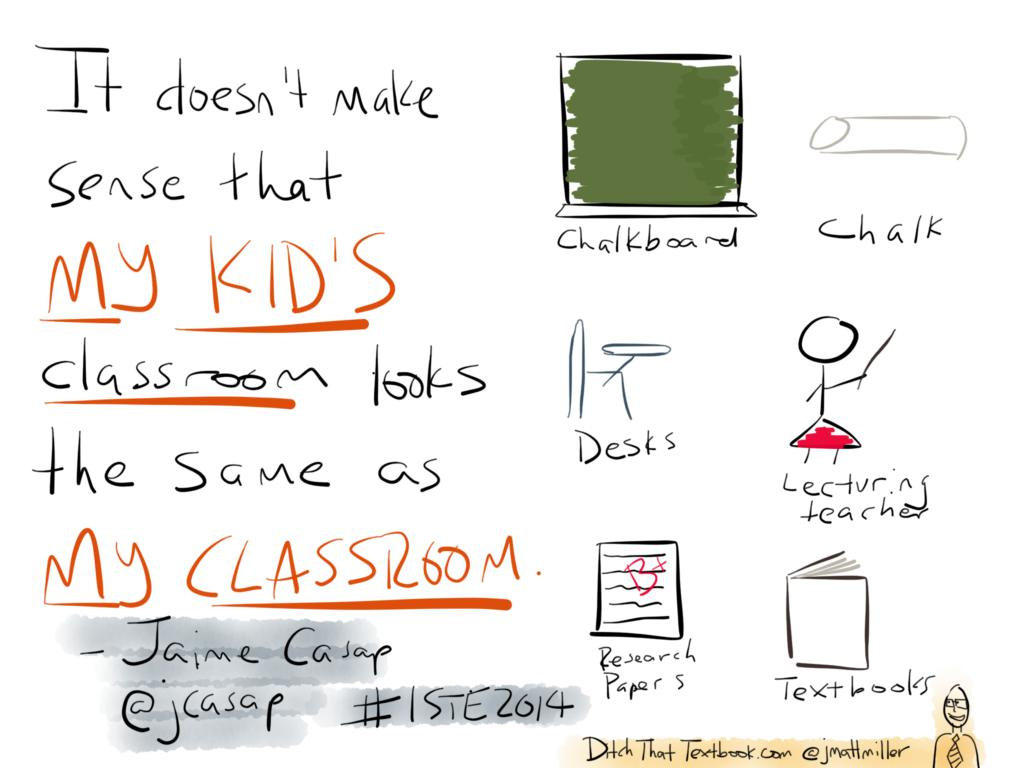
Matt Miller - https://www.flickr.com/photos/126588706@N08/14562421540/in/photostream/
Matt Miller – https://www.flickr.com/photos/126588706@N08/14562421540/in/photostream/

In a recent MIT study, researchers identified two categories of work that have been in a fairly consistent decline since 1960.  Those are the jobs that are defined as routine and manual.  The jobs that have been growing are the non-routine tasks.  Those are the tasks that require problem-solving, intuition, persuasion, creativity, situational adaptability, visual and language recognition, and in-person interaction.

In our school improvement plan we say that engagement and inquiry should be in the forefront of our planning.  I believe that it is much more important for our students to know how to ask the right questions, and then how to find the answers themselves, rather than simply answering the questions we ask.  In the book Future Shock, Alvin Toffler said “The illiterate of the twenty-first century will not be those who cannot read and write.  The illiterate will be those who cannot learn, unlearn, and relearn.”  This applies to education just as well as it does to any other part of society.

Matt Miller https://www.flickr.com/photos/126588706@N08/14562423080/in/album-72157645530010989/

I think that as teachers, many of us think that our classroom should somehow resemble the classrooms of our childhood.  When I first started in education, I thought it was a good thing for my students to be quiet – especially when my principal came in the room.  Now I don’t feel that way.  When a classroom is silent, my first reaction is “are they taking a test?”  Collaboration and problem solving rarely involve silence.  I’m not saying that it should never be silent in a classroom.  There’s a time and a place where that is necessary.  However if we are trying to meet the concepts of the Best Practice Model, should it be silent most of the time?

Reflect on your own classroom.  What does your class look like most of the time?  What changes have you made, or will you continue to make, in order to help your students be ready for the non-routine tasks of their future?  In the comments share some of the things you’ve tried before, or share something that you feel like you want to try soon.

Focus on Student-Centered Activities

Last week I shared a TED Talk from Sir Ken Robinson.  In that video he talked about the factory model that some schools have become.  Our students can be really good at playing the game of school here at RSI, or in junior high, and possibly even in high school.  By playing the game of school I mean finishing homework, not causing issues in the classroom, and being what would generally be considered a “good student” in the old factory model of education.  But when they go on to college, or when they are out in the real world, those students who played the game are not ready for real life.  Know this: Homework completion in fifth and sixth grade are not a sign of success in the future – I consider myself a walking example of that statement.  When graduating from college, our students may have a degree that they don’t really know what to do with, and send out resumes that put them into jobs that they do not find inspiring.

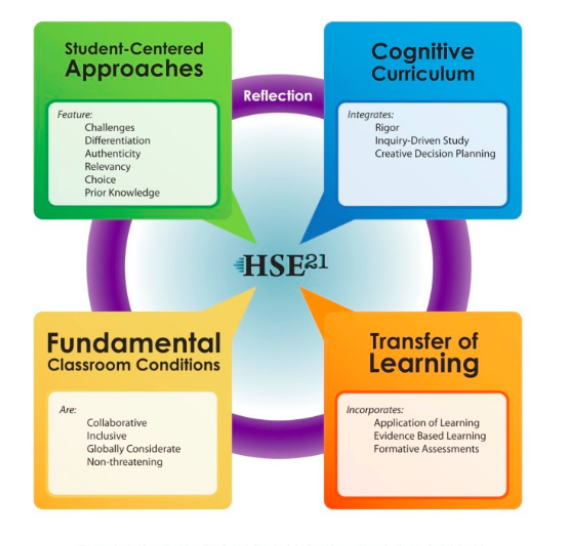
http://www.hse.k12.in.us/resources/pdf/ADM/academics/hse21/best%20practices%20model.pdf

The best way we can break this model is through providing more student centered approaches in our teaching (think back to the post on the HSE21 Best Practice Model).  When students are investigating things that are high interest to them, they find passion and purpose in their learning.  When students want to learn more about their passions, they need only type a few key words into Google.  Through that search they can be directed to pages of information, videos, pictures, and blog posts that may help them learn in a way that fits their learning styles.

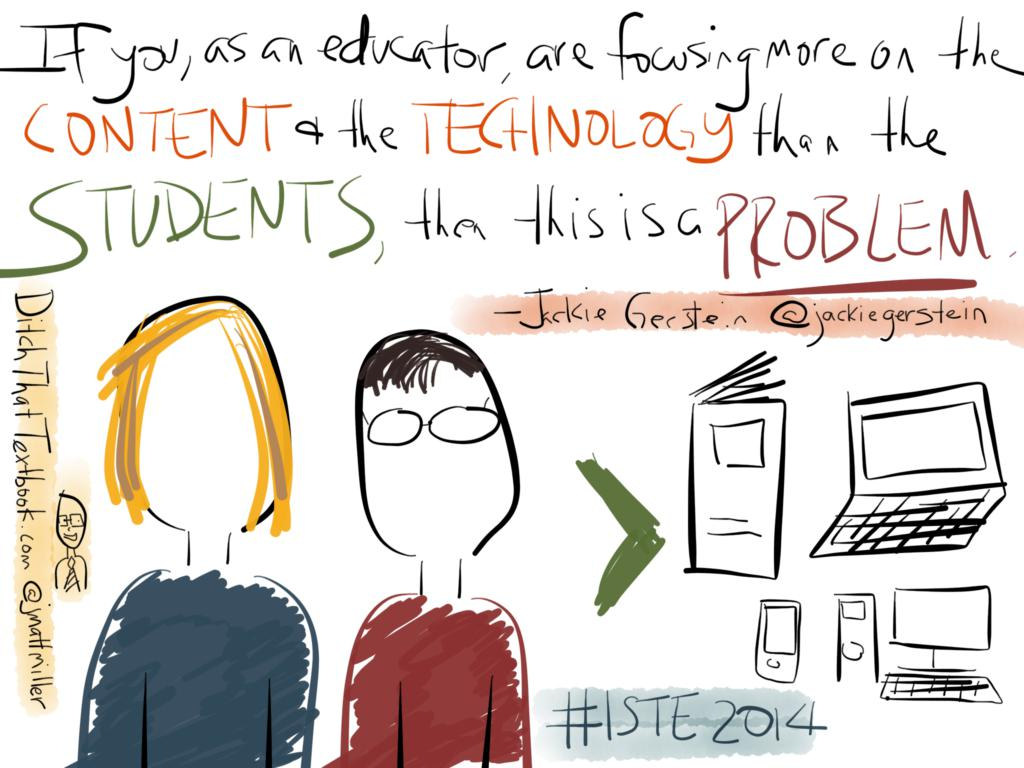
Matt Miller - https://www.flickr.com/photos/126588706@N08/14726101996/in/album-72157645530010989/
Matt Miller – https://www.flickr.com/photos/126588706@N08/14726101996/in/album-72157645530010989/

Through integrating the Internet and online tools, you can help students realize that there are things in the world that they want to explore.  You can help provide them with that spark that may ignite their passion.

In what ways have you tried to factor in your students own curiosity in your classroom?  When you try to be more student centered, what do you notice about classroom engagement?  Share some ways that you have tried to keep learning and teaching “student centered” in your class.

Sir Ken Robinson!

Sketch of Sir Ken Robinson

Many of us have seen the TED Talk by Sir Ken Robinson titled “Changing Education Paradigms.”  It is a talk that I find myself going back to again and again.  Early in the talk he shares the story that kept many of us in school.  That story was that “if you worked hard and did well, and had a college degree, you would get a job.”  He goes on to say that in today’s world a college degree, while it does generally make you better off, it doesn’t guarantee a job anymore.

For this week’s PD, I am going to share a link to that video.  The run time is just under 12 minutes.  Don’t be surprised if, like me, this video sends you down a wormhole of other talks by Sir Ken Robinson and some other speakers who are working to transform teaching and learning.

Did you come across any nuggets of wisdom that will transform something that you do in your classroom?  Share your thoughts in the comments below.

If you’re interested in more, I included links to a couple other Ken Robinson TED Talks (I love them all!):

Bring on the Learning Revolution!

How to Escape Education’s Death Valley

Technology to Make Life Easier

Last week I talked about how living in a digital world makes it easier to connect with people all over the world, or in your own backyard.  In addition to allowing us to communicate so easily, technology can make us all more efficient.  While there are times that technology might seem to make life more difficult, there are so many benefits that it’s hard to ignore.

Its easier to go down a hill

Here are just a few ways that tech can help us transform teaching and learning:

-Field trips – instead of spending weeks planning and preparing for a field trip (think scheduling the trip, collecting money, permission slips, scheduling buses, etc.) you can create a field trip experience during a class period without leaving the room. Skype or Google Hangouts can let you chat with people almost anywhere in the world.

-Grading – instead of sitting at your desk with a stack of papers, you can use online methods to assess your students. In the case of simple assignments, they can be auto-graded through apps and websites.  Something more complicated can be assessed and returned to students anytime of the day.

-Materials – no more digging through file cabinets, folders, or binders. Now you can do a quick keyword search in Office 365 or Google Drive to find the document you need.

-New ideas – you don’t have to spend hours flipping through books to find new ideas, now a quick search on Google or communication through social media could come up with new ideas in a matter of minutes.

To understand their world we must be willing

Those of you who know me well know that I am pretty “techy.”  If any of the ideas above sound like something you’d like to learn more about, let me know.  I can help you find resources to use the digital world to allow yourself to be more efficient.

What tech have you used to make life easier in your classroom?  Share some ideas in the comments below so that others can learn from you!

Best Practice Model

In the book The World is Flat, Thomas Friedman says that “today’s workers need to approach the workplace much like athletes preparing for the Olympics, with one difference. They have to prepare like someone who is training for the Olympics but doesn’t know what sport they are going to enter.”  When we look at the HSE21 Best Practices Model below, HSE has all the parts necessary to develop students who are prepared for an unknown future.

Best Practice Model

A lot of people immediately think of HSE21 as being all about a device.  This is a misconception that we need to move past.  When the HSE21 team created the best practices model, their ideas were based in transforming learning and teaching to better meet the needs of our world.  Past models of education were focused on rote learning and memorization because our economy needed workers who were able to complete repetitive tasks successfully.  In today’s job market, employers are looking for workers who can problem solve, think creatively, and work collaboratively.  By using the best practice model above, we can help our students be more prepared for whatever role they may take in the future.  It’s about getting our students to think about the big changes that they can help bring to our future.  Check out this video on Moonshot Thinking to see some examples of problems that people are thinking about now:

If you haven’t already done so, print out a copy of the Best Practice model and keep it by your plan book.  As you create activities, don’t worry about hitting all the Best Practices, but rather be thinking about what you can add to the activity you are planning so that you are including some of the HSE Best Practices.

What new things have you tried recently based on the Best Practice model?  What activities are you planning to do that are new and exciting?  Leave a comment below, share it with a colleague, or tweet it out to the world!