The Novice to Expert Continuum

I’ve recently been reading the book Just Tell Them: The Power of Explanations and Explicit Teaching by Zach Groshell. I see it as something of the convergence of the work from John Sweller on Cognitive Load Theory and the work from Anita Archer on Explicit Instruction. I’ve been really enjoying the book, and I highly recommend it as a way to reflect on how you explain your instruction to your students. Plus, it’s a speedy read! 

I often think of people as either novices or experts, almost as if they are binary. But what I hadn’t thought about carefully enough that Groshell calls attention to is that the transition from novice to expert really exists along a continuum. The reminder about the needs of learners based on where they are in the learning process was probably one of the greatest aha moments for me. Let’s dig into that a little bit. 

As a former science teacher, I will use an example of something that I often felt all of my students came to me as something of a novice at: using the triple beam balance to measure the mass of objects. We would learn this skill early in the year because many of the labs we would do throughout the year would require using the balance and getting accurate mass measurements. In case you’ve forgotten what a triple beam balance looks like, the ones we used in my classroom were practically identical to this: 
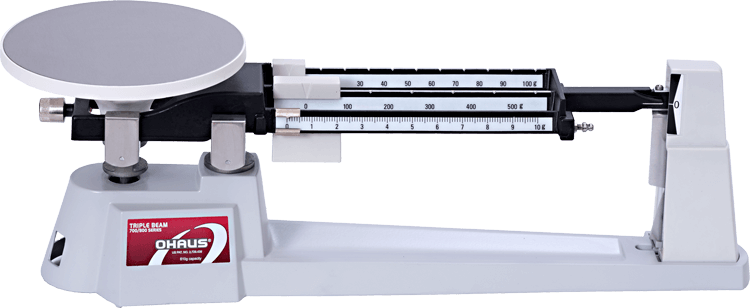
When we learned to use the triple beam balance, I would often take one of our balances, show our students how to “zero” the balance, and then take a random object to find the mass. To build background knowledge, we’d talk about how many people had ever used a scale that you had to move the weights (when I was in the classroom, most doctor’s offices still had that type of scale, not the digital ones that are everywhere now). Then, I’d explain how the balance is similar. 

To allow everyone to see the process, I’d place the balance on my document projector and use it like a camera to project the steps on the screen for all to see. First, I’d take my object and place it on the pan. Then, I’d explain that you start by moving the 100 g mass. Once it gets to the point where the balance goes down, you go back to the previous notch. Then, you move to the 10 g mass. Once the balance goes down, you go to the previous notch. Finally, you slide the 1 g marker until the balance is zeroed or the marker on the right points to the 0 mark. That would tell us that the object’s mass is the same as the mass we moved on the balance’s three beams. We would then add up the 100 g mass, the 10 g mass, and the 1 g mass rounded to the nearest tenth of a g. We’d do a couple more examples with objects I had on or around my desk. I might have students say what step to do next, but I was still moving the masses on the balance, although they could see it on the screen. 

After a few samples, I’d have one member of the table group come and get a balance with a few objects on a tray to bring back to their table. Then, I’d set them free. And that is where I made my mistake. Invariably, table groups would have a hard time. One group would have an issue, so I’d have to answer those questions. While I was helping that group, other groups would have problems, but with nobody to help, learning would break down, and engagement would break down. The different groups were entirely disengaged when I finished with the first or second group. Potentially, there were behavior issues. Kids were frustrated because they “couldn’t get it.” I would see kids from across the room doing things in the wrong order but couldn’t do anything about it because I was stuck at this table helping this group. 

In retrospect, I see the error of my ways. I went directly from the “I do” modeling portion of my lesson to the “You do” portion. I skipped the “We do” portion and jumped directly from the novice to the expert stage, but my students weren’t yet experts. Insert face palm emoji here! 

If I could go back, I’d do the task differently. I’d still model the task in the “I do” stage the same way. Nothing seems wrong there. However, I need to strengthen the “We do” portion of the lesson. To do that, each tray would have identical objects. That way, I would know they had the same mass. This would allow me to do a completion problem, where a portion of the task is shown to them, and then they need to finish the final step to find the answer. For the triple beam balance, I’d show them (and have them follow along on their own balance) what to do with the 100 g mass, then the 10 g mass, and then have them use the 1 g mass to find the result. We’d use something like a whiteboard to write our answers, then use a “3… 2… 1… show me” to quickly check how people did. I’d be able to see if any groups were way off that needed additional support, if we were ready to pull back on support as a class, etc. Over time, I’d fade the support, adding more steps they would complete on their own, eventually getting to the point that students were working in their groups, finding the mass of objects they selected around the room, and then having me check their work. 

Chances are, this process would take more than one day to play out, but by following a similar process, I’d build a stronger understanding of the task at hand. What I found in my old methods was that I often had to reteach the triple beam balance every time we used it because the methods I used never got my students to master it in the first place. By taking a little more time the first time and ensuring we all get to mastery, we might not have to spend as much time on a reteach the next time we pull out the triple beam balances.

Do you ever find that with something you teach, you have to reteach every time you come back to it? Maybe you need to rethink the gradual release of the task in your teaching to get your students to mastery in the first place. 

This is a sign of our rush to get to letting the students “do the work.” And trust me, I get it! We want them to be able to do it! But what is the cost of letting them do it if they cannot do it correctly? They might practice incorrectly and solidify their understanding of an incorrect method, making your job harder to reteach. Or they might become frustrated and just start to believe “I’m not a ____ person” (fill in the blank with the appropriate subject area). By remembering this concept of the novice to expert continuum, slowly fading our support, and providing models that students can go back to, they are better able to figure it out. 

My favorite suggestion from this section of Groshell’s book was the idea of a completion problem. Imagine math class with a problem that takes 4 steps to solve. In a completion problem, you model steps 1 through 3 for your students and then ask them to do step 4 on their own. After you have mastered that step, you fade the support by modeling steps 1 and 2, asking the students to do steps 3 and 4 independently. With mastery, you fade to only modeling the first step. Eventually, you get to the point where you do not complete any of the steps because your students know how to do the entire process. When we explicitly teach math (or anything), it becomes easy for our students. If you have students take pictures of these models, or you take pictures on your own and then put them on Canvas for your students, they now have a resource they can return to any time they need to remember how it’s done. I loved this idea – I often modeled problems. I frequently asked students to tell me what to do. But I never went to the level of thought that Groshell went to here. I hope it’s an aha for you too! 

So, what is a takeaway for you? What might you try to do differently in your classroom due to this post? How will you think of your students a little differently now that you know about the idea of the novice to expert continuum? Share your thoughts in the comments below! 
Foundational Reading Skills

This year has been one filled with a lot of learning about the process of reading, how children learn to read, and the knowledge of how to teach reading with the use of any good reading program. I’ve already shared a bit about my experiences at The Reading League’s National Conference, as well as items I’ve learned as part of our experience as members of Cohort 2 of the Indiana Reading Cadre. Currently, I am one of several members of the team in my building engaged in Lexia LETRS Professional Learning. In today’s post, I want to share with you one of my key takeaways from the first unit of LETRS.

First of all, what is LETRS? LETRS stands for Language Essentials for Teachers of Reading and Spelling. It’s a professional development course of study for instructors of reading, spelling, and related language skills. Its goal is to take current research on reading instruction and bridge the gap to classroom practices that allow teachers to feel confident in their instruction.

Unit 1 covers a variety of topics, and I would describe it as something of an introduction to the learning that will be happening throughout the remaining seven units. For me, the most impactful section was on the topic of how children learn to read and spell. One piece of the key takeaways is that for students to develop the skills necessary to be skilled readers, we must teach them deliberately. As I’ve shared before, in previous posts (check out my previous posts on the purpose of reading) the ultimate goal of reading is to comprehend. In a skilled reader, that seems to be somewhat automatic. Their knowledge of word recognition skills combined with their language comprehension makes it seem as though reading is an automatic process. Recent science tells us that’s not true – with the development of eye-tracking software, we know that the human eye of a skilled reader will scan an entire word in 250 milliseconds (that’s a quarter of a second!).

The research of Linnea Ehri does a great job of helping to define the stages of reading development. To learn more about the typical development of reading, check out this post from Reading Rockets here. As teachers of reading, we want to move our students to a consolidated reading practice. For most kids, this happens sometime in 2nd or 3rd grade. Often, as students are moving towards the consolidated phase of reading, and truly skilled reading, we are concerned with their reading rate, or words correct per minute. When students do not become fluent readers, it has a great impact on their ability to comprehend.

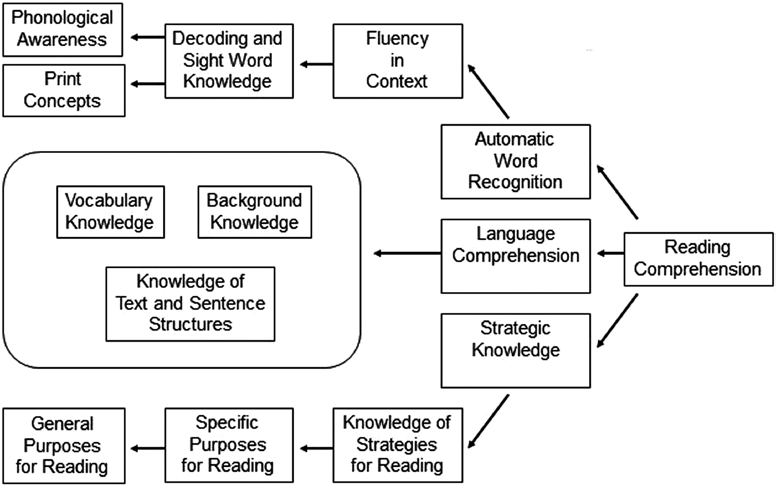
One thing that I see at times when talking with teachers of struggling readers is a focus on their inability to comprehend their reading. But what is important to remember is that most of the time when a student struggles with comprehension, there is some underdeveloped skill that must be in place to get to strong reading comprehension. Instead of using interventions to support a student’s reading comprehension, we have to identify the gaps. Is there an issue with their phonological awareness or phonics skills that impact their comprehension? Or does the student lack key vocabulary? Or could there be a lack of background knowledge in the reading topics?

To help us understand where a student is in their reading progression, tools like The Cognitive Model of Reading Assessment (see below, created by Michael McKenna and Katherine Stahl) is a great tool to think of the skills that build solid reading comprehension. I like to think of the skills as building on one another. If I have a student who is struggling with reading fluency, then The Cognitive Model reminds me that maybe the underdeveloped skill is actually in decoding and sight word knowledge. This would impact the type of intervention I might want to use for a student, as well as what my progress monitoring tool might be. If I want to identify more specific needs, I might use a diagnostic tool such as the Phonological Awareness Screening Test (PAST) or some form of a letter naming and word reading survey (LETRS has one included in their assessment resources).

McKenna & Stahl (2009)

Ultimately, we need to remember that the thing we think is the issue is not always the issue. Often, there are underdeveloped skills that come earlier in the progression of reading skills that will lead to the struggles that we see right now.

Think about a student in your class. What is the thing that they seem to be struggling with? Take a look at the cognitive model, and think about the areas that come earlier. Could you do a quick formative assessment on that skill to see if there actually are gaps there that are impacting the reading comprehension? If so, you need to take a step back on the progression. Share with us what you are thinking about as you reflect on the students you serve. Share with us how it might impact your next steps with that child.

Kids these days

For as long as I can recall, I’ve heard people talk about how kids these days are just different. I’m sure people said it about my generation when I was a kid, and now we’re adults saying it about the students that we serve. But when you stop to think about how the world is an ever-changing place, how technology leads to innovation, and how knowledge is so much easier to access, it’s not surprising to me that kids these days would be different.

This year, our school district is engaged in phase two of the Ford NGL (Next Generation Learning) Roadmap. This roadmap is all about developing a district-wide vision to help the graduates of our district be ready for college, careers, and life beyond high school. For a long time, I’ve been talking about this idea of helping to prepare our current students for their future reality, not our current reality. When we think about learning, this roadmap will help us to engage community stakeholders to plan for the future of our community.

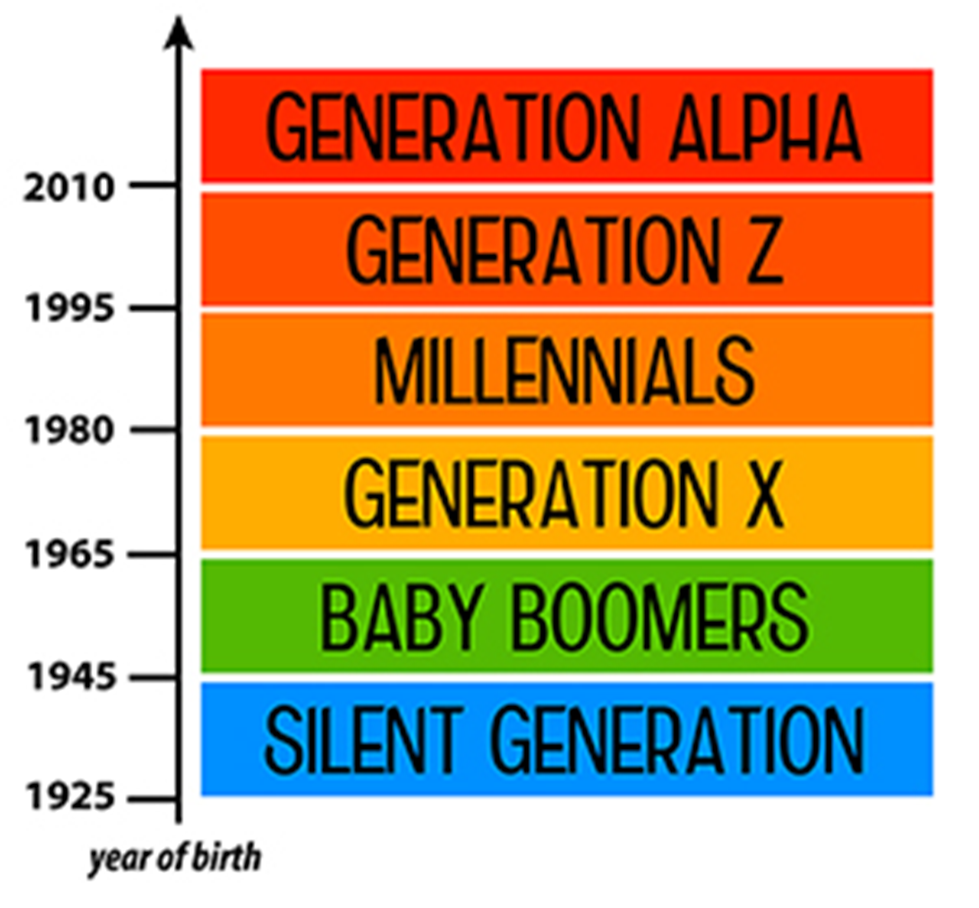
Recently, all the K-8 administrators in our district attended a two-day conference to learn more about the work we are engaged in as we begin this second phase. One of the pieces that was most fascinating to me was some discussion about generations. Personally, I am a member of Generation X. The experiences of my childhood, the time period that I grew up in, and the technologies I experienced all helped to form me into the person that I am today. What generation are you a part of?

One of the things that was shared with us was that there are certain characteristics that are generally true of most people from any given generation. Take a moment to think about how the generation you were born in might have helped to shape who you are today. Then, take a look at this graphic that will compare a bit about the different generations and the characteristics that helped form them:

As you think about your own generation, what do you notice from this chart that strikes you? I definitely noticed the Rubix cube and the Walkman, two key parts of my own childhood. The day I upgraded to the “Sports Walkman” with the yellow body and matching yellow headphones, whoa! Although I also recall the excitement of the upgrade from the Walkman to the Discman!

Now, here’s the thing, let’s think about the students that you work with most directly. If you work in an elementary setting like me, all the students you interact with on a daily basis are part of Generation Alpha. So let’s think a little bit about who they are, and then what that means for them as learners.

First, a few facts about Generation Alpha (based on the research of McCrindle and found here):

  • This is the first generation born entirely in the 21st century
  • Their lives have been shaped by:
    • A climate crisis
    • A pandemic
    • A mental health epidemic
    • Seeing their parents and relatives working remotely
    • Witness the introduction of Artificial Intelligence
    • Access to digital devices and screens their entire life
  • If current trends continue, Generation Alpha will be the most racially and ethnically diverse generation
  • If current trends continue, they will be more likely to be surrounded by college-educated adults than prior generations
  • They will be more likely to interact with peers online and through social media, which could result in shorter attention spans and impact their social formation

To go a little bit deeper, take a look at this graphic about Generation Alpha:

So let’s bring it back to learning. Now that we understand a bit about who Generation Alpha is, and what how they have been impacted by the environment, what does that mean for them as learners? According to “Understanding Generation Alpha” from McCrindle:

A shift in educational engagement is occurring for Gen Alpha, with schools switching from structural and auditory learning to engaging, visual, multimodal, and hands-on methods of educating this emerging generation.

Because their parents will indulge them in more formal education and at an earlier age, Generation Alpha will have access to more information than any other generation.

“Understanding Generation Alpha” accessible at https://mccrindle.com.au/article/topic/generation-alpha/generation-alpha-defined/

If we take all that we know about Generation Alpha, we must recognize that teaching students in the ways that may have worked for those of us in other generations will not work for today’s students. So what will education look like for Gen Alphas?

  • Skills over degrees – Just mastering a standard is not enough for Gen Alpha. They are seeking learning that feels relevant. They want skills that they know they will be able to use in their future.
  • Real-world simulations – How can we connect our learning within the four walls of the classroom to things that exist in the real world? Our students want to know that the things they are learning connect to life beyond school.
  • On-the-job training – As our students grow older, we want to seek ways to provide them learning opportunities while in the job setting.
  • Personalized learning – Choice for students will be so important! UDL helps to get us there. We want to provide choice and scaffolds in how to learn material, and then choice in how to show what they know.
  • Shared learning – Our world is relying on collaboration more and more. Shared learning opportunities will help our students be better able to collaborate.
  • Will learn at faster pace due to smart & voice tools, AI, and machine learning – As digital natives, our students understand how technology makes life and learning easier. Knowing that they have access to Google and AI tools, DOK 1 and 2 thinking will not push our students to the levels of thinking they will need for their future. We must work towards higher level thinking skills that technology hasn’t yet caught up with.

As I said earlier, our goal in education is to help prepare our students for their future. With that in mind, the most in-demand skills of the future work force include:

  • Communication – The ability to use both spoken and written communication to work with others.
  • Collaboration – The ability to develop constructive and cooperative working relationships with others.
  • Customer Focus – Actively look for ways to assist customers and clients.
  • Personal Learning and Mastery – The ability to acquire knowledge or skills through one’s study or experience.
  • Cultural and Social Intelligence – Have awareness and understanding of other’s reactions.

My hope is that you can take this post and use it as a reflection for how to shift learning in a way that better meets the characteristics of our learners. What I believe you’ll find is that as you integrate teaching methods that meet the needs of today’s generation, you will see higher levels of engagement and greater learning for our students! What ideas do you have from this post? Does the information about Gen Alpha resonate with your experiences with students? Share your thoughts in the comments below!
Memorization

Memorization

Recently, I’ve been reading a couple of different books about school design. You see, our district is working towards an expansion and renovation of our school. It’s been exciting to think about what a remodeled version of Fishers Elementary School might look like. When I learned of this process, I started a document on my desktop called “The Wishlist.” Currently, it’s broken up into 3 categories: Spaces, Environment, and Office. Much of my thought process has been about the design of the school. But this week, I finished reading a book called What’s in Your Space? 5 Steps for Better School and Classroom Design by Dwight Carter, Gary Sebach, and Mark White. One of my key takeaways was that no matter what kind of innovative thought processes are used when we design a school, if we don’t also spend some time thinking about what it means to teach Generation Z children, the school will ultimately continue to operate in traditional ways.

But why do we need to think in innovative ways at school? Today, schools are almost the only places left where students write by hand; when they are away from school, they text, type, and FaceTime. And when they are writing by hand away from school, you can probably bet that their writing is something to take back to school. We all know this, but as a reminder, our students of almost all ages constantly want to interact with technology. And related to that, their future will be filled with technology that is unimaginable today. Now, I’m guessing that writing by hand will never go completely away, but if I pause to think about it, almost the only time I write by hand outside of the school setting is when I’m leaving a note for my family or sending a greeting card to someone. That’s about it. I don’t even handwrite my grocery list anymore – I tell my Google Assistant at home what to add to my shopping list, then I pull the list up on my phone while I’m out shopping.

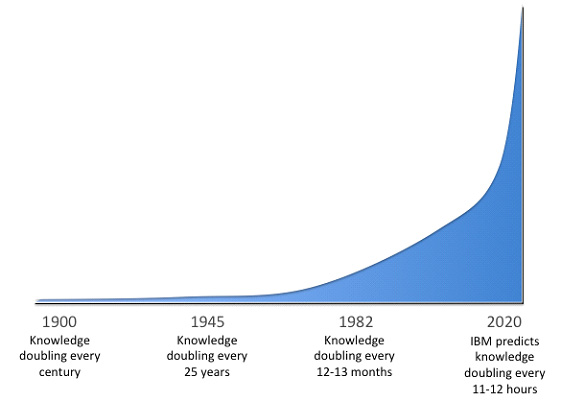
Why do we need to think about this? In the book What’s in Your Space the authors shared the results of an IBM Big Data study from 2012. That study shared that as society moved from an analog to a digital age, the time it took the knowledge to double dropped significantly. The graphic below represents the Knowledge Doubling Curve, first introduced by Buckminster Fuller, and later expanded on by research from IBM.

What this curve shows us is that the expansion of knowledge is an exponential curve. Around 2020, this meant that for each one of us, the knowledge that is available in our world more than doubles in the time that we are awake each day. That thought blows my mind! But at the same time, in our digital world, I don’t think any of us could keep up with all the posts on social media, YouTube, and other websites that matter to us, let alone the things that are not even in our sphere of interest.

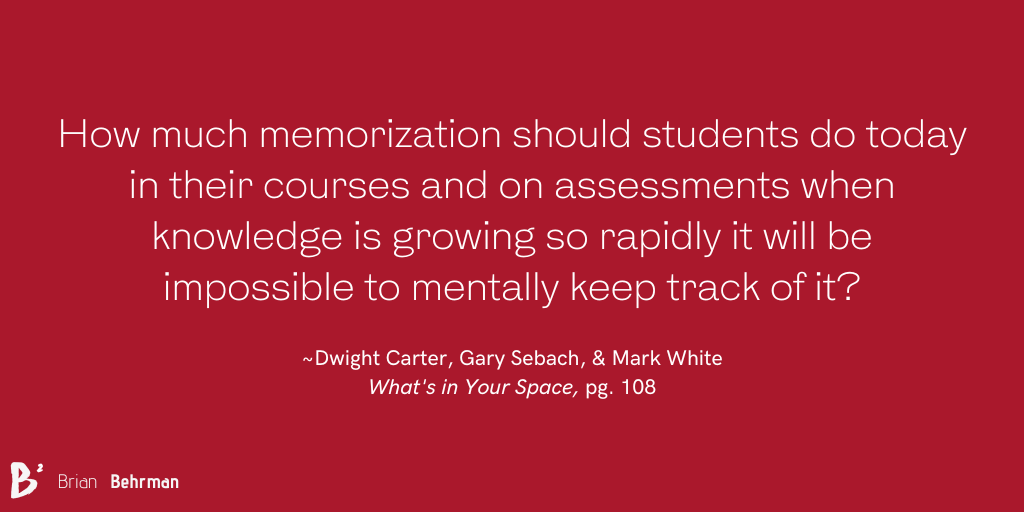
So, the question that really hit me as I neared the end of What’s in Your Space was this:

One of the things that we need to think about as we serve Generation Z is that they will not be successful based on what they know. Instead, they will be successful with what they can do with what they know.

There are some sacred cows in education – things that we feel like we must teach every year. In fact, some of our standards, especially in content areas like science and social studies, force us into teaching and learning that is based on rote memorization. One of my long-term pet peeves has been States and Capitals, maybe that’s because I struggled with rote memorization as a child and did poorly on those tests and quizzes, but I have never had a high-stakes situation where my success relied on my ability to identify the capital of Idaho, although I can tell you it’s Boise. Here’s the thing, if our assessments and our questions are asking kids things that Siri can answer for them, then maybe we aren’t pushing them to where they need to be as a member of Generation Z. And our students know that.

Everyone has access to Google these days, in fact, the number of times I pull out my phone to hop on the Google app or ask my Google assistant a question might be shocking to some of you. But I also have skills that allow me to do my job in a way that Google would never be able to do. We need to help our students be prepared to do the jobs that will exist 20 or 30 years from now, not the jobs that exist today. And the reality is that many of those jobs are things we can’t even imagine.

So here’s the challenge for us as educators – the rest of the world does not exist in these 9-month-long bubbles of a school year. In the non-education world, everything is evolving constantly, but in education, we often just look at what’s happening for this school year. We all have to be ready for continuous evolution in technology for the rest of our careers. We have to be aware of the needs of our students and their future. Every day we are surrounded by the experts of the future, our students. A willingness to ask our students “Is there a better way for you to show me what you know about this topic?” might open our eyes to ideas that never would have occurred to us.

To meet the needs of Generation Z, our pedagogy must shift. The design of a school is just one part of the process of being able to meet the needs of future generations. We must lose the fear that exists in turning our students loose on technology that we might not fully understand. Our standards, objectives, and expectations don’t have to change, but often the best learning opportunities come out of the unscripted moments in learning. Our new role is to be the guide, not the leader, and as the guide sometimes that means getting out of the way.

What are your thoughts? How has pedagogy shifted in your time as an educator? What shifts do you think still need to happen? Share your thoughts in the comments below.

Building resilience

Last Friday, I was out of my building for a professional development opportunity. Cornelius Minor, one of my #eduheroes was in town and working with teachers and administrators from across our district. Anytime he’s around, I make it a point to spend time learning with him. I’ve had the privilege to meet him on 4 different occasions, and his message always feels fresh to me. I’ve written about his visits before, and I’m guessing that this most recent visit may result in a couple of different topics to share with you. If you really want to see a bit of my in-the-moment thinking, you can check out the thread of tweets I shared while Cornelius was presenting here:

For those of you who don’t know much about Cornelius, he is a Brooklyn-based educator who still spends most days in a middle school classroom, but his skills as an educator can translate to any level or subject area. Every time I’m in a room with Cornelius, I feel like I’m with a close friend who is helping me become the best educator I can be to support the students I work with!

On Friday morning, Cornelius started the day with a guiding question for our thinking: “How can we create conditions where all kids succeed?” While he did not come back to the question multiple times, the work we were doing helped to answer that question, at least for me.

One of the standout portions of the day for me was a conversation he shared about building resilience in his students. There were three things he said that he feels all students need to know or be able to do to be resilient in the classroom. He said that all kids need to know:

  1. What learning looks like
  2. When to pause
  3. How to talk to parents about what you’re working on at home

Let me expand on each of those thoughts just a bit – some of what I share here will be based on the thinking Cornelius shared, but some will be my own thinking as I have been reflecting on the day.

What learning looks like – Think for a moment from the perspective of a student in your classroom (if you are a teacher). What must that day feel like? Depending on your age, you go from one learning activity to another, sometimes with a clear understanding of the purpose of what you’re doing, sometimes without that understanding. For our elementary students, most of these learning activities take place in the same room. For our middle-grade students and up, they may be transitioning to a different classroom every 45-ish minutes with a 5-minute break to get from one class to another. Our students might start working on reading, then shift to word work, then to writing, then to math, and hardly have a moment to pause and reflect between these transitions. In that whirlwind of a day, can you identify what the purpose of the activity is? How do you feel when your day is jam-packed with things to do? Can you remember what you accomplished during your day? I know for me, I cannot! As educators, we can help build resilience in our kids by defining what we are working on. Tonight, I asked my son what he was doing for math homework. He shared that he was learning how to figure out percentages, like adding a tip to the bill at a restaurant. I was excited about this answer because often the answer I get is “stuff” or “I don’t remember what we did today.” I must have caught him at the right moment. We can support this understanding of what learning looks like by sharing things like success criteria, or “I can” statements so that kids know what the target is for their learning and building in moments to pause and reflect in our lessons. If we think about the learning cycle, learning does not happen if there is no time for reflection. And if our students can’t share what they are learning, then did they really learn it?

When to pause – Life for a child can be a challenge, and for some of our students, these challenges can lead to a student acting out in a physical or verbal way, shutting down, or possibly even just leaving the classroom. When students notice that they are becoming dysregulated, they need tools to be able to react appropriately. If they don’t yet have the tools, we must teach them. Most of the time, there are three reasons students need to take a pause from what they are working on in class – they feel overwhelmed, they need a moment to think or process, or they need to help someone else. Often, students have not been taught yet how to pause what they are doing, so that pause may turn into putting a head down and not engaging in work, or it may result in goofing around, or worse! What students need is to know what a pause should look like. When students in Cornelius’s class need a pause, there is a three-step process: 1) Put your pencil down and find the clock on the wall and focus on the second hand. 2) Watch the second hand until it goes all the way around and is pointing at the same number as when you started looking at the clock. 3) Take a deep breath, pick up your pencil, and get back to work. And he also teaches students how to help someone who has taken a break – when they notice that their tablemate has taken a break, they can put their pencil down, watch the clock, and when their neighbor has taken a breath and picked up their pencil, they can turn and say, “How may I support you?” Sometimes kids may not be able to answer that question, but they know they have support, which helps them get regulated.

What I think we all know is that when we are feeling overwhelmed, or need a moment, we need to try to help our brain slow down. By focusing on the clock, we give our brain something to think about other than whatever is overwhelming us. During that time, we are breathing. When we stop whatever we’re doing just to breathe, the mind-body connection helps alleviate stress. Blood pressure will come down, and stress hormones are able to filter out of the brain. The pause allows us to come back closer to our baseline. After that minute, students should be better prepared to engage in their work.

How to talk to parents about what you’re working on at home – This one probably applies more to students who are in our older grades or have moved on to middle school or high school. As teachers, when we have our students take work home, we know that there is a risk that parents may help their child. Or that a parent may say “I think you should do all the problems on this page for practice” even though you have only assigned a few. If parents do the work, we don’t really know where our kids are (one of my issues with homework, but that’s a different post). When parents ask their kids to do extra work, they are taking away a child’s time to be a child (parents do this with the best of intentions, but as a teacher, I know just as well if my students understand their math work after 4 problems as I would if they did 20). Cornelius has taught his students 2 sentences that they can use if a parent is trying to help too much:

“Even though I can’t do/understand it, I know the right questions to ask.”

“No thank you, I’ve got it from here.”

Parents just want to help, but part of what we need students to learn is how to advocate for themselves. By being able to say these things to their adults at home, they are advocating for their own skills.

These are just a few ideas that came from our day with Cornelius to support resilience in our students. What other ideas might you have? Do you have ways you help build resilience in your students? Share your thoughts with us all in the comments below.

The kids we worry about

Over the past 2 weeks, I have been spending a lot of time in meetings. These meetings bring our MTSS (multi-tiered systems of support) team at school together with classroom teachers. The goal is to hold an initial meeting to review the beginning of the year data on our students. For each class, we look at the class profile on NWEA assessments, current guided reading levels, and any other data a teacher has to bring about their students. We spend time in these meetings discussing what the data tell us about our students, and how we might provide the best possible support.

We always love to begin our conversations around strengths, but ultimately, a big chunk of our time is spent discussing students of concern.

I know that when I was in the classroom, I always had a running list in the back of my mind of kids I worried about. If any of you are like me, you probably have a list as well. But what do we do with that list? After a recent learning session with Cornelius Minor, I found myself pulled back to his book We Got This, and there’s a section that caught my attention based on the conversations we’ve been having in our MTSS meetings. On page 38, Cornelius shares a resource called “Thinking About Kids in My Classroom.”

What I love about this resource, is that it takes what many of us may do – having a running list of our students of concern in the back of our minds – and asks us to make it more formal. So, here’s what I challenge you to do in the next couple of days – On a piece of paper, a post-it, the notes app on your phone, or wherever works for you, make a list of the kids you worry about. This might include kids who are struggling with curriculum, or maybe something in their assessment data is concerning, or it might be kids who don’t seem to “fit in” with the rest of your class, or maybe you see that they are acting out in your classroom. I believe there is so much power in making an actual list of the kids we’re worried about. When the list is mental, it’s easy to just forget about someone, or almost feel like you’re playing whack-a-mole with the issues that seem to be the biggest at the moment. But when we make the list more formal, when we write it down, we have to reflect on what we can do to create an environment where all our students can thrive. As I reflect on the work of Cornelius Minor, I’ve learned that maybe those students on that list are not successful because there is something about our system, the way we do school, that fails a subset of people.

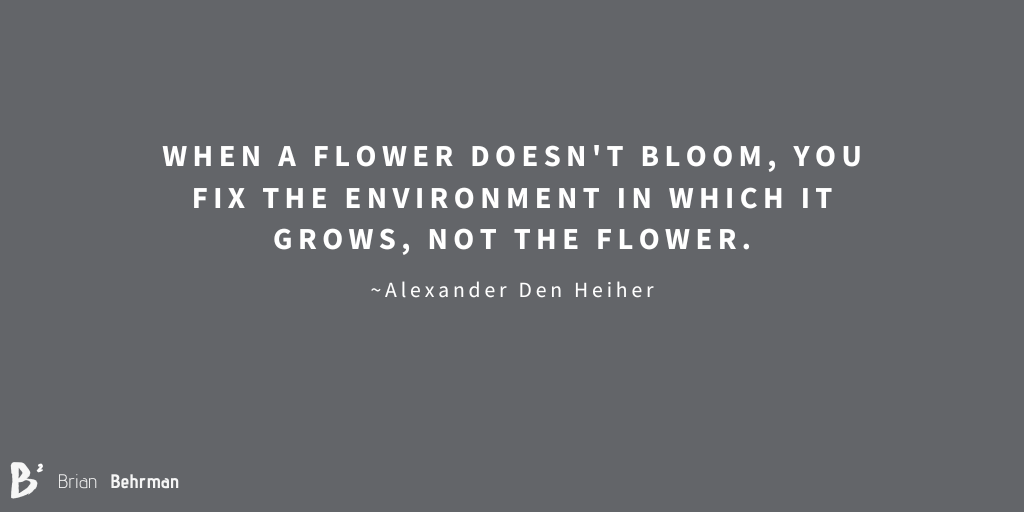
As Alexander Den Heiher reminds us, “When a flower doesn’t bloom, you fix the environment in which it grows, not the flower.” If a whole subset of our students is unsuccessful in school settings, we might need to engage in the hard work of looking at what about our environment needs to be changed.

So, once we have our list of kids we’re worried about, what we can do is think about how we might sort them into groups. Examples of groups Cornelius shares in We Got This include (but are not limited to) “kids who are below benchmark”, or “kids who are still learning English”, or “kids who can’t stop talking.” As you learn more about your students, consider all the other things these students might have in common. The more commonalities we identify, the easier some of our later steps might be.

Next, it’s important to think about what students need to do to be successful in your class. When was the last time you took a moment to define your own success criteria? And even more importantly, have you defined this for your students? If you can’t define what success looks like in your class, how could your students who struggle possibly know what they need to do?

Once you’ve defined success criteria, Cornelius asks “what barriers keep some students from achieving that success?” This is why relationships matter so much. We have to know our kids well in order to define our barriers. Sometimes identifying those barriers may mean we need to work with the family of our students.

Once you have identified some barriers, you can make a list of ways that those barriers could be removed. What could you try? What could you implement? Then, treat your ideas as little experiments. As you try things, pay attention to how it impacts your students. Does it make a difference? If not, try a different strategy to remove that barrier. If you’re struggling to figure out ways to remove barriers, seek support from a colleague. Maybe they have an idea that you haven’t tried yet! Have you ever created a formal list of the kids you’re concerned about? How has that changed the way you reflect on your students? If you’ve never utilized this strategy, what ideas or questions are you left with? Share your thoughts in the comments below!
Channeling student behaviors

It’s always interesting to me watching students at the beginning of a school year. We are already approaching the end of the first month of school here in our school district, and while many of our students have settled into the typical routine, some are continuing to struggle. I’m trying to reflect on a couple of my recent learning opportunities as I think about some of the behaviors we’ve been seeing and how we as a school might respond to those behaviors.

A couple of weeks ago, I was able to participate in a training called Restorative Leadership: Authority with Grace. Much of this training was spent learning about and then reflecting on how to lead our sphere of control in a restorative way. One basic concept that fits with other thinking recently is that we should separate the deed from the doer by affirming the worth of the individual while disapproving of inappropriate behavior. We must first see our students as people. This allows us to identify their strengths, as well as areas for continued growth. Challenging behaviors are often telling us of some unmet need, and when we look at it that way, it’s easier to separate the child and the behavior.

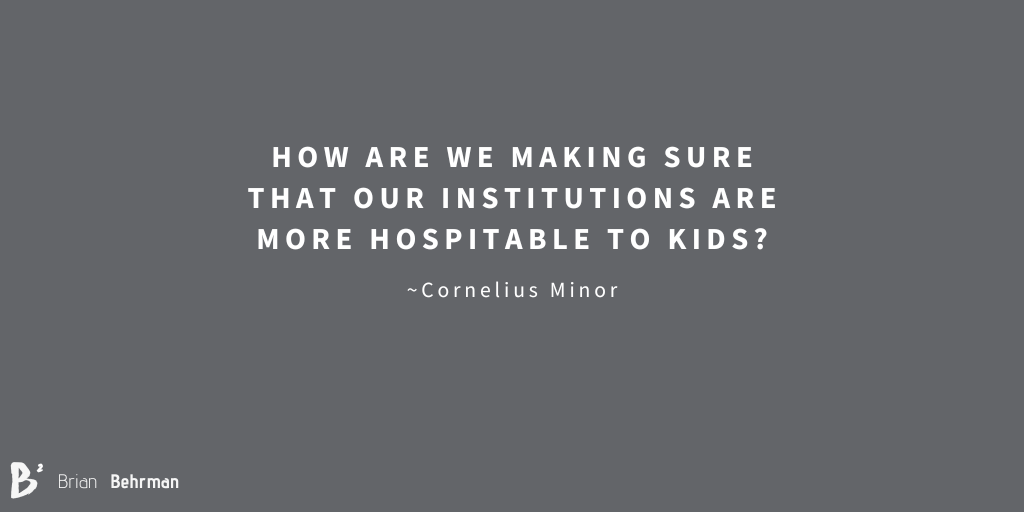
Then last week I had the privilege to spend a day learning from and with Cornelius Minor. If you aren’t sure who that is, he is an educator who is dedicated to working with teachers, school leaders, and others to support equitable literacy reform across the globe. If I had to distill my thinking about the day into one thought, it was a question he posed at one point. He asked, “How are we making sure that our institutions are more hospitable to kids?” A train of thought that I’m thinking about because of this has to do with the systems that exist within the school culture. Cornelius pointed out that in schools, some of our approaches do not see kids. Kids know that this isn’t ok, which causes them to act out. In turn, we treat kids as if they are broken, and we give them labels. He went on to share that disproportionately, this can happen to our multilingual students, our students with learning disabilities, and our marginalized populations. If we go back to the beginning of the chain and try to fix the fact that kids are not always seen or heard in the school environment, then maybe we break that chain.

Then, today, I happened to be over by the bookshelf in my office and I noticed a book I haven’t picked up in a long time. Early in my career, the members of my fifth-grade team read the book Teaching with Love & Logic: Taking Control of the Classroom by Jim Fay & David Funk. As I reflect on all these pieces of learning from my many years of public education, it keeps bringing me back to the relational side of management, leadership, and most importantly for this post, discipline.

What if we started thinking about how we handled problematic behavior differently? If the goal of equitable work in schools is to create a more hospitable environment for kids, we must go back to another one of the basic beliefs of restorative work: We respond to situations WITH people, not TO them, FOR them, or NOT at all.

As educators, we need to think of ourselves as “child watchers” who are observing our students. What do we notice about them? What makes them happy? When do they get frustrated? What seems to motivate them?

If you’d like an idea of how to keep track of the things that you are learning about your students, there are a couple of options:

  • You could use a page in a notebook for each student.
  • You could create a spreadsheet with a list of all your students and begin filling in things you notice.
  • You could use a paper with several boxes on it and use each box for a different student (this was a method I used – I would have 8 boxes per page, which meant 3-4 pages for a class).

If you notice that there is a student’s page or box that isn’t as full as the others, it’s time to create some opportunities for learning. Seek that student out for 2 minutes a day to talk about anything not related to school. It’s amazing how much you can learn in a few short stints of time.

The more we notice about our kids, the more we can use those things to our benefit. As an adult, if you have a student who talks out in class and causes disruptions, the easy solution is to remove them from their group, seat them on their own, or possibly even have them leave the room. And how does that feel to the student? That we are doing something to them, not with them. And ultimately, we must remember that the word discipline comes from the Latin word disciplina which means instruction or knowledge. Discipline isn’t about what we do, it’s about teaching how to do the appropriate thing.

What if instead, we took a moment of our day to have a conversation with a student about the impact that behavior has on the class? What if we turned it into a topic for a community circle where other students can share how talking out or creating disruptions impacts them? Next, you might be able to process with the student during an unstructured time of the day (in the hallway as you’re walking to related arts, during a passing period, or a quick chat during recess) about how their behavior has impacted others. Then, what if you find ways to feed that student’s desire to talk? Could you increase the number of turn and talks during a lesson to help that student who is talking too much? Could you make a portion of the lesson partner or group based? If you let the student know that you see what it is that they need and that you are going to try to create more opportunities for that, it may help shift the behavior. When we think of teaching as art and creation, we must ask ourselves what we can create that will support our students who are struggling.

When we create a classroom environment that provides students with a way to have their needs met, we make the learning environment more hospitable for the student that needs to talk.

Take a moment to reflect on the problem behaviors that you are seeing. See if you can piece together what the behavior is, and when it is happening. Then, ask yourself if there is a way you can take that behavior and channel it towards something more positive. In the Love & Logic mindset, this would be called providing choices within limits. We all know that there must be certain limitations within the classroom, but if we let students know when and where in their day they will be able to make choices, they should be able to uphold your expectations in other parts of the day.

And something that I want to make clear – none of what I’m saying is meant to imply that there should never be consequences for a child’s poor choices. Whether we are working from a restorative mindset, from the mindset of creating a hospitable environment, or from a Love & Logic mindset, consequences certainly can be a part of the learning process. We just need to make sure that the consequence is reasonable, natural, and appropriate. In fact, “Children will learn from their mistakes when: They experience the consequences of their mistake; and Adults in their environment provide empathy.” (Fay & Funk, Teaching with Love & Logic, pg. 37). When adults express sorrow for a student’s poor choice and the resulting consequence, children have a much greater opportunity to grow.

What ideas does this spark for you? Do you want to think about how you might react to problematic behavior? Or does this spark some questions for you? Learning happens when we reflect, so share your reflections in the comments below!

Being trauma-responsive

Being trauma-responsive

Last week, we hit a big milestone – two years since most schools shut down due to the Covid-19 virus. This anniversary had me thinking about the trauma that we have all been living through over the past two years. But I’ve also been thinking about the impact it has had on our students. We have now hit the point where school is starting to feel a lot more normal in terms of our day-to-day operations. At the same time, there is something different going on. I was thinking about the impact that the trauma of Covid-19 has had on our students in the past couple of years. I know that here in my school, we’ve been seeing behavioral trends different than anything that might have been considered “typical” for our students.

Let’s think about why that might be. In my K-4 school, the students we serve were somewhere between 3ish years old and second grade when things shut down in March of 2020. When I think about what happened to those students in the past couple of years there are several things that stand out to me. For the ones who were not yet school age, they probably missed out on opportunities to attend pre-school, summer camps, sports, and other activities outside of the home, among so many other potential events. Think about the amount of social interaction and peer-based learning that was missed! I don’t love the phrase learning loss for a multitude of reasons, but one of the things that I believe strongly about how humans learn is that it is done socially. This missed social interaction can help explain so much about behaviors occurring in kids currently. And many of our students who were already school-aged at the beginning of the Covid-19 reality also missed out on much. Along with activities outside of the school building, they may have lost connection to friends and trusted adults when school shut down. You could connect trauma to those lost connections.

Now I know, not all kids have been impacted in quite the same ways. When I walk into classrooms, there are certainly students who seem to be rather normally developed based on their age and grade level. But one of the things I understand about trauma is that the same event may be traumatic to one person, but not impact others in the same way. And another thing I understand about trauma is that those experiences change us. Trauma has an impact on our brain chemistry, it leads to bottom-up control in our brain.

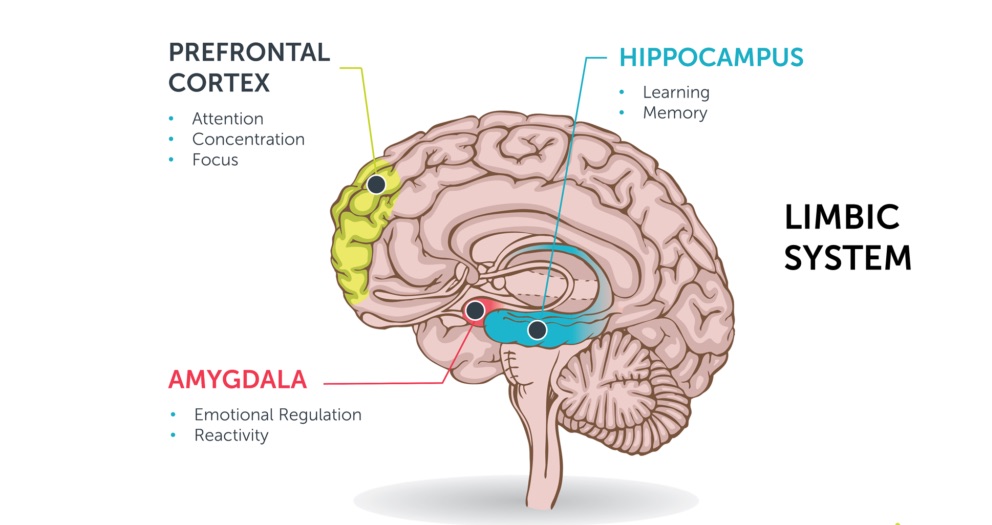
I wanted to throw in a quick reminder about how the brain works here – the amygdala is the lowest part of the brain and is our alarm system, the hippocampus is the mid-brain and assists with learning and memory, and the prefrontal cortex is the front of the brain and manages thoughts, behaviors, and helps us control emotional responses. When the amygdala takes control of the brain, it causes most of the other parts of the brain to go offline.

If you want to know more about the impacts of trauma on the students in our schools, you might want to learn a little bit about the Adverse Childhood Experiences Survey (ACES) study. I’ve written about that in a two-part post titled “Childhood trauma.” You can see part 1 here, and part 2 here. In the ACES study, there is a 10-question survey, and each question that is answered yes equals 1 point. The higher the score for a person, the greater the correlation to a variety of negative health outcomes later in life, including alcoholism, drug abuse, depression, suicide, and even heart disease and lung cancer. In one study, students who had at least 3 ACES were 3 times as likely to experience academic failure, 5 times as likely to have attendance issues, and 6 times as likely to exhibit behavioral problems.

Last week I connected with a former colleague who now works with students in multiple school districts in the area. As we were talking, she shared that the behavioral trends I was seeing had become something of a universal experience in the schools that she serves. If we consider the experiences of the past two years, you could argue that the Covid-19 reality has created at least one ACE for all our students, and depending on other experiences, possibly more (we know that there are students who lost a close family member, that equals one ACE).

What helped pull all this thinking together was an article in the most recent edition of Principal, a publication from the National Association of Elementary School Principals. “Safe Signals for Preschoolers” is an excellent article on the role that trauma-supportive schools can play in creating an environment where students feel safe, cared for, and ready to learn. Based on that article, I wanted to share some tips that you might consider implementing in your classroom or setting. One thing to note: you might be thinking “But I don’t have any students with trauma in my class.” The data we have on ACES says that is probably false. In the initial ACES study, the participants were 75% white, 39% were college-educated, another 36% had college experience. We also know that most of them would be considered affluent because all the participants in the study had health insurance. ACES know no bounds and can impact students of various backgrounds. Odds are pretty good that you have students with one or several ACES sitting in your classroom right now that you don’t even know about. Implementing trauma-responsive strategies will benefit those students who have been through trauma that we aren’t aware of. In addition, trauma-responsive interventions are beneficial to all students, not just the ones we think need them.

First and foremost, to be ready to learn our students need to have a safe environment. The human brain is like a radar, constantly monitoring what’s going on around them, and for most of us, that just happens in the background. For students who have several ACES, their brains are dealing with higher levels of cortisol (the body’s stress hormone). This higher level of cortisol in the brain causes what’s sometimes referred to as toxic stress. This causes the brain to be stuck in survival mode or the lower portion of the brain. When stuck in the lower brain, a student’s brain cannot physiologically take in knowledge or problem-solve. Here are a couple things you might do to help a student feel safe in your classroom:

  1. Relationships: Students must sense that you can take care of them – to send signals of safety, think about things like your appearance, facial expressions, eye contact, etc. Often what we do through our nonverbal communication can help a student feel safe or unsafe, even more so than any of our verbal communication. And a child’s perception of this is what matters most. If they don’t perceive that you care, then they may not feel like they do have a meaningful relationship. Kids are pretty perceptive!
  2. Predictable schedule: Students feel safe when there is consistency, and the brain mistrusts uncertainty. Consider a visible schedule, and let students know in advance (when possible) of changes.
  3. Transitions: Whenever possible, try to minimize transitions. Each one feels like something of a loss for our students. When a transition is coming, give plenty of warning – let them know there are 5 minutes left, or a 1-minute warning to wrap up, or a count down.

A few years ago, we had a summertime training on Trauma-Informed Schools. Jim Sporleder, the former principal of an alternative high school in the state of Washington and now a consultant on training others on how to implement trauma-informed strategies in our schools, led the training. One of the things that I always recall about that training is that he challenged us to “Be the one…” Often for students of trauma, the best intervention is a solid relationship with a trusted and caring adult. The kids we struggle with most are often the ones who most need that relationship. They might push us away as a defense mechanism related to the traumas they have been through. We just have to keep trying to let them know, through our words, our actions, and our non-verbal communication, that we are there to support them, and that we care for them.

As I’ve worked in schools and implemented more trauma-informed strategies, one of the things we’ve had to also think about is how to respond to negative behavior. For our students who have lived through trauma, those cortisol levels in their brain often cause them to live in a constant state of “Fight – Flight – Freeze.” A self-protection strategy that they have developed is to act out, shut down, or sometimes simply run away. I don’t know about you, but I’ve seen an increase in students leaving class without permission, I’ve seen an increase in students who simply shut down in class, and I’ve seen some acting out towards peers, teachers, or others. Here are some strategies that you might implement to help create that trusting environment:

  • Modeling appropriate behaviors, then using guided or independent practice and repetition
  • Do-overs or reboots when things go wrong – a teacher can coach a student through a difficult situation and help them try again and be successful
  • Role plays, puppet practice, scripted stories, or behavioral rehearsals

Remember, behavior is a form of communication. Often students are telling us that they don’t have the words or skills to describe what they are feeling. Some people though, mistake trauma-responsive strategies as implying that consequences are not appropriate. This is not the case. There are times when students need to be held accountable for their actions. These accountability measures help students to learn that they are accountable for their actions, but at the same time, they will not necessarily change a child’s behavior. When our students feel a true relationship with their teacher or another trusting adult at school, they will have a stronger internal drive to please the people who care for them. Consequences may be a temporary measure to help other students feel safe or to help parents understand the severity of the behavior, but they will not change a child.

Ultimately, for healing to happen in our students who have been through trauma, we need to show them the everyday acts of kindness that we might want to see when going through struggles in our own lives. As I shared before, connections to invested adults are the best intervention to provide opportunities for healing for our students. Our students may not remember all the things we teach them, but they certainly will remember how we made them feel.

Developing a PBL Unit

Last week I was having a conversation with a teacher about planning for some Project-Based Learning (PBL) in her classroom. She said something to me that I think a lot of teachers might think when they hear the phrase “Project-Based Learning.” She shared that she wasn’t sure that she had the time to devote to project work in her classroom. And I think that’s what can be tough about moving towards project work. We hear stories about these amazing projects that spanned weeks or months, like the time some 6th graders at my previous school worked to bring ice cream to our school cafeteria (see a post about that here), or the long term project by a 3rd-grade class who noticed a big blank wall and felt like they could make something much more beautiful.

The reality is though, you don’t always have to have huge projects like this. Sometimes project-based learning may only take a day or two and be really focused on a specific skill. This post is going to dive into some ways you might think about the planning side of PBL. In my current school, our leadership team is working closely with a pilot team that will be launching a mini-PBL unit in their classroom in the coming weeks, and the process is related to what I’ll be sharing here.

So, let’s start with how you might kick off the planning process. The way I see it, there are a few different ways that you might begin on the path to PBL work. Here’s a list of a few:

  • Academic Standard or Unit of Study: You might be looking at a list of standards that are coming up, or a Unit that you have used in the past, and that may spark an idea for a project. In last week’s post (see it here), I shared a social studies project that started in just this way.
  • The End in Mind: As I’m writing this, President’s Day has just passed. What if we looked at our school calendar and said, “I want my students to be able to share something about…”? This could potentially work for any holiday (US or elsewhere), or for other things that come up on the calendar. You have a clear end in mind, and you backwards plan.
  • A Way of Thinking: Imagine that you want your students to learn more about something like mindfulness, or restorative practices. Or maybe you want something that ties more directly to a standard, so you want them to learn more about the scientific method or engineering process standards.
  • Something Awesome: Maybe there is something that you recognize your students being really excited about (this is how the mural above got started). It’s taking that excitement in the moment and running with it!
  • Student Ideas: You might recognize that your students are really interested in Minecraft, or a video game, or animals. Take that idea that they are interested in and help guide them!

Now, some of you might be saying something like, “But what about my standards!?!?” And I get it, ultimately, we are all beholden to our standards, but I guarantee you that with any of the ideas I listed above, we can find a few standards that we can tie in. If nothing else, you’ve got standards related to reading, writing, and research that can be connected to just about any project. That said, if you can integrate multiple subject areas, you have hit the pay dirt! I also often found that as we worked our way through a project, there would be things that came up that I needed to create a mini-lesson on. When I was teaching sixth grade, I had to create a mini-lesson on plagiarism after seeing kids cut a paste from some of their resources. In another project, we folded in a grammar boot camp to help with some of the grammar issues that were coming up. These were teaching moves that I made in the middle of a project as I recognized a need.

Once we have our starting point on the path to PBL selected, we next need to think about how we’re going to get to the endpoint. You might have students work towards a product – something that could be shared on a specific day, or at a specific event. Every student will create some type of product, but choices are made in how they get from the start to that product. Another option might be to start with a problem – maybe leading up to President’s Day you have a bunch of students asking why there isn’t school on that day. This could be our problem that we’re going to solve – we need to find out why President’s Day is a holiday, and then we could share our findings with our school community. Finally, you might decide to make the endpoint more open-ended. You might have your starting point, share with your students what it is that you want them to learn about or take away, and then allow them to pick a product that suits their needs.

I don’t necessarily believe that any one of these three methods is the best. I would say that it might be challenging for students to jump into an open-ended pathway if they have had limited project experience in their school careers. As with any creative task, our students will need some guardrails to help guide them. When those guardrails are too wide-open, some students struggle to even get started.

So, at this point, we have an initial idea, and hopefully a pathway we will be following. Now we need to select a few standards that may serve as the basis for your project, as well as some standards that may support the learning. In my past, when I was planning a PBL unit, I’d pull my upcoming standards and look for standards that are seeking a deeper level of understanding (words like apply, understand, or explain are good key terms to watch for). And again, it’s a great idea to try to find standards from multiple subject areas to be the key ideas. These standards can be the driving force of PBL. One thing to keep in mind though – if you try to pack too much into a single project, you begin to lose focus on the main point. While there may be several skills that you are able to touch on throughout the work, you should have one or two standards that are the primary focus of the project.

Once we have a couple of standards identified, we want to think about what we want our students to learn or be able to do because of this project. These are the takeaways we want to highlight. When I did project work with my students, I would share the takeaways with them at the beginning of a unit and would reiterate them throughout the unit. I always tried to make sure that this was in “kid-friendly” language that they could understand and describe to others. I would often also use these takeaways to create what I liked to call our guiding question. This question would boil all our projects down into one question. A couple of examples from past projects I carried out in my classroom include:

  • What are the planets and objects that make up our solar system?
  • What are some of the cultural achievements of Ancient Rome?

OK, so I know this is a lot, but here’s what we’ve got so far:

  • Starting point
  • Project pathway
  • Standards
  • Takeaways
  • Guiding question

One of the things I have noticed about PBL is that there are lots of different protocols out there. You can choose to pick one to guide your planning, you can decide to create your own hybrid of the ones that exist, or you could create something all your own. But to me, the items that are listed above are keys to the planning phase, no matter what you call them. Even with the work we’ve done so far, we aren’t ready to dive into the project yet. We must always plan for the end in mind. So next week, we’ll talk about the importance of assessment. When thinking about backward design, we need to plan our assessment before we begin teaching our unit. We’ll talk briefly about pre-assessment, formative assessments along the way, and some potential options for post-assessment.

So, what have I missed? Is there anything that you are still wondering about with the planning process? Let me know your thoughts in the comments below!

Using outdoor spaces

Today I was reading a recent blog post by John Spencer about the ways that nature helps us to be more creative (check it out here).  Personally I love to be out in nature, so the post really caught my attention.  The gist of the post was about the fact that time in nature can lead us to greater levels of creativity.  His 5 ways that nature makes us more creative are listed in bold below, with my own thoughts added:

  1. Nature creates positive disruptions – Life draws us into the natural hustle and bustle of our world. Being in nature helps us get away from technology, current events, and everything else that makes it hard for our brain to stay focused.  That time away from all those distractions allows our brains to think more deeply.
  2. Nature encourages problem-solving – Almost every time I go for a hike, or spend some time in nature, I’m inspired to write a new blog post, or solve a problem, or be creative.
  3. Nature helps us embrace deep work – When do you do your best thinking? There is a lot of research that says that simply being active can lead to deeper thinking.  Simply going for a walk helps us activate our brain in different ways.  According to some research, throw nature into the mix and you multiply that effect.  So what does that mean for you?  Before teaching a particularly important skill, take your class for a walk in the woods outside of school.  Your students brains will be better prepared for deeper thinking when you return.
  4. Nature humbles us while also expanding our worldview – I’m not sure how many of you know this about me, but I was a 10 year 4-H member. I didn’t show animals (we weren’t on the farm), but I did lots of other projects over the years.  One of the projects I did required me to take multiple observations of a natural environment every day over multiple weeks.  I chose a small wooded area with a trail just a little over a mile from my home.  I had to observe at different times in the day, and I began to notice changes in what seemed like an untouched environment.  Some animals were more or less active at certain times of the day, some plants looked different depending on various factors.  The time I have spent in the natural world helps me realize that there are so many things happening in the world around us that we miss when we are in our cars, or on our devices.  Sometimes you really do have to slow down, look around, and smell the flowers in order to be aware of what’s happening in our world, and to realize how little control we have over so much of what’s around us.
  5. Nature can spark innovation – Did you know that Velcro was designed by a Swiss engineer after his dog was covered in burdock burrs after going on a hike? Or that the design of the nose of Japanese high-speed trains was meant to mimic the beak of a kingfisher?  These are just a couple of examples of innovations that came about because of things that people noticed in nature.  Imagine what the future scientists of the world (our students) may be able to develop if they learn to look to nature for ideas and solutions to our problems.

Reading Spencer’s post got me thinking about the natural wonders just waiting to be explored outside of our school.  By walking out the doors of our building, you can access a variety of outdoor environments.  Between the trails in the wooded areas, the stream running through the woods, the untended plain near the baseball fields, or the river, there are so many ways for us to access nature.  And the benefit doesn’t just stop with the kids being out in nature away from their devices.  Something they see while they are with you may inspire creativity and wonder in a way that is totally unexpected.

What have you done with your class in our outdoor areas?  Have you seen increased levels of creativity as a result of the time you have spent outside?  Share your thoughts in the comments below.