Enhancement or Transformation?

Avoid the $1000 Pencil

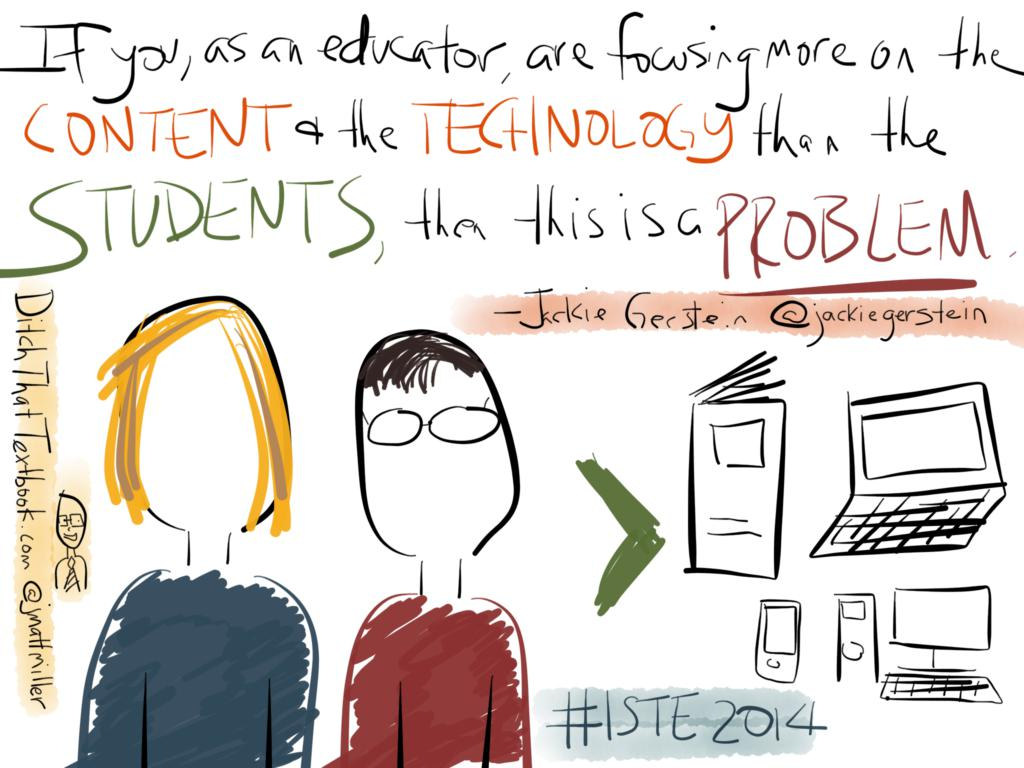
Being that we are in the second year of a 1:1 program, we all know that adding technology to education comes at a cost – money, time, and effort.  If it’s done well, technology can transform teaching and learning.  If it’s done poorly, our students are left holding a “$1,000 pencil” according to George Couros (@gcouros), a Canadian principal and education speaker.  As I said last week, our pedagogy must drive our technology.  Don’t use tech just because our kids have an iPad; instead use tech to create a learning experience that would not have been possible otherwise.  Remember, we want to integrate tech where it works.  Hopefully the rest of this post will provide some ideas about how to transform education for our students.

SAMR Model
SAMR Model

Most of us have seen the SAMR model (to the left) as a framework to help you evaluate the best technology in your classroom.  This framework is developed from the bottom up.  As you see in the graphic, the creator of SAMR places Substitution and Augmentation in the Enhancement group (think of enhancement as the most basic change – it may improve the lesson, but maybe not the thinking).  Then there is a dashed line before you get to Modification and Redefinition which fall in the Transformation group (think of transformation as a thorough change in the form of education – it will improve the lesson and the thinking).  Many teachers find that dashed line to be a tall fence to climb.  In essence, to get over that fence, teachers sometimes have to throw previous activities out the window and create something new, and other times it requires a complete redesign of the activity.  In order to make that jump from augmentation to modification, here are some ideas:

  1. Know your goals – don’t think task or app, think learning outcome.
  2. Think about things you’ve done in the past and identify their strengths – what experiences were important for students, and what were the areas of growth from those experiences?
  3. Find a tool that can meet your goals and has similar strengths – with a quick Google search you can find websites and apps that might work. Scan their features to see if something does what you need it to do.
  4. Keep an open mind – don’t eliminate a tool just because you’ve never used it before.
  5. Generate several ideas for activities – make a list of possible tools. Cross out the ones that you don’t think will work.
  6. Put the plan into action – remember that the best way to learn new tech is to play with it. If you don’t know a tool yet, don’t feel like you can’t let students use it.  I have yet to have a student tell me “I can’t use this, we haven’t had PD on it!”  Students are just as capable of playing with an app or website to figure out what it can do, and if they’re really stuck, they’ll use Google or YouTube to help them figure it out.  Plus, if it’s new, students will be more excited and engaged!
  7. Be ready to adjust on the fly – remember, failure is part of the learning process. If something doesn’t work, go back to the drawing board.  Sometimes our willingness to model failure will help our students accept the idea that we learn and grow in times of failure.

One other idea that may help you to transform education for your students is through collaboration.  Don’t feel like you have to redevelop everything you are doing on your own.  Get together with others who teach the same subject as you and pick a topic.  Bring some of your favorite activities that fit that topic, and collaborate to find a way to make the jump from enhancement to transformation.  Then, after you try something, come back together to talk about what worked well, what didn’t, and what you would do next.  And if meeting together is not possible, use tech to collaborate – create a shared planning document in Office 365, or Facetime with your colleagues to plan when you both are free but cannot be together.

On Matt Miller’s website there is an excellent article titled 10 ways to reach SAMR’s redefinition level.  Follow the hyperlink for some great ways to take it up a notch!

Where are you in terms of the SAMR model with the tech you are using in your room?  Do you feel you are sticking to the enhancement zone, or have you jumped the fence into the transformation zone?

Sometimes it’s ok to ditch the tech too!

WritingIn a previous post I talked about the misconception that some have about HSE21 being all about the device.  Just a reminder here – IT’S NOT!  Technology can allow us to do some really cool things, it can help us be more efficient, we can collaborate more easily, you can create and carry out awesome formative assessments, and you can use technology to help you grade papers more quickly.  There are many more things that technology can help us with, but there are also times it gets in the way.  Remember that the HSE21 best practice model is about so much more than an iPad.  It’s also important to remember that just because you are using an iPad for an activity, it doesn’t mean you are “doing” HSE21.

Sometimes an app doesn’t work the way we expect it to.  Sometimes wifi issues prevent our students from being able to access what we need them to get to.  If you’re using a computer in the lab, the amount of time it takes for a student to log in can take away from their ability to be productive.

Ultimately, our pedagogy must drive our technology, not the other way around.  Good teaching will always trump a good tool.  Someone could put me in a wood shop with every imaginable tool, but without the knowledge of how to use those tools, anything I built would not be something I would want to put into my room (except maybe in the back corner of the garage!).

Avoid the $1000 Pencil

You all know that I love technology.  I consider myself an early adopter of most types of technology, quick to try things out to see if it can fit into my life.  Anymore I can’t go for a run, bike ride, or sometimes even a walk, without my GPS enabled device to tell me how far I went, what my average heart rate was, and the average speed or pace I was traveling.  However, when we look at the classroom, learning has to be the focus.  While I would love to see a classroom where everything is being done digitally, sometimes due to challenges that method is not efficient.  There is nothing wrong with an exit slip that is actually on paper, or a quick formative assessment of thumbs up or down.  Don’t be afraid to try to integrate tech where it works, but don’t do it at the sacrifice of helping our students to learn and grow into the best they can be.

What are some times you have chosen to ditch your tech and had a positive outcome?  Share a few of your experiences in the comment section below!

Know your kids – Love your kids

Growing up, the mother of one of my closest friends was an elementary school teacher.  When I graduated from college with a brand new teacher’s license in hand, she gave me a couple of books and some unsolicited advice.  One of the books was The First Days of School by Harry and Rosemary Wong.  The advice was “don’t smile until at least Thanksgiving.”

From Amazon: http://www.amazon.com/The-First-Days-School-Effective/dp/0962936022

The First Days of School was a great resource in setting up my first classroom, and knowing that this person was a great teacher, I tried to follow that advice.  The only problem…  I really like kids!  I couldn’t not smile at them.  They were curious, they were funny, and most of all, I knew they were going to be with me for a whole year.  Building a relationship with them was really hard if I couldn’t smile!

Some of you may be of the opinion that if you are a good teacher, it doesn’t matter whether or not the kids like you, as long as they respect you.  Let me ask you this…  How many people that you don’t like do you truly respect?  Kids don’t learn from people they don’t like.  Kids will learn from people they feel a strong relationship with.

Matt Miller: https://www.flickr.com/photos/126588706@N08/14726101996/in/album-72157645530010989/

Going back to our belief statements, building positive relationships is one of our top priorities.  It’s easy to have a relationship with the kids who do really well in your class and seem motivated to learn.  Those are the kids who know how to play school and probably have the most positive relationships.  Those kids are probably the ones who need you the least because they can build relationships easily.  The ones who need you the most are the ones who seem to not be motivated, or seem to not do well.  What have you done to build relationships with those students who don’t play school well?

The next time you look at your class, see who it is that you know the least about.  Seek out an opportunity to learn something about them.  Have a 2 minute conversation that has nothing to do with school or your class.  What are their interests?  What do they like to eat?  What did they do last night?  What do you know about their family?  Do this as often as possible until you know a few new things about each of your kids, then start again!

Remember the first day of school this year.  I asked you to do 2 things – Know your kids, and love your kids for who they are.  What steps have you taken this year to be able to know your student better?  Share in the comments below some of your successes.

Matt Miller: https://www.flickr.com/photos/126588706@N08/14746751544/in/album-72157645530010989/

Make it fun

What makes one professional development opportunity great, while another may be bland and boring?  Some of the best PD that I’ve had felt that way because the presenter somehow made things fun.  In your classroom, the students are the audience, and while making sure they are having fun is not your primary goal, we all know they are going to pay a lot more attention if the activities that we are doing are more fun.  What are some ways we can incorporate fun into our classrooms?

Kevin Jarret - https://www.flickr.com/photos/kjarrett/7070563247
Kevin Jarret – https://www.flickr.com/photos/kjarrett/7070563247
Scott West
Scott West
  • STICKERS – I am continually amazed by what a fifth or sixth grader will do for a sticker (haven’t you noticed the Ham & Cheese stickers that end up on our students foreheads?). Want some more participation?  Pull our the foil stars, ask a question, and give out a star for good answers, or to integrate tech, give a foil star to the best response or question on Today’s Meet (see the post on Getting ALL our students to participate in the classroom).
  • Make it silly – before students hand in a paper, have them do something silly, make a sound like a pirate, do a little dance, etc. Adding a little silliness will up the fun factor by at least 10% (and even more important – if you are being silly with them, they will be even more engaged!).
  • In a content area, retell a story and make your students the stars of the story (think about last week’s post on titled Put your students into your materials).

When kids walk out of this building, the fun they want is pretty much on demand.  Between social media, streaming video and music, video games, and more, our students have tons of ways to do something fun.  If we want them to be as engaged in our room as they are with their Minecraft world, we have to be willing to bring in some of the fun.

Matt Miller: https://www.flickr.com/photos/126588706@N08/14562457739/in/album-72157645530010989/

Think of some lesson you have done in the past that was a bust (even the best of us have had one!).  How could you add some fun and silliness to help the students be more engaged?  What things have you included that were fun and did help students remain engaged?  Share some of your ideas in the comments section below.

Student Behaviors

Robert Temple Ayers - https://www.flickr.com/photos/42787780@N04/4975296555
Robert Temple Ayers – https://www.flickr.com/photos/42787780@N04/4975296555

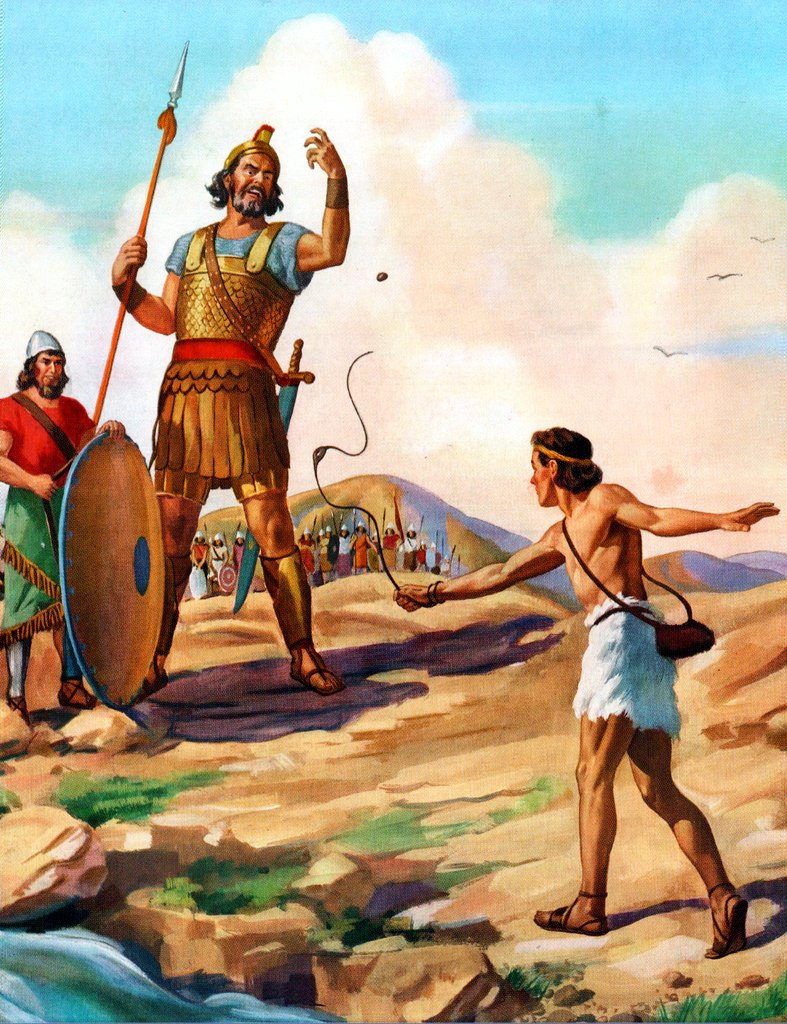
I have recently been reading the book David and Goliath: Underdogs, Misfits, and the Art of Battling Giants by Malcolm Gladwell.  I’m not sure if any of you have ever read anything by him, but he often picks a story to share, and then spends the rest of the book talking about the psychology behind what “really” happened.  He does a ton of research, interviews a wide variety of people on a wide variety of topics, and then puts it all together in a way that ties back to his original message.

If you remember the story of David and Goliath from ancient Palestine, you will remember that David miraculously felled a mighty warrior with nothing more than a pebble and a sling.  Now, any rivalry game where one team is hugely favored and the underdog wins is often referred to as a battle of David and Goliath.  What I have taken away as one theme of the book is that sometimes there are times that the win by David is not as improbable as you might have suspected.

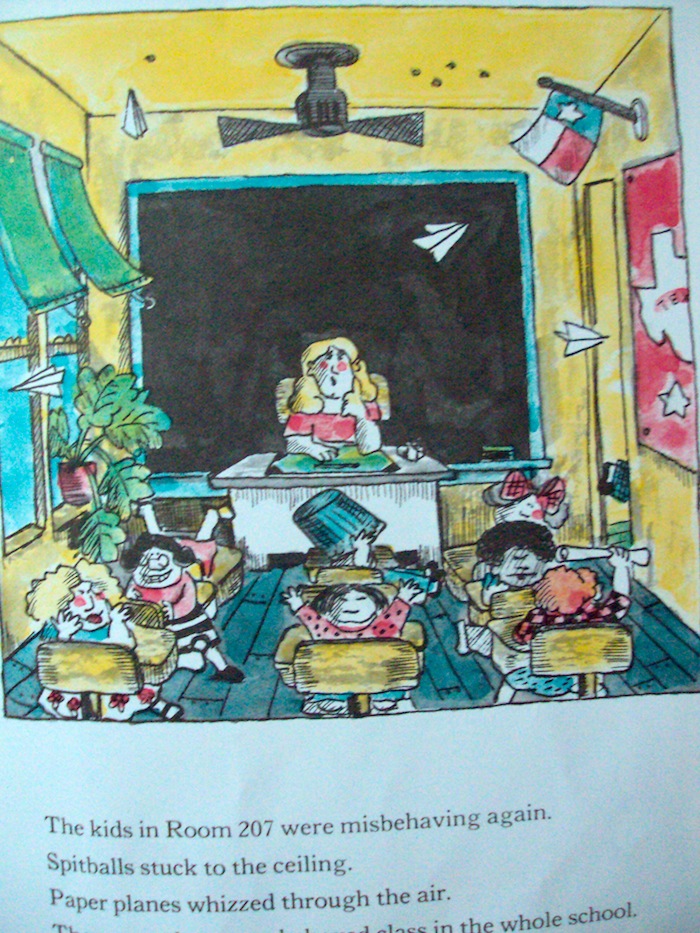
Let's hope your class doesn't look like this!!! http://gatheringbooks.org/2011/05/10/miss-nelson-is-missing/
Let’s hope your class doesn’t look like this!!!
http://gatheringbooks.org/2011/05/10/miss-nelson-is-missing/

In one portion of the book, Gladwell is talking about classroom management skills.  He describes walking into a classroom that appears to be absolutely in chaos.  The teacher is at the front of the room doing a read aloud.  One student is standing next to her and they are taking turns reading from the story.  Kids are making faces, one girl is doing cartwheels, and several students have turned their back on the teacher.  The situation is unpacked a little more greatly in the book, and it becomes obvious that the teacher in this situation is using some very poor classroom engagement strategies which lead to the classroom management issues, but something that Gladwell said struck a chord with me:

“We often think of authority as a response to disobedience: a child acts up, so a teacher cracks down.  Stella’s classroom, however, suggests something different: disobedience can also be a response to authority.  If the teacher doesn’t do her job properly, then the child will become disobedient.” (Gladwell, pg 339)

A view of some of the projects in Brownsville - https://upload.wikimedia.org/wikipedia/commons/2/22/Qbridgenycha.JPG
A view of some of the projects in Brownsville – https://upload.wikimedia.org/wikipedia/commons/2/22/Qbridgenycha.JPG

In the same chapter, Gladwell then shifts to a story about a program based in Brownsville, a residential neighborhood in eastern Brooklyn, NYC.  If you were to visit, you might be inclined to refer to this area as the projects.  In 2003, a police officer took charge of the city’s Housing Bureau, and their primary responsibility was the Brownsville projects.  In an effort to try something new, they started trying to help the troubled youth in the area.  They identified all the juveniles in Brownsville who had been arrested in the previous year.  They reached out to those kids and their families.  Kids who were brought into the program were told that the cops in this group (called the Juvenile Robbery Intervention Program – J-RIP) would do everything in their power to help.  They would get them back in school to get a diploma, bring them needed services for their family, find out what’s needed in their household, provide job opportunities, educational opportunities, medical – everything they could.  The program would work with the kids, but there was one circumstance.  The criminal conduct had to stop.  Kids were told that if they got arrested for anything, the cops would do all they could to keep them in jail.

The cops in the J-RIP program seemed to be everywhere these 106 kids went.  They’d show up at their home, find them hanging out in other parts of the city, walk up to Facebook friends and talk to them about what they’ve been up to.  These cops lived in the world of these kids.  Initially things did not go well.  The kids didn’t want to interact, the families didn’t want to interact.  The cops had the best of intentions, but they weren’t getting anywhere.  Finally they had a breakthrough one November.  One of the cops decided it would be a great idea to help out one of the kids they were most worried about losing.  One the Wednesday before Thanksgiving this officer went out and bought a Thanksgiving dinner for the kid’s family and delivered it.  They knew they might not be able to get through to the main target, but maybe they’d have a breakthrough with the kid’s seven siblings.  That year, through the efforts of the commander of the unit, they were able to get funds to be able to deliver a turkey to the home of every kid that was on their list for Thanksgiving.

The reason they were so persistent in trying to meet the families was because police in Brownsville were not seen as legitimate.  A large percentage of the families in Brownsville had only had negative interactions with the police, and multiple people in most families had spent time behind bars.  By taking turkeys to the families of the J-RIP kids, the cops were saying to the families “we really do care about you and your family, and we want to help you make the most of yourself, and most important, we want you to have a good Thanksgiving.”

After this, things in Brownsville began to turn around.  The trend line on all crime in Brownsville dropped significantly in the following 5 years.  Kids who were in the J-RIP program went from a total of over 350 arrests in the year before being added to the program, to less than 40 arrests.  Gladwell argues that what this proves is that

“the powerful have to worry about how others think of them – that those who give orders are acutely vulnerable to the opinions of those whom they are ordering about.” (Gladwell, pg. 356)

As teachers, we are clearly in a role of power.  Some of our parents are scared to be involved in school because they may have had bad experiences when they were in school, or maybe their child has had bad experiences in the past.  Some of our students are nervous in the classroom because of things beyond our control, maybe a bad experience in another class, or their perception of the teacher.  As people in power, what actually matters are the hundreds of small things that we as the powerful do – or don’t do – to establish legitimacy.  When power is not seen as legitimate, it can often have the opposite of the intended effect.

https://allthingslearning.wordpress.com/tag/trends-in-education/

We are dealing with the minds of 10, 11, and 12 year olds.  Sometimes they struggle to understand the things we say, the jokes we make, or the ways we interact with them.  Things like sarcasm and a sense of humor that may make perfect sense to the adults in our building will fly right over the heads of our kids, and instead they will feel that you are actually being serious, or possibly making fun of them.  For some of our kids, the direct approach doesn’t work because it only leads to a shutdown.

Think about what you do to build legitimacy with our students.  Keep in mind that what works with one kid may not work with another.  Also keep in mind that without legitimacy, our students may not see us as people who care for them, but rather as the person who’s trying to keep them down.  If you want to build better legitimacy with your kids, give them a voice.  Also, give them the time to talk about their interests.  Think about the J-RIP program – they took a small group of kids living in Brownsville and truly showed those kids that the cops cared about them, and many of them changed their ways.  It also had a larger effect of changing the culture of crime in the entire neighborhood.  Who are the kids that you would identify as needing to know you care?  How can you show them that you care?  How can you build greater legitimacy so that your power has the intended effect, and doesn’t lead to unintended consequences?

Preparing our Students for the Great Unknown

lennon-quote-with-photoWhen you were in 6th grade, what did you want to be?  When you talk to our students, what jobs do they want to have some day?  The amazing thing is that some of the jobs that my classmates are in did not exist when I was in 6th grade.  How many jobs that our students will end up doing don’t even exist yet?  In a previous post I shared the following quote from Thomas Friedman:

“Today’s workers need to approach the workplace much like athletes preparing for the Olympics, with one difference. They have to prepare like someone who is training for the Olympics but doesn’t know what sport they are going to enter.”

Matt Miller - http://ditchthattextbook.com/wp-content/uploads/2015/02/jobs-that-didnt-exist.jpg
Matt Miller – http://ditchthattextbook.com/wp-content/uploads/2015/02/jobs-that-didnt-exist.jpg

A quick search of the top jobs for 2015 lists things like computer systems analyst, software/app developer, information security analyst, and IT manager.  These are all relatively new jobs.  A couple weeks ago, I talked about the importance of being able to learn, unlearn, and relearn.  What does this look like when we don’t even know what jobs may exist when our students enter the job market?

To me, there are a few skills that will always be valuable.  These are the skills that are most important for our students to learn.  Here is a list that Matt Miller shared of a few skills that will help our students be better prepared for the real world when they get there:

  • Adding value
  • Creating content online
  • Continuously listening and watching for new ideas
  • Glamorizing hard work
  • Turning wasted time into productive time
  • Cultivating relationships
  • Being financially responsible
  • Staying on the cutting edge
  • Maintaining a balance between professionalism and being a real person
  • Becoming a twenty-four-hour worker

Some of these may be hard to visualize in practice in the school building.  If you’re looking for further description on any of these skills, let me know and I can share a more detailed explanation.Peanuts-happy

Are there any skills that you feel are left off of the list above?  What would you add?  Share in the comments below!

Gatekeepers or Travel Guides

Prior to the development of written language, the gatekeepers of knowledge were the village elders who could tell stories about the history of a village or society.  Those elders would teach the “smartest” members of the village the old stories so that the history could live on.  Once societies began to develop a written record, this role began to phase out.  In more recent history, the gatekeepers of information were the librarians, teachers, and college professors.  They gave the knowledge to their students through lecture format and rote memorization.

Today the role of a teacher is changing.  Our students don’t need gatekeepers to provide them with the knowledge they need.  Our students won’t quit playing a video game because they get stuck, they watch a YouTube video to show them how to go further.  If they see a reference to someone and they want more information, they grab their phone and find out more from Wikipedia (for base level knowledge, it does a pretty good job!).  If they are arguing a trivia fact they can find the answer through a Google search – for some of our kids, the Google app is one of the most used.

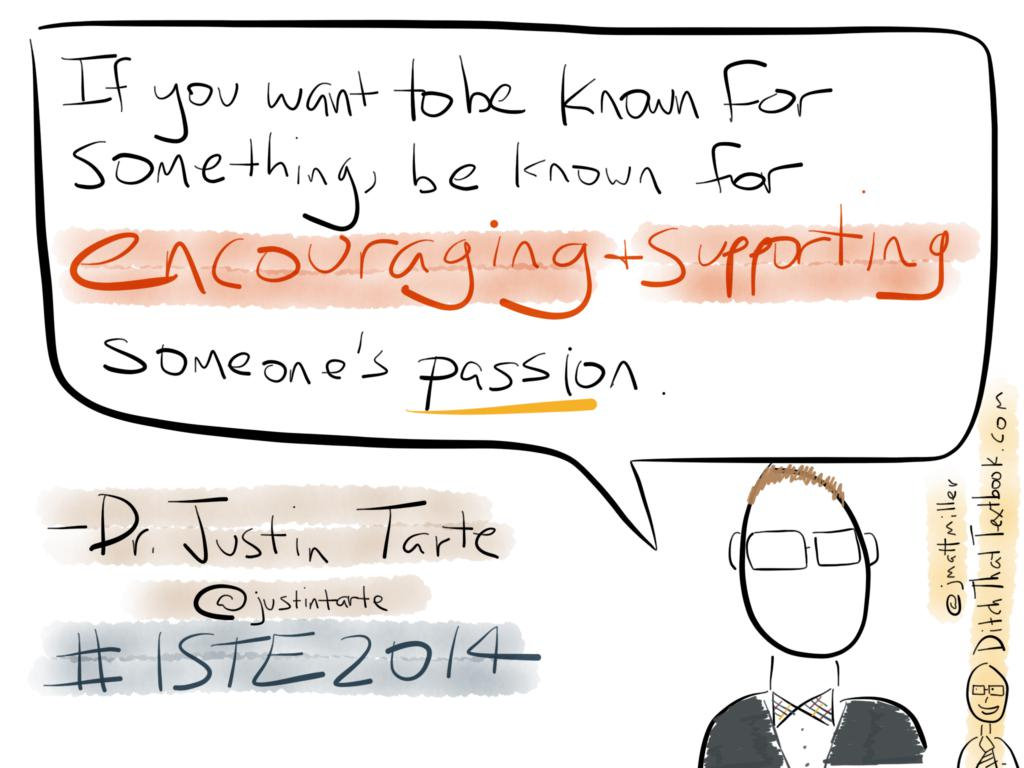
When we provide more students the opportunities to share in the classroom, we are building bridges to the world instead of placing them in a silo. https://www.flickr.com/photos/126588706@N08/14749002232/in/album-72157645530010989/
Matt Miller – https://www.flickr.com/photos/126588706@N08/14749002232/in/album-72157645530010989/

Even though students have the ability to find the answer to their content questions, they still need our help.  They need us as mentors and guides who can help them discover their passions, and then investigate those passions using the skills that will be valued by our changing world.

How have you noticed your role changing in your classroom as it has become easier for students to find the answer to their content questions?  Share some thoughts in the comment section below.

The “Typical” Day

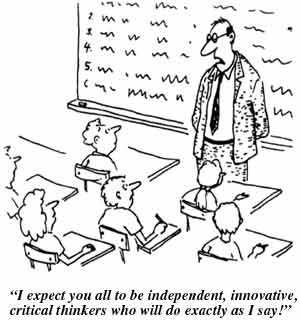
What does a typical school day look like?  Get to school on time, go to class, sit quietly, do your work, write all your answers down, listen and take notes, leave at the end of the day, do more work when you get home.  This sounds pretty routine, and is exactly the model that Ken Robinson was arguing against in his “Changing Education Paradigms.”

Matt Miller - https://www.flickr.com/photos/126588706@N08/14562421540/in/photostream/
Matt Miller – https://www.flickr.com/photos/126588706@N08/14562421540/in/photostream/

In a recent MIT study, researchers identified two categories of work that have been in a fairly consistent decline since 1960.  Those are the jobs that are defined as routine and manual.  The jobs that have been growing are the non-routine tasks.  Those are the tasks that require problem-solving, intuition, persuasion, creativity, situational adaptability, visual and language recognition, and in-person interaction.

In our school improvement plan we say that engagement and inquiry should be in the forefront of our planning.  I believe that it is much more important for our students to know how to ask the right questions, and then how to find the answers themselves, rather than simply answering the questions we ask.  In the book Future Shock, Alvin Toffler said “The illiterate of the twenty-first century will not be those who cannot read and write.  The illiterate will be those who cannot learn, unlearn, and relearn.”  This applies to education just as well as it does to any other part of society.

Matt Miller https://www.flickr.com/photos/126588706@N08/14562423080/in/album-72157645530010989/

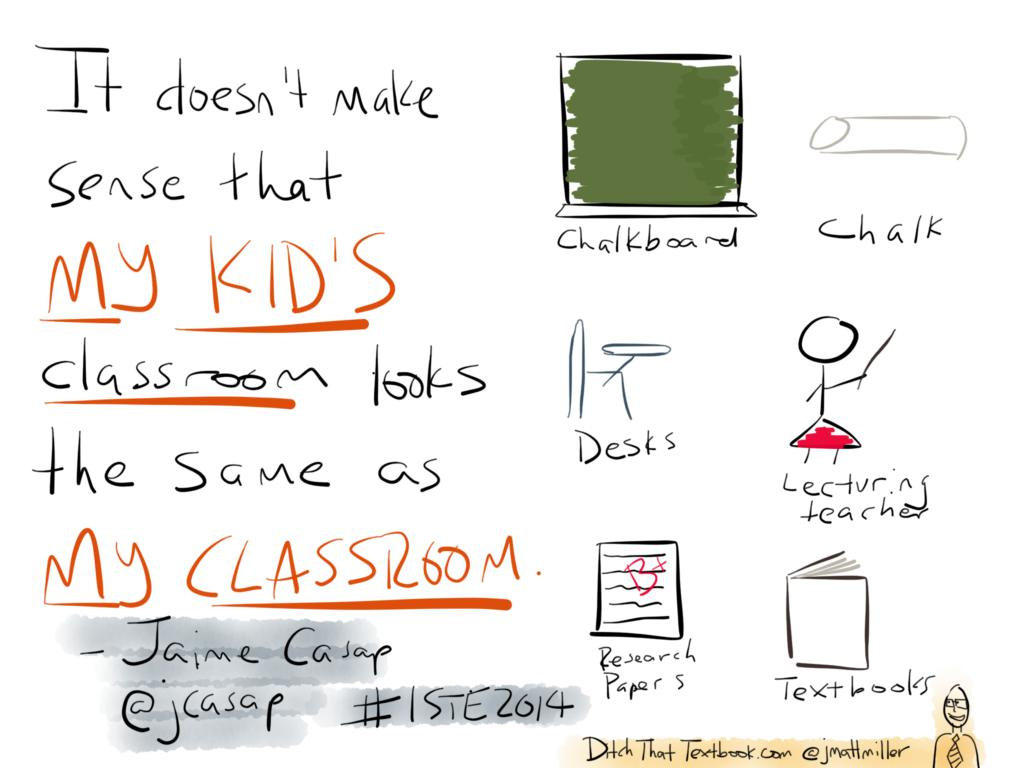
I think that as teachers, many of us think that our classroom should somehow resemble the classrooms of our childhood.  When I first started in education, I thought it was a good thing for my students to be quiet – especially when my principal came in the room.  Now I don’t feel that way.  When a classroom is silent, my first reaction is “are they taking a test?”  Collaboration and problem solving rarely involve silence.  I’m not saying that it should never be silent in a classroom.  There’s a time and a place where that is necessary.  However if we are trying to meet the concepts of the Best Practice Model, should it be silent most of the time?

Reflect on your own classroom.  What does your class look like most of the time?  What changes have you made, or will you continue to make, in order to help your students be ready for the non-routine tasks of their future?  In the comments share some of the things you’ve tried before, or share something that you feel like you want to try soon.

Focus on Student-Centered Activities

Last week I shared a TED Talk from Sir Ken Robinson.  In that video he talked about the factory model that some schools have become.  Our students can be really good at playing the game of school here at RSI, or in junior high, and possibly even in high school.  By playing the game of school I mean finishing homework, not causing issues in the classroom, and being what would generally be considered a “good student” in the old factory model of education.  But when they go on to college, or when they are out in the real world, those students who played the game are not ready for real life.  Know this: Homework completion in fifth and sixth grade are not a sign of success in the future – I consider myself a walking example of that statement.  When graduating from college, our students may have a degree that they don’t really know what to do with, and send out resumes that put them into jobs that they do not find inspiring.

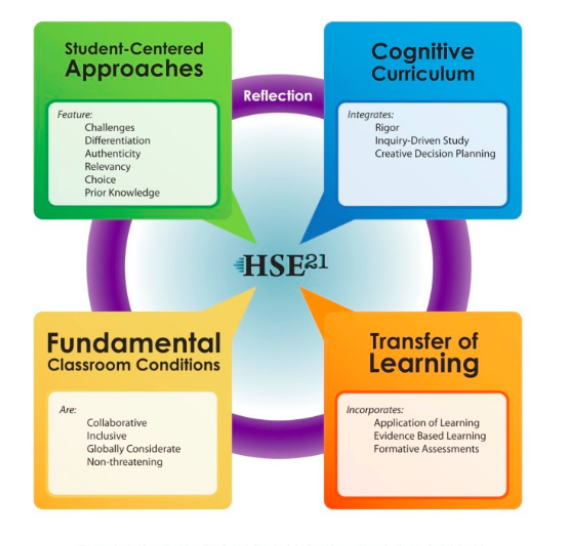
http://www.hse.k12.in.us/resources/pdf/ADM/academics/hse21/best%20practices%20model.pdf

The best way we can break this model is through providing more student centered approaches in our teaching (think back to the post on the HSE21 Best Practice Model).  When students are investigating things that are high interest to them, they find passion and purpose in their learning.  When students want to learn more about their passions, they need only type a few key words into Google.  Through that search they can be directed to pages of information, videos, pictures, and blog posts that may help them learn in a way that fits their learning styles.

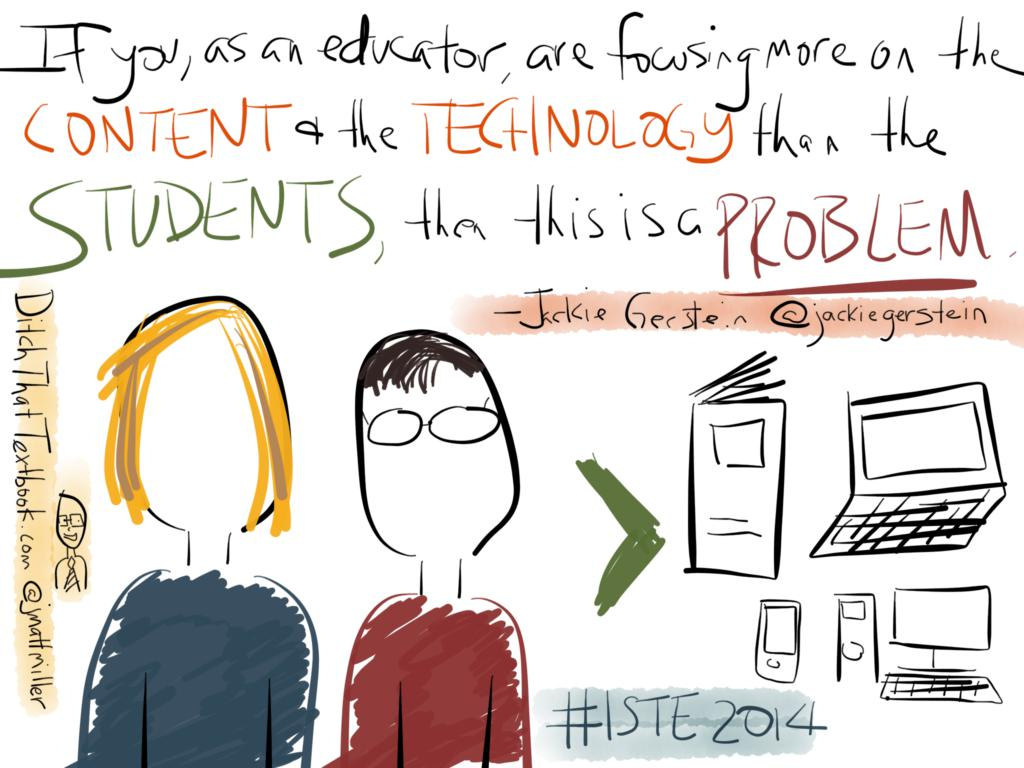
Matt Miller - https://www.flickr.com/photos/126588706@N08/14726101996/in/album-72157645530010989/
Matt Miller – https://www.flickr.com/photos/126588706@N08/14726101996/in/album-72157645530010989/

Through integrating the Internet and online tools, you can help students realize that there are things in the world that they want to explore.  You can help provide them with that spark that may ignite their passion.

In what ways have you tried to factor in your students own curiosity in your classroom?  When you try to be more student centered, what do you notice about classroom engagement?  Share some ways that you have tried to keep learning and teaching “student centered” in your class.