
If you, like me, attended a traditional education school prior to starting your career in education, you probably spent at least a little time learning about the concept of learning styles. You might recognize the terms visual, auditory, linguistic, or kinesthetic. You may also have been asked to design lessons with different learning styles embedded. If you were like me, you may have even had a poster of the different learning styles in your classroom. Some of us may even still refer to learning styles at times – in fact, the same day I sat down to start writing this post, even after having done some research, I made reference to being a visual learner as I was adding a visual into some notes I was taking.
The lie that we’re trying to dispel today is that students learn better when taught in their preferred learning style. You might have thought, or maybe still believe, that some students learn better anytime they are provided a visual to support the learning, while others learn better when we bring movement into a learning task. But what does the research say?
Decades of controlled studies have failed to find evidence that a teacher’s effort to match a student’s preferred learning style to instructional practices leads to better outcomes. The research suggests that the best instructional learning style is the one that best fits the content being taught.
In Psychological Science in the Public Interest, Pashler, McDaniel, Rohrer, & Bjork (2008) conducted research on the effects of style-based learning. The study ultimately notes that there is little evidence to support the claim that teaching tailored to students’ learning styles improves student outcomes. Despite this, a 2020 review of educators found that almost 90% of teachers believe their instructional methods should match their students’ preferred learning styles.
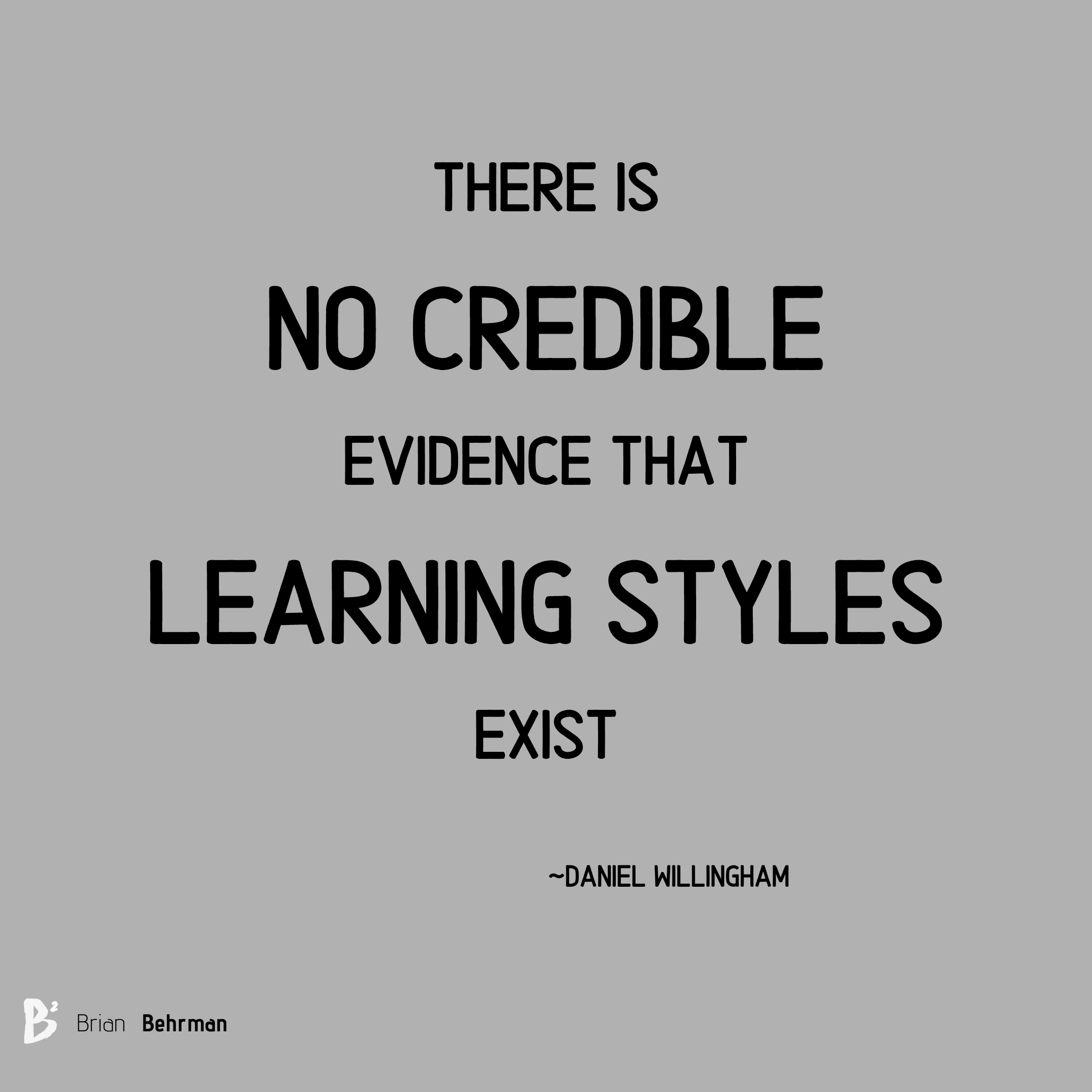
If the research doesn’t support this belief, why does it continue to exist? A 2016 study by the National Council on Teacher Quality found that 67% of teacher preparation programs require learning styles in their lesson planning assignments, and nearly 60% of textbooks continue to advise future teachers to take learning styles into account. Cognitive psychologist Daniel Willingham shares:
This is clearly an example of the research-to-practice gap. Sometimes also referred to as the 17-year gap, this idea holds that it takes about 17 years for educational theory to become educational practice. But that gap represents a passive form of adapting to research. When we know better, we should do better. If the research shows that learning styles do not improve outcomes, we have to make a change.
So if learning styles don’t exist, what should we do? Well, first of all, the research shows that we can improve student outcomes by designing the learning modality around what is best suited to the topic. For example, if you were teaching students about plate tectonics, you’d want to include diagrams to help students visualize the process. If you’re teaching phonics and early reading, the combination of auditory and verbal would be a necessity to help build letter-sound correspondence. In physical education, students would need a worked demonstration of a skill – say, practicing throwing techniques – and then a chance to try it on their own. This might involve the teacher modeling the skill, then allowing students to simulate the throwing technique while receiving feedback from the teacher.
There are other, more research-supported, techniques to improve student outcomes. I’ll share a few of those below:
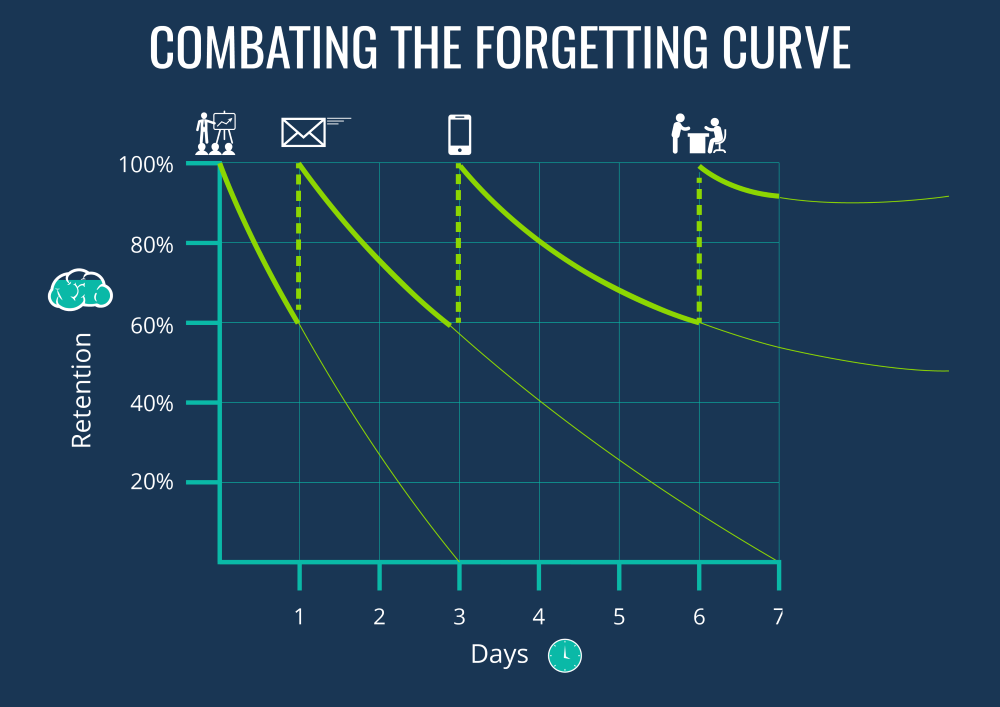
- Spaced repetition: This would involve reviewing material at increasing intervals over time. This would be like a spiral review or creating flashcards for practice. Spaced repetition suggests that you might review something an hour later, then the next day, then a few days later, then maybe a week later. Each time a skill is reviewed, the neural pathway to that information is strengthened, making the learning more “sticky.”
- Retrieval practice: Actively recalling information strengthens memory and understanding. Ways to incorporate this would be to have students quiz themselves, use low- or no-stakes quizzes for practice, or have students summarize new learning without looking at notes or resources.
- Interleaved practice: Mixing different topics or skills into study sessions. In practice, this might mean starting your class with a warm-up that includes a review question from yesterday, last week, and last month. It could also include randomizing the practice questions rather than grouping them by topic.
- Elaboration: Explaining and describing concepts in detail. You might put this into practice by having a student explain their thinking to others or share their understanding of a concept with a peer. Or you might use follow-up questions like “why does this work?” or “How is this related to something I already know?”
If you’d like to learn more about this topic, one of the best resources for work around learning styles is Daniel Willingham. One option would be to check out his YouTube explainer titled “Learning Styles Don’t Exist” (I shared this below). You could also dig a little deeper by reading his book, “Why Don’t Students Like School?” I’ve added this title to my To-Read List!
What are your beliefs about learning styles? Were you taught about them in your teacher preparation program? What do you think about this research? Share your thoughts in the comments below.
 The View from 518