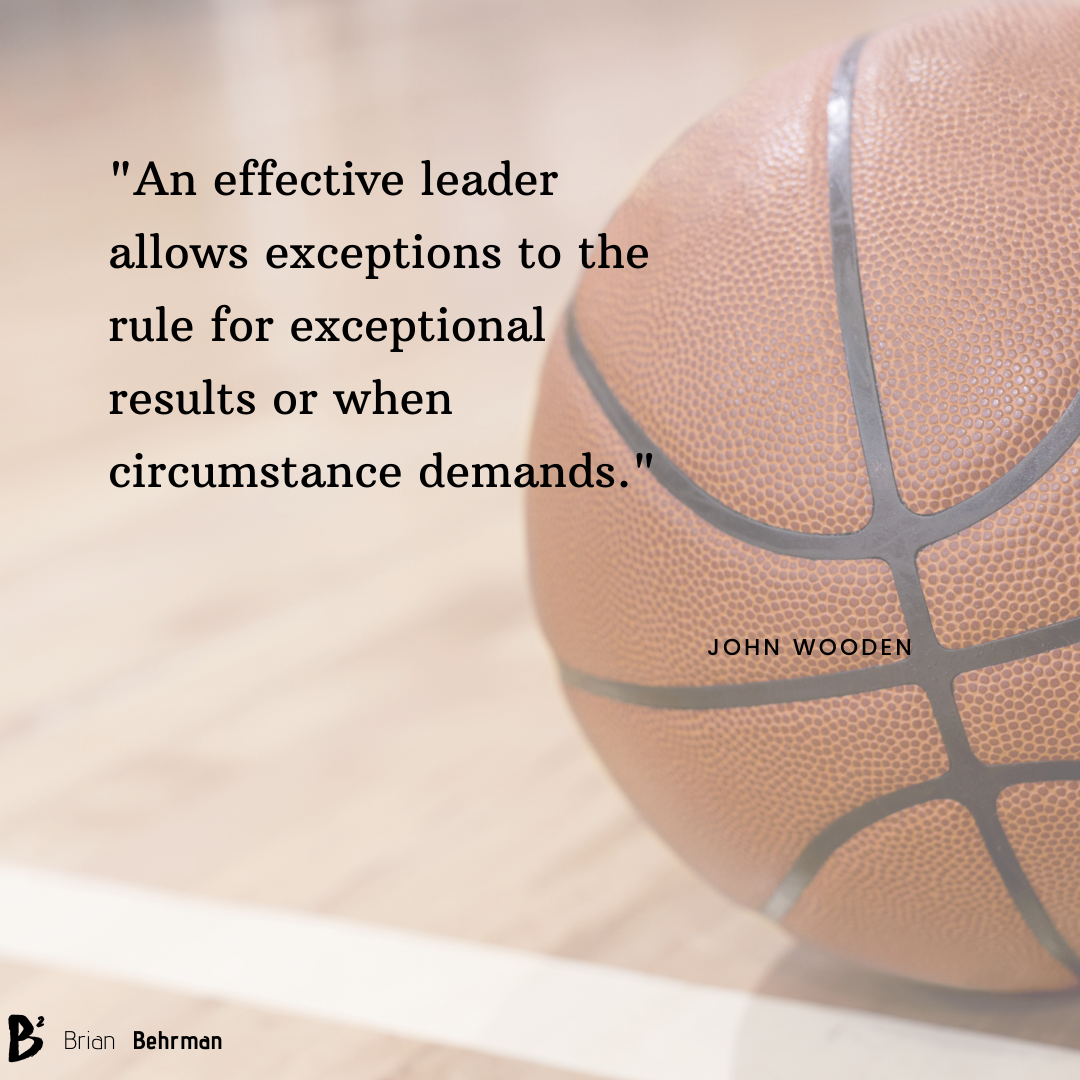
In my many years of working in education, one thing that I have learned again and again is that we have to be flexible in what we do. At any given time, I walk in with a list of items on my to-do list, as well as a list of current projects that I’m working on. But sometimes something happens in the day that leads me to have to adjust on the fly.
When I was in the classroom, I remember times when my lesson plan went out the window due to something that occurred in the world that morning or the night before. Other times I might have been forced to adapt my plans because I woke up sick and needed to adjust to sub plans. Or maybe there was a situation where a teammate wasn’t there and the classroom was uncovered, so we had to split the students among our teams.
As an administrator, that happens as well. Sometimes things happen that are beyond your control. I remember a time when I was supposed to be leading professional development with a group of teachers, but as I was about to walk out of the office, an upset parent walked in who needed to speak to me. At that moment, I felt it was best to take the time to meet with the parent rather than head to the PD. While it was an inconvenience for the teachers, everyone was understanding.
Last week we had a couple of days where our art teacher had to be out, and we weren’t able to find a substitute teacher to cover the classroom. I went through the normal process, checking in with various people about when / if they’d be able to help cover some or all of the day. On one of the days, it quickly became apparent that there was nobody to “cover the class.” Rather than spinning my wheels trying to piece together a possible schedule, I just decided to step in and cover the class. While I didn’t have anything on my calendar that couldn’t be adjusted, it definitely meant that I needed to be flexible for the day.
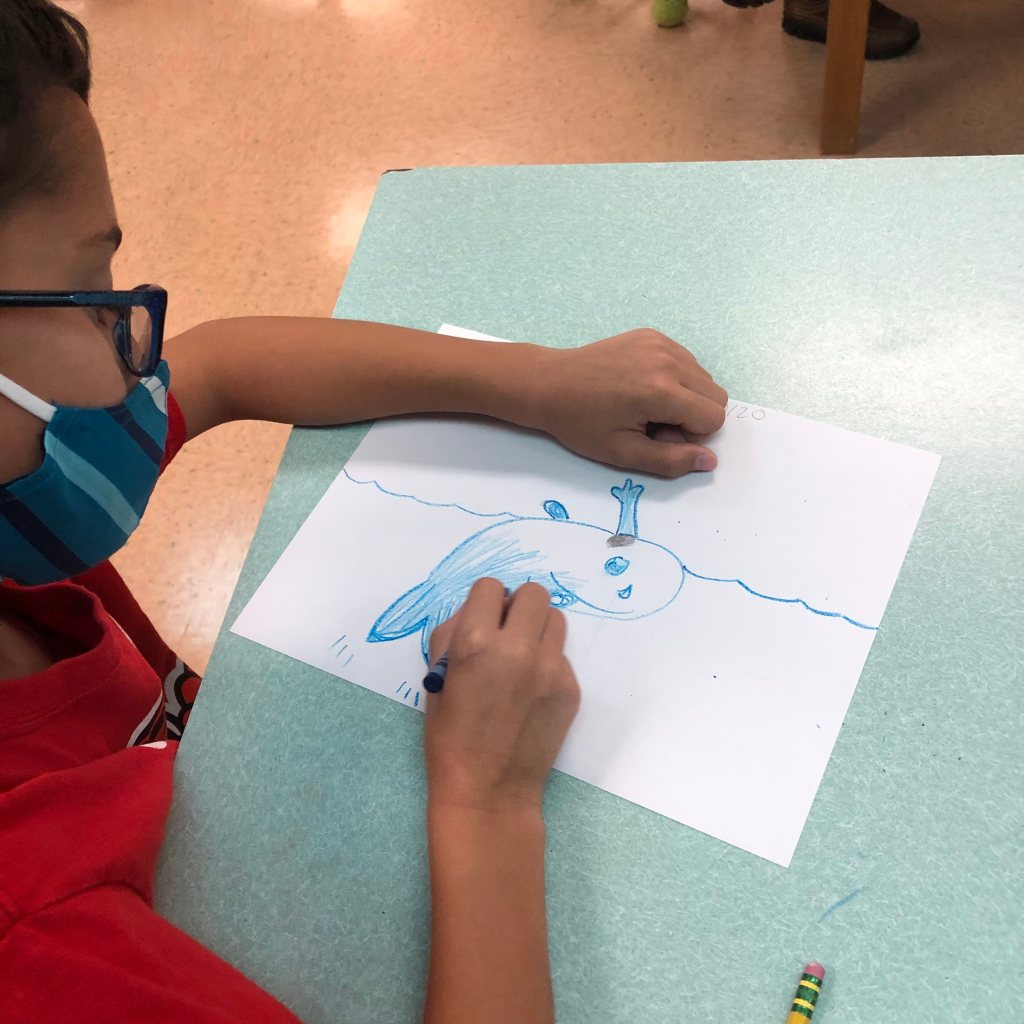
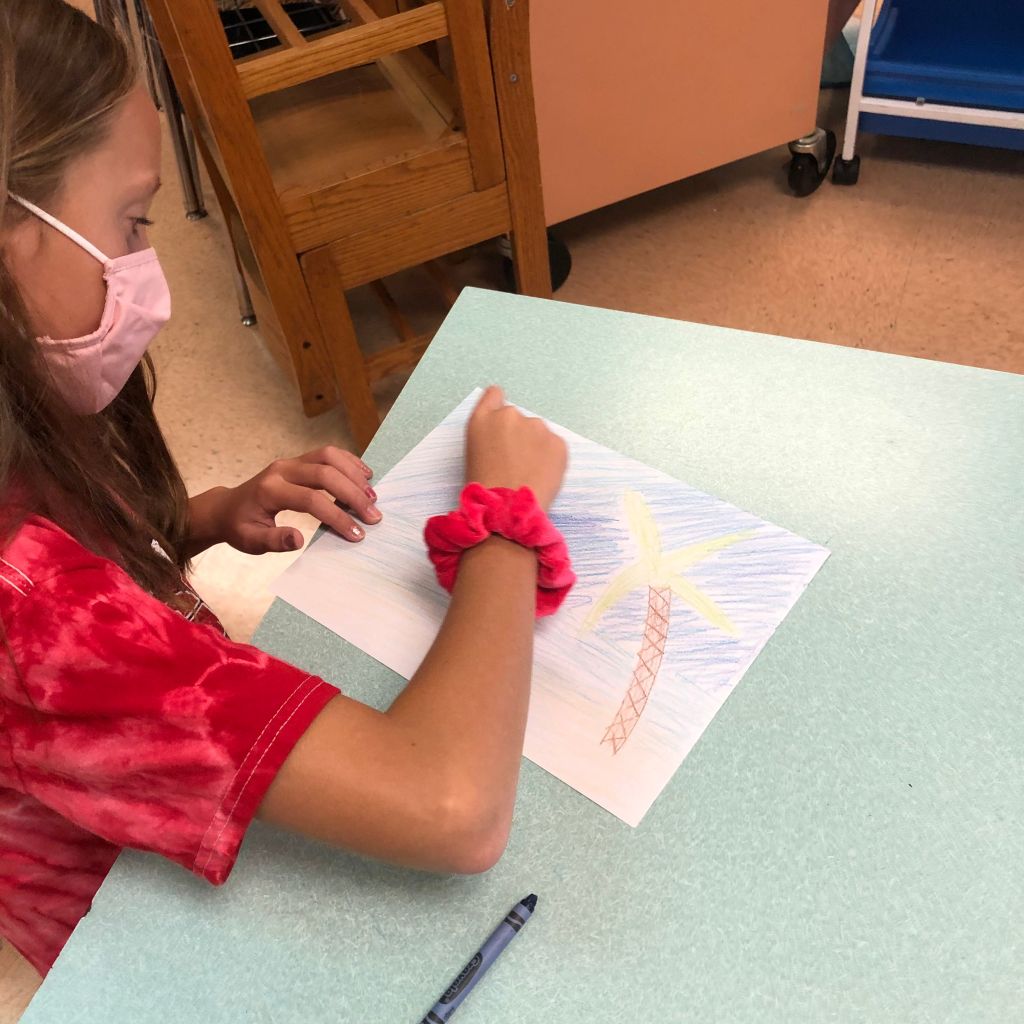
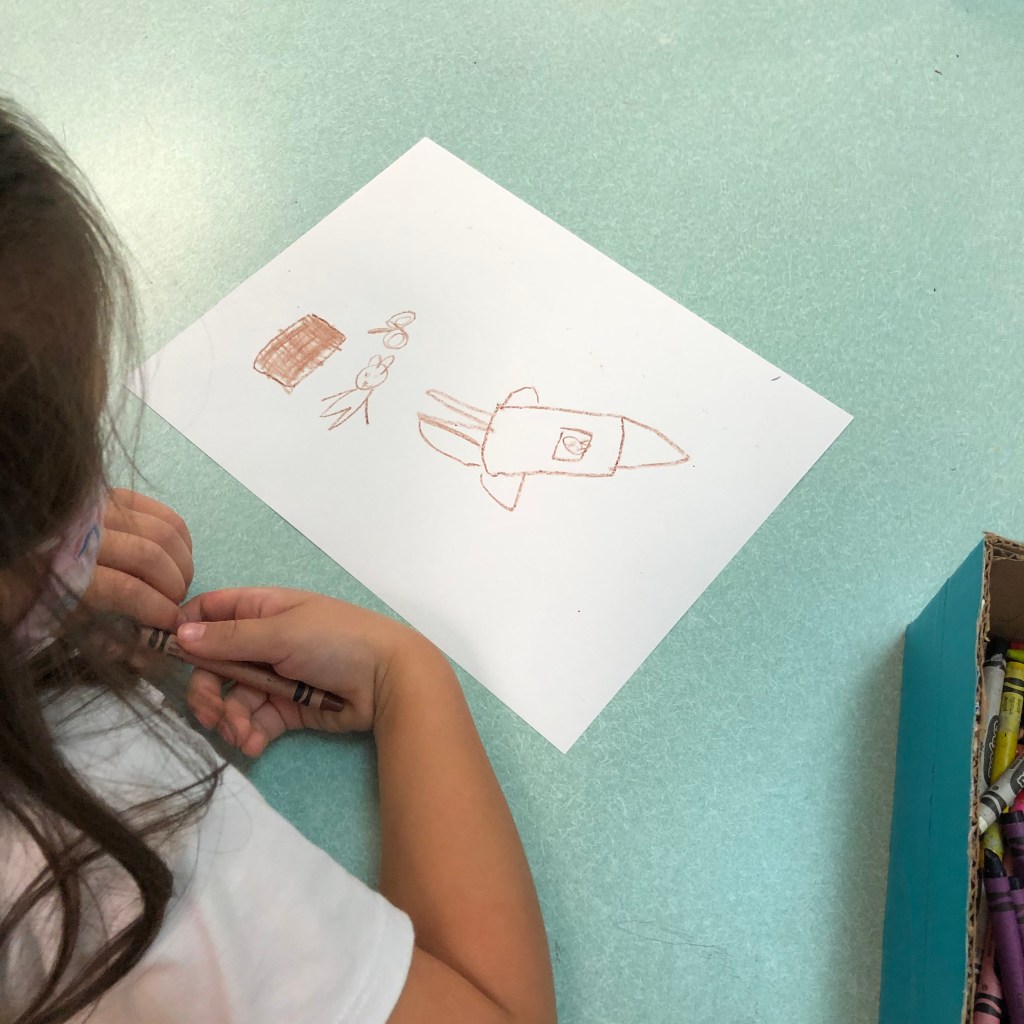
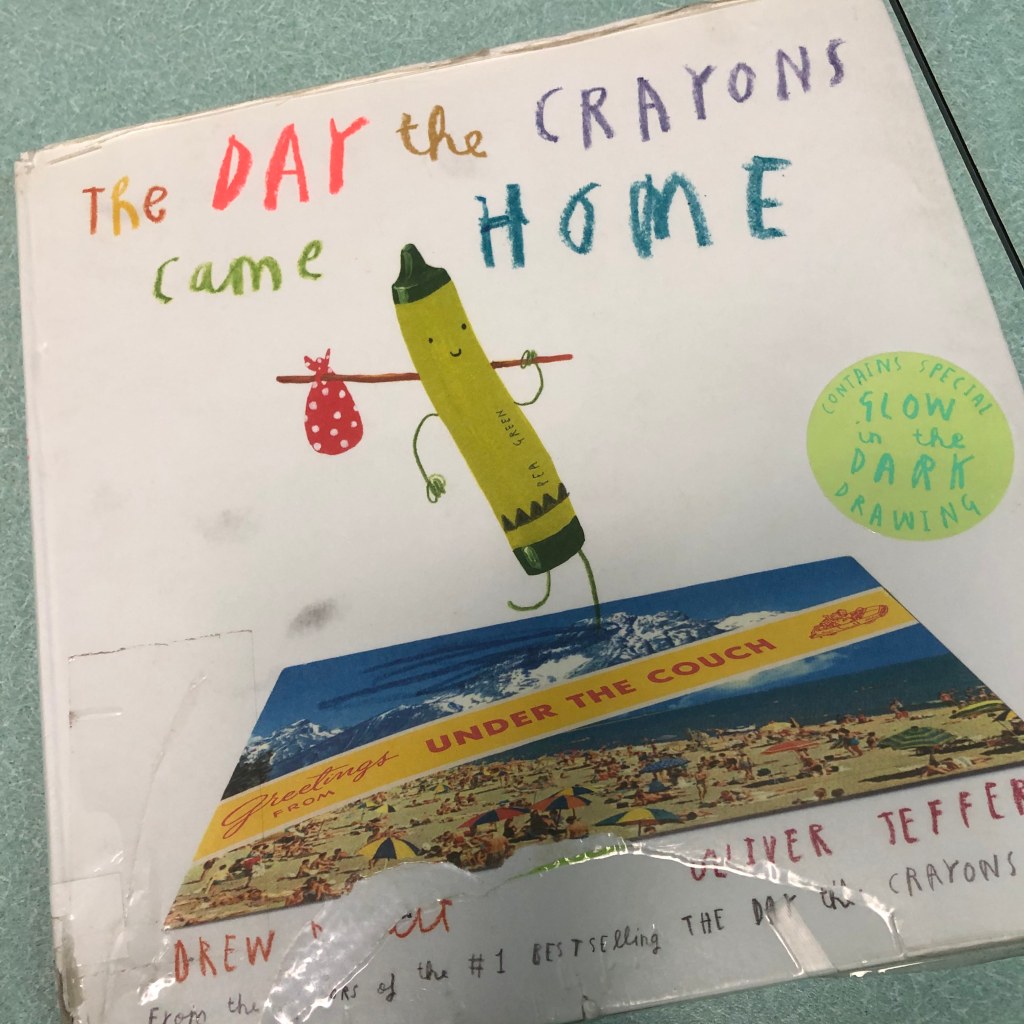
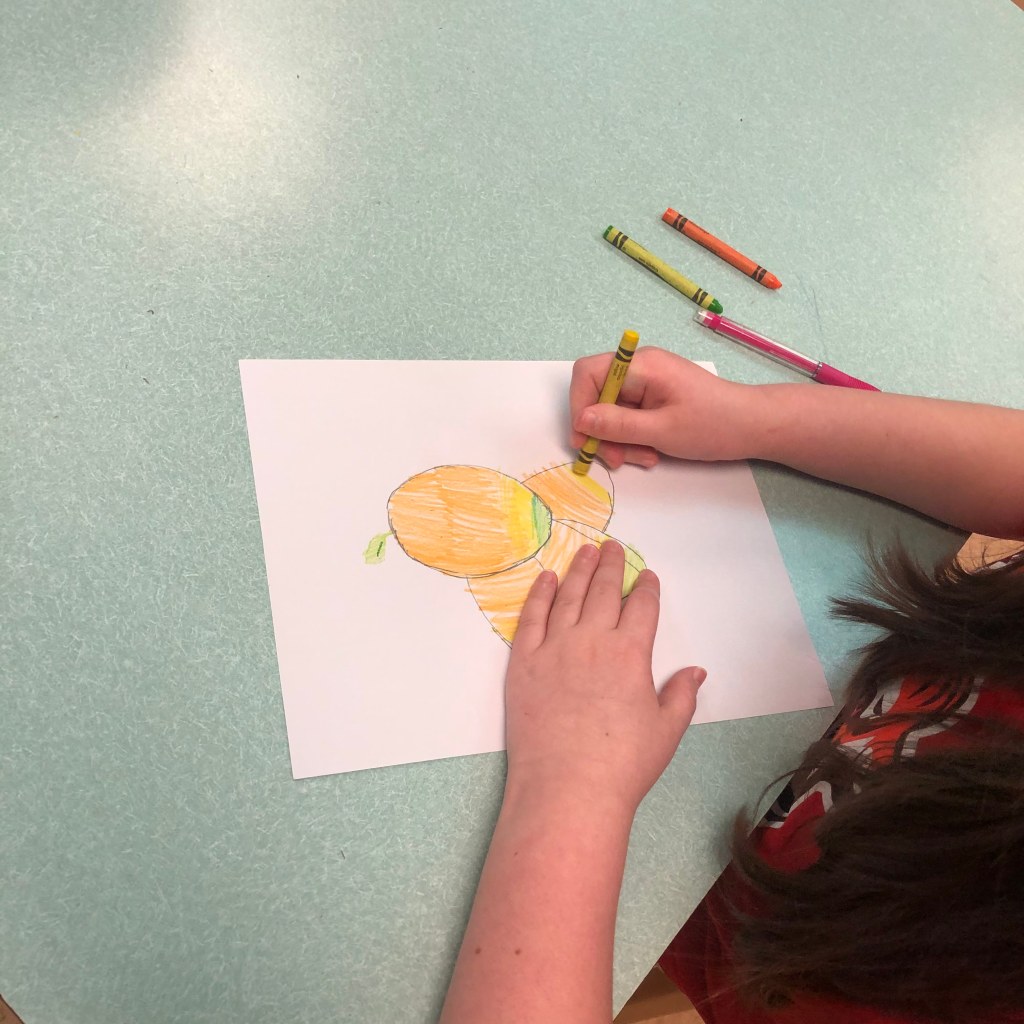
Our art teacher left emergency sub plans, and they certainly would have worked, but I also wanted to see if I could come up with something a little more creative. I went over to our library and found the book The Day the Crayons Came Home by Drew Daywalt. If you’ve never seen the book, each page is a postcard from Duncan’s crayons who have been lost about talking about the fun they’ve had together, where they were lost, and that they wanted to come back. After reading the story, each student was encouraged to pick a crayon color from the crayon box and create something with that color. Students who finished their artwork were then encouraged to write a note from the crayon to Duncan.
While this was certainly not the day I had planned, it was the way the day needed to go. And as principal, there are things that may not be a typical part of your day, but you just step in because it’s what the school needs. And as an added bonus, I can tell you that I had a ton of fun being with our students helping with the art class throughout the day!
It would have been easy to have a mindset of frustration about the inconvenience that this created in my day, but the truth is, someone had to be the art teacher for the day, and there was nobody else to do it. Sometimes part of being a leader is stepping up and taking on things that nobody else can do. Sometimes you just have to do it!
In my first ever interview for an administrative position, one of the questions I asked of the interview team was “What does the typical day look like?” The members of the team briefly looked around at each other, and with a laugh, one said “There is no typical day.” I have found this to be so true.
Every day I walk into the building with a targeted to-do list. But the task of leading a school involves lots of people. And a big part of those people is the kids that walk into the building each day. And when people are involved, things happen, among our staff and students, that may require my immediate attention. So, with that knowledge, I have to recognize that my to-do list is always a moving target. Some days, I can be focused primarily on the things that are on that list, and I walk out of the building feeling like I accomplished a lot and did good work. Other times, I find that there are so many things that come up during the day that I’m unable to do any of the things on my list, and I walk out of the building at the end of the day feeling like I was run over by a truck and wondering what just happened.
What this means is that I have to work to identify my vital function. When I look at my role, the vital function that I keep coming back to is one of communication – I am the chief communicator for Fishers Elementary School. I communicate with our staff about how to best accomplish our goals while meeting the needs of our students. I communicate with our students through things like the morning announcements, times I visit the classroom, and the multitude of other times I get to interact with them. And I communicate with our families and communities to share important updates about what’s happening on the daily at our school.
On my bulletin board in my office there hangs an index card with the quote “How do we make great learning go viral?” It’s a reminder to me that I have the privilege to walk into all of the learning spaces of our school and share the amazing things that are happening to our community within our school, and the community beyond our school.
So, with an identified vital function, the next step is to narrow my focus. If it’s one of those days I referred to above where I feel like I’m being pulled in a hundred different directions, I have to be able to ask myself “what is the main thing?” that will help me to accomplish my vital function. Sometimes that question allows me to zoom from the 30,000-foot view to the 10,000-foot view. And that’s still not zoomed in enough, so I look at my new list of tasks and say, “what is the main thing here?” and can get a lot more granular.
Sometimes some things are on my initial list that still have to happen today, but they don’t fall into that more focused version of my to-do list. This is when it’s time to delegate.
Last week I had a morning meeting with our 3rd and 4th-grade team. They had concerns about their report card for quarter 1 this year (For some context depending one when you are reading this, it’s the fall of 2020. We are in the middle of Covid-19 life. Students were learning virtually for the first month of school, then we were in a 50/50 model, and just before the end of the grading period, we will be returning to school with almost all our students learning in-person, although there is still an option for virtual learning for families who want to do so. A complicated time!). As I was walking with my assistant principal to this meeting, one of our teachers came walking out of her room just in front of us. She had injured the top of her head by hitting it after bending over to pick something up. I knew we needed to check on her but also knew almost a dozen people were waiting on me for a meeting. I knew that our nurse was in the office already, so delegated – our AP walked the teacher down to the office to see the nurse while I continued to our meeting. I asked our AP to keep me informed of what was going on with the teacher because I was concerned about the health of our teacher, but when I weighed the tasks on my list, I knew that taking care of this teacher was something that could be delegated at that moment while being prepared to be the lead communicator in the room for our discussion on the report card was part of my vital function.
One of the things that I have come to realize in the past 10 months of being a building principal is that there’s always something for me to do, and sometimes there are a bunch of somethings that need to be done. And while there are things that require my attention, there are also things that I have to trust the team that’s around me to make the best call on. I’ve long believed that part of leadership is knowing your strengths and weaknesses and surrounding yourself with people who will support you in your areas of weakness. Luckily I am in a position where I have a ready-made team that is willing and able to step in and take charge in situations that fall into their areas of strength, and I’ve consistently made it clear that I trust them to make judgment calls, even in a sticky situation.
As a building principal, the leadership of our building falls on me, but I can’t do it all. And that recognition is part of what makes my leadership work for our team. For our team to be great, we all have to play our part.
In my last post, I spent some time talking about the strategies I used to build relationships with the staff of my school after I transitioned into the role of principal of Fishers Elementary School. After spending that time listening to our staff, it was clear that there was a lot of energy, a lot of ideas, and a willingness to grow. But what it seemed was lacking was a clear direction. During an early meeting with the staff, we started talking about the process of building a vision of learning for Fishers Elementary School. We all agreed that there needed to be one, and that it needed to start with each one of us – our beliefs, ideas, and personal passions about teaching and learning.
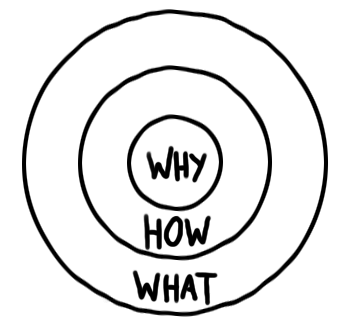
In order for someone to understand what they are doing, they have to also be really clear on the how and why that goes with that what. Simon Sinek has a book and a TED Talk titled Start With Why (the book is a quick and easy read, or you can check out the talk here). In both, he shares the idea of The Golden Circle. In both the book and the talk, he explains that the people and companies who are the most successful have a really clear definition of their Why, and then work their way out on the Golden Circle. But most companies or organizations start with the what and work their way in. I felt that if we wanted to have a really clear understanding of what we were trying to accomplish at FES, we needed a clear definition of our why.
For our January staff meeting, I planned, then presented my own version of an Ignite session (if you’ve never done this, it’s a 20 slide presentation, where the slides automatically shift every 15 seconds) titled “My Why” (I wrote a post about it a while ago – you can read about it here). I then encouraged everyone to take some time in the coming weeks to think about their own why.
At our next staff meeting, we came together again. It was a chance for us to all reflect on our personal why. I encouraged everyone to sit in a grade level team, and with that team, they had a short amount of time to discuss and define a shared why. We then used a collaborative powerpoint document, where each team created their own slide. The work around defining our why was so important in helping all of us to be really clear on our beliefs about education and learning. It’s the why that drives what we do, not the other way around.
As we were spending time talking defining our why, we also talked about the importance of a shared vision. A Vision for Learning for FES that is written by one person based on their beliefs is not going to be meaningful to all the stakeholders. We started talking about who else we needed to get input from. In these conversations, we knew we wanted the thoughts of our students, we wanted the thoughts or our families, and if possible, we wanted the thoughts of our community. We wanted to make sure that whatever our Vision for Learning was to be included in the ideas of multiple stakeholders.
In February, we were planning to gather the thoughts about learning from our community. It was a couple of days before an upcoming PTO meeting and I was sitting in the conference room with my leadership team. As we were talking, someone pointed at a bulletin board in the room and said “Well, we already have a vision statement right here.” I was floored. “You mean I’ve been here for almost 3 months, and I’ve talked with all of you about developing a vision, and nobody told me that there was already one on a bulletin board?” (OK, maybe my fault for not noticing.)
But what I quickly came to realize is that the vision that was on that bulletin board was nothing but words on a wall to most of the people in the building. They did not feel that the vision that was on the wall accurately reflected them. I’m not exactly sure who all was involved in the writing of that vision, but it wasn’t a shared vision. It didn’t drive the decisions that we made about learning in our building. It was just words on a wall.
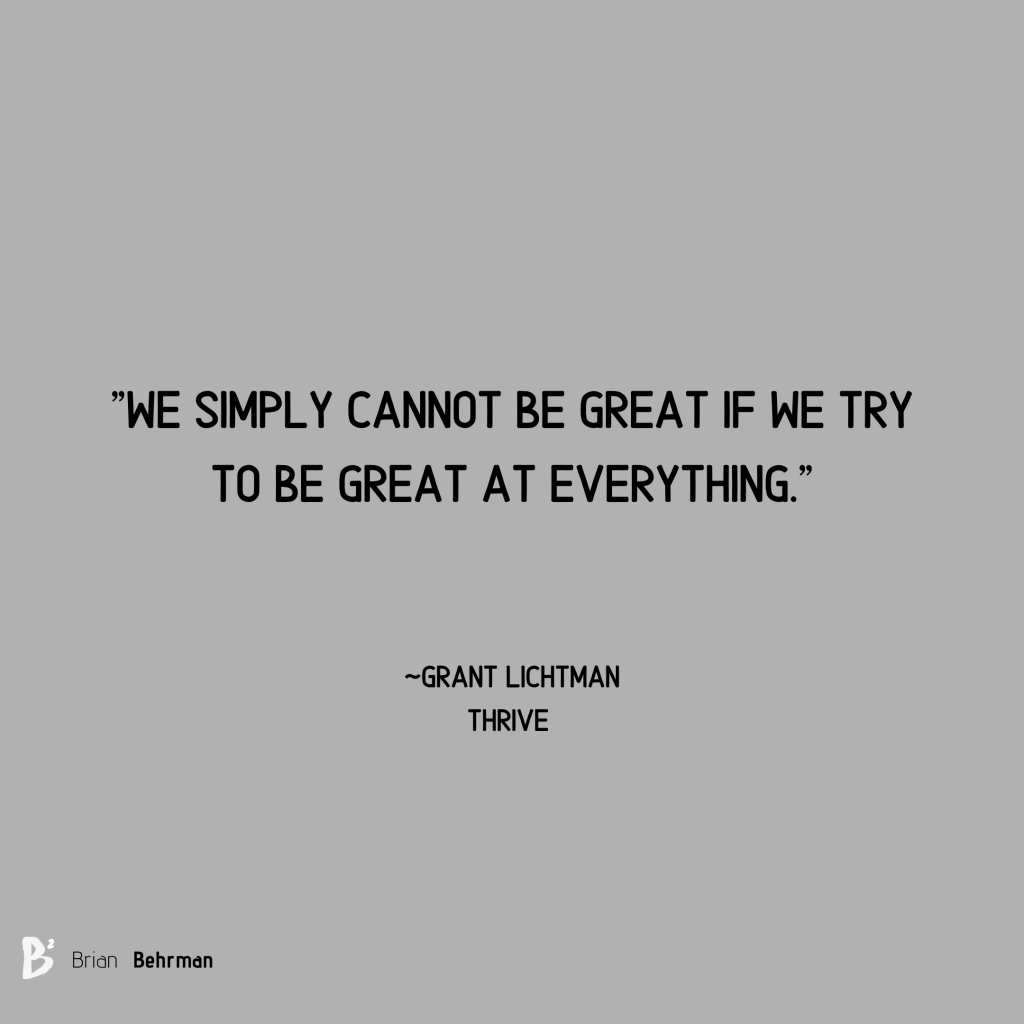
To gather some thoughts, we started with 4 questions. Those questions were driven by the book Thrive by Grant Lichtman and included:
We asked these questions first in a staff meeting, and then in our PTO meeting. The thoughts we gathered were so impressive!
These responses were collected during a staff meeting and then a PTO meeting on March 11th. When we collected these thoughts, we did not fully grasp what was about to happen in our world. On March 13th, we let out of school earlier than scheduled for spring break due to concerns about the risks of Covid-19. We taught from home for a week, then had a 2-week spring break during which the governor of Indiana announced that schools would not reopen.
After spring break, we transitioned to what I would call emergency remote learning. It was nothing close to the ideal learning environment for our students. Initially, when this transition happened, I had big plans. I thought we could still do our work on the Vision of Learning for FES virtually. But what I quickly found is that we weren’t ready for that. Most of us were barely able to tread water to meet the learning needs of our students. In January, my goal was to have a well-defined vision for learning before the start of this school year. By April, it was clear we needed to hit the pause button on that work.
So now, I sit here at the start of September. Students start in our building tomorrow. So much of our mental energy has been devoted to the logistics of opening a school in the middle of a global pandemic. But, my assistant principal, our teacher development specialist, and I are once again reading Thrive. In talking through the first section, we all feel like we’re currently at the point where we need to identify our value proposition – what is the thing that makes us valuable to our community? In the coming couple of weeks, I will be working on writing this up for our school community. I’ll share with our teachers, I’ll share with our PTO, and I’ll share it here, to seek feedback on our value at Fishers Elementary School. That will move us one step closer on the path of a clear Vision for Learning.
I think it’s safe to say that the transition to my current principal position is not what would be considered typical. Last year I began the school year as the assistant principal of the intermediate school that I had been working at for 16 years. I was initially hired as a 6th grade teacher, and then transitioned to the assistant principal for the last 7 years. Last October I walked into a training on Culturally Responsive Teaching with Kelly Wickham Hurst. It was an afternoon training and I was running a few minutes late because I’d been dealing with a student behavior situation at my building that morning. As I walked in, one of the secretaries stopped me and let me know that our superintendent was hoping to see me.
As with most of us, hearing that your boss wants to see you might bring us all pause. As the secretary called back to see if Dr. Bourff was still free, I was wondering what he might want to speak to me about. Had I done something wrong? Was there a parent upset with me? Had I handled a student situation poorly? While there was nothing I could think of that had gone wrong, I think we all react to something like that when you are asked to see the “boss.”
When the secretary got off the phone she let me know that he was no longer available, and to head on to my training. When I walked in, I pulled out my computer and got ready to take notes. I sent a quick email to our superintendent’s personal secretary letting her know that I was there and could step out if need be, and tried to focus on what we were learning. The training was very engaging, and soon I was locked in. Then I noticed an email saying that I could come on back to Dr. Bourff’s office.
As I walked into the office, I was still wondering what this could possibly be about. I was asked to sit down in one of the “comfy” chairs at the side of the office, and we began to chat. At the time, I was in a cast because I had broken my hand after falling off my bike a couple weeks earlier (that’s a different story), and Dr. Bourff asked me if I’d looked into training wheels. The feeling in the room was not one of trouble, so I settled in, still wondering what the news would be. Finally, we got down to business.
“Brian, I’m going to reassign you,” were his words. About a million thoughts went through my mind, but my response was “What does that mean?”
Dr. Bourff explained to me that he would be reassigning me to the principal position at Fishers Elementary School. We talked about a few details, but the most important things I needed to do was to talk to our assistant superintendent of teaching and learning and our director of elementary education.
The next few weeks were a whirlwind of conversations so that I could be prepared for the transition. As you can imagine, I had lots of questions, and one that I asked of everyone that I met with was “What should my priorities be when I get started?” I’m not sure that I recall exactly what I expected when I asked the question, but I think I expected it to be something relating to curriculum. That wasn’t it at all. Consistently the response I got was to build relationships, get to know my team, and work to set a direction.
So I did some thinking about that. I’ve always been a relationship guy when it comes to working with kids. I was intentional in talking with all my students, checking in regularly, and noticing who was quiet or who was acting different than normal. So I guess I needed to come up with some way to get to know all the staff members of my new building. I know that I never (not as a student, and not as a teacher) enjoyed getting called down to the principal’s office. I didn’t want my first conversation with staff members to be something that might make them feel overly stressed before we even started.
Just down the street from school, there is a local coffee shop. I decided that I’d set up “Coffee Chats” where I could meet with members of my team and just talk. While there were times that our conversations would stray to things about school, that was not necessarily my goal. I wanted to walk away from those conversations feeling like I knew the people I would be working with, and that they knew me. I created a sign-up genius with times both before and after school on different days of the week, then shared my idea with the staff. Over the course of about 5 weeks I met with almost every member of our staff. A few chose to meet with me in my office out of convenience, but the vast majority decided to meet with me at the coffee shop. Some chose to come with their “friends” while others came on their own. And at times when one conversation would go a little long, or someone showed up a little early, we’d expand our circle and have a group conversation.
Here is what I used as the questions/conversation starters to guide our conversations:
Tell me your story… Where are you from? What was your childhood like? How did you come to be in education?
What do you most like to do when you aren’t at school?
What are you passionate about in education or personally?
What has been your most significant learning experience?
What are your goals (professional or personal)? How can I help you achieve them?
I know that those could sound a bit “interview” like. I let people know at the beginning that it was a conversation and my goal was just to get to know them. In some of the chats, we spent the whole time just on sharing our stories, while at other ones we spent much more time talking about some of the other questions.
I started as the principal of our building at the beginning of December, and by the end of January I really knew the people who worked with me. As I reflect on this process, it’s probably the most impactful thing that I could’ve done as a leader in my building to get started in that role. It has allowed me to know about people, to understand their background, and to understand what they value. The better I know people, the better I am able to serve and support them, and the better we are all able to support our students.
As a first-year, first-time principal, the opportunity to simply take the time to get to know people also teaches you so much about the culture of the building. Before long it was clear to me that I had a staff that was excited for a change. There were some really great ideas that needed to be encouraged, and some staff members who were ready to fly with powerful learning opportunities for students.
Finally, the time invested with people allowed me to build trust with each of the staff members I met with. One of the key tenants of the book The Speed of Trust by Stephen M. R. Covey is that when there are high levels of trust, you are able to accomplish big things very easily, and when there are low levels of trust, even the smallest of changes takes an incredible amount of effort.
Building these relationships and establishing trust set our course for the next big steps: setting a mission and vision for our school. More on that in the next post!
The bell curve. It’s a standard part of the old-school mindset of the Industrial Age of Education. For years, this bell curve concept represented where our students fall. The high point on the curve is seen as “average” and anyone to the left of that point was “below average.” Our goal as educators was to push students over the top of the hill so that they might move into the “above average” category. I’ve written about the concepts of average in a two-part series previously (see Part I here, and Part II here). While there have definitely been some shifts in education, there are times that schools still operate in an industrial age model.
The problem with this is that our world has moved beyond the Industrial Age. Much of my lifetime, we have lived in the information age. For those of you who have been around for a while (like me), think about all the things that have come into existence in your life – from the birth of the cordless phone, to the original cell phone to the smartphone, iPad, Google, Facebook, Twitter,Netflix, Apple Pay, Zoom, Grubhub, Uber – this list could go on! The information age has been all about flattening the ability to gather information. Teachers and librarians used to be seen as the keepers of all knowledge. Today, our students can take out their smartphone or iPad (which both have more computing power than the rocket that took Neil Armstrong, Buzz Aldrin, and Mike Collins to the moon) and find any content they need to know.
A few weeks ago I was at our annual administrative retreat (this title makes it sound way fancier than it really was – this year we met in the cafeteria at the high school) and had an awesome session through Zoom (one of those tools I mentioned above!) titled “The Future of Learning, Today” with Jon Landis. Jon currently serves as the National Development Executive for Apple Inc. In his past, he spent time as a teacher, administrator, and assistant professor. There was so much goodness in his presentation. I wish there were a way to share this entire presentation, but I can’t find a way to do that anywhere. If you ever see an opportunity to view this presentation, you should absolutely go for it!
Jon talked about how at Apple they are now beginning to think of the world in a new way – no longer are we in the information age, but we have now shifted into “The People Age.” Historically educators grouped their students and created bell curves, but in the people age, we have to begin looking at the individual dots on the curve, not the curve as a whole. So what does that mean for education? Jon talked about 4 main concepts that affect learning in the people age.
Connected
Collaborative
Creative
Personal
Let me expand on each of these ideas:
Connected – In the modern-day learning can happen ANYWHERE! Anytime a student wants to know more, they can pull out their device and “search it up” (as my 8-year-old likes to say). Our job as educators is to help provide equitable access to quality content, anytime, anywhere. This means students no longer need to know it all. Rather they need to have the skills to understand if the resource they are using is providing meaningful and accurate information on the topic they are researching. Since we aren’t the keepers of the knowledge any more, the content isn’t what they seek from us, rather it’s the tools to know if the content is valid.
Collaborative – Our students love to share what they are learning – this is why the share portion of the workshop model is such an important part of the learning process. But another advantage is that when students share, they form relationships, and when they form relationships, they are able to build a stronger understanding and contribute to the world. Look for ways for students to share their learning in authentic ways and beyond their own classroom walls. I feel my learning has grown and solidified since starting my blog because it forces me to process my learning in a way that I can share with others. How might your students be able to share their learning – could you start a class blog? Share on a class Twitter or Instagram page? Or maybe even on a YouTube channel? Or maybe it’s your students who could manage the blog, social media, or YouTube channel? Could you try to connect with experts in the areas our students are learning about so that students can share their thinking? I don’t know too many people who can choose to ignore an email from a cute elementary student!
Creative – This is where the true agency for our learners comes in! As teachers, we might pick an instructional goal for our students, but then we allow students to be creative in how they show their learning. Some students may choose to write an essay or create a poster, others might create something else. I’ve seen picture books that students created to share their knowledge of the water cycle. I had a student who built a model of a Roman Aqueduct to share what he had learned about Roman architecture. Other students might choose to create a digital presentation or a news broadcast. The choices that students could make are endless – your assessment is on the learning outcomes you are seeking, which means that your assessment tool can be used to assess anything that your students might create.
Personal – This allows students to make choices in their learning pathways. Ultimately we want to help our students develop a desire to learn about the things that are important or interesting to them. This means that no longer is the teacher the keeper of knowledge, rather the teacher may be the curator of a variety of tools and resources that students can choose between to make it to their ultimate outcome. One year as a social studies teacher we were learning about Ancient Rome. Our learning outcome was that students needed to have an understanding of the various aspects of Roman society. I did a brief introductory activity on Ancient Rome, and then let the students do research. They had our textbook, some videos I found, a variety of magazines and books I was able to find in our library, and a list of websites I shared with them. Students were able to pick one of the aspects of Roman society that they were curious about, and then dig in. Not only did a student create a Roman aqueduct, but I also had students who designed and then made their own Roman-style clothing, I had a student who taught others how to play a game that Roman children played, and so much more. The students in my class were able to design their own learning path for this unit, and they learned more about Rome as a whole than if I had taught a unit on Rome in a more traditional style. And my assessment? One basic rubric that involved general knowledge of Roman culture and tied back to our original learning target. My only regret – I didn’t teach like this all the time!
At the close of his presentation, Jon asked us 3 questions to reflect on:
What is your vision for the future?
How is your technology helping you get there?
What if we lean into the realities of remote learning?
No longer do we live in the Industrial Age of education. No longer are we driven by the bell curve. No longer should our thinking be focused on trying to get our students over the top of the curve. In the People Age of education, we need to look at every child in our class and remember that they are a dot on the curve. We meet them where they are. We move them as far as we can while they are in our class. We provide the content, but more importantly, the tools they need to solve problems they are curious about. We help them to define their own learning path within the constraints of our learning outcomes. Because ultimately, not all things work for all learners.
It’s August, and that means it Back-To-School time! In my lifetime, I’ve had 36 first days of school when you combine my years as a student and as an educator. That’s a lot of first days. None of them have prepared me for this year.
You see, this is my first time starting the year as a building principal. I moved into the role last December, but often joke that for all intents and purposes I only had one grading period as the principal, and the first half of that was spent with a map of the school in my pocket so that I knew who was the teacher and which grade level classroom I was walking into. Then came March 13, 2020. We shut down for Covid-19, just like so many others. We went home with the hope that we’d be able to return after our scheduled spring break at the beginning of April, but the Governor of Indiana changed those plans for all of us by closing down all schools for the remainder of the school year.
Beginning in mid-May, those of us who worked in the office were able to return to close out the school year, but there were not teachers on-site, and there were no students. The school was a quiet and dark place most days. Really, it didn’t even feel like school.
During June and July, our administrative team would meet each Tuesday to review our plans for the coming year, work towards reopening, and begin planning for a new school year. We had a reopening plan. I spent my first week back working on schedules for lunch, recess, related arts, all while trying to think about how to keep students appropriately physically distanced. We revamped several aspects of our schedule so that not as many students were entering the cafeteria at the same time. We were thinking about how to map out our hallways so that there would be fewer traffic jams of students. We were registering new students. We were responding to parents who wanted all students to wear a mask at all times. We were responding to parents who never wanted their child to wear a mask.
Then came July 17th – we received word that the school year would be starting virtually in our school district. While the work we had been doing all summer wasn’t a complete waste – we need to have plans for when we are able to open the building – we had to make a quick pivot from the mindset of how to safely open a school to how to start the school year in a virtual setting. As a large suburban district (and like so many other districts all over the country) we are doing something that has never been done on quite this scale – opening public schools in an entirely virtual setting, during a global pandemic, and in a moment of awakening for the Black Lives Matter movement.
Did I mention I’m a first-year principal?
Luckily, I work with an amazing team of educators, and they were up to the task!
As a new principal, when I came into the position, I was walking into a building that I quickly realized needed to take some time to revisit the work of a mission and vision. When I brought this up in staff meetings, nobody mentioned to me that the school had a mission and that it was on the wall outside of the office. That was a sign to me that the mission that was on the wall didn’t have a true meaning.
Through some vision setting activities during staff meetings, in working with our PTO, and working with our school leadership team, some clear patterns arose. In conversations around our building, it was clear that our staff valued three key ideas:
Relationships
Equity
Learning
These three words will guide the work we do all year.
On the first teacher day last week, we opened with a staff community circle. We valued the time to rebuild relationships and community after a school year that was cut short. This was relationship work.
On Tuesday we spent the morning in our PLC Teams watching a presentation from Cornelius Minor thinking about how we can “Lean into the idea of possibility” for this school year, and discussing in our PLC teams how we can create equitable learning opportunities for our students even when they aren’t present in our school building. This heart work was so powerful and tied to our beliefs in both equity and learning.
On Wednesday, I spent much of the day meeting with each of our grade-level teams to talk with them about how they were feeling. What questions did they have, what support did they need? While we certainly spent some of our time discussing logistics that people were worried about, I also heard about the thoughts and ideas that each team had come up with in order to build relationships early with their students. I heard ideas they had to provide equity in their learning opportunities. But most of all, I heard a staff that couldn’t wait to see their kids. This was more relationship work and continued work on learning.
In starting a virtual learning school year, our district plan provided us with a unique opportunity that no teacher ever truly gets. On the first two official days of school, our teachers spent the day meeting in an individual Zoom call with each one of their students. By lunchtime of the first day, I had already heard from many of our teachers how great it was to start the year this way. Several were asking if this is something that we could do every year. You see, when else in the first two days of school would you be able to have a 15ish minute long conversation with every one of your students? And when would that time be uninterrupted by the other students in the classroom?
As I write this today, we are in the first week of our true virtual learning schedule. I promise all of you that I would much prefer to have each and every student in our school building every day, but since that isn’t possible we are trying to make the most of the situation we’re in. Every student is participating in reading, writing, and math every day. They will also have their related arts every day. Some of the instruction is coming from pre-recorded videos created by our students, and some of the instruction is coming as live individual/small group instruction on Zoom. And while we are doing this in a way that we have never done before and it feels so much harder than anything else we’ve done, I’m excited by the possibilities that this time will afford us.
And even more so, I am so excited to see the teachers of our school embodying our three words: Relationships; Equity; Learning.
There has been a LOT going on since my last post. I’m venturing into an area that I’ve written on before, but it’s one that I can’t seem to leave behind – the concept of equity.
For the past few years, I have been on a journey of learning about the systems and structures that are in place in our society today, and how those systems have impacted many of the colleagues, friends, students, and the families I serve. That learning began long ago but was really brought home during my participation in the Undoing Racism training that all district administrators from my school district participated in during the summer of 2017. The learning has included multiple meetings and conversations with colleagues in our district as well as outside of it. It has included presentations from outside voices in the equity space (just in the past year that includes Kelly Wickham Hurst, Cornelius Minor, Dr. Paul Gorski, and Sarah-SoonLing, just to name a few). And much of my continued learning has come from books that help me to not only understand more about my own privilege but also about the oppression that I can never fully understand because it isn’t my lived experience. The stories of Amaud Arbery, Christian Cooper, and George Floyd just to name a few recent examples have reminded me yet again of the privilege I have and the oppression that some feel.
In the district that I work, we have defined equity as the concept of giving each individual what is needed to succeed within our global society. With that as a mission, the recent events of our world have left me feeling that I cannot remain silent. I needed to do something.
So today I sat down at my computer and I typed an email to my staff, sharing with them much of what appears above. I wanted them to know that I support them and the work that they do, whatever it may be that they are going through. I know that there are some on my staff that have to deal with the type of oppression that has led to racially motivated violence all over our country. I also know that there are some on my staff who are still working to come to grips with the privilege that we have, and the potential guilt that may be felt as a result of that. And I also know that there may be some who have not yet been able to examine the place of privilege that we live in, and want/need to learn more.
In my current position, I recognize my own power and privilege. I want to take advantage of the platform that I have. So as I was thinking about how to help be a part of the solution to tearing down the systems that oppress others, I shared with my staff a list of books that I thought might help them on their own path. I’ll share that list with you here. In order to support my staff in their learning, I also let them know that they were free to pick any of the books below, or any other book on equity that they wanted, and forward me the invoice so that I could buy it for them. I challenge my fellow administrators to seek ways that they may be able to use their budgets to support the continued learning of our collective staff. The education system is one that was built on inequities, and the only way to change it is for those of us inside the system to fight for better systems.
Just like my staff, I encourage you to look over the list of books below and select one or more of them to read so that you may also learn and grow at this time. I believe strongly in the role that white allies will play in making a difference moving forward. Hopefully, these titles will help you identify some potential opportunities for your own learning.
Stamped: Racism, Antiracism, and You. This book is actually considered a Young Adult Nonfiction piece. It breaks down the history of our country and helps us to better understand why we are where we are now. The writing style of this book feels almost conversational.
White Fragility: Why It’s So Hard For White People To Talk About Racism. Many people believe that in order to be a racist, you have to be a bad person. What this book taught me is that good people can have racist ideas and actions. This belief about racist = bad leads to a lack of meaningful dialogue between the races.
Waking Up White, and Finding Myself in the Story of Race. As a white male, I don’t think I recognized the role race played in my life until fairly recently. Debbie Irving, the author of this book had her own “aha” moment. This is a story of one white person’s journey in learning about how race has impacted her own life.
How to be an Antiracist. This is the one book on this list that I have not yet read, so I can’t give a meaningful background of the book, but I am planning to participate in a book study with some of my former colleagues this summer and look forward to learning more from Dr. Kendi.
You should know that with the exception of Waking Up White, the books on this list may be on backorder because of the number of people recommending them. I also encouraged my staff to look in multiple places for these books, starting with https://bookshop.org/ because it supports local and independent book shops, and as an added bonus, currently the prices for these books seem to be better than the prices on Amazon.
Finally, I shared with my staff that we will have a lot of work to do this fall. We will need to build a community back up that has been torn apart by a global pandemic, and one that has been hurt by the racially motivated violence that has been going on for a long time but has become so visible this week. We don’t know how long either of those things will continue to influence our lives or the lives of our students. I encouraged my staff to be thinking about what we can do to make sure that each one of us feels safe and accepted for who we are, as well as what we need to do to create identity-safe spaces for each child who walks through our doors.
I’m curious to hear what titles you might add to this list? What books am I missing? What other ideas do you have about how we might change the system, or prepare for a return to some kind of normalcy in the fall. I know I have much more to learn and would appreciate your thoughts and ideas.
For a little context depending on the time when you are reading this – as I write this post, it is the last official week of school during the spring of 2020. This means we are living through the effects of the Covid-19 pandemic. We haven’t had students at school since the middle of March here in Indiana. Much of the world has been living through a time of social distancing. I am sitting at the desk in my son’s bedroom because it is the one quiet space that I can find right now that also has (semi) reliable wifi. The nicest shirt I’ve worn in the past 10 weeks is a polo, and I felt weird the day I put it on. My wife and kids are currently working on their eLearning, Diane is a first-grade teacher, Lainey is wrapping up her fifth-grade year, and Brody is finishing up his second-grade year.
I have been sharing with people that this has truly been the strangest school year of my life, and I continue to believe that to be true. I started the year as an assistant principal at an intermediate school in the district where I have lived and worked since the fall of 2006. In October of this school year, I was asked to move into the position of Principal at Fishers Elementary School. That transition took place on the Monday after Thanksgiving break. During the weeks between Thanksgiving and winter break, I was carrying a map of the school around in my pocket because it reminded me of the name of the teacher’s classroom I was about to walk into, and what grade level they taught.
After winter break, I felt like I had a good grasp of who my staff was, now I wanted to get to know them as teachers too. I spent lots of time in classrooms just looking around, listening, asking questions, and learning about personalities, teaching styles, and the feel of the classroom. About the beginning of March I was beginning to feel like I had a pretty good grasp on our school. Then came the announcement that school would be closing – initially it was for a few weeks, then our governor made the decision for the State of Indiana that it would be the rest of the school year.
For about 2 months now, we have been living through an environment of Emergency Remote Learning. In the beginning, we had no idea what this would look like. But soon, teachers were coming up with plans to connect with students. They adapted to teaching kids synchronously and asynchronously, depending on the needs of the students. I was on Zoom calls with teachers, with students. I saw teachers turn walls in their home “office” into a whiteboard type space. I saw other teachers drive in their car to the public library to sit in the parking lot because it was the only place they could get reliable wifi during the day. I think @Wes_Kieschnick says it best:
I’m done hearing “our schools are broken”. Point to another industry during this crisis that has more quickly adapted to change, supported our most vulnerable, & served the community at large…without a bailout.
But the end of this year comes with lots of questions. What will the start of school look like? Will we be back on the “normal” schedule? Or will it be something different and unique? If you’re anything like me, then the quote to the right probably resonates with you as well (shared by @hansonhallway on Instagram). There are so many things that I simply do not know about what’s going to happen in the next couple of months. Currently August 3rd is scheduled as the first teacher workday of the year. I have big plans for what we will be doing as staff on that day, but I don’t even know if those plans will be possible, or realistic.
All of this has the end of the year having a very different feeling. In a normal year, we’d be thinking about classroom celebrations. There’d be a field day, and picnics, and so many more fun ways to wrap up the year of learning. I was recently talking to my wife, and we were both saying that even though the calendar says it’s the end of the school year, it just doesn’t feel like it should be. There’s so much that it seems we haven’t completed. But, I’ve got to trust that we’ve done our absolute best in unprecedented circumstances, and we can only be stronger after all of this!
I have been so amazingly proud of the work the teachers of Fishers Elementary School have done over the past 10 weeks! While I still am the “New Guy” at FES, I can’t wait for an opportunity to work with my team in some form of normal! I’m looking forward to walking into classrooms, hearing the sounds of learning, and watching the amazing work our staff does every day.
One thing that I am super hopeful for: that this time causes all of us in education to pause for a moment and really reflect. Take just a moment to think about these 3 questions:
What have you learned during emergency remote learning that you want to keep doing when you get back to school?
What have you always done that you now realize you should stop doing when you get back to normal?
What things do you wish you would have done prior to this time of emergency remote learning?
Hopefully through reflection on these questions, we can better identify what it is in education that we value most. What is it that our students need most? What is is that we need most? And then we can help change the system from the inside out to be a better environment for learning and growth for us all!
Last week I was on a Zoom call with one of the grade-level teams at my school. We were talking about celebrations and struggles that have come during emergency remote learning. For a long time, we have been aware that our system of education is full of inequities for our learners. During this team meeting though, one of the teachers shared an insight that really blew me away. She was talking about how her classroom Zoom calls have shown to her inequity in a whole new way. Some of her students “never have a quiet background” when they are on a call with their class. Some of her students seem to be managing their learning entirely independently while others have consistent support from their parents. Because of the current context of her emergency remote teaching, we have had the opportunity to come into the homes of our families, even if only in a virtual way. It helps us understand that some of our students may never have a quiet background or the support they need even in normal times. These inequities have caused this teacher to reflect on all that she does in the classroom moving forward. She’s already starting to make changes.
Now, before I start talking about the potential for change that comes from what is happening, I want to first share that I am completely aware of the struggles that those who are “in the trenches” are going through. I’m not the one providing emergency remote learning for a group of students. I am not the one who feels personally responsible for the students in my class meeting the standards that they need for their current grade level. I see the struggles that our teachers are going through because of the conversations I have had with teachers in my school and watching the work that my wife, who teaches first grade, is putting in. I’m trying to meet each person where they are and offer them the support they need by asking them how they’re doing and what they need.
Every chance that I get to talk with my staff, I make sure that I check in on them. I know that we (admin, teachers, families, students) have all been thrown into a difficult situation for which most of us were unprepared. I know that there are teachers dealing with illness in their family. I know that some of our teachers are trying to take care of their own children while teaching their class. I know that there are teachers feeling completely stressed about what is happening in our world. I am constantly asking teachers what our leadership team can do to help them with whatever is happening. At the same time, I encourage our teachers to check in with their students and families every chance they get. There are two questions that I hope are used to drive these conversations: How are you doing? and Do you need anything? For many of our teachers and families, that’s exactly what they need. I know that our families are also may be going through struggles. Some families have members who are ill, others may have lost their jobs, or had hours cut back. Some may simply be going stir crazy because we can’t get out and be with our family and friends as we might normally do. Whatever we can do to support them will only help build bridges between our school and our families.
But I also know that sometimes through moments of struggle, we can find great opportunities. Recently I was on a webinar led by George Couros, Katie Novak, and AJ Juliani. One of them (I honestly can’t recall which one) shared a quote from Donna Volpitta, the founder of The Center for Resilient Leadership:
Resilience is… about “bouncing forward.” Resilience doesn’t mean getting back to normal after facing a difficult situation. It means learning from the process in order to become stronger and better at tackling the next challenge.
Kolb’s Experiential Learning Cycle
When we think about the learning cycle, an important piece of that cycle is taking time for reflection. It’s something that we often don’t do well, for ourselves, or for our students. How many times have you walked away from a conference feeling like you’ve had so much shoveled into your brain that you don’t even know where to start with putting your learning into action? How often do you try to cram as much as possible into your teaching, not providing students time to reflect, only to find that you have to go back over that learning the next day or next week? Reflection is where growth comes from!
Last Monday I met with the PLC Lead Team from my school. There were several important things for us to talk about in the current situation, but one of the things that I shared with this leadership team was something I wanted them to take back to their PLC. I wanted to make sure that all our people spent some time reflecting on these three questions:
What have you learned during emergency remote learning that you want to keep doing when you get back to school?
What have you realized that you should stop doing when you get back to normal?
What things do you wish you would have done prior to this time of emergency remote learning?
Ultimately, I think it’s important for us to try to find some of the good that has come from our current situation, and then ask ourselves how we make sure that continues to happen when we return. What does school, and more importantly, learning, look like when we return? Where do we go from here? I don’t know that I have all the answers, but we’ve been given the chance to try some new things out, and I hope we look at this as if it were an experiment. We can try things, see if they work, iterate, and test again. Then we identify our successes and try to replicate in other areas.
A few of the things that I’ve gathered in conversations with teachers involve the motivation of students. Several people have noticed that doing things the same way we’d do it at school simply won’t work. There is a reason that TED Talks are only about 15-20 minutes. It has a lot to do with the amount of time a person – even the adults at a TED Conference – can focus on topics. If adults need things broken down into 15-20 minute chunks, we can’t expect our students to sustain for 30-45 minutes of lecture via video. Some of the things that I think learners need right now are choice, ownership, and empowerment:
Choice in what it is that they are expected to learn, or choice in how they show what the know.
Ownership in the selection of an issue that matters to them.
Empowerment to seek out their own geeky interests in the topics you have already been learning about, or that relate to your content or standards.
Another issue that’s come up with this new way of learning comes in the form of feedback to students. Right now we have many students participating in asynchronous learning, submitting work when it’s finished, and then waiting for feedback from one person. I’ve watched my wife spend hours a day responding to student work on Seesaw – she’s teaching first graders. I imagine that this feedback issue gets harder the more complex the content. I’ve always loved the quote “What are you doing for the kids that they could be doing for themselves?” Through the utilization of Flipgrid or discussion board formats in your learning management system, you could make the kids part of that feedback loop. If you use the concept of a Single Point Rubric (more on that in this post from Jennifer Gonzalez of Cult Of Pedagogy), kids can easily give one another feedback on areas for improvement of examples of ways that kids have exceeded the standard. I also feel that self-assessment with a single point rubric can be so valuable because it causes students to reflect on their work and learning. More often than not, they are harder on themselves that even you might be!
While these are shifts that may make emergency remote learning easier, they are shifts that could also support learners when we are able to return to school, whenever that may be.
What are your thoughts? Have you reflected on the three questions above? Share your thoughts in the comments below!
This is me when I was in junior high. I know… Great haircut, right?
When I was in seventh grade, I had a teacher named Mr. Courtney. He was my social studies teacher and was truly one of the more interesting teachers that I had in my middle school years. The recent developments with COVID-19 have me reflecting on one of the long-term projects that we did while in Mr. Courtney’s class that year. You see, I was in seventh grade during the 1991-1992 school year. If you don’t remember the time, this is the year of the fall of the Soviet Union.
As a child of the 80s, I remember living through a somewhat constant level of… Fear? (That doesn’t feel like quite the right word now, but I’m not sure what works better). Also, there was some incredible music and hair! Anyway, there was this awareness of the Cold War between the US and the Soviet Union. Who knew when things could erupt into a real war? But during the late 80s and early 90s there started to be some changes in the structure of the Soviet Union. Things really came to a head in 1991. This isn’t a history lesson, so I’m not going to go into the details of what I recall from the time.
Mr. Courtney, in a moment of great wisdom, made a decision to pivot with some of our learning. I’m sure that the fall of the Soviet Union was not on his curriculum guide for that year, but world history was. He knew that we were living through a moment of history. As an assignment during that school year, Mr. Courtney had us begin a journaling activity. We were asked to take newspaper clippings from the daily news about what was happening in the Soviet Union, as well as how it might be affecting the rest of the world. Then we were asked to write a journal response each day.
It’s got me thinking about what’s happening right now. All of us are living through a moment of history. What an authentic learning experience to bring into what we’re already doing. (And please understand, I’m trying to be really cautious not to use the phrase “opportunity” because this is a scary time for us all, and that word sounds kind of icky to me given the context of what’s happening around us. Sometimes authentic learning isn’t the topic that we’d ideally choose, and yet we go with it.)
In a team meeting with the fourth-grade teachers at my school, we began talking about an authentic writing assignment of a pandemic journal. Students can write about their lived experiences of this time around COVID-19. Students could share what they’ve learned about the virus. And to go with it, we talked about using resources on newsela as a way to read about COVID-19, viruses, and so much more of what is happening in the world. Here are just a few ideas I had around teaching during this period of COVID-19:
Create an informational brochure about viruses. Include ways to avoid spreading the virus, information on how long the virus can live, etc.
Have your students write a persuasive letter convincing their neighbors of why they shouldn’t be playing together with their friends right now.
Have your students learn about how a disease can spread through some of the amazing graphics from the New York Times here (or any of the other great graphics out there).
Have your students record a video showing what they are doing in their own homes to help keep things clean and prevent any potential spread of the virus within their own homes.
Have students use Wakelet, or something like that, to curate a list of news items that they find interesting relating to the world around them.
These are just a few ideas that come to mind in the short amount of time I spent thinking about it, but I’m certain that the chances for learning are endless. Here’s the thing, we sometimes get caught in what our curriculum guide says that we “need” to cover. At least here in Indiana, we know that we won’t be giving any standardized tests this year. While I’m not suggesting that we should throw out the curriculum guide completely, we can think critically about our standards and how we might be able to meet the learning goals of our students with a meaningful and relevant learning experience right now.
I still think about the assignment that Mr. Courtney gave us when I was in seventh grade, not because I want to reflect on the fall of the Soviet Union. Rather, I think of it when I want to talk about a model of what it means to be authentic and relevant for our students. I think about it when we contemplate how to be responsive to the world around us.
What things have you done with your class as a result of what is happening in our world now? Have you adjusted your plans? Created learning opportunities for your students that relate to what is happening in the world around us all? Share with us in the comments below a little about what you have tried, or are planning to try.




 The bell curve. It’s a standard part of the old-school mindset of the Industrial Age of Education. For years, this bell curve concept represented where our students fall. The high point on the curve is seen as “average” and anyone to the left of that point was “below average.” Our goal as educators was to push students over the top of the hill so that they might move into the “above average” category. I’ve written about the concepts of average in a two-part series previously (see
 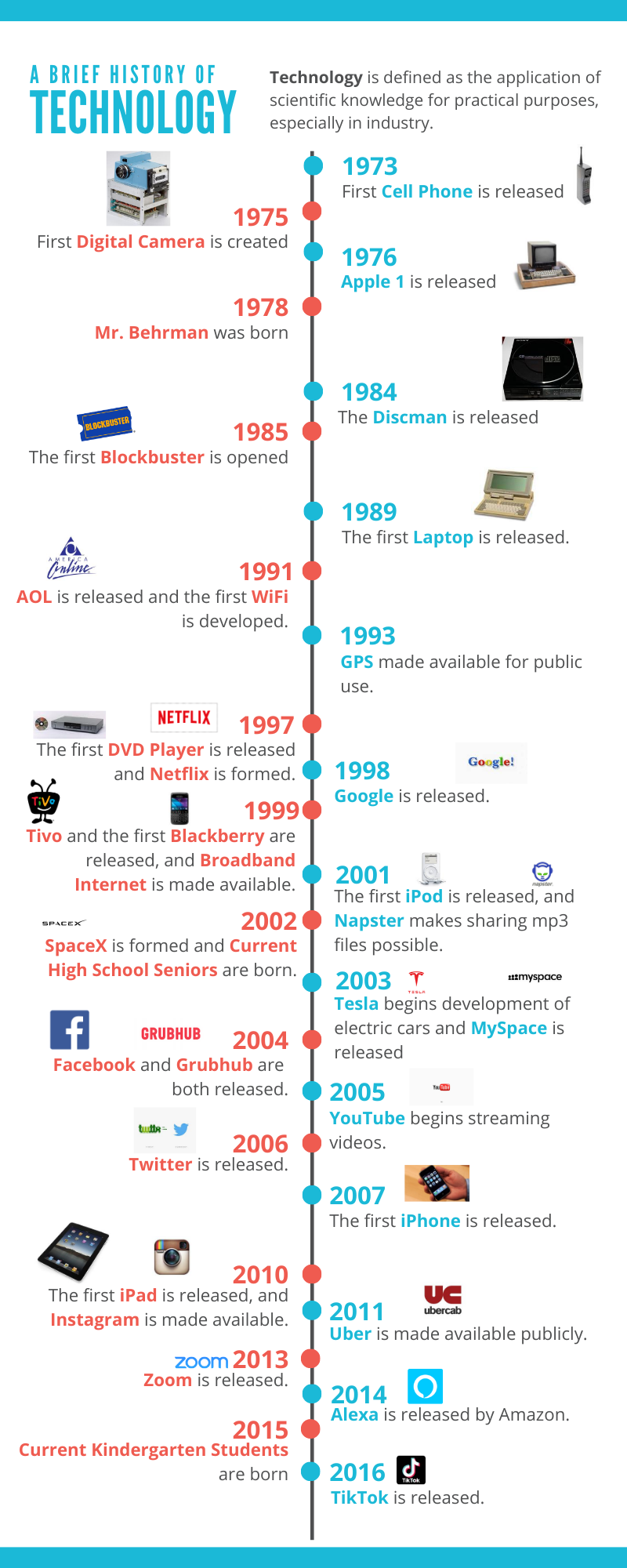 The problem with this is that our world has moved beyond the Industrial Age. Much of my lifetime, we have lived in the information age. For those of you who have been around for a while (like me), think about all the things that have come into existence in your life – from the birth of the cordless phone, to the original cell phone to the smartphone, iPad, Google, Facebook,
 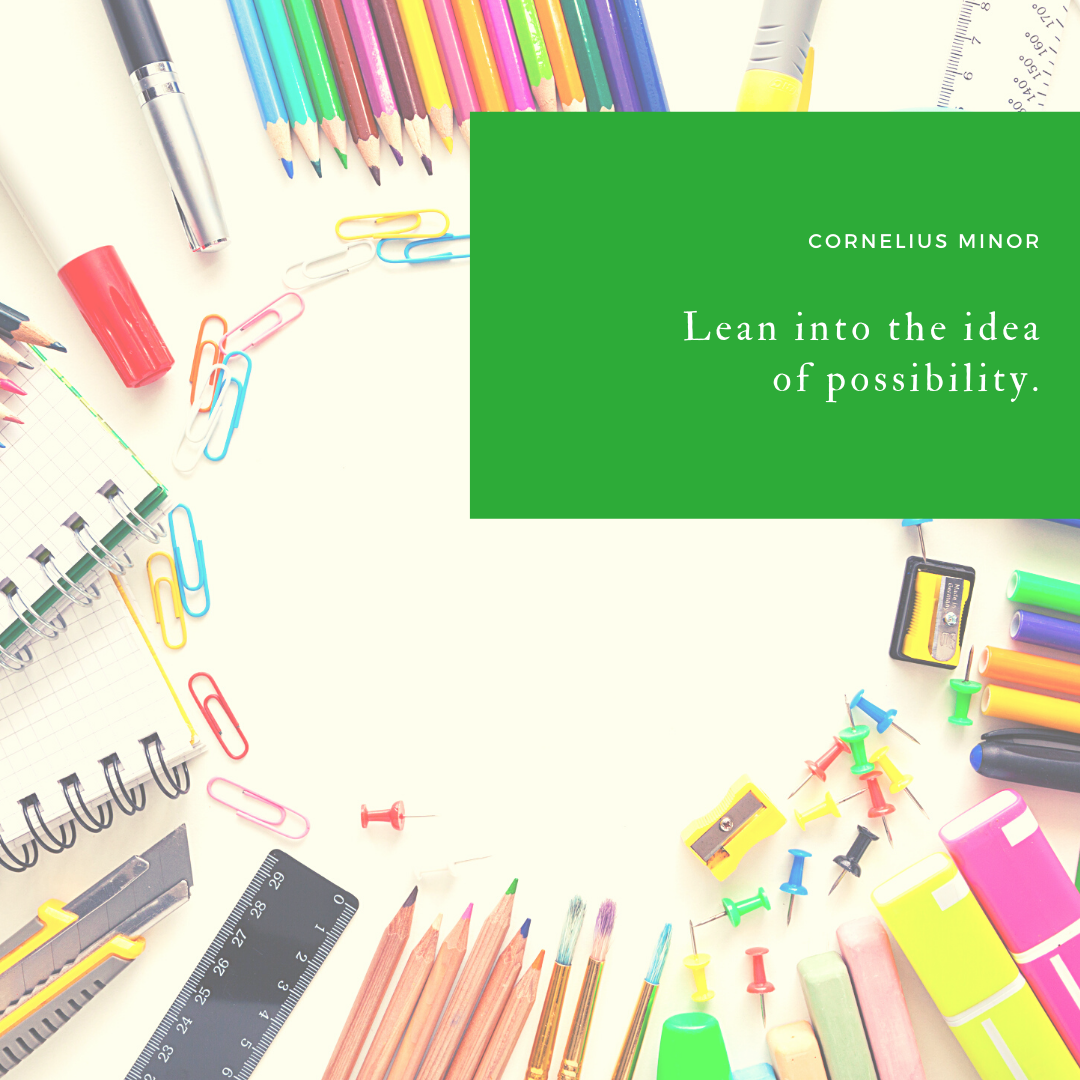 On Tuesday we spent the morning in our PLC Teams watching a presentation from Cornelius Minor thinking about how we can “Lean into the idea of possibility” for this school year, and discussing in our PLC teams how we can create equitable learning opportunities for our students even when they aren’t present in our school building. This heart work was so powerful and tied to our beliefs in both equity and learning.
 In my current position, I recognize my own power and privilege. I want to take advantage of the platform that I have. So as I was thinking about how to help be a part of the solution to tearing down the systems that oppress others, I shared with my staff a list of books that I thought might help them on their own path. I’ll share that list with you here. In order to support my staff in their learning, I also let them know that they were free to pick any of the books below, or any other book on equity that they wanted, and forward me the invoice so that I could buy it for them. I challenge my fellow administrators to seek ways that they may be able to use their budgets to support the continued learning of our collective staff. The education system is one that was built on inequities, and the only way to change it is for those of us inside the system to fight for better systems.


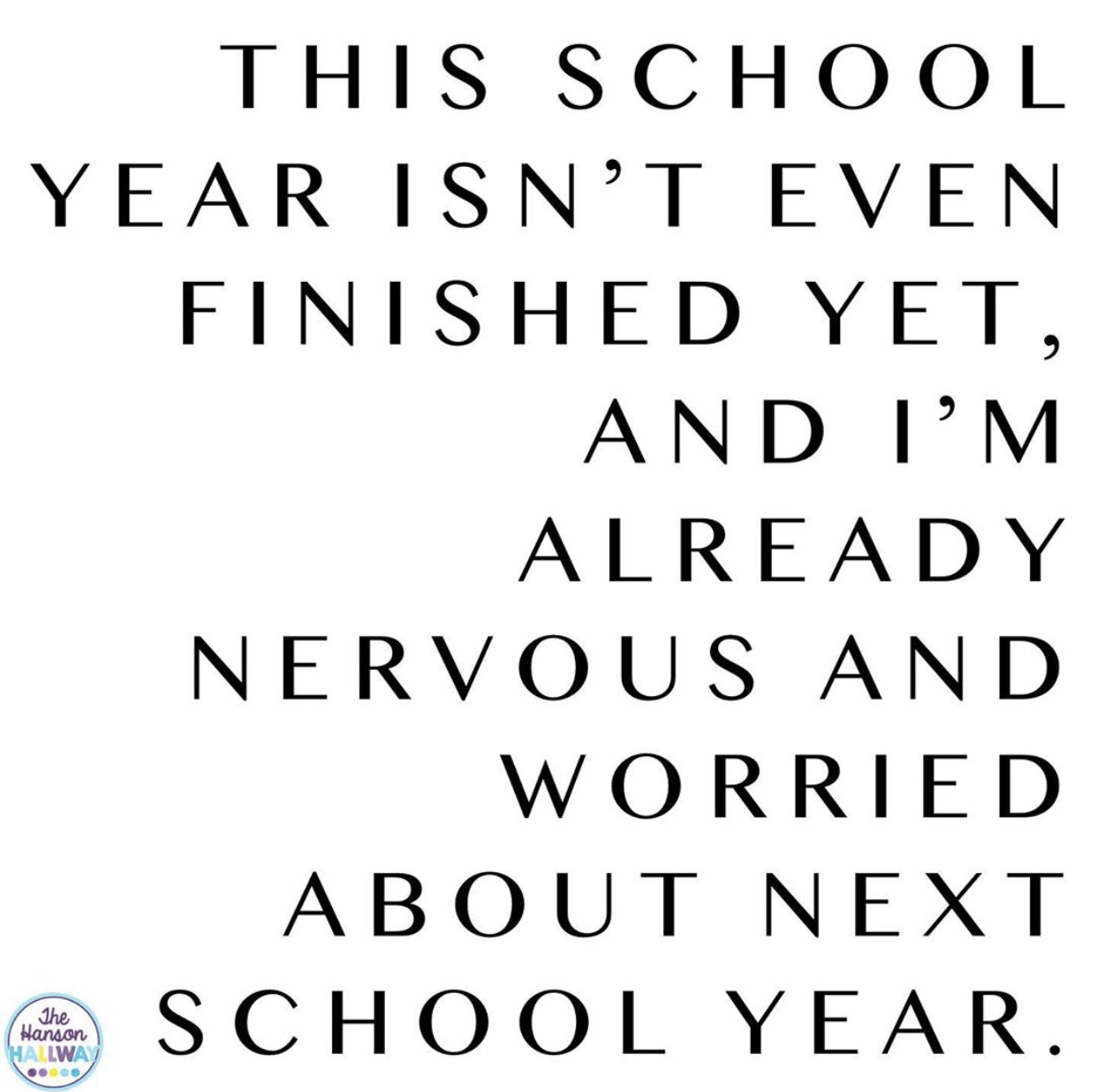 But the end of this year comes with lots of questions. What will the start of school look like? Will we be back on the “normal” schedule? Or will it be something different and unique? If you’re anything like me, then the quote to the right probably resonates with you as well (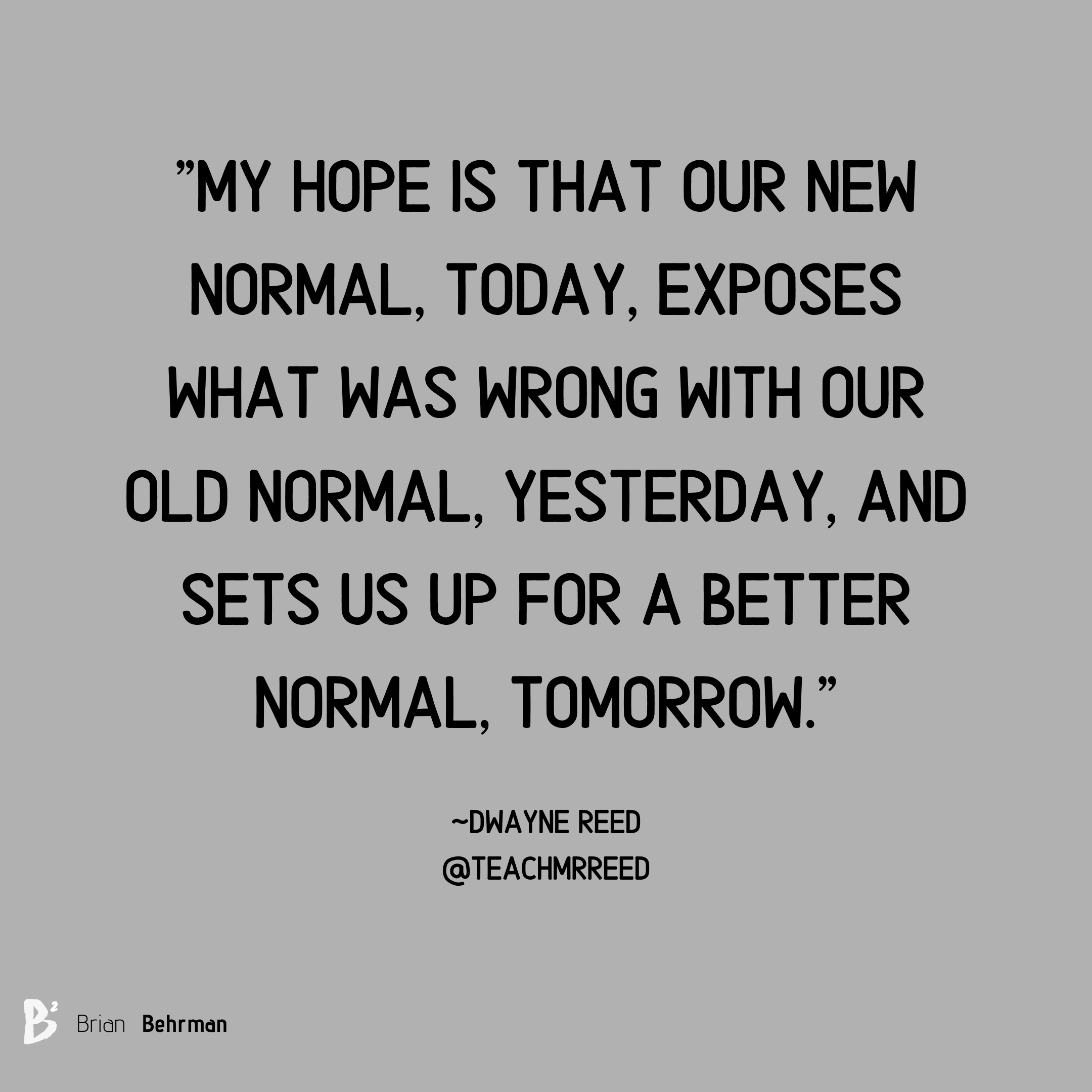

 This is me when I was in junior high. I know… Great haircut, right?
