
During a recent #IMMOOC YouTube Live event, the topic of student apathy came up among the presenters. For any educator who has tried to do something innovative in their classroom, you probably know what this looks like – that student that is really good at “playing school”, but when you give them a task that is innovative, they just struggle to even get started. These are the kids that might ask you for a worksheet in place of the innovative student inquiry project that you are beginning to work on. John Spencer started talking about his take on students who show apathy about those innovative tasks. While I didn’t capture his quote exactly, I tweeted out the general idea of what he shared:
Spencer is a former middle school English teacher, and currently a professor working on training our future teachers to come into the classroom ready to teach in innovative ways. In the book that Spencer co-wrote with AJ Juliani, Launch, Spencer introduces the design cycle he used in his classroom to help his students become creative thinkers and problem solvers.
For those of you who have read my blog in the past few years, you know that I spend a lot of time thinking and writing about the skills that our students will need in order to be successful in the future. In the current model of education that still exists in a lot of classrooms, there can be a lot of focus on assigning and grading.

The problem, as Katie Martin points out above, is that when we keep our focus on assigning and grading, we lose sight of actual learning. Think back to your most impactful learning experiences – it could be anything that you are passionate about – for me I think back to learning how to ride a bike. I didn’t learn to ride my bike because my mom wrote out strict lesson plans with specific standards to meet. Instead I learned through time spent on my bike. Nobody told me that I had to know how to pedal the correct way before I could give it a shot. Did I fall down? YES! Did I get back up again? YES! I wanted to be just like the other kids on my street who could ride their bikes.
Going back to that tweet that I shared at the top of this post, I am really intrigued by that idea of fear of uncertainty, of failure, of being outside their normal. This seems like a pretty normal human reaction. Part of the joy of learning to ride a bike is that little bit of fear, mixed with a bit of excitement, that runs through our body as we get ready to pick our feet up off the ground. So how do we get our students past whatever it is that’s holding them back? My best suggestion is through scaffolding.
When we try something that’s new and innovative, we need to be prepared for those students who might struggle to get started. When you’re planning, be thinking about what might be struggles, and then prep for that. Are you asking students to come up with inquiry questions? Have some question stems ready to help them get started. Are you wanting students to research a topic that interest them? Have some general topics that you know your kids are in to as well as locations to go to find information to help them start on a path.
One thing though – some students in your class will be ready to dive right in. Make sure that you don’t provide too many scaffolds for everyone – make sure that students do have some choices that they can make themselves. Save the extra scaffolds for the students who really need them. If you provide too many scaffolds for all, you will end up with work that all looks and sounds the same. That’s not inquiry, that’s not project based learning, that’s a recipe. And when we have a recipe, that means that some students might feel too boxed in, and not enough opportunity for creativity.
I recently saw a tweet from Alice Keeler that I thought summed up the stages that some of our students might go through as we try to move towards a more student-centered model:
With the appropriate steps to help our students who are afraid to go out on a limb, we might be able to get our students through those 7 stages more quickly. All the better for you and for them!
What are your thoughts? Are there things that you have tried that have helped your hesitant students get going on an inquiry project? Have you had successes that I don’t mention here? Share your thoughts with all of us!

 If a student can turn to Google, Siri, Alexa, or whatever smart tool comes out next to find the answer to your question, then maybe we aren’t asking the right questions.
 The students in our school in general are very compliant. Compliant students sometimes struggle with creative tasks because they want specific directions to follow. They may not remember what it feels like to be creative or curious. Years of compliance in the school setting seems to suck creativity and curiosity out of our students. I think that sometimes students lose that ability to be creative and curious because they have grown accustomed to the amount of scaffolding that we provide for learning activities. That scaffolding can begin to feel a bit like a cage, and students forget how to get out.
 So how do we add relevancy to the things that we are teaching our students? I’ve had this conversation with several people recently, and my best suggestion is that we need to help our students see how the thing that they are learning about in class actually applies to their life. Recently in my school, many of the science classes have been learning about outer space. Can we tie last week’s amazing launch of Falcon Heavy into their studies of our solar system? What research could be done on the potential and kinetic energy of a rocket launch? Or what about the fact that there is research on the angle of release of a basketball shot being related to it’s likelihood of going in the hoop? Or maybe there are amazing connections that our students can make to our content that we would never even think of – we just have to get out of the way and let them share!






 As we think about innovating in education, it’s always valuable to spend some time thinking about why we do what we do. As I begin my participation over the next 6 weeks in #IMMOOC (Innovator’s Mindset Massive Open Online Course), I’m driven to think more intentionally about why we innovate, and what innovation means in education. Below are 3 reasons that stand out to me as why we need innovation in education.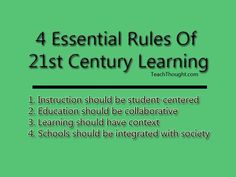
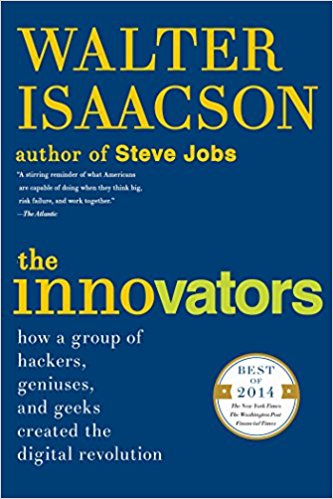 The Innovators has the subtitle “How a group of hackers, geniuses, and geeks created the digital revolution.” This book caught my attention for a couple of reasons – first, I’ve always been something of an early adopter of technology. I love to check out new and exciting innovations. A second reason that this caught my attention is that I’m always curious about how people made the leaps to take us from the earliest computers (devices that took up entire rooms in the basement of college buildings or at military bases), to the technology that I can hold in my hand every time I pick up my iPhone.
 The View from 518