I’m not sure how many of you have read the book The Innovator’s Mindset by George Couros. It’s a book that I have referenced in the past, and today I happened to be on his blog and came across a great post that I want to share. Below you’ll find a link to his short post titled “Successful Adaptation.” Click the link to check it out, and then come back here for some closing thoughts:
How many of those contradictions are things that you’ve heard, or maybe even said, before? I feel our steps with the HSE21 Best Practice Model have helped us to attack many of the contradictions, however I still see some of those contradictions within our building.
I know Couros shared his own remix of those contradictions written as questions, but I have a few more questions for us to think about:
What have you created in the past week? Month? Year? Have you shared any of those things with your students? How could our own efforts at creation model that expectation for our students?
What are some areas that you would be willing to give up the expectation of students asking for permission? (assuming they are acting responsibly) How would this promote greater empowerment for our students?
What are the things that you have let go of this year in order to show more of a growth mindset? What are the policies within our classroom or our building that get in the way of the growth mindset?
I want to say again, I am not asking you to change for change’s sake, rather I am asking you to think about how you might change in order to make your classroom a better learning environment for our students. With that, I want to leave you with one of my favorite quotes from Couros:
If you feel up to it, share your response to one (or more) of these questions, or one of the questions from the original quote by Couros in the comments below.
Last week I shared with you a little bit about the idea of averages. From astronomers in the 16th century, to the work of Quételet in the 1800s, to Lincoln’s efforts to standardize the military during the Civil War, averages have a long history of being used to understand humans both physically and mentally. During World War II, the research of Gilbert Daniels showed that averages were not a great idea for design of the cockpits of airplanes because no pilot fit the mold of the average man. As a result, the Air Force banned the use of average for design, and began demanding design to the jagged edges. This led to adjustable foot pedals, helmet straps, flight suits, and seats (things that seem like a no-brainer today).
Through the choice to move to flexible design, our Air Force was able to move forward in ways that they were not able to do when design was based on the average. Now I know that some of you probably read last week’s post and may not have seen an immediate connection to education. If you recall, in last week’s post I mentioned Todd Rose, a Harvard professor and a high school dropout, who is doing some interesting research in the science of individuality.
During a TEDx Talk titled The Myth of Average (if you have a chance, this is a really good TED Talk with some real implications for the education of all students), Rose talked about the educational repercussions of using average to design learning. Sometimes our classrooms are like the airplane cockpits at the beginning of World War II. There aren’t a lot of options for adjustments, and because of that, there are students who struggle. Here’s the dirty little secret though – it’s not just the kids at the bottom who struggle in school. When you look at dropout rates, a significant portion of high school and college dropouts aren’t leaving because it’s too hard, they’re leaving because it’s too easy and they aren’t challenged or engaged.
Over the summer I had a video post to the blog titled “An Open Letter to Educators.” More recently I have been reading the book The Boy Who Played with Fusion, the story of Taylor Wilson, a 22-year-old who built a fusion reactor at the age of 14. Both talked about a need to embrace new formats of education in an effort to be more individualized and prepare our students for the real world. The implication I saw was that this individualization isn’t just for the kids that we identify on the low end of the spectrum, or those on the high end of the spectrum, but also for the kids we identify as the “typical” student.
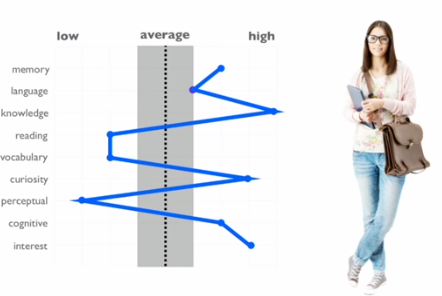
No matter how we might identify our students (typical, below average, above average), our students come to us with jagged learning profiles. Some are strong in math, but struggle in ELA. Others have a talent for memorizing facts in social studies or science, but when you try to get them to think deeper, and solve the problems of our scientific world, they just can’t do it. What if our education system was designed to adapt to the jaggedness of our students instead of expecting our students to adapt to the school setting?
The HSE21 Best Practice Model is a great method to get there. Through student-centered approaches, transfer of learning, cognitive curriculum, and fundamental classroom conditions, we can develop an environment that accepts students where they are, and helps to move them further.
As you continue to design your classroom conditions for your students, be thinking about their jagged profile of learning. How are you making the learning environment more flexible? What are you doing for that science genius who struggles with the reading? They may be awesome with the hands-on portion of science, but when it comes time to read and learn about theories, they just don’t get there because the textbook is too challenging for them. Our goal has to be one of constant incremental growth, both for the kids who are struggling in a lot of areas, as well as those who seem to have it all together. Remember, we’re all jagged!
Technology can help us to get there. With an iPad, each of your students has the ability to translate text, look up vocabulary, or even have text read aloud to them. With programs like NEWSELA or Achieve 3000, we are able to have our students read materials that are at the appropriate level for them, be able to understand what they have read, and in turn have an opportunity to grow.
Flexible design in learning is the school equivalent to adjustable seats! These adaptations will nurture the potential of each individual in your classroom. And remember, adaptations aren’t just for those on either end of the spectrum. That kid that you think of as average probably has a jagged profile of learning too, with strengths that we can tap into, and weaknesses that we can target for growth. The adaptations that we’d make for anyone with a label can work for those without any specific label too – and as the teacher, you are allowed to make the choices of what is best for your students!
What might flexible design in education look like in practice? Here are a few ideas:
Get rid of specific numbers on assignments (3 pages, 5 paragraphs, 4 signposts, etc.) and shift to requiring quality work instead.
Allow modifications on assignments.
Create a loose structure for projects to allow more student autonomy in what they are creating and how they are making it.
De-emphasize standardized test scores or other systems where averages are used to judge students.
Let students select the strategies that work best for their own learning (that student who struggles with reading might be able to listen to a podcast or watch a video on YouTube and think just as deeply as that star reader who can learn from the text).
Change the pace so that certain students can finish earlier and have enrichment opportunities and others who are behind can have more time to work and not feel like all they are doing is to catch up.
Now, I know some of these ideas sound crazy, or scary, or hard to put into practice. We can’t change everything at once, but we can move incrementally to try to develop an environment that our students will be able to have more success. Just like setting goals for students to grow, we have to set goals for our own growth, and then take steps to get there.
But isn’t it worth it? Who knows, that kid who is struggling in your class right now might be on the path to dropping out, but they may have the potential to be a professor at Harvard – or any one of millions of other successful paths. They just need to have the opportunity to embrace their individuality!
So what are your thoughts? What successes have you had when adapting to be better suited to the individuality of your students? What challenges do you see in this way of thinking? Let us know in the comments below!
I’m not sure how many of you listen to podcasts, but for me, it’s almost all that I listen to – in the car, on a run, working on the yard – if my earbuds are in, I’m probably listening to a podcast. I used to love to listen to talk radio, but the commercials drove me crazy, not to mention that I had to put up with topics that didn’t interest me to get to the interesting stuff. One of the great things about podcasts – you only have to download the ones you find interesting. If you don’t like a topic, don’t download it. There are a couple of podcasts that I listen to no matter what the topic is. The other day I was listening to one of my favorite podcasts, 99% Invisible. It’s a show all about design, but looks at it from all kinds of perspectives – sometimes architecture and infrastructure, sometimes history, sometimes visuals, even a series on vexillology, which is the study of flags (I know, I’m a geek!).
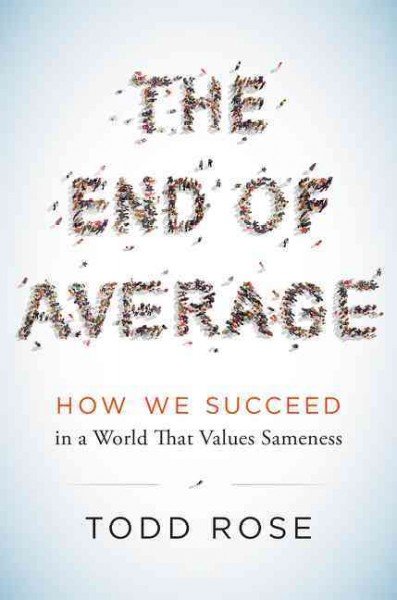
One of the most recent episodes was titled “On Average.” Much of this episode is based on the work of Todd Rose, author of The End of Average. One of the things that I found most interesting was that Rose, who is a professor at Harvard, is also a high school dropout. His research on the science of individuality is based on his learning that nobody truly fits the average – more on that later.
So where does the idea of average come from? While there are some mathematical references that go back to ancient history, the first scientific documentation of the idea of averages comes from astronomers in the 16th century. In tracking the orbits of planets, astronomers would scratch the lens of a telescope in 2 spots and keep track of the amount of time it took the planet to move. Astronomers realized that individual measurements could be highly inaccurate based on who was taking them, and other factors. However, by taking many measurements and finding the average, the data seemed more accurate among multiple astronomers.
Fast forward to the 1800s, and a Belgian mathematician named Adolphe Quételet. He decided to take a tool primarily used by astronomers and apply it to people. He started with a data set of thousands of Scottish soldiers, and found that the average chest size of the soldiers was 39 and three-quarters inches. He considered this to be the “true” size of a soldier. Quételet extrapolated this data to say that if all lived in optimal conditions, they would be average. Over time Quételet’s ideas expanded to find the normal rates based on all kinds of data sets – marriages, murders, suicides, etc. Quételet went so far as to say that the individual person was synonymous with error, while the average person represented the true human being.
One of Quételet’s fans was none other than Abraham Lincoln. During the Civil War, Lincoln had the army take data on soldiers to assess them both physically and mentally. The data sets were then used to decide on appropriate food rations, design of weapons, even the size of uniforms. Prior to the Civil War, every soldier received a uniform that was custom made. With the number of uniforms necessary, this was no longer feasible, so the soldiers were broken into average sizes (small, medium, and large) so that uniforms could be mass produced. Today we buy clothes based on sizes that relate back to these measurements from the armed forces.
Average based design became the way for the military, and from the time of the Civil War until World War II, everything built for the military was designed based on the average size of the soldiers. Whether we’re talking about uniforms, bedding, food rations, weapons, vehicles, and as they came into use, airplanes, all were built to specifications that matched the average size data.
During World War II, the Air Force noticed a huge decline in the performance of pilots. As the first air based war, this was a problem. Initially blame was placed on the pilots, then on the trainers. In time, the Air Force realized the issue was the size of the cockpit. The cockpit didn’t fit the pilots. As a fighter pilot, when split second decisions can make a difference between survival, the Air Force saw that they needed to find a new average.
Researchers at Wright Air Force base in Ohio were tasked with finding new averages. Members of the team traveled from base to base taking measurements of pilots on 140 dimensions (some were the obvious – height and weight – while others were much more unique – length of the thumb or the distance from a pilot’s eye to his ear). One of the members of the team was Gilbert Daniels, a recent graduate from Harvard in the field of anthropology. As he was taking the measurements, Daniels started to wonder how many of the pilots truly were average.
Daniels took the data from a set of just over 4,000 pilots. He found averages on the 10 measurements that would be considered the most important in terms of the design of an airplane cockpit and set up norms based on a 30 percent range (the average height in the study was 5-9, so the range was 5-7 to 5-11). He then he went back to the individual data. The assumption going in was that most pilots would fit the definition of the average pilot. When he compared the individual measurements of all the pilots in the data set, he was stunned to find that not one of the pilots fell within the average range on all 10 dimensions. When they narrowed the study to only 3 dimensions, less than 4% of the pilots met all 3.
The research showed that there was no such thing as the average pilot. Instead the data looked a little like this:
Rose describes the variation that shows in these measurements as Jaggedness – which represents that fact that everyone has variations from the norm or average.
In response, the Air Force made significant changes to their design process. No longer would they buy airplanes that had cockpits that were designed to the average. The Air Force banned the average for design of airplanes! Instead they needed planes to be designed to the edges. Prior to World War II, the pedals, seats, helmets, controls, and anything else in a plane was static, it could not be adjusted. Following the results of this study, the Air Force demanded adjustable seats, foot pedals, helmet straps, and more.
When the change was made, guess what happened? Pilots got better! No longer did they have to adapt to the size of the plane. Now all planes can be adapted to the size of the pilot. Think about it, how many of you would purchase a car that did not have adjustable seats, mirrors, or steering wheel? These adjustable features came about thanks to the Air Force’s research on averages.
I know that this post hasn’t gotten into the education implications yet – I promise that’s where I’m going next week. To help next week’s post make more sense, we needed some background information about averages. Next week we’ll get into how the research on the science of the individual translates into the classroom, and what we can do to design education to the edges, not just to the average.
What thoughts do you have? Do you already see a connection between this backstory and your students today? Share your thoughts in the comments below.
The HSE21 Best Practice Model is such a great tool because it reminds us of the fundamental classroom conditions that will help our students be ready for their future. I was recently reading the book Learn Like a Pirate by Paul Solarz and he spent a lot of time talking about active learning. In active learning, we see differentiation, authenticity, relevancy, choice, and collaboration – all important pieces of the best practice model. Think back to your favorite moments when you were in school. What stands out? It’s probably an example of active learning.
When I was in elementary school, both of the 6th grade classes in our building collaborated to write, produce, and perform a musical. I vividly remember working with classmates to write the script, to advertise the show, and to plan the costumes and props for the show. The skills and strategies that I developed in activities like this were ones that I believe helped set me up for success in middle school, high school, and beyond. While I remember moments of passive learning when I was in sixth grade (one of my teachers was the queen of having us copy notes from her beloved transparencies), I can’t recall any details that I may have learned in that format of lesson.
So, how can we integrate more active learning into our classrooms? Here are just a few ideas based on Learn Like a Pirate book:
Simulations – What’s a better way to learn about the Boston Tea Party? Read about it, or take your classroom back to 1773 and have your students simulate the circumstances that led the Sons of Liberty to throw cases of tea into the Boston Harbor? Or you could integrate some science into your social studies by having your students set up a colony in outer space. They can experience creating a government for their colony while also learning about the needs for their planet.
Debates – The collaboration that goes with a debate can be amazing. If you pick a topic that would have more than 2 sides, you can break your class up into several different groups with different topics, keeping the groups small enough that all play a role, while also large enough that you can put mixed ability students together. Solarz does alternative energy debates with his students. He plays the role of President, while his students are the advisors trying to convince him that their energy plan is the best. While this topic may not resonate with you or your curriculum, there are many other debatable topics that could tie to your standards.
Science Fair – This is something that has gone out of style, but why? In a time where we are shifting to STEM classes, and at a period in time when so many of our kids don’t do hands on science projects like previous generations, this seems like a no brainer. The issue I had with the science fair’s old style was that it was typically done as homework. The last time I had my students do a science fair, we did everything at school. Students were asked to bring in poster boards, but I tried to provide most of the other resources they needed (sometimes we had to get creative). Kids assisted one another on their projects, and were truly excited to share their findings at the end. I was able to provide feedback, help with data collection, and teach mini-lessons as necessary. The best part – I knew it was all done by the student on a relevant topic of their own choosing. A variation on this could be an invention fair, or a coding fair, or anything else you might imagine that lets students be actively involved in inquiry.
Project-Based Learning – A trend in education, and one that I was guilty of when I was still in my classroom, is that we teach a unit, and then at the end of the unit students complete a project to show their learning. What PBL asks is that we teach through the project. Once you have your basic idea planned, students choose their more specific project and dig in. Throughout the unit, mini-lessons can be taught on content, procedures, or skills that students need to go further in the process. As a teacher, you are continuously checking in with students, seeing where they are and where they are going next, providing feedback, and deciding if there are topics that you need to build a mini-lesson around. While we’re giving students choice and freedom, you are allowed to set some parameters up front. PBL doesn’t mean setting the students free to do whatever they want, there have to be some class norms and expectations in place first. Think of these expectations as the guardrails to keep your students in the right lane, and heading in the correct direction! If you’re looking for good PBL resources, the Buck Institute for Education (bie.org) is a great resource!
Technology – Sometimes integrating some tech into a passive lesson is just what it takes to up the level into an active learning opportunity. Don’t just use technology for the sake of saying that you’re using technology. Use technology when it is the best tool for the job. Remember, HSE21 is not, and has never been, about technology, the iPad, OneDrive, or any of the many apps that are used around school. However, when we find technology that truly improves or transforms what we’ve been doing, don’t hesitate to add it to your lessons.
Reader’s Theater – This is such a great way to work on oral reading fluency. Students get to practice their part several times with their group. During that time they can practice pronouncing difficult words, learn to project their voice, add inflection, and enunciate. Depending on your goals, it could be a single day activity, although students don’t have as many opportunities to practice and they may not be able to create props to go with their performance. On the other hand, you could do a multi-day activity where students are put into groups and roles one day, have time for rehearsals and planning for the performance (props, costumes, etc.) on a second day, dress rehearsals where you can give feedback on props and costumes that aren’t appropriate or necessary on a third day, and then performance day on the last day. If you’re really brave, you could record the performances to put on a YouTube page so that parents can see what their kids are up to at school.
This is not intended to be an all-inclusive list of active learning activities, but is meant to give you some ideas of how to create more active learning opportunities for your students. What am I missing? Are there active learning examples that you use that I didn’t mention? Have you tried (or are you thinking about trying) any of the ideas above? Tell us about your experiences, your thoughts, or your plans in the comments below!
Earlier this summer I finished reading the book The Innovators Mindset by George Couros (@gcouros). One of the things that I loved about the book was his use of his website and blog as a way of linking to important information that tied to the chapter you had just completed. On his website you find a page dedicated to each chapter of the book. It has a brief overview as well as links to additional reading (typically blog posts or new articles), as well as video resources. One of the links led me to the video below titled “An Open Letter to Educators.” Take a moment to watch the video:
A few thoughts after watching:
If a strong education is the key to success, what does that education look like in this day and age?
Does the current institution of education get our students prepared for a successful future?
How has “free” information changed your life? How might it continue to change the lives of your students?
If, as Dan Brown says “education isn’t about teaching facts, it’s about stoking creativity and new ideas” and one of your primary goals should be to “empower students to change the world for the better” then I wonder what our classrooms need to look like? What are we getting right? What aren’t we getting quite right yet?
For me, I see collaboration, student choice and student voice, authentic and meaningful learning, inquiry based activities, and opportunities for our students to apply their learning beyond the classroom as keys to help meet these needs for our students.
What do you see as the keys to success for your students? How is your classroom currently meeting the needs of your students? In what ways is your classroom still falling short on meeting those needs of your students? Share your thoughts in the comments below! If you’re looking for ideas and inspiration, I highly recommend The Innovators Mindset as a way to help you find opportunities for innovation!





 The View from 518