

Recently I was doing my morning workout in the basement. I know that many people prefer to listen to music when they are working out, but for me, I lean towards podcasts. I think that when I’m tuned in to the podcast mentally, the time seems to go faster, which makes the workout seem easier! On the morning I’m thinking of, the next podcast in the feed was The Innovator’s Mindset Podcast from George Couros. In this episode George was talking to Katie Novak. George and Katie are co-author’s of the book Innovate Inside the Box. I loved that book, so I knew I was going to enjoy the podcast. You can check out the podcast on YouTube here.
Recently, I’ve had several conversations with people about the changing world in education. I’ve seen tweets and heard podcast conversations that talk about how education cannot go back to what it was in a pre-Covid world. I’m pretty sure that I agree with that. But I’m also pretty sure that for a lot of people (myself included), we’re not quite sure what that means. In this episode of the podcast, George and Katie were talking about Universal Design for Learning (UDL). As I listened, I started thinking that maybe UDL could be the key to the type of changes we need to create the schools that students need.
For years on this blog, I’ve made reference to the Best Practice Model that was created by Hamilton Southeastern Schools. You can check it out below. Some of the things that stand out to me from the best practice model are the idea of student voice and choice, authentic learning, access and equity, and applying knowledge.

The reality is that in a traditional education system, what some might refer to it as the factory model, some students are excluded from learning (I’ve written more about the factory model here). If you are a teacher who does mostly whole group lecture style teaching, students who have auditory processing issues are not able to access your learning. I recall during my college career going into one of my first lecture style courses. On the first day, our professor told us that the seats we were sitting in were our assigned seats for the semester. I had chosen a seat about halfway back. This professor was a huge fan of lecture, but also wrote a lot on the chalkboard. At the time I didn’t have glasses, but after a few classes, I realized that I could hardly read what he was writing and I walked out of class each day with a headache. I was talking with my parents about it one day and my mom asked when was the last time I’d had my eyes checked. It had been a while! I scheduled an appointment and found out that I needed glasses. Once I got a pair of glasses the problem was solved!
Just like providing glasses to a student with vision problems helps them to access the learning, UDL provides better access to all students because it is more inclusive. Now some of you may be saying that you aren’t ready to do something new in your classroom. What Katie shared during the podcast is that UDL isn’t so much something that you do, but is more a set of principles or beliefs. There are 3 primary beliefs about UDL:
- We have to embrace variability – In a previous post, I wrote about some of my take-aways from the book The End of Average by Todd Rose. In that book he talks about how there is no such thing as an average person, instead, each person is “jagged” meaning that each of us may have strengths or weaknesses that are physical, mental, emotional, etc. Our students come to us with jagged learning profiles. Just because a student is strong in math, doesn’t mean that they will be strong in all areas. Similarly, just because a student is weak in math doesn’t mean that they are weak in all areas. So in practice for us, that means that students may have different needs at different times. In my glasses experience above, if I had chosen a seat closer to the front, I may not have become aware of my vision issue until some later time. The tenets of UDL suggest that whenever possible, we let our learners choose/create their own environment. I’ll share more about these thoughts later.
- Really firm goals with flexible means – When you take a look at your academic standards, you’ll find that for the most part, your standards are really open. This means that you have a lot freedom in how you go about meeting the goals for academic needs. With that in mind, we can think about how we might provide multiple pathways to meet the goal. All students will most likely have the same goal, but they may take a variety of paths to get there and show you what they know.
- Value expert learning – One of the goals of UDL is to get our students as close to being an expert in their learning as possible. I know that for each of us, we get to be experts in the things that we are passionate about, the things that we feel are most important. Think about how you feel about the words professional development. In my experience, when it’s being done to us, we aren’t huge fans, but when we have choice and voice in our development, we probably learn a lot more. By providing students the flexibility that we talked about in the last bullet point, our students are able to meet goals that you set for them while becoming more of an expert in topics that are important to them.
Now, the reality is that this doesn’t just happen automatically. In the beginning we have to provide a lot of scaffolding and support. In your classroom, when you are starting in on some UDL practices, you might share the goal of your lesson, provide some choices, and then support them while they learn. So here’s an example that I might use if I were to go back to the days of being a 6th grade science teacher:
Goal: Design models to describe how Earth’s rotation, revolution, and tilt cause seasons (The Earth and Space Science Indiana Academic Standards actually includes much more, but this is enough for one goal).
Provide Choice: We could provide choices in how students go about learning or we could provide choice in how students show what they know. First, I’d share with students that they could learn about these topics from a variety of resources I provided them. One option might be the science textbook. I’d also pull a wide variety of books from the library that could serve as resources. Next, I’d have a curated list of websites that might help students. I’d also provide some videos from YouTube, or podcasts on those topics that would help students who are auditory or visual learners. Depending on the topic, there might be other options that could be provided for learning about the topic. As for students showing what they know, for this project I might suggest that students could create sketch that represented their learning, or they might choose to build a physical model. Another option is that students could create a video to share what they have learned. One time, I had a student who created an amazing picture book to teach about the water cycle, and I could see some creative student doing something similar on how the seasons work. Depending on the topic you are studying, there could be a multitude of ways for students to show what they know.
Set Them Free: Here’s the thing about work like this, once we set the students free, our role has just shifted from being the keeper of the knowledge to the facilitator who comes side by side. It’s challenging work, but the challenge comes from having to think on your feet in the moment instead of building really specific lessons and plans in advance. It means creating a system to make sure that you are checking in with your students (there’s always that one kid that manages to slip through the cracks and get to the end of the project/unit without doing any work if we don’t have a system). I’ve seen teachers have a clip chart that students have to update that shows what they are working on. I’ve seen teachers with a chart that they carry around while they wander the room, and make notes on students regularly. I used a spreadsheet to track my student’s progress with a row for each student, and a column for each day, then I’d make anecdotal notes each time I checked in with my students. You could choose whatever system works for you (and it might take some experimentation to find what will work best!).
In the beginning, you as teacher need to be the one to provide your students with options. Think of it as a menu – students can pick their learning style and their performance task. As students become more proficient, you may back off of the choices, saying something like “Here are some ways you might learn about the topic, but you can always suggest others” or you might say “what were some of the ways you learned when we were doing our project on the seasons?” When I did projects like this, I’d provide a menu of potential ways for students to show their learning, but also allow students to make suggestions. As you and your students become more comfortable with UDL, you’ll eventually get to the point of saying:
- Here’s the goal…
- How do you want to learn it?
- How do you want to show what you know?
- Let’s create a rubric together…
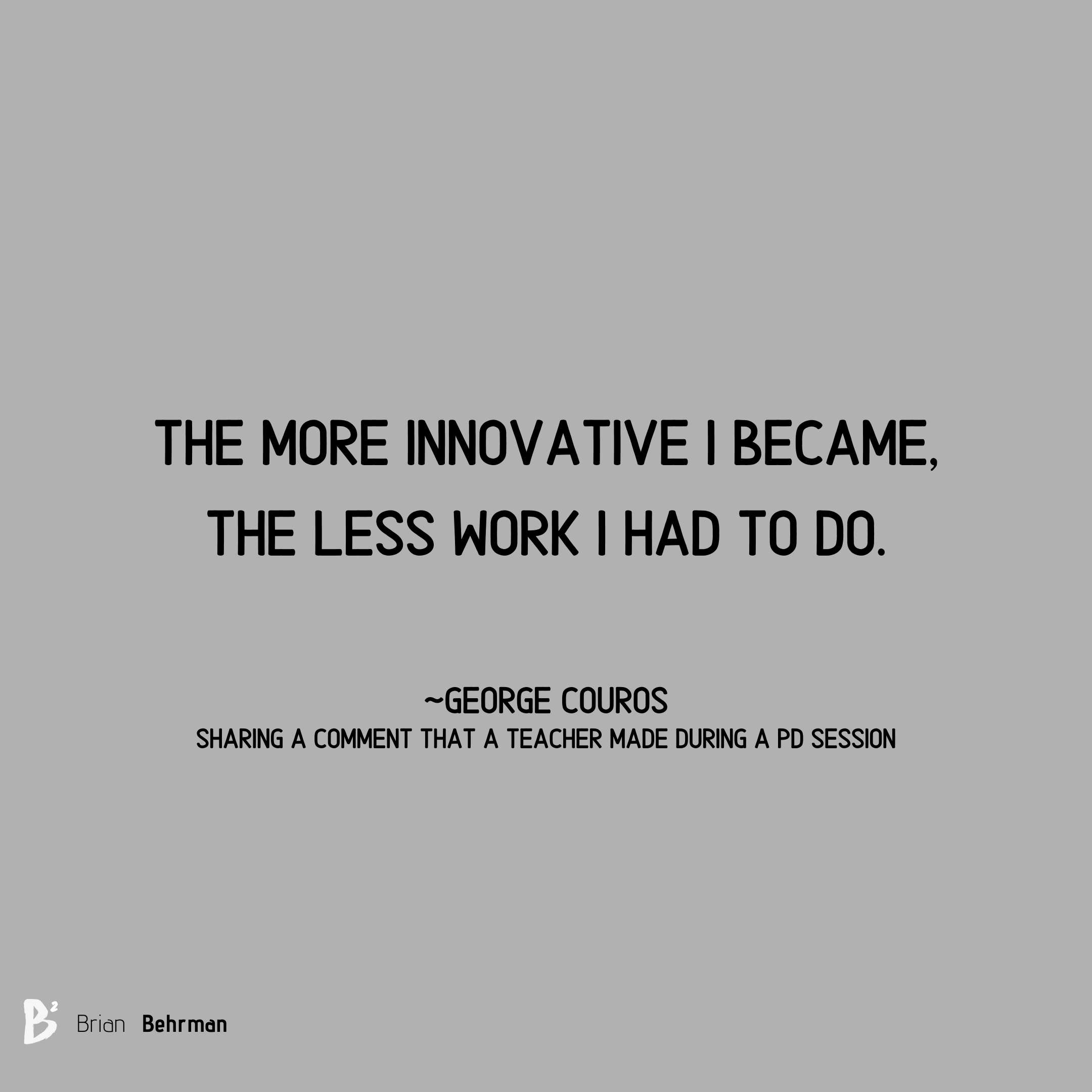
Later in my teaching career, I started doing things similar to this without even knowing that I was implementing UDL. And what I found is that the more choices I gave students, the less “work” I had to do. It’s not that I got to just sit back and put my feet up on my desk, but when we were engaged in UDL type projects, what I was doing was much more of a problem solve in the moment mindset as opposed to having to plan for the entirety of the unit. So near the end of the podcast something George said had me nodding along:
If you’d like to know more about UDL, there are some excellent resources to be found on the website for CAST. Check out their information on The UDL Guidelines here. I agree with the statement that we can’t go back to learning the way it was. Our students have changed, and we have changed. This is a chance to help create major shifts in the education world. Many of our students have been struggling in the factory model of education for quite some time. Shifting the way we teach, providing our learners more choice, and maybe even engaging in some of our own choice based learning will help make a difference for your students today and on into the future, and create the schools that we need.
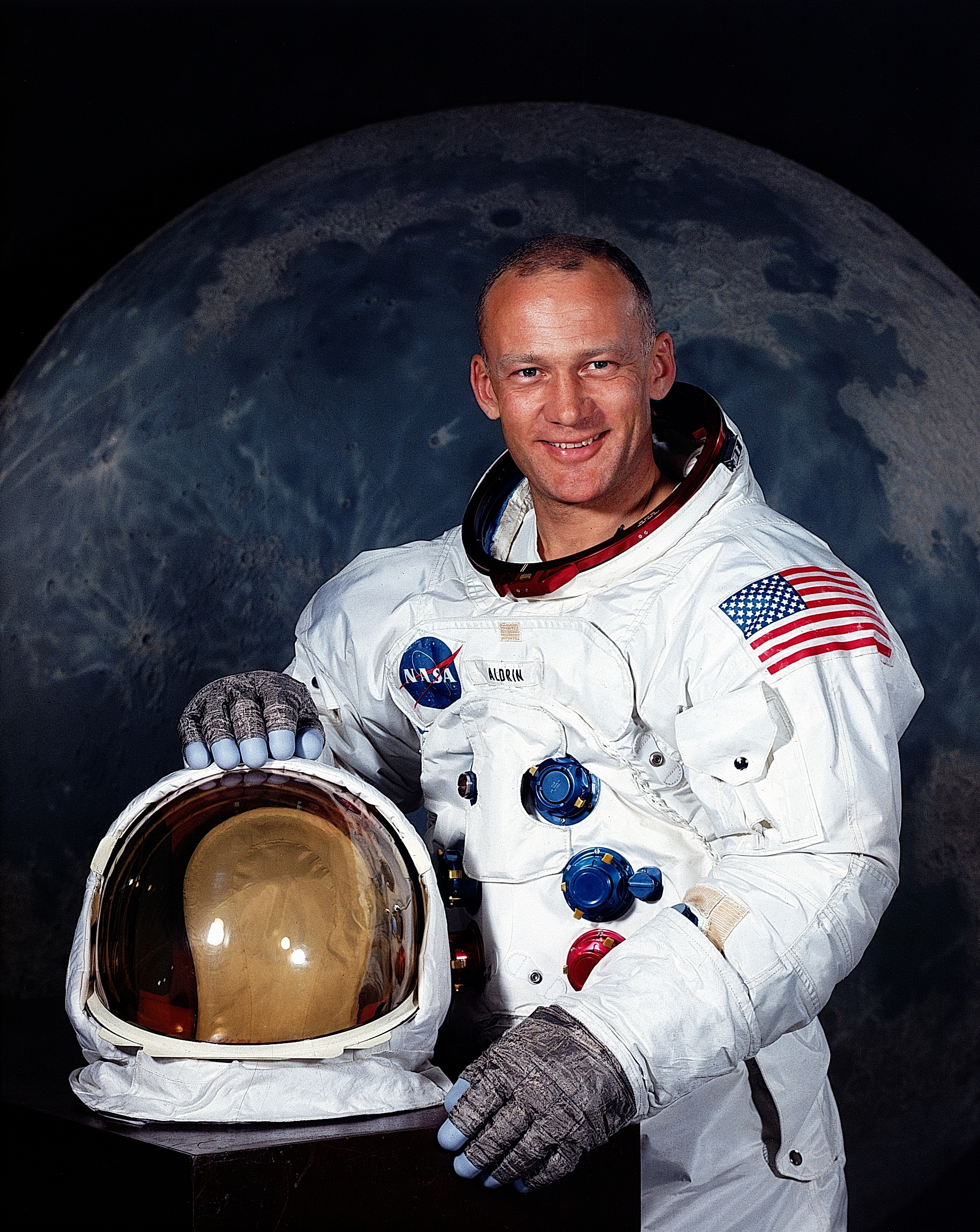 The opening of the conference included a guest speaker that I was super excited to see – Buzz Aldrin! It was cool to hear Aldrin talk about his experiences, as well as his hopes for continued space exploration. Aldrin is a huge supporter of getting a human being to Mars. Not to mention, there’s something pretty awesome about being in the same room as someone who actually walked on the moon.


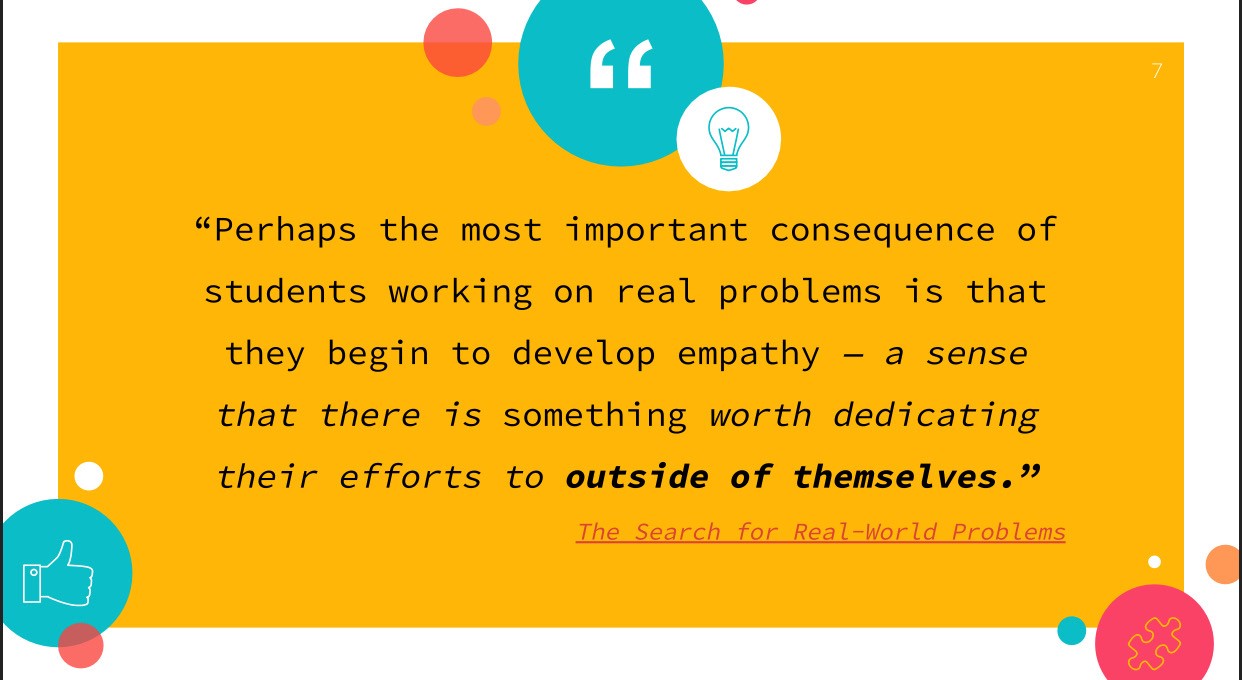 I wanted to briefly touch on my final two sessions, which were on similar topics. One was about an intermediate school in Ellettsville that implemented a school-wide genius hour program. At this school, every other Friday, the entire school basically shuts down for the last hour of the day. Students then work on their genius hour projects. These projects are ungraded, student-led, and lead to a STEAM Night Showcase where students share their findings from their genius hour project. The teachers, administrators, counselors, custodians, and other adults in the building are all able to serve as advisors for students who choose projects on a topic that they have an interest or understanding in. The school has even partnered with outside professionals who can come in and help be mentors for topics students are interested in. Being located near Crane Naval Surface Warfare Center and Cook Inc. opens up the possibility of some great partnerships for this school.
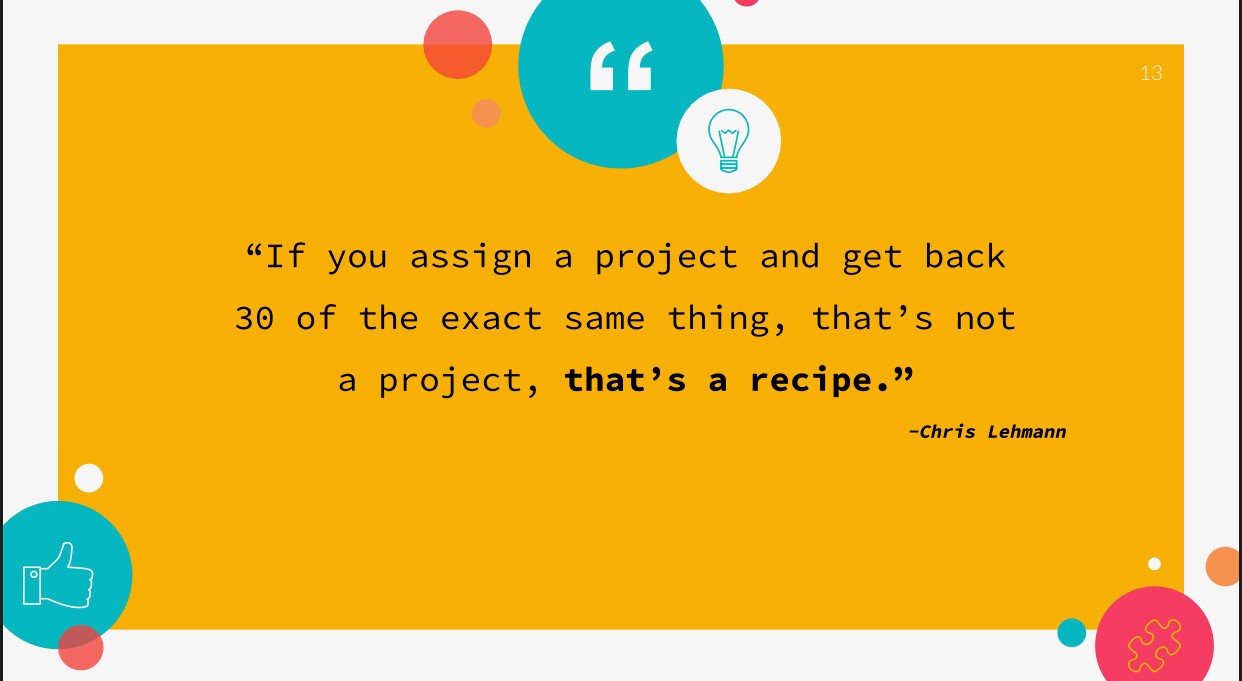 The final session of the day that I attended was put on by the innovation director and principal from New Palestine Intermediate. This year they created a new day in their related arts rotation called Innovation Hour. Other schools might call this learning clubs, or choice activity time. To create the clubs, staff members signed up with something they were passionate about. Examples include gardening, drones, coding, woodworking, etc. Students then sign up for their top three choices. Once assigned to an Innovation Hour, then they meet every 4th day from 8:30 to 9:20, and all the students are able to participate in the club they are assigned to. So far, everyone has been able to get one of their top 3 choices.
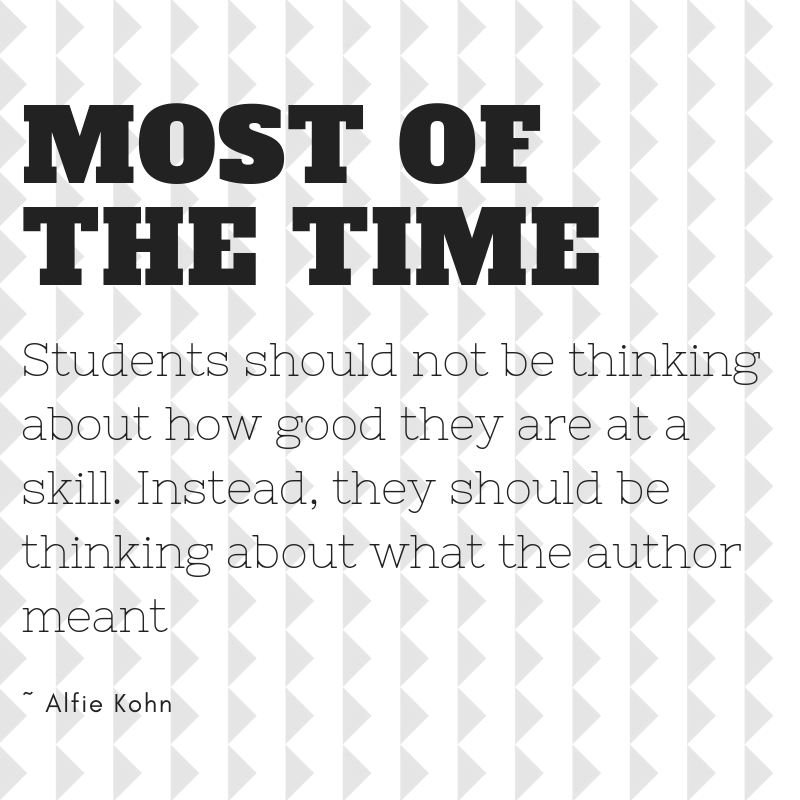 In his conversation with Goins, Kohn challenges us that there is no way to measure or quantify true learning. The moment we try to put a numerical or letter-based score onto a learning task, we take away much of the motivation that students have to learn, and instead we create a system that trains our students for compliance. The things that can be easily measured in an assessment are not the things that truly matter. The example that Kohn used here was that on an assessment of a writing task, we may spend more time and effort in measuring the number of times that a student used punctuation correctly, however we don’t spend nearly as much time on whether the student expressed meaningful ideas in their writing. If we are developing learners in our world, what’s more important? I think most would agree that the ideas are the most important part, but ideas are hard to quantify, so we struggle to factor that into our assessments. As Kohn puts it “More focus on data in teaching means that we teach the trivial stuff more than the important stuff.”
 Let’s contrast that just a bit with human history. I’ve recently been reading Walter Isaacson’s fascinating biography Benjamin Franklin. There were a lot of things that I knew about Franklin, his role as an inventor/scientist, his time as a member of the Continental Congress, and that he’s a writer and printer. I don’t know that I fully realized what a world traveler he was. I also did not quite realize just how curious he was – throughout his life he found wonder in the world around him, and spent time trying to learn more.


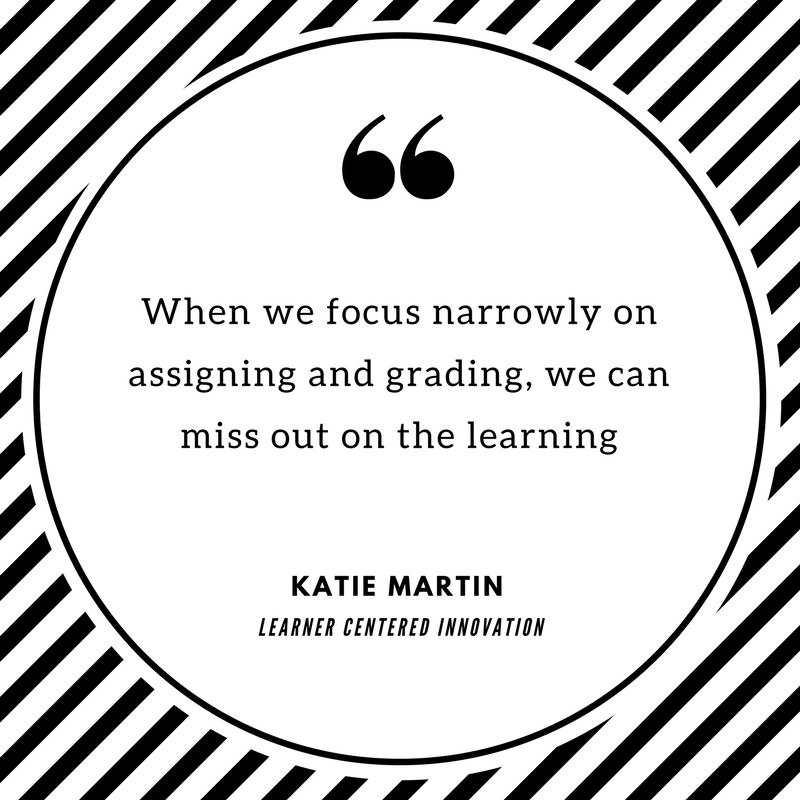
 If a student can turn to Google, Siri, Alexa, or whatever smart tool comes out next to find the answer to your question, then maybe we aren’t asking the right questions.
 The students in our school in general are very compliant. Compliant students sometimes struggle with creative tasks because they want specific directions to follow. They may not remember what it feels like to be creative or curious. Years of compliance in the school setting seems to suck creativity and curiosity out of our students. I think that sometimes students lose that ability to be creative and curious because they have grown accustomed to the amount of scaffolding that we provide for learning activities. That scaffolding can begin to feel a bit like a cage, and students forget how to get out.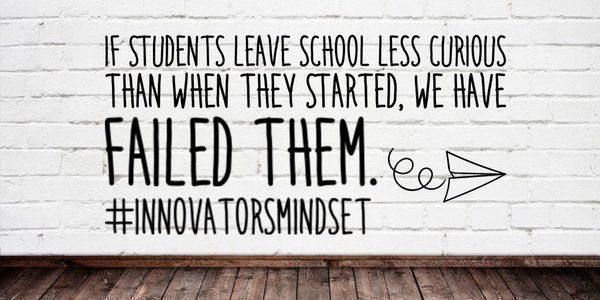
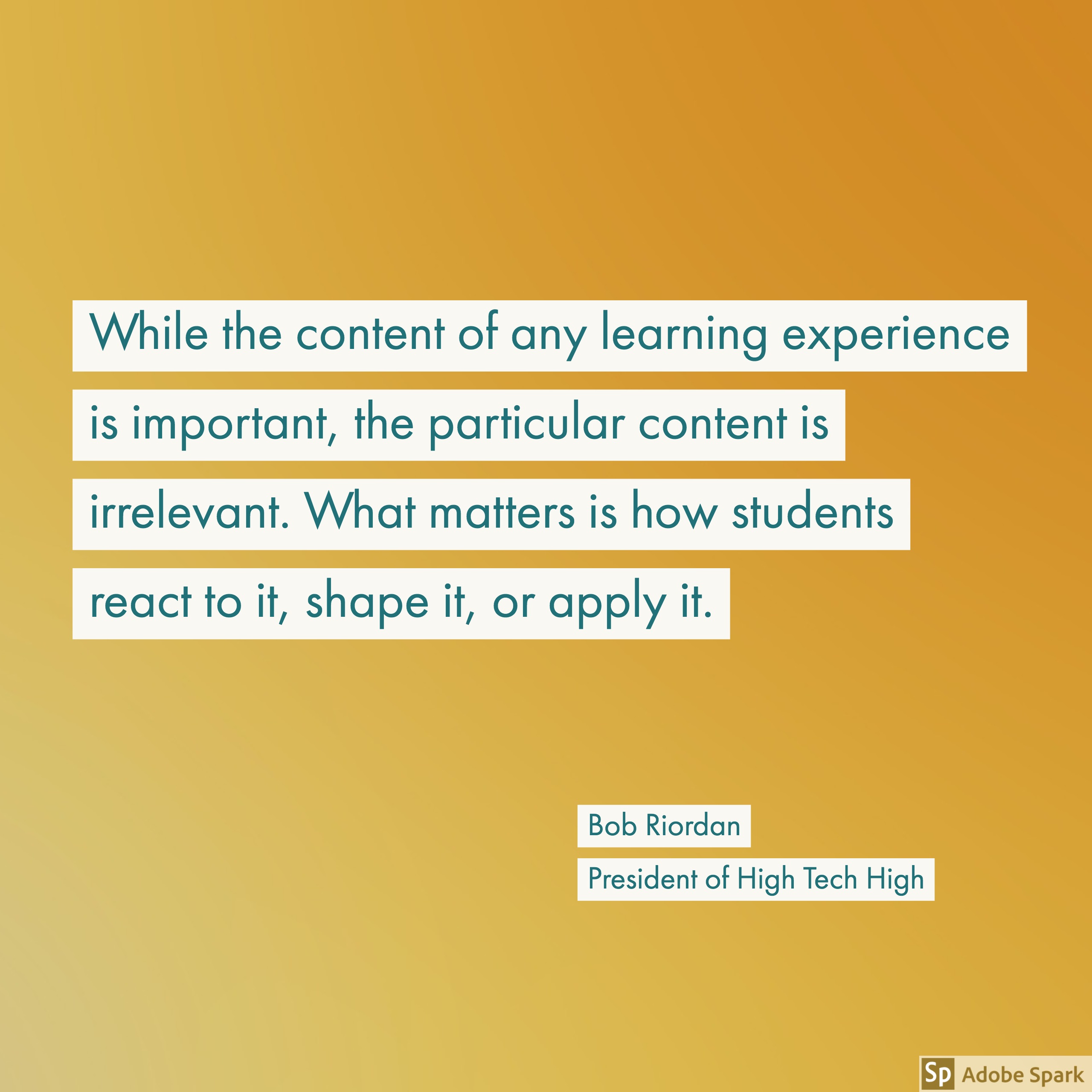 So how do we add relevancy to the things that we are teaching our students? I’ve had this conversation with several people recently, and my best suggestion is that we need to help our students see how the thing that they are learning about in class actually applies to their life. Recently in my school, many of the science classes have been learning about outer space. Can we tie last week’s amazing launch of Falcon Heavy into their studies of our solar system? What research could be done on the potential and kinetic energy of a rocket launch? Or what about the fact that there is research on the angle of release of a basketball shot being related to it’s likelihood of going in the hoop? Or maybe there are amazing connections that our students can make to our content that we would never even think of – we just have to get out of the way and let them share!


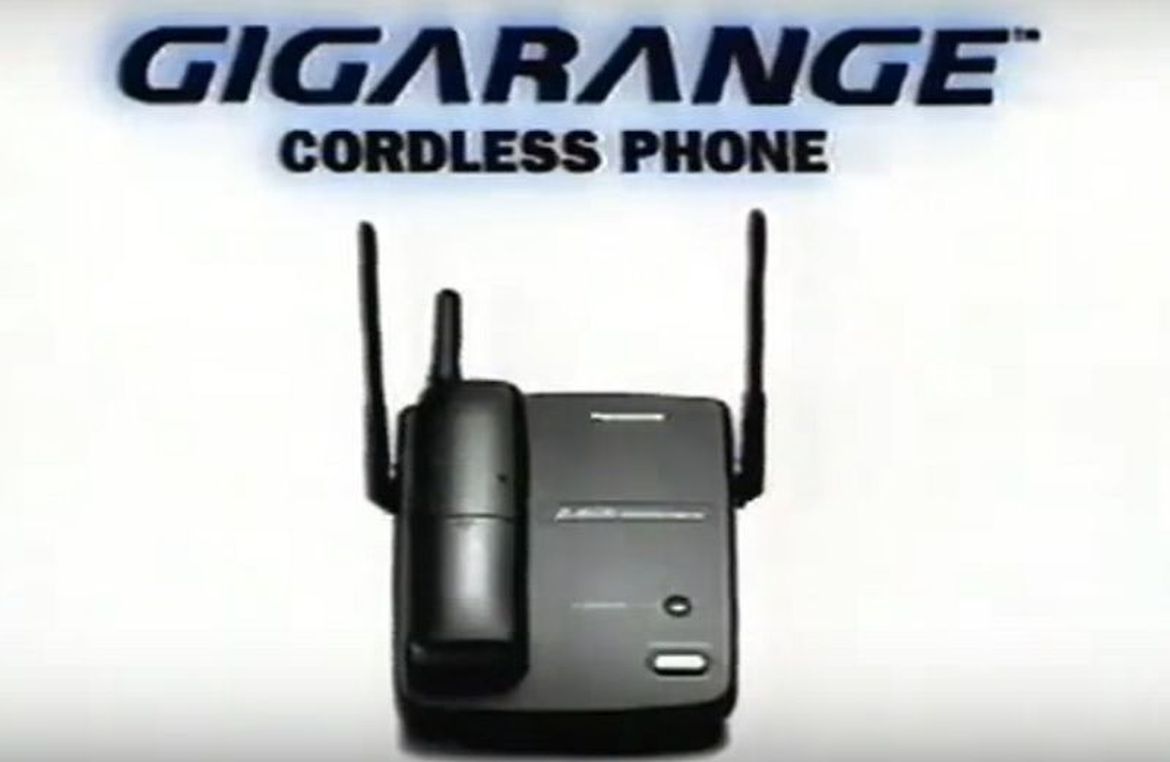
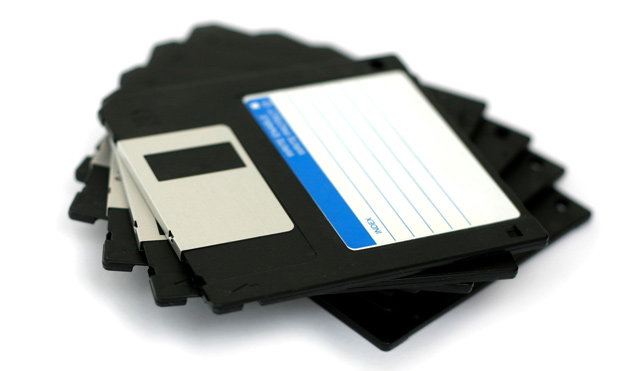


 So that brings us to the bigger question: What is school for? While some of our students may consider a role in manufacturing, the factories of today are way different than the ones of the early to mid 1900s that led to this factory model of education. Many of our students will not be heading down the path of manufacturing, so that factory model of school definitely doesn’t apply. If you believe that innovation is going to keep happening (and why wouldn’t it?), then we’re preparing our students for an ever changing world! That is so different from the traditional model of school as a factory. In an excellent TED Talk by Seth Godin, he gives 8 examples of things school should be doing:
 The View from 518