
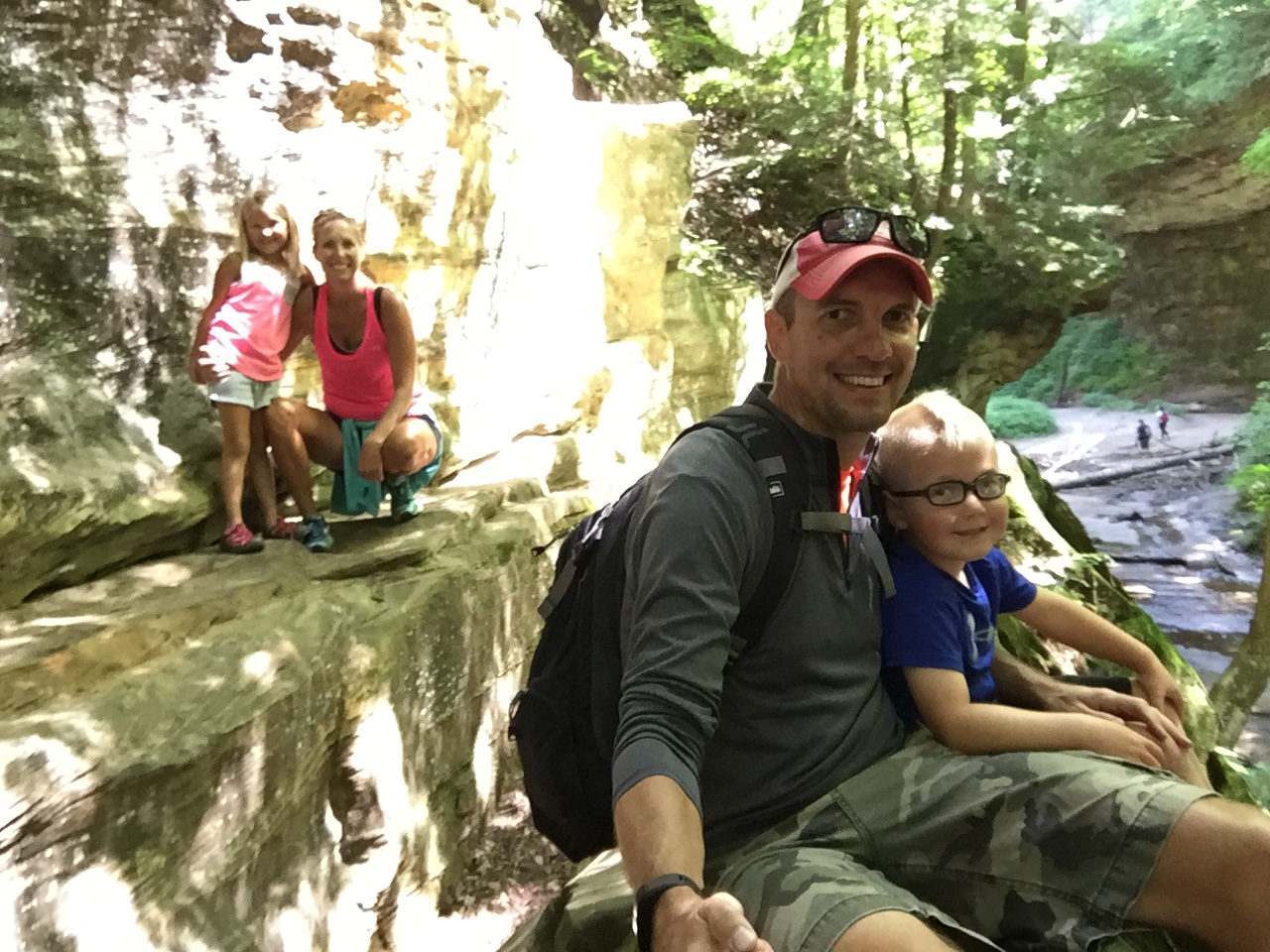
 Today I was reading a recent blog post by John Spencer about the ways that nature helps us to be more creative (check it out here). Personally I love to be out in nature, so the post really caught my attention. The gist of the post was about the fact that time in nature can lead us to greater levels of creativity. His 5 ways that nature makes us more creative are listed in bold below, with my own thoughts added:
- Nature creates positive disruptions – Life draws us into the natural hustle and bustle of our world. Being in nature helps us get away from technology, current events, and everything else that makes it hard for our brain to stay focused. That time away from all those distractions allows our brains to think more deeply.
- Nature encourages problem-solving – Almost every time I go for a hike, or spend some time in nature, I’m inspired to write a new blog post, or solve a problem, or be creative.
- Nature helps us embrace deep work – When do you do your best thinking? There is a lot of research that says that simply being active can lead to deeper thinking. Simply going for a walk helps us activate our brain in different ways. According to some research, throw nature into the mix and you multiply that effect. So what does that mean for you? Before teaching a particularly important skill, take your class for a walk in the woods outside of school. Your students brains will be better prepared for deeper thinking when you return.
- Nature humbles us while also expanding our worldview – I’m not sure how many of you know this about me, but I was a 10 year 4-H member. I didn’t show animals (we weren’t on the farm), but I did lots of other projects over the years. One of the projects I did required me to take multiple observations of a natural environment every day over multiple weeks. I chose a small wooded area with a trail just a little over a mile from my home. I had to observe at different times in the day, and I began to notice changes in what seemed like an untouched environment. Some animals were more or less active at certain times of the day, some plants looked different depending on various factors. The time I have spent in the natural world helps me realize that there are so many things happening in the world around us that we miss when we are in our cars, or on our devices. Sometimes you really do have to slow down, look around, and smell the flowers in order to be aware of what’s happening in our world, and to realize how little control we have over so much of what’s around us.
- Nature can spark innovation – Did you know that Velcro was designed by a Swiss engineer after his dog was covered in burdock burrs after going on a hike? Or that the design of the nose of Japanese high-speed trains was meant to mimic the beak of a kingfisher? These are just a couple of examples of innovations that came about because of things that people noticed in nature. Imagine what the future scientists of the world (our students) may be able to develop if they learn to look to nature for ideas and solutions to our problems.
Reading Spencer’s post got me thinking about the natural wonders just waiting to be explored outside of our school. By walking out the doors of our building, you can access a variety of outdoor environments. Between the trails in the wooded areas, the stream running through the woods, the untended plain near the baseball fields, or the river, there are so many ways for us to access nature. And the benefit doesn’t just stop with the kids being out in nature away from their devices. Something they see while they are with you may inspire creativity and wonder in a way that is totally unexpected.
What have you done with your class in our outdoor areas? Have you seen increased levels of creativity as a result of the time you have spent outside? Share your thoughts in the comments below.
 Parts of this quote come from Todd Rose, author of The End of Average. I read the book last fall, and wrote a couple of posts on the ideas learned from the book here:

 So, what does that mean for us? As we talk with students – whether we are giving them feedback on classwork, discussing their behavior, or making suggestions, we need to keep it short and to the point. In a recent post from Matt Miller, he suggested using the sandwich technique:
 For me, when I think about what brought me into education, there are a few moments in my lifetime that stand out. I remember my fifth-grade teacher, Mrs. Gromer. With her, the Maya Angelou quote to the right comes to mind. There aren’t very many specific things I remember happening in her classroom, but I remember that I always felt welcome, and valued, and important. I felt that if I wasn’t there, someone missed me, and some value was lost from the class. While I had great teachers before her, and great teachers after, nobody ever made me feel as important in the classroom setting as Mrs. Gromer.
 I have hopes and dreams for these two. I want the best for them. And I know that if that is the way that I feel, then the parents who trust each of us with their children have similar types of hopes and dreams. The faces that sit in our classrooms each day are their everything, and they want the best for their kids as well.
 Knowing how strengths can motivate all of us reminds me to be on the lookout for strengths as I am walking the halls. I am challenging myself to look for the strengths or everyone, and recognize those strengths! I challenge you to do the same.






 The View from 518