Be a Connected Educator (Part 2)

https://plus.google.com/+SylviaDuckworth/posts/61rTzdcJ1yG?pid=6097161572876797314&oid=114228444007154433856

In last week’s post I shared a little about the value that connectedness can provide to educators.  This week I want to share some of the ways that you can use social media for personalized PD.  As I shared last week, online educator communities provide you with 24/7 access to people, ideas, resources, philosophies, and opportunities that can expand your world (and the world of our students).  So here are some of the reasons I get excited to connect online:


  • Inspiration: Many of the new things that I try here at school are because of something I have learned through a tweet, blog post, or somewhere online.
  • Motivation: Several of the twitter accounts I follow are educators who love to tweet out pictures and quotes that motivate me to try to be better. That little bit of motivation can be such an awesome help!
  • Challenge: I intentionally follow some people because they have different opinions than me. I do this because I want to have a full background.  Every once in a while something that someone shares truly challenges my thinking in a way that makes me reflect on my beliefs.
  • Camaraderie: I have been able to find connections with many other teachers and administrators all over the country/world!
  • Apps: You can use your digital connections to learn about new apps for a specific purpose, or ideas for better ways to use the apps you already have.
  • Humor: Just like our Friday funnies, there are funny things that happen in schools every day. Some of those things show up in my timeline and give me the opportunity to laugh.
  • Collaboration: Through online connections you can work with almost anyone in the world. You can find teachers all over the world teaching the same material, and create connections that allow you to learn from them, and they can learn from you.

So how do we connect?  And how do we find the time?  That’s total up to you, but there are a couple of options that you could try, and the amount of effort you put into them is totally up to you!

Our connections on social media allow us to connect with educators like never before!  Matt Miller - https://www.flickr.com/photos/126588706@N08/14562418440/in/album-72157645530010989/
Our connections on social media allow us to connect with educators like never before!
Matt Miller – https://www.flickr.com/photos/126588706@N08/14562418440/in/album-72157645530010989/

Social Media: For me, this is the best way to connect.  Twitter is my favorite choice, but Facebook, Instagram, and Pinterest are good ones as well.  My favorite thing about Twitter is that every post is 140 characters or less.  It’s amazing how much info can be packed into such a short amount of space.  The biggest thing to know on Twitter is how to use a hashtag.  A couple of my favorites are #edchat and #edtech.  Tons of great ideas get shared, and if you post something with one of those hashtags, you will get a ton of people to see your post.  (For more education hashtags, take a look at the links in last week’s post)

Blogs: There are thousands of blogs about education out there!  Most of my favorite blogs that I follow are because of connections I have made on Twitter.  I use Feedly.com as an RSS aggregator that keeps all my blogs in one place.  Each time a new blog that I follow posts, it shows up in my feed.  When I have time, I’ll peek at it.  If my day is too busy, I’ll skip it.  Feedly can also help you find other blogs based on topics you are interested in.  In addition to reading blogs, you can also start writing a blog.  Share the things you know – creation is one of the highest levels of thinking.  It can also be a huge time commitment – these posts don’t write themselves!  Some post daily, some are a few days a week, some are less regular than that.

Being a connected educator will make it easier to transform education in your classroom.  You will find new ideas, you will be able to ask questions, and you will be able to share your own thinking and give back to the community!  Invest the time that makes sense to you.  There are days I don’t get on Twitter at all, and there are days where I have extra time and might spend an hour or two reading, adding, and building connections.

What tools have allowed you to connect and change the way you teach?  Share with the rest of us below!

Teachers vs. Students

It’s the beginning of class, and you are checking to see what students came to class prepared, and you get to “that” student (admit it, a name just came to your mind!), and of course, they are not prepared for class today.  This is the third time this week, and who knows how many times this month…

All of us have been there at one time or another.  It can be so hard not to take it personally.  In your mind you may think about the amount of time you have invested in that student, or the help that you provided yesterday to make sure that student was organized and prepared to be able to finish the homework, or maybe you think of the assurances you had from the parents who told you they would help make sure work was being completed.  How can we not take it personally?

Of course, the reality is that for the vast majority of our students, they are not doing this purposely (although on the day I am writing this, I did see a student with a t-shirt that said “I’m just here to annoy you!”).  In fact, you are probably the furthest thing from their mind when a student does not complete his work.  Instead, the lack of completion could be for a lot of reasons (maybe they didn’t understand how to do the assignment, maybe they didn’t want to do it, maybe they thought it was boring, or maybe there was nobody at home to make sure they did it – you get the idea, there are lots of possible reasons).  I think logically all of us understand that students are not intentionally coming to class unprepared in an effort to drive us crazy, and yet we can’t help but feel that way.

no significant learningOne of the great beliefs I have about education is that relationships are one of the keys to success for our students.  I know that many of you feel the same way.  We take the time to build relationships with all our students.  We feel invested in each of them.  We can’t help but believe that the feeling is mutual.  Unfortunately, our students don’t always feel the same way.  Sometimes even with our best effort, it is hard to help all our students to feel connected here at school.

When “that” student comes to class unprepared, the simple solution is often to get angry or frustrated.  It is much more difficult to figure out the answer to the key question – why?

Finding the answer to the question of why is not easy.  The answers that students will give run the gamut – I forgot, I had a basketball game last night, my parents couldn’t help me, etc.  A lot of time we see these answers as excuses.  Instead, maybe we should look at them as clues.  If they say they forgot, are they disorganized?  Do they need additional support so that they won’t forget in the future?  Could you help them set an alert on the iPad or phone to go off in the evening to remind them of the work they have to do tonight?  If they say that they had another activity, can we assess what they do have done to see if they understood the concept?  Do they need more work time here at school?  We can’t control how their time is scheduled outside of school hours, but we can help control how that student uses their time here at school.  If they say they didn’t have a parent to help them, then do they need to have the concept retaught to them?  If a student needs a parent’s help to be able to complete a homework assignment, then they don’t really understand the material.

In last week’s post we discussed growth mindset in teachers.  An argument could be made that situations like the one described at the beginning of this post could be the perfect opportunity to use some of what we learned about having a growth mindset.  Instead of taking it personally when a student isn’t prepared for class, look at it as a puzzle to be solved.  Try to understand why the student isn’t prepared.  Once you understand the why, it will be much more likely that we can approach a solution.  If you don’t have an idea of how to help the student, talk to your colleagues, counselors, or administrators to see what ideas they may have (collaboration = more opportunities for growth!).

If you’re still struggling to come up with a way to motivate the student, come at the problem from a PBIS perspective.  Most of our kids who struggle simply want attention of some kind.  Getting negative attention is easy, but when given a choice between a positive and a negative consequence, most kids will choose the positive (it’s amazing what I used to get kids to do for a sticker or a jolly rancher!).  And if you show them that it is possible to earn that positive consequence, then they find success.  Once they show a pattern of success, you can make it more difficult to earn that positive feedback, and hopefully the student will begin to learn that the feeling of success from a job well done is a good enough reward (I know that this process takes longer than we like, but it does work!).

Instead of looking at the unprepared student as the enemy, spend some time thinking about them as a puzzle.  If you don’t know what will motivate him, spend some time to get to know him (2 for 10 strategy).  Look back on one of our earlier posts: Know your kids – Love you kids for a little more on how a 2 minute conversation can help you learn about your kids.

What success have you had in motivating the unmotivated or reaching the unreachable?  Spread the wealth!  Share some of your experiences in the comments below.

Importance of student feedback

A couple weeks ago I had a post on how to influence students (click here to see it again).  This weekend I was reading a post by A.J. Juliani on his blog titled “The Future of Learning” and I saw an article that related to my previous post, but he looked at things from a slightly different perspective.

What are the best ways to give feedback to our students?

Through reading Juliani’s blog, I ended up reading a research paper written by a team of psychologists from Stanford, Yale, Columbia, and several other well known schools to look at the type of feedback that is given to students.  In this study the authors were testing to see if the type of feedback given on an essay written by 7th graders could result in greater effort (as measured by an increased number of revisions), and improved quality of final drafts.

While there have been many studies on how to provide praise to our students, there has been limited research in how to provide meaningful criticism that will result in improvements for students.  Many of us place our criticism in the format of 3 stars and a wish (or something of this nature) to boost self-esteem before delivering the criticism.

The reality is, self-esteem is not the key to being able to hear criticism, but rather trust is the key.  Boosting self-esteem will not always boost trust.  When trust exists, we are able to see criticism as information to help us improve.

In the experiment, some students received “wise feedback” while other students received “neutral feedback” on their papers.  Simply through the type of feedback that was given to a student, there was a marked improvement in students choosing to revise their paper (a 40% increase in student effort) and improvement in overall performance on the final paper (you can see the study here).

So, what was the magical feedback that led to such extreme improvements?  What note was written on the top of each paper with similar feedback below?  The experimental phrase was:

“I’m giving you these comments because I have very high expectations and I know that you can reach them.”

That’s right – 19 words written on the top of the paper.  In other aspects of the study, these words helped develop greater trust between the student and the teacher, which in turn provided students with a sense of belonging and connection.

For the students who were in the control group, the note at the top of the page looked very different.  It simply said “I’m giving you these comments so that you’ll have feedback on your paper.”

Remember that feedback tells us about the relationship that we hold together.  Feedback like what you see in bold above gives the students some clear messages: you’re part of this group; we have high standards; and I believe you can reach those standards.  So what lessons can we as teachers take away from this?  In the post from Juliani that led me to this research study, he referenced an article by Daniel Coyle, the author of The Talent Code.  His lessons from this study are as follows:

  1. Connect: As John Wooden said, they can’t care how much you know until they know how much you care.
  2. Highlight the group: Seek ways (traditions, mantras, fun little rituals) to show what it meas to belong in your crew.
  3. Don’t soft-pedal high standards: Don’t pretend that it’s easy – do the opposite.  Emphasize the toughness of the task, and your belief that they have what it takes!

Have you found success in sharing feedback in this manner?  If so, share with us how you let students know that they are part of the group, the group has high standards, and your belief that the students can reach those standards.

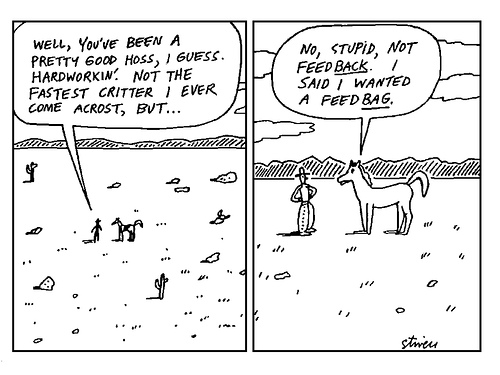
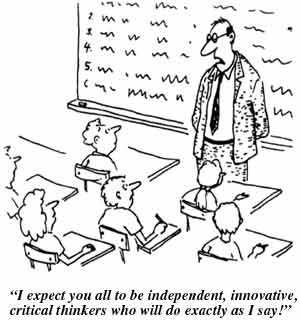
Sometimes our feedback can be a little misguided...
Sometimes our feedback can be a little misguided…

Know your kids – Love your kids

Growing up, the mother of one of my closest friends was an elementary school teacher.  When I graduated from college with a brand new teacher’s license in hand, she gave me a couple of books and some unsolicited advice.  One of the books was The First Days of School by Harry and Rosemary Wong.  The advice was “don’t smile until at least Thanksgiving.”

From Amazon: http://www.amazon.com/The-First-Days-School-Effective/dp/0962936022

The First Days of School was a great resource in setting up my first classroom, and knowing that this person was a great teacher, I tried to follow that advice.  The only problem…  I really like kids!  I couldn’t not smile at them.  They were curious, they were funny, and most of all, I knew they were going to be with me for a whole year.  Building a relationship with them was really hard if I couldn’t smile!

Some of you may be of the opinion that if you are a good teacher, it doesn’t matter whether or not the kids like you, as long as they respect you.  Let me ask you this…  How many people that you don’t like do you truly respect?  Kids don’t learn from people they don’t like.  Kids will learn from people they feel a strong relationship with.

Matt Miller: https://www.flickr.com/photos/126588706@N08/14726101996/in/album-72157645530010989/

Going back to our belief statements, building positive relationships is one of our top priorities.  It’s easy to have a relationship with the kids who do really well in your class and seem motivated to learn.  Those are the kids who know how to play school and probably have the most positive relationships.  Those kids are probably the ones who need you the least because they can build relationships easily.  The ones who need you the most are the ones who seem to not be motivated, or seem to not do well.  What have you done to build relationships with those students who don’t play school well?

The next time you look at your class, see who it is that you know the least about.  Seek out an opportunity to learn something about them.  Have a 2 minute conversation that has nothing to do with school or your class.  What are their interests?  What do they like to eat?  What did they do last night?  What do you know about their family?  Do this as often as possible until you know a few new things about each of your kids, then start again!

Remember the first day of school this year.  I asked you to do 2 things – Know your kids, and love your kids for who they are.  What steps have you taken this year to be able to know your student better?  Share in the comments below some of your successes.

Matt Miller: https://www.flickr.com/photos/126588706@N08/14746751544/in/album-72157645530010989/

Make it fun

What makes one professional development opportunity great, while another may be bland and boring?  Some of the best PD that I’ve had felt that way because the presenter somehow made things fun.  In your classroom, the students are the audience, and while making sure they are having fun is not your primary goal, we all know they are going to pay a lot more attention if the activities that we are doing are more fun.  What are some ways we can incorporate fun into our classrooms?

Kevin Jarret - https://www.flickr.com/photos/kjarrett/7070563247
Kevin Jarret – https://www.flickr.com/photos/kjarrett/7070563247
Scott West
Scott West
  • STICKERS – I am continually amazed by what a fifth or sixth grader will do for a sticker (haven’t you noticed the Ham & Cheese stickers that end up on our students foreheads?). Want some more participation?  Pull our the foil stars, ask a question, and give out a star for good answers, or to integrate tech, give a foil star to the best response or question on Today’s Meet (see the post on Getting ALL our students to participate in the classroom).
  • Make it silly – before students hand in a paper, have them do something silly, make a sound like a pirate, do a little dance, etc. Adding a little silliness will up the fun factor by at least 10% (and even more important – if you are being silly with them, they will be even more engaged!).
  • In a content area, retell a story and make your students the stars of the story (think about last week’s post on titled Put your students into your materials).

When kids walk out of this building, the fun they want is pretty much on demand.  Between social media, streaming video and music, video games, and more, our students have tons of ways to do something fun.  If we want them to be as engaged in our room as they are with their Minecraft world, we have to be willing to bring in some of the fun.

Matt Miller: https://www.flickr.com/photos/126588706@N08/14562457739/in/album-72157645530010989/

Think of some lesson you have done in the past that was a bust (even the best of us have had one!).  How could you add some fun and silliness to help the students be more engaged?  What things have you included that were fun and did help students remain engaged?  Share some of your ideas in the comments section below.

Student Behaviors

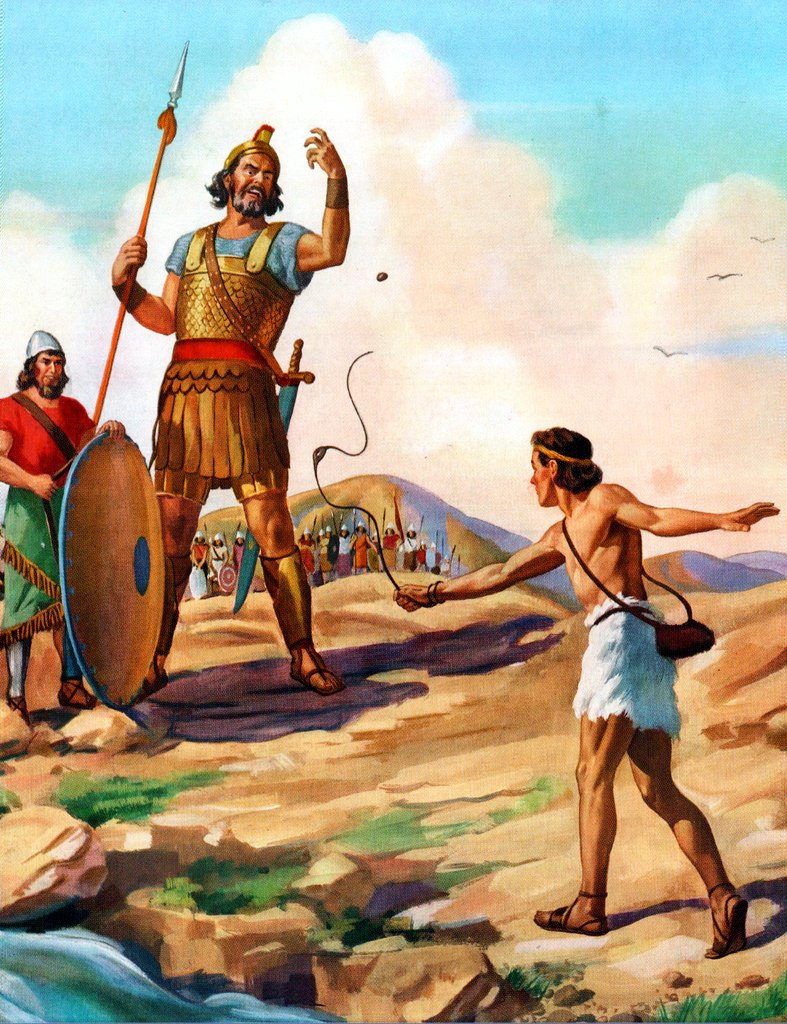
Robert Temple Ayers - https://www.flickr.com/photos/42787780@N04/4975296555
Robert Temple Ayers – https://www.flickr.com/photos/42787780@N04/4975296555

I have recently been reading the book David and Goliath: Underdogs, Misfits, and the Art of Battling Giants by Malcolm Gladwell.  I’m not sure if any of you have ever read anything by him, but he often picks a story to share, and then spends the rest of the book talking about the psychology behind what “really” happened.  He does a ton of research, interviews a wide variety of people on a wide variety of topics, and then puts it all together in a way that ties back to his original message.

If you remember the story of David and Goliath from ancient Palestine, you will remember that David miraculously felled a mighty warrior with nothing more than a pebble and a sling.  Now, any rivalry game where one team is hugely favored and the underdog wins is often referred to as a battle of David and Goliath.  What I have taken away as one theme of the book is that sometimes there are times that the win by David is not as improbable as you might have suspected.

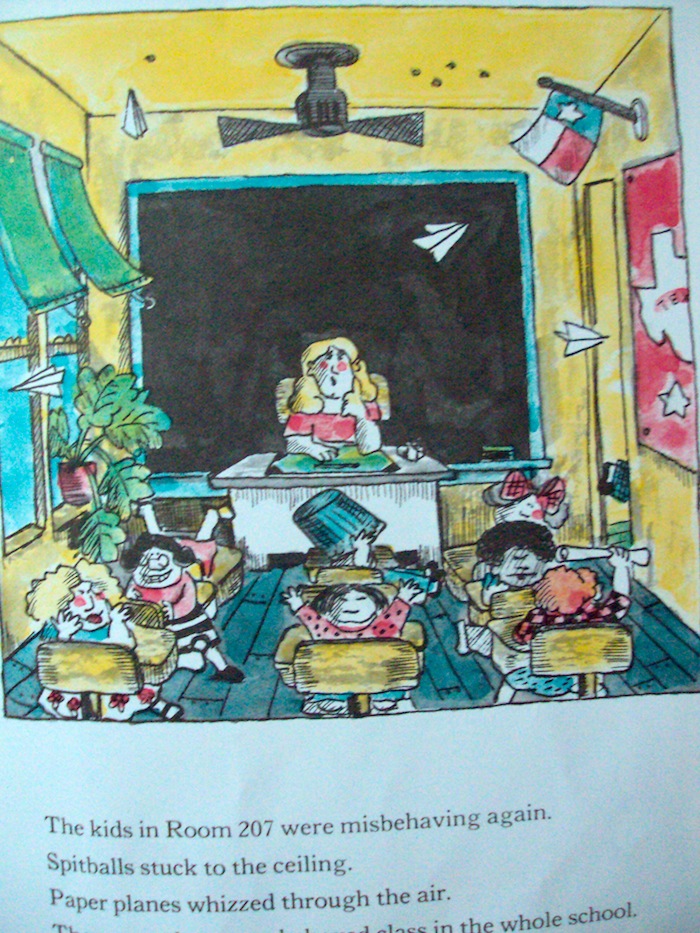
Let's hope your class doesn't look like this!!! http://gatheringbooks.org/2011/05/10/miss-nelson-is-missing/
Let’s hope your class doesn’t look like this!!!
http://gatheringbooks.org/2011/05/10/miss-nelson-is-missing/

In one portion of the book, Gladwell is talking about classroom management skills.  He describes walking into a classroom that appears to be absolutely in chaos.  The teacher is at the front of the room doing a read aloud.  One student is standing next to her and they are taking turns reading from the story.  Kids are making faces, one girl is doing cartwheels, and several students have turned their back on the teacher.  The situation is unpacked a little more greatly in the book, and it becomes obvious that the teacher in this situation is using some very poor classroom engagement strategies which lead to the classroom management issues, but something that Gladwell said struck a chord with me:

“We often think of authority as a response to disobedience: a child acts up, so a teacher cracks down.  Stella’s classroom, however, suggests something different: disobedience can also be a response to authority.  If the teacher doesn’t do her job properly, then the child will become disobedient.” (Gladwell, pg 339)

A view of some of the projects in Brownsville - https://upload.wikimedia.org/wikipedia/commons/2/22/Qbridgenycha.JPG
A view of some of the projects in Brownsville – https://upload.wikimedia.org/wikipedia/commons/2/22/Qbridgenycha.JPG

In the same chapter, Gladwell then shifts to a story about a program based in Brownsville, a residential neighborhood in eastern Brooklyn, NYC.  If you were to visit, you might be inclined to refer to this area as the projects.  In 2003, a police officer took charge of the city’s Housing Bureau, and their primary responsibility was the Brownsville projects.  In an effort to try something new, they started trying to help the troubled youth in the area.  They identified all the juveniles in Brownsville who had been arrested in the previous year.  They reached out to those kids and their families.  Kids who were brought into the program were told that the cops in this group (called the Juvenile Robbery Intervention Program – J-RIP) would do everything in their power to help.  They would get them back in school to get a diploma, bring them needed services for their family, find out what’s needed in their household, provide job opportunities, educational opportunities, medical – everything they could.  The program would work with the kids, but there was one circumstance.  The criminal conduct had to stop.  Kids were told that if they got arrested for anything, the cops would do all they could to keep them in jail.

The cops in the J-RIP program seemed to be everywhere these 106 kids went.  They’d show up at their home, find them hanging out in other parts of the city, walk up to Facebook friends and talk to them about what they’ve been up to.  These cops lived in the world of these kids.  Initially things did not go well.  The kids didn’t want to interact, the families didn’t want to interact.  The cops had the best of intentions, but they weren’t getting anywhere.  Finally they had a breakthrough one November.  One of the cops decided it would be a great idea to help out one of the kids they were most worried about losing.  One the Wednesday before Thanksgiving this officer went out and bought a Thanksgiving dinner for the kid’s family and delivered it.  They knew they might not be able to get through to the main target, but maybe they’d have a breakthrough with the kid’s seven siblings.  That year, through the efforts of the commander of the unit, they were able to get funds to be able to deliver a turkey to the home of every kid that was on their list for Thanksgiving.

The reason they were so persistent in trying to meet the families was because police in Brownsville were not seen as legitimate.  A large percentage of the families in Brownsville had only had negative interactions with the police, and multiple people in most families had spent time behind bars.  By taking turkeys to the families of the J-RIP kids, the cops were saying to the families “we really do care about you and your family, and we want to help you make the most of yourself, and most important, we want you to have a good Thanksgiving.”

After this, things in Brownsville began to turn around.  The trend line on all crime in Brownsville dropped significantly in the following 5 years.  Kids who were in the J-RIP program went from a total of over 350 arrests in the year before being added to the program, to less than 40 arrests.  Gladwell argues that what this proves is that

“the powerful have to worry about how others think of them – that those who give orders are acutely vulnerable to the opinions of those whom they are ordering about.” (Gladwell, pg. 356)

As teachers, we are clearly in a role of power.  Some of our parents are scared to be involved in school because they may have had bad experiences when they were in school, or maybe their child has had bad experiences in the past.  Some of our students are nervous in the classroom because of things beyond our control, maybe a bad experience in another class, or their perception of the teacher.  As people in power, what actually matters are the hundreds of small things that we as the powerful do – or don’t do – to establish legitimacy.  When power is not seen as legitimate, it can often have the opposite of the intended effect.

https://allthingslearning.wordpress.com/tag/trends-in-education/

We are dealing with the minds of 10, 11, and 12 year olds.  Sometimes they struggle to understand the things we say, the jokes we make, or the ways we interact with them.  Things like sarcasm and a sense of humor that may make perfect sense to the adults in our building will fly right over the heads of our kids, and instead they will feel that you are actually being serious, or possibly making fun of them.  For some of our kids, the direct approach doesn’t work because it only leads to a shutdown.

Think about what you do to build legitimacy with our students.  Keep in mind that what works with one kid may not work with another.  Also keep in mind that without legitimacy, our students may not see us as people who care for them, but rather as the person who’s trying to keep them down.  If you want to build better legitimacy with your kids, give them a voice.  Also, give them the time to talk about their interests.  Think about the J-RIP program – they took a small group of kids living in Brownsville and truly showed those kids that the cops cared about them, and many of them changed their ways.  It also had a larger effect of changing the culture of crime in the entire neighborhood.  Who are the kids that you would identify as needing to know you care?  How can you show them that you care?  How can you build greater legitimacy so that your power has the intended effect, and doesn’t lead to unintended consequences?

CPI Refreshed!

http://www.crisisprevention.com/

Today I had my annual refresher in CPI – Crisis Prevention Intervention.  The focus of the refresher training this year was on Goals, Power, and Relationships.  As I was sitting in the training, I kept thinking how important these ideas are for all the teachers in the building I work in.  It seems that some people think that CPI is all about how to put our kids who are in danger of hurting themselves or others into some sort of restraint.  Unfortunately there are times that this is part of the process.  The reality is that if you are using the strategies put forth in CPI in the best way possible, you are able to avoid getting to the point of using any restraint.

In those early stages of escalation, when students are becoming anxious or defensive, it is all about how we handle the behavior.  The analogy that my trainer used today was that it’s like approaching a fire with 2 buckets, one of gasoline, and one of water.  The things we say to the escalated student, and how we say those things can act as either the gas or water on the fire.

Sometimes as teachers we get caught up in our own feelings and emotions.  We have to remember the Q-TIPs: Quit Taking It Personally!  Instead, as a person who is skilled in deescalation techniques, you need to focus on a goal for every intervention, using the power you hold in a positive way, and building relationships with trust and respect.

In a situation of crisis, there are 3 possible outcomes – things can stay the same, get better, or get worse.  What we say and how we act can control what outcome we see.  If the outcome we seek is for improvement, we have to enter each situation with a goal in mind.  As we all know, there are different types of goals – short term, intermediate, and long term.  Our short term goal must always be focused on safety.  The intermediate goal should be focused on learning opportunities for the student, and our long term goal should be on autonomy.  But how do we get to those goals?

Part of the way that we get to our goals is through our use of power.  Sometimes power is seen in a negative light, but in the crisis situation, not only is the power that you hold important, but also the power that you give to others is important.  By gradually releasing power to our students, we show them that we trust them, and we help them feel empowered to take control of their own situation.  Compliance alone should not be what you are looking for, rather you should be seeking cooperation.

Another skill at reaching a positive outcome is that of relationship building.  When you have a solid relationship with your students, it is much easier to influence their choices and behavior due to the rapport you have with them.  Instead of focusing on rules and regulations, build a positive relationship that makes it easier to have a meaningful learning opportunity for your student.  We all know pretty quickly who our difficult students will be.  Use something like the 2 for 10 strategy, spending 2 minutes per day for 10 days talking to the student about something that is not directly related to school, or something that they care about.  The deposits that you make in a relationship at the beginning of the year will make your life easier later in the school year.

Think about the student that you sense may cause you trouble this year.  What steps can you take today, or this week, to build a rapport with that student?  At the beginning of the school year this year, I encouraged the teachers in my building to know their kids, and love them for who they are.  When they feel valued and loved, its amazing what they will do for you!

What are some of the successes that you have experienced from relationship building?  What strategies have helped you to deescalate a student who was feeling anxious or defensive?  Share some in the comments below.