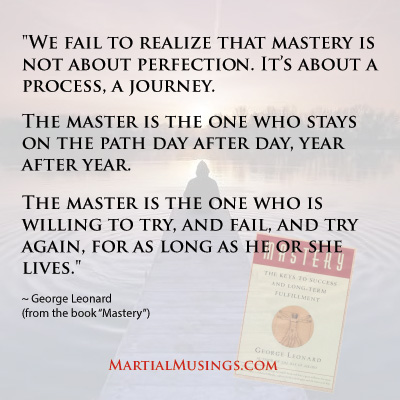
The importance of failure (and a little about Elon Musk)

Last week I received an email from one of my favorite blogs directing me to a post titled “What Teachers Can Learn About Failure From Elon Musk” (you can click on the link if you’d like to see the original post).  The gist of the post is that as teachers and learners, we have to fail, and be willing to share those failures, as part of the learning process.  I thought of the saying “Fail Forward” as I read one of the early paragraphs.

elon-muskThe post then talked a lot about Elon Musk.  This is a guy I had heard of – I’ve seen his TED Talk, Tesla makes some pretty cool cars, and as a self described nerd, I have watched multiple SpaceX launches and attempts at landing with interest.  So as I was reading about Musk, I was curious to be directed to a series of posts about Elon Musk from the blog Wait But Why (Check it out here: Elon Musk: The World’s Raddest Man).  After going deep into some background on the history of fossil fuels, automotives, space travel, and a few other topics, I also walked away with a newfound interest in Elon Musk, as well as an understanding of why Tim Urban, the author of Wait But Why, describes Musk as such a rad dude.

As a college student what were you thinking about?  When Musk was in college, he asked himself “What will most affect the future of humanity?”  His list contained 5 things: “The internet; sustainable energy; space exploration with a goal of life beyond Earth; artificial intelligence; and reprogramming the human genetic code.”  I can tell you that as a college student, this is most certainly not what I was thinking about!

Whatever skeptics have said can't be done, Elon has gone out and made it real. Remember in the 1990s, when we would call strangers and give them our credit-card numbers- Elon dreamed upSo here’s a brief rundown of Musk’s career:

1995 – starts Zip2 – think Yelp and Google Maps in a pre-smartphone era – in 1999 at the age of 27 Zip2 sells for $307 million, and Musk’s take was $22 million.

1999 – Musk takes three quarters of his personal net worth to start X.com – an online bank (before those really existed).  X.com merged with Confinity to create a money-transfer service that we now know of as PayPal.

2000 – Musk is replaced as CEO of PayPal, but stays on the team in a senior role.

2002 – eBay bought PayPal for $1.5 billion, and Musk walked away this time with $180 million.  He was 34 years old.

Also in 2002 – Musk begins researching rocket technology and after the finalization of the sale of PayPal, he invests $100 million of his own money in a rocket company called SpaceX.  The stated goal of the company was to revolutionize the cost of space travel in order to make humans a multi-planetary species by colonizing Mars with at least a million people over the next century.

SpaceX Logo

Let that sink in for a minute…  In the span of 7 years he went from dropping out of a Stanford PhD program to starting SpaceX.

And he wasn’t done yet…

Tesla-Motors-logo-2

2004 – still in the middle of the SpaceX experiment, Musk personally invested $70 million into an electric car company called Tesla.  The last successful US car startup was Chrysler in 1925.

2006 – invests $10 million to found another company – SolarCity with the goal of revolutionizing energy production by creating a large distributed utility that would install solar panel systems on millions of people’s homes and reducing their consumption of fossil fuel generated electricity. Because, I mean, what else did he have to do?!!

Side note: As I was reading through this, especially in reading about what Musk has done since 2002, I couldn’t help thinking of someone winning the PowerBall and deciding that they are going to use their money to feed the people of Africa, only to go bankrupt before they send anything across the Atlantic!  I wonder what I would have done if I was in his shoes when PayPal sold to eBay – it would be so tempting to take that money and go live on a tropical island for the rest of my days!

So, what does this have to do with failing forward you might ask.  Looking over the list of accomplishments above, it might be hard to find the failure.  During a 2005 interview with Fast Company, Musk was quoted as saying “Failure is an option here.  If things are not failing, you are not innovating enough.”  He was speaking about the culture of business at SpaceX.

Let’s look at some of the failures in his time at SpaceX:

I'll admit - this isn't a picture of one of the failed launches, but look at it! How cool is that???
I’ll admit – this isn’t a picture of one of the failed launches, but look at it! How cool is that???

2006: First launch – failure

2007: Second launch – failure

2008: Third launch – failure

At this point, it was easy to have doubts in the likelihood of success for SpaceX.  They had yet to prove that they had the ability to be successful.  And yet, those who worked at SpaceX, Musk included, were supremely confident.  With each of the failures, that had been livestreamed to the world, the company had learned and made improvements.  The engineers and scientists at SpaceX would go back to the drawing board and try to improve.

In the fall of 2008 SpaceX only had enough money to try one more launch.  Failure here would mean failure to the entire company.  But on the fourth launch they achieved complete success.  With it came new funding in the form of funds from NASA to make multiple deliveries to the International Space Station.  So what does this have to do with education?

In reading about SpaceX, Tesla, and other companies that Musk has been involved in, the key to their success is the feedback that the company seeks from it’s failure.  They are working in fields where there has been little to no success, so there isn’t a blueprint of how to succeed.  Failure is part of the process, whether they are building a rocket, a car, a battery for the car, or some other component in the process.

We can all agree that failure is an important part of the learning process.  But for it to be a learning experience, failure can’t be the end point for our students.  We can’t just put a failing grade in the grade book and move on.  Instead we mark that section at ‘needs improvement’ and we get back to work through meaningful feedback.  At SpaceX and Tesla, that feedback is an important part of the process to innovate.

Check out this video of a launch in June of this year.  It will pick up about 10 seconds before launch.  If you watch until about 2 minutes after lift-off, you’ll see the result:

As you can see, SpaceX still has failure.  But those failures continue to result in innovation!

We need to be providing that same type of feedback for our students.  There should be a two-way feedback loop between a teacher and student.  You have to provide your students feedback on the work that they are submitting.  It must be specific and lead to action that your students can take in their learning.  At the same time, your students have to be able to provide you feedback about their learning.  They need opportunities to make choices – in what they are learning, how they are learning it, how they are showing their learning.

Students can feel defeated when they try something new and things don’t go as they hope.  We have to continue to help them to understand that the journey is just as important, if not more so, than the end point.  We all learn from our failures, and getting up and trying it again shows that we are truly working for something better.

And just to show that success in one place doesn’t mean an endpoint, it’s important to think about what Musk and SpaceX are up to now.  They’ve shown they can successfully launch a rocket a get a payload to the ISS, but now they are trying to learn how to land a rocket that has just been in orbit onto a landing pad in the ocean.  Because, duh!  Why not???

There is no such thing as a quantum leap. There is only dogged persistence - and in the end you make it look like a quantum leap.So far, no success.  All four attempts have been failures.  But think back to Musk’s earlier quote – failure is an option.  I’m guessing that before too long, we’ll see a successful landing by SpaceX on a launch pad in the middle of the ocean.  When you see that landing, remember that it didn’t just happen.  It took tons of man-hours to get the feedback necessary to learn and adapt.  In the same way, our students need our feedback in order to continue to learn and grow.

Think back to a time that you learned something from a failure.  What steps did you take to improve?  Did you eventually find success?  Share with us in the comments below.  Or share your own example of a person who has show you what it means to “fail forward.”

How can you motivate your students? (Part 2)

Last week I shared a TED Talk by Daniel Pink.  If you haven’t watched it yet, take a little time to watch it.  You can scroll down to the post below, and then come back to here.

Sometimes the things that we believe will motivate us actually hold back creativity.

How many times have you tried to incentivize your students?  You let them all know that “if you do this, then you’ll get this…”  Whatever you offer is something that you just know that your students will love, and yet they don’t fulfill your expectation, or you get a negative response.  What I love about Pink’s talk is that he realizes that since rewards and punishments often don’t work, he shares some ideas that do work.  What his research shows is that appealing to deeper motivations like autonomy, mastery, and purpose are the key.  Here’s how he defines each:

  • Autonomy: “the urge to direct our own lives.”
  • Mastery: the desire to get better and better at something that matters.”
  • Purpose: “the yearning to do what we do in the service of something larger than ourselves.”

So, how do we take these ideas and use them to help motivate our students?

Control leads to compliance;autonomy leads to engagement.Autonomy: When I was in high school, I took science all 4 years.  Biology was probably my least favorite, and Physics was the best.  The difference was not so much the subject matter, but rather the way that we learned.  My biology classroom had 30 desks with attached chairs.  It was difficult to manipulate the space, and we were always told at the end of the class to be sure that our desks were lined up correctly (she had permanent marker outlines on the tile floor for the location of every piece of furniture in the room).  On the other hand, my physics classroom was in a giant lab setting.  There were lab tables at the back, and desks arranged in groups at the front.  We didn’t have assigned seats, and could sit where we wanted every day.  I didn’t always sit in the same place, my choice depended on what we were doing.

The more choice we provide our students, the more engaged they will be (think about the HSE21 Best Practice Model – there is a whole section on Student Choice).  Look for any way you can to allow your students to have autonomy in their learning and they will be much more motivated to learn!  If you keep the goal of learning the focus, there are hundreds, if not thousands of digital tools that allow our students to reach our main objectives.  It may take a little longer to grade if everyone’s project is different, but where in the real world is every member of a team expected to produce an identical product?

The process... The journey...
The process… The journey…

Mastery: Historically it was the role of the teacher or educator to be the master of all information in the classroom – think back to an earlier post on Gatekeepers and Travel Guides – but anymore our students may be masters of some of the technology that we have them using, while we are still learning.  It can be uncomfortable to admit that students know more about something than we do, but in this day and age, anyone can be a master of anything.

Allow your students to be the masters sometimes.  If there is someone who figured a new idea out with a tech tool, allow them to share with the class.  We as teachers can become the learners right along with our students.  What if we allowed that student to present during a staff meeting?  Think of how empowering that would be from the student’s perspective!

It's all about the purpose!
It’s all about the purpose!

Purpose: If students feel that the only reason they have to learn your material is to pass a test, that does not help the student feel like they are contributing to “something larger than themselves.”  What if their learning was part of a service project to help others?  Or what if their project solved a problem here at our school, or in our city?  Have your students find how what they are learning can connect to a local need, and they will see purpose in what they learn.

Another way to think about motivation is through the Six C’s of Engagement (Choice, Collaboration, Connection, Challenge, Communication, and Commotion).  If you want to see more, click here.  If you want your students to truly be motivated, use some of the strategies here to move beyond consequences and punishments, and move to a realm of true motivation!

What are some of your most successful motivation strategies?  Share below so that we can all have more ideas!

How can you motivate your students?

Sometimes teaching is a bit like selling! Through effective motivational strategies, we can help to flip that switch!

This week I am going to simply post a TED Talk by Daniel Pink called “The Puzzle of Motivation.”  I have watched this Ted Talk several times.  I first heard an interview of Pink during a podcast called TED Radio Hour.  The show was called “The Money Paradox,” and talked about money’s ability, and sometimes inability, to motivate people.  The talk is 18 minutes in length, and while Pink speaks mostly about business and sales, his ideas about motivation can easily translate to our students here at RSI.  As you watch this TED Talk, be thinking about what surprises you about Pink’s research and ideas on motivation.  I know there were several things that initially challenged my own thoughts.  Next week’s post will follow up on this TED Talk.

Share with your community

Every time that I moved to a new subject area, I relied on the teachers around me who had already been in the subject to help me figure out where to get started.  There are some of you in this building that I borrowed (or maybe stole) to the benefit of my students.  More important than taking in is the willingness to share out.  With Office 365 and Blackboard, I know that many of you are already sharing within the building, however as you build connections with the world beyond these 4 walls, you can share them out with others.

Sharing KnowledgeIn Ditch that Textbook, Matt Miller says “The one thing that teachers can do to make this unprecedented collaborative community more powerful is to share.”  Some of you may have your doubts about this – you may think you don’t have anything to share, you don’t know how to best share, and most of all you don’t have time.  I would suggest picking a way that works for you – Twitter is easy to start using and make quick connections through the use of hashtags.  We all have different perspectives based on our own experiences, and any of us can talk about our experiences, content, success, failure, etc.  As for time, start small – a short blog post once a week about your classroom successes, and a Twitter account to follow a few educators that you can check for 5 minutes a day.  Instead of taking the time to come up with an excuse, you could find a way to share.

share-buttonThe two easiest way to share:

  • Pass your best ideas around with colleagues – each time you come up with something new, share it with your PLC, your teammates, or the whole school. If you gain something at a conference, pass it on.  Inspiration is infectious!
  • Start a blog – basically a blog is like an online journal. You can post your ideas, and others can read and comment on them.  I love WordPress.com, and set my blog up in about 5 minutes.  Write about what you know.  The time you take writing causes you to reflect on what you are doing

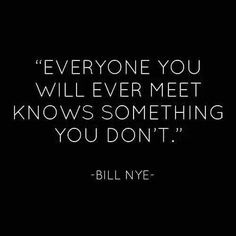
Nye SharingHow have you benefitted from the things others have shared with you?  What have you shared in the past that others have benefitted from?  Share in the comments below!

10 Things to Know About the SAT (and how that could translate for other grade levels)

SATA couple weeks ago I was in a meeting with all the secondary assistant principals in our district.  While we spent the first half of the meeting discussing things that are normally within the realm of the AP (school safety, student assistance and support, student attendance, etc.), we spent the second half of the meeting with our Director of Secondary Education.  One of the things we looked at during that meeting was a list of 10 Things to Tell Students About the Redesigned SAT.  While the students in my building are not taking the SAT, there were some great takeaways that could apply to teaching and learning at all levels.  This list comes from a presentation that Laurie Ferry of CIESC gave to some of the secondary teachers in our district.  Hopefully this list will allow you to think about the skills and needs that our students will have in the future as we prepare them to move forward in their education.

10 Things About the SAT:

  1. Register/Sign-up for Khan Academy – The College Board has teamed up with Khan Academy to offer SAT practice with the new exam, and the best part – it’s Free!!!  If your students are not yet taking the SAT, that may not sound valuable, there are some other cool things that Khan could offer you.  In the NWEA support section there is a series of documents that have been correlations between MAP sub-goals and RIT ranges to Khan Academy exercises.  If you don’t know much about Khan, ask around – many teachers have dipped their toes into the water with it.  Check out the correlations here: MAP to Khan Academy.
  2. Use evidence to support your arguments – Many of us work on this strategy in class, but we must keep working on it, especially in nonfiction reading.  Always encourage your students to go back to the text and think about where they found the information to support their thinking.
  3. Build your reading stamina – The only way to grow reading stamina is to spend time reading.  One of the important things about building stamina – the text needs to be self selected and high interest.  As you get to know your students, you will be able to help them select reading that is not only appropriate, but also interesting for them.
  4. Always analyze the informational graphics – When you are doing nonfiction reading in class, do you have text with lots of informational graphics?  The new test does, and questions will relate to information shared in those graphics.  Make sure you are taking the time in your class to analyze those graphics.  Don’t have a lot of text with informational graphics?  Start looking for some!  USA Today could be a great teaching tools.  If you haven’t picked it up in a while, you may not know this, but it is full of great informational graphics to go with the articles you find.
  5. Get excited about the U.S. Founding Documents – On the College Board website, it says “The Evidence-Based Reading and Writing section of the newly redesigned SAT embodies the College Board’s firm commitment to the idea that all students should be asked routinely to engage with texts worthy of close attention and careful analysis… nowhere it is more evident than in the Reading Test’s inclusion of U.S. founding documents and texts from the Great Global Conversation.”  Even at younger levels, be looking for ways to integrate readings of primary source documents into your instruction.  The sooner we begin analyzing text like this, the more successful students will become.
  6. Practice editing – On the new SAT in the writing and language portion, students will look at a passage of writing to consider how they might revise the piece to improve the expression of ideas.  In other questions, you may have to edit to correct errors in sentence structure, usage, or punctuation.
  7. Put away the calculators (some of the time) – This has a two part purpose.  First, students need to become adept at figuring out when the math is simple enough that the calculator is not actually necessary, thereby decreasing the time spent on the problem.  Students will need to be able to analyze the question to understand how much effort actually needs to go into the question.  Second, the new tests limit the use of calculators on the math portion of the test, which means our students will need to be able to solve a variety of problems without the help of a calculator.
  8. Check your answers – Students need to take the time to analyze their work and be certain that the answer they have provided actually answers the questions asked.  Encourage your students to review their work to be sure that they are correct.
  9. Answer every question on the test – This is not just about finishing, but about time management.  Part of the test will actually challenge our students to analyze a question and decide how much time actually needs to be spent on it.  There will be problems and questions with really dense text, but the problem or question at the end will be really simple to answer.  Students can’t spend long periods of time on the “simple” questions.
  10. Take the SAT – With tests like the SAT, the more times you take it, the better you are likely to do.  Start integrating sample questions and problems from these types of tests as a problem of the day or problem of the week so that students can see they types of questions that will appear.  This will allow our students to learn how to attack the types of problems they are likely to see on the test.  Think how excited your younger students would be to have “solved” a problem from a test that high school kids will be taking.

Obviously, this is just a list of thoughts and ideas based on the thoughts of others and my understanding.  As you gain understandings and insights on this, let us know about your thinking.  Share with us the insights you have made while reading this post in the comments below.  If these ideas have challenged, changed, of confirmed your thinking, let us know that too!

Be a Connected Educator (Part 2)

https://plus.google.com/+SylviaDuckworth/posts/61rTzdcJ1yG?pid=6097161572876797314&oid=114228444007154433856

In last week’s post I shared a little about the value that connectedness can provide to educators.  This week I want to share some of the ways that you can use social media for personalized PD.  As I shared last week, online educator communities provide you with 24/7 access to people, ideas, resources, philosophies, and opportunities that can expand your world (and the world of our students).  So here are some of the reasons I get excited to connect online:


  • Inspiration: Many of the new things that I try here at school are because of something I have learned through a tweet, blog post, or somewhere online.
  • Motivation: Several of the twitter accounts I follow are educators who love to tweet out pictures and quotes that motivate me to try to be better. That little bit of motivation can be such an awesome help!
  • Challenge: I intentionally follow some people because they have different opinions than me. I do this because I want to have a full background.  Every once in a while something that someone shares truly challenges my thinking in a way that makes me reflect on my beliefs.
  • Camaraderie: I have been able to find connections with many other teachers and administrators all over the country/world!
  • Apps: You can use your digital connections to learn about new apps for a specific purpose, or ideas for better ways to use the apps you already have.
  • Humor: Just like our Friday funnies, there are funny things that happen in schools every day. Some of those things show up in my timeline and give me the opportunity to laugh.
  • Collaboration: Through online connections you can work with almost anyone in the world. You can find teachers all over the world teaching the same material, and create connections that allow you to learn from them, and they can learn from you.

So how do we connect?  And how do we find the time?  That’s total up to you, but there are a couple of options that you could try, and the amount of effort you put into them is totally up to you!

Our connections on social media allow us to connect with educators like never before!  Matt Miller - https://www.flickr.com/photos/126588706@N08/14562418440/in/album-72157645530010989/
Our connections on social media allow us to connect with educators like never before!
Matt Miller – https://www.flickr.com/photos/126588706@N08/14562418440/in/album-72157645530010989/

Social Media: For me, this is the best way to connect.  Twitter is my favorite choice, but Facebook, Instagram, and Pinterest are good ones as well.  My favorite thing about Twitter is that every post is 140 characters or less.  It’s amazing how much info can be packed into such a short amount of space.  The biggest thing to know on Twitter is how to use a hashtag.  A couple of my favorites are #edchat and #edtech.  Tons of great ideas get shared, and if you post something with one of those hashtags, you will get a ton of people to see your post.  (For more education hashtags, take a look at the links in last week’s post)

Blogs: There are thousands of blogs about education out there!  Most of my favorite blogs that I follow are because of connections I have made on Twitter.  I use Feedly.com as an RSS aggregator that keeps all my blogs in one place.  Each time a new blog that I follow posts, it shows up in my feed.  When I have time, I’ll peek at it.  If my day is too busy, I’ll skip it.  Feedly can also help you find other blogs based on topics you are interested in.  In addition to reading blogs, you can also start writing a blog.  Share the things you know – creation is one of the highest levels of thinking.  It can also be a huge time commitment – these posts don’t write themselves!  Some post daily, some are a few days a week, some are less regular than that.

Being a connected educator will make it easier to transform education in your classroom.  You will find new ideas, you will be able to ask questions, and you will be able to share your own thinking and give back to the community!  Invest the time that makes sense to you.  There are days I don’t get on Twitter at all, and there are days where I have extra time and might spend an hour or two reading, adding, and building connections.

What tools have allowed you to connect and change the way you teach?  Share with the rest of us below!

Be a connected educator (Part 1)

How often have you felt that you were “alone” in your classroom?  You plan for your students – nobody else’s class is quite like yours.  You plan for your content – nobody else is at quite the same place as you.  It’s easy to build up walls and confine yourself to them.  But think for a second…  Is that what’s best for you?  Is that what’s best for the kids in your class?

When we provide more students the opportunities to share in the classroom, we are building bridges to the world instead of placing them in a silo. https://www.flickr.com/photos/126588706@N08/14749002232/in/album-72157645530010989/
When we provide more students the opportunities to share in the classroom, we are building bridges to the world instead of placing them in a silo.
https://www.flickr.com/photos/126588706@N08/14749002232/in/album-72157645530010989/

If the answer you find yourself coming to is no, then it’s time to think about how to connect beyond the walls of you classroom.  I think we all know that there is a wealth of information out there on the internet.  Can you imagine what teaching was like before Google? (I’m sure some of you are saying “Yes!  I lived it!”).  I think we all know that we can find great resources with a simple web search, but sometimes we find a lot of junk too!  Taking the time to sift through it all can be time consuming!  What if there was a way to connect with others who did have students similar to ours, or who were sharing something that was just right for your class to do as well.

14746748124_db83c93b04_b
One of the best ways to connect with other educators is through Twitter! Matt Miller: https://www.flickr.com/photos/126588706@N08/14746748124/in/album-72157645530010989/

In addition to websites, there are also other educators out there waiting and eager to help you!  Or they might be looking for the help that you can provide them.  The community of educators on Twitter grows every week.  According to one report from Twitter, about 1 in every 100 tweets are related to education, and there are about a half-billion tweets a day!  You can tweet at someone, or just to a hashtag, and get a response in moments.  For an overwhelmingly long list of education hashtags, check out this link: http://cybraryman.com/edhashtags.html.  Some of those hashtags are related to education twitter chats – you can see a calendar of what’s out there here: Education Chat Calendar.

You can also connect with other schools and teachers for your students benefit.  Earlier this year, my daughter’s first grade class did a Skype session with a class in New Hampshire to learn about geography and discuss a book from the Global Read Aloud.  This was the third Skype session (that I’m aware of).  Their online connections included chatting with the author of a book they read, and talking with another class in Colorado.

Last week Barbara tried out a Mystery Skype with her class (she can tell you more about how it went), and once the technology was working correctly, it was a cool experience for the kids in her class.  All over HSE, there are elementary classrooms participating in mystery Skype’s to learn about new places and things.  Want to know more about the idea behind a Mystery Skype, click here!

It’s also important to point out that here at RSI, we have several staff members who already use Twitter from their classroom.  If you want to know more about it, just ask Jenna, Mary Lynn, Barbara, Christian, Samantha, Mary, or Krista and Jennifer (you can also click on their name to go to their Twitter page) about how they use Twitter to connect with the world beyond our walls.  As a parent I also feel that Twitter enriches my understanding of what is happening in my daughter’s class.  I have followed and subscribed to Lainey’s teacher, Courtney Gibson, and I get alerts whenever she posts a tweet (typically just once or twice a week).  Sometimes she shares what they are doing, sometimes there is a picture, but always it tells me something about what the class has been doing which in turn allows me to have a conversation with Lainey about her learning.  If you want to see how it’s used by her teacher, click here.

Online educator communities provide you with 24/7 access to people, ideas, resources, philosophies, and opportunities that can expand your world (and the world of our students).  In next week’s post, I’ll talk a little more about some of the benefits of an online presence.

How have you used digital connections to improve learning opportunities for your students?  What new things have you learned or tried?  Share with us below!

How much is enough?

In this week’s post, I would like to build upon the ideas of a post from before winter break titled Choosing to Cheat.  The concept of that post was built on the idea that we don’t have an unlimited amount of time in our days to be able to fulfill all of our priorities.  Feel free to go back to that post if you would like.

For some of us it is difficult thing to think about cheating at anything.  We might think “If I skimp here, my students might not get it.”  Or we might say “If it doesn’t look pretty and perfect, I won’t feel as proud of it.”  There are a lot of people who spend a lot of time in this school building.  They are all effective or highly effective teachers.  Sometimes it’s hard to leave the building knowing that there is more that could be done.  But for all the teachers who put in long hours, there are others who do not spend that amount of time in the building.  Does that mean that the teachers who spend less time are less effective?  Or is there something more to the story?

In order to be more effective in our time management, we have to think about the concept of the minimum effective dose (MED).  Tim Ferriss, the author of The 4-Hour Workweek, defines the MED as:

2835194472_40e2ab981a_b“the smallest dose that will produce the desired outcome.  Anything beyond the MED is wasteful.  To boil water, the MED is 212 degrees Fahrenheit at standard air pressure.  Boiled is boiled.  Higher temperatures will not make it more boiled.  High temperatures will just consume more resources that could be used for something more productive.”

There are lots of examples out there of people who have cut back the amount of time spent, only to find that it actually improved their outcome.  As a runner I always taper the amount I run in the last couple of weeks leading up to a big event so that I will feel fresh on the day of the race.  Every year at the end of the NFL season you hear analysts arguing about whether a certain team should rest their star players prior to the playoffs.  I follow a couple of blogs that post daily, but rarely do I have time to read them every day.  On the days I miss a post, I feel as though I am missing something that could be important.  If the authors of those blogs cut back to 3 posts a week, I wouldn’t be upset.  I might actually be able to read everything they post!

Ultimately, we have to remember that our audience are the kids sitting in our classroom.  No matter how hard we work, they are only going to take in as much as they think is necessary to be able to complete your upcoming performance task.  So think, are you trying to over boil the water in your classroom?  Remember, water temp can’t go over 212 degrees, no matter how much energy you put in.  At the same time, no amount of overwork will cram more info into your students’ heads if they can’t absorb it.  Keep your focus on your goals and what you want to accomplish.  Try to reduce the wasteful or ineffective things we do, and ultimately we will use our time in more valuable ways!  In the Choosing to Cheat post, I shared the chart below.  Focus on placing your energy in the activities that we believe will help our students grow.

Use this to help guide your thinking and the areas where you may choose to cheat.

As for how much time to spend at school, I can’t say that there is a correct answer to that questions.  At different phases in my life there have been different amounts of time spent.  I feel that through appropriate time management, we can all do our job to the best of our ability, and meet the needs of our students in a reasonable amount of time.

Have you ever tried to over boil the water?  What are some of the things you cut when your realized you were doing more than you actually had to?  Share in the comments below!

Teachers vs. Students

It’s the beginning of class, and you are checking to see what students came to class prepared, and you get to “that” student (admit it, a name just came to your mind!), and of course, they are not prepared for class today.  This is the third time this week, and who knows how many times this month…

All of us have been there at one time or another.  It can be so hard not to take it personally.  In your mind you may think about the amount of time you have invested in that student, or the help that you provided yesterday to make sure that student was organized and prepared to be able to finish the homework, or maybe you think of the assurances you had from the parents who told you they would help make sure work was being completed.  How can we not take it personally?

Of course, the reality is that for the vast majority of our students, they are not doing this purposely (although on the day I am writing this, I did see a student with a t-shirt that said “I’m just here to annoy you!”).  In fact, you are probably the furthest thing from their mind when a student does not complete his work.  Instead, the lack of completion could be for a lot of reasons (maybe they didn’t understand how to do the assignment, maybe they didn’t want to do it, maybe they thought it was boring, or maybe there was nobody at home to make sure they did it – you get the idea, there are lots of possible reasons).  I think logically all of us understand that students are not intentionally coming to class unprepared in an effort to drive us crazy, and yet we can’t help but feel that way.

no significant learningOne of the great beliefs I have about education is that relationships are one of the keys to success for our students.  I know that many of you feel the same way.  We take the time to build relationships with all our students.  We feel invested in each of them.  We can’t help but believe that the feeling is mutual.  Unfortunately, our students don’t always feel the same way.  Sometimes even with our best effort, it is hard to help all our students to feel connected here at school.

When “that” student comes to class unprepared, the simple solution is often to get angry or frustrated.  It is much more difficult to figure out the answer to the key question – why?

Finding the answer to the question of why is not easy.  The answers that students will give run the gamut – I forgot, I had a basketball game last night, my parents couldn’t help me, etc.  A lot of time we see these answers as excuses.  Instead, maybe we should look at them as clues.  If they say they forgot, are they disorganized?  Do they need additional support so that they won’t forget in the future?  Could you help them set an alert on the iPad or phone to go off in the evening to remind them of the work they have to do tonight?  If they say that they had another activity, can we assess what they do have done to see if they understood the concept?  Do they need more work time here at school?  We can’t control how their time is scheduled outside of school hours, but we can help control how that student uses their time here at school.  If they say they didn’t have a parent to help them, then do they need to have the concept retaught to them?  If a student needs a parent’s help to be able to complete a homework assignment, then they don’t really understand the material.

In last week’s post we discussed growth mindset in teachers.  An argument could be made that situations like the one described at the beginning of this post could be the perfect opportunity to use some of what we learned about having a growth mindset.  Instead of taking it personally when a student isn’t prepared for class, look at it as a puzzle to be solved.  Try to understand why the student isn’t prepared.  Once you understand the why, it will be much more likely that we can approach a solution.  If you don’t have an idea of how to help the student, talk to your colleagues, counselors, or administrators to see what ideas they may have (collaboration = more opportunities for growth!).

If you’re still struggling to come up with a way to motivate the student, come at the problem from a PBIS perspective.  Most of our kids who struggle simply want attention of some kind.  Getting negative attention is easy, but when given a choice between a positive and a negative consequence, most kids will choose the positive (it’s amazing what I used to get kids to do for a sticker or a jolly rancher!).  And if you show them that it is possible to earn that positive consequence, then they find success.  Once they show a pattern of success, you can make it more difficult to earn that positive feedback, and hopefully the student will begin to learn that the feeling of success from a job well done is a good enough reward (I know that this process takes longer than we like, but it does work!).

Instead of looking at the unprepared student as the enemy, spend some time thinking about them as a puzzle.  If you don’t know what will motivate him, spend some time to get to know him (2 for 10 strategy).  Look back on one of our earlier posts: Know your kids – Love you kids for a little more on how a 2 minute conversation can help you learn about your kids.

What success have you had in motivating the unmotivated or reaching the unreachable?  Spread the wealth!  Share some of your experiences in the comments below.

Growth Mindset for Teachers

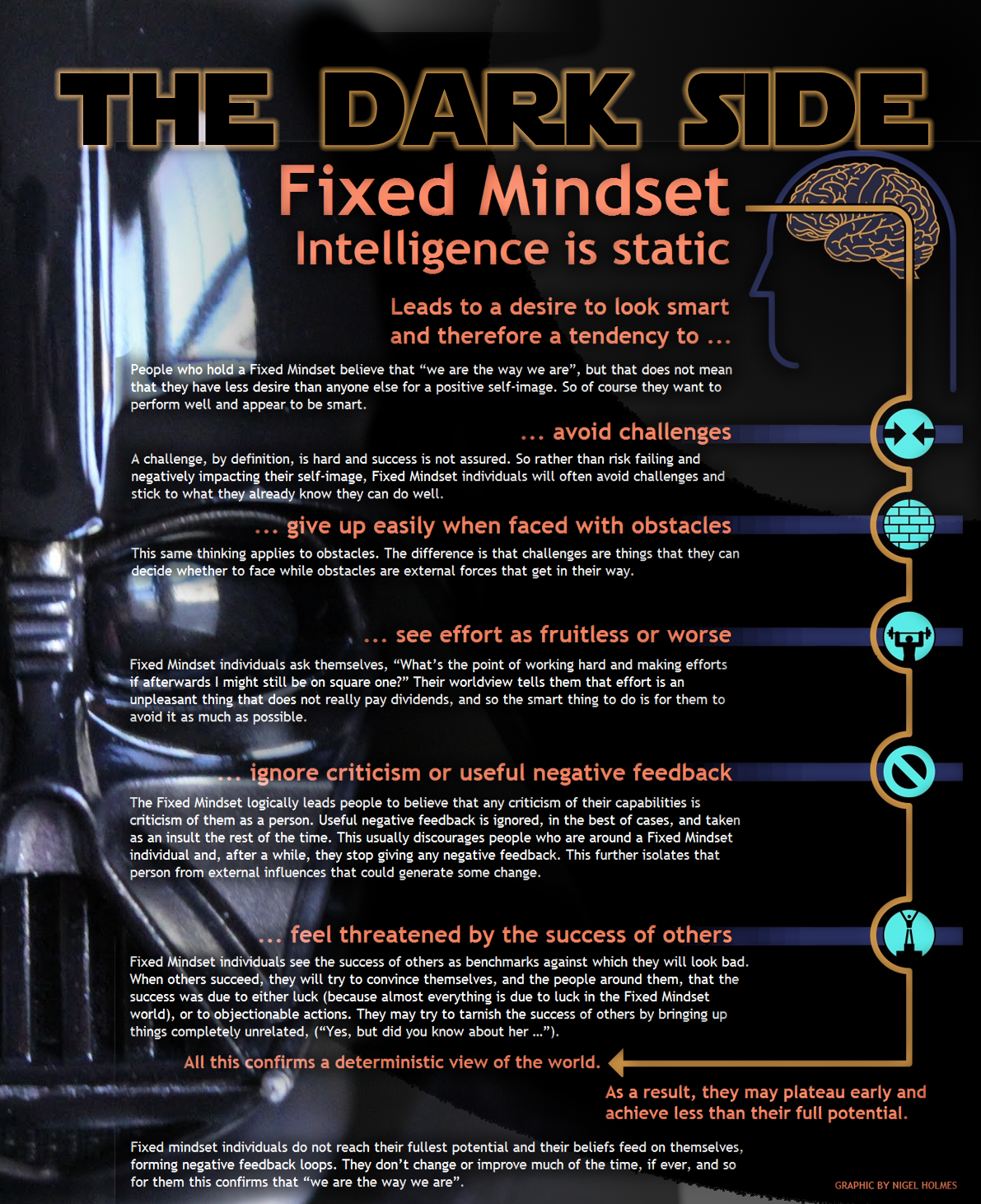
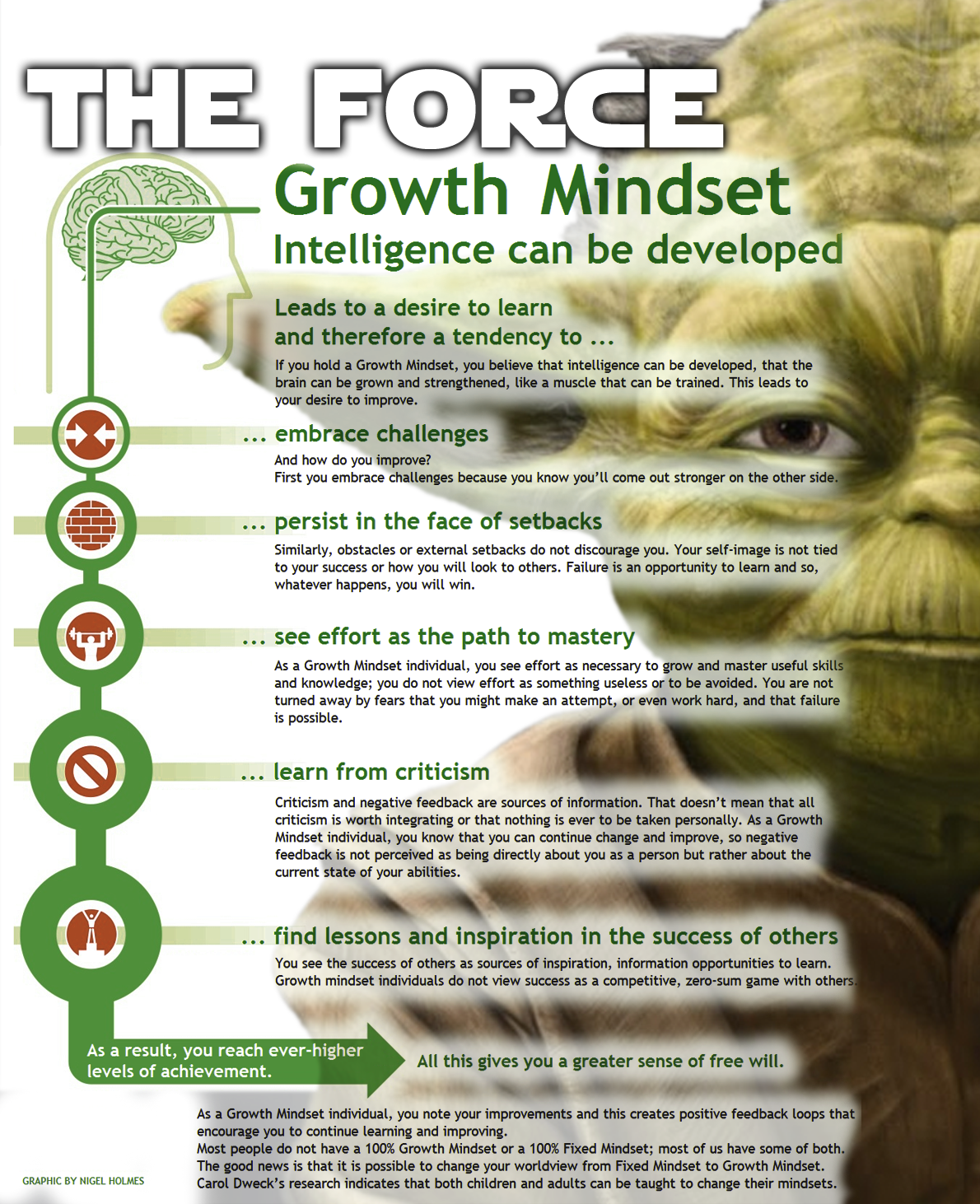
Over the past couple of years I have had several conversations with members of our school community about the idea of Fixed Mindsets vs. Growth Mindsets.  I previously shared a video featuring some of the findings of Carol Dweck.  In those conversations and in that video, the discussion is framed around how to help our students to develop a growth mindset.  What about all of us?  How do our mindsets impact the learning that takes place in our classrooms?  How might those mindsets impact our relationships with students?  As a review, I included a couple of graphics showing the difference between a Fixed or Growth Mindset. (I know the pictures below appear small – if you click on them, they will be easier to read).

https://teacherpaulp.files.wordpress.com/2014/07/darkside1.png
https://teacherpaulp.files.wordpress.com/2014/07/growth_mindset_poster1.png

According to Dweck:

In a fixed mindset students believe that their basic abilities, their intelligence, their talents, are just fixed traits.  They have a certain amount and that’s that, and then their goal becomes to look smart all the time and never look dumb.  In a growth mindset students understand that their talents and abilities can be developed through effort, good teaching, and persistence.  They don’t necessarily think everyone’s the same or anyone can be Einstein, but they believe everyone can get smarter if they work at it.

What if you reread that statement, but you replace students with teachers?  Where do you fall?  Are your abilities as a teacher a fixed trait, or do you believe that your talents and abilities can be developed through effort?  Are you somewhere in the middle?  Draw a continuum with Fixed on one end, and Growth on the other.  Put an X where you think you are, and then ask if you are comfortable with that location on the continuum.  If the answer is no, how can you move that X to where you want it to be?

Yes, even you have permission to fail! Just make sure that you learn and grow from those failures! https://www.flickr.com/photos/126588706@N08/14826069893/in/album-72157645530010989/

One of the things that concerns me most for teachers comes from the second sentence of Dweck’s definition above.  Is it your goal to “look smart all the time and never look dumb”?  What does that show our students?  If we tell them that they should see failure as a first attempt in learning, but never model for them what it looks like to fail and then improve, what message are we sending our students?  Do we really want to have an attitude of “do as I say, but not as I do”?

I’ll admit, it’s never fun to make a mistake in front of a group of students.  But let’s think about the concept of gradual release – I do, we do, you do.  We would never assign our students something they have never done before without modeling it and expect them to be successful on their first try.  Instilling a growth mindset in our students means we have to be willing to take risks, and sometimes fall flat on our face.  Then, we can model for our students what it looks like to get back up, dust yourself off, make an adjustment, and do better the next time.

If you look at yourself as a learner first, and a teacher second, you will recognize that this craft we carry out is something that we are all learning.  Every day that I’m here at school, I see someone doing something that I’ve never seen before.  When I scroll through my Twitter feed in the evening I often end up reading education related blog posts that provide me with new ideas or ways of thinking.  I see things my friends share on Facebook, and I get new ideas.  Hopefully you see your experiences here at school, and those outside of school, as something that you can learn and grow from as well.  Hopefully you’ll be looking for ways to shift your own mindset further down that continuum towards the ideas of growth.

Throughout this month I hope to use this forum as a way to look further at the Growth Mindset continuum, and in particular focus in on how our mindsets can affect our relationships with the students sitting in our classroom.

In the comments below, feel free to share with us a time that you may have fallen flat on your face.  What steps did you take to correct it?  What did your students learn from your failure?  Or you can share something that you plan to try that you aren’t quite sure how it will work out.  What are you nervous about?  What’s the worst that could happen?  I look forward to hearing from you!