Teachers vs. Students

It’s the beginning of class, and you are checking to see what students came to class prepared, and you get to “that” student (admit it, a name just came to your mind!), and of course, they are not prepared for class today.  This is the third time this week, and who knows how many times this month…

All of us have been there at one time or another.  It can be so hard not to take it personally.  In your mind you may think about the amount of time you have invested in that student, or the help that you provided yesterday to make sure that student was organized and prepared to be able to finish the homework, or maybe you think of the assurances you had from the parents who told you they would help make sure work was being completed.  How can we not take it personally?

Of course, the reality is that for the vast majority of our students, they are not doing this purposely (although on the day I am writing this, I did see a student with a t-shirt that said “I’m just here to annoy you!”).  In fact, you are probably the furthest thing from their mind when a student does not complete his work.  Instead, the lack of completion could be for a lot of reasons (maybe they didn’t understand how to do the assignment, maybe they didn’t want to do it, maybe they thought it was boring, or maybe there was nobody at home to make sure they did it – you get the idea, there are lots of possible reasons).  I think logically all of us understand that students are not intentionally coming to class unprepared in an effort to drive us crazy, and yet we can’t help but feel that way.

no significant learningOne of the great beliefs I have about education is that relationships are one of the keys to success for our students.  I know that many of you feel the same way.  We take the time to build relationships with all our students.  We feel invested in each of them.  We can’t help but believe that the feeling is mutual.  Unfortunately, our students don’t always feel the same way.  Sometimes even with our best effort, it is hard to help all our students to feel connected here at school.

When “that” student comes to class unprepared, the simple solution is often to get angry or frustrated.  It is much more difficult to figure out the answer to the key question – why?

Finding the answer to the question of why is not easy.  The answers that students will give run the gamut – I forgot, I had a basketball game last night, my parents couldn’t help me, etc.  A lot of time we see these answers as excuses.  Instead, maybe we should look at them as clues.  If they say they forgot, are they disorganized?  Do they need additional support so that they won’t forget in the future?  Could you help them set an alert on the iPad or phone to go off in the evening to remind them of the work they have to do tonight?  If they say that they had another activity, can we assess what they do have done to see if they understood the concept?  Do they need more work time here at school?  We can’t control how their time is scheduled outside of school hours, but we can help control how that student uses their time here at school.  If they say they didn’t have a parent to help them, then do they need to have the concept retaught to them?  If a student needs a parent’s help to be able to complete a homework assignment, then they don’t really understand the material.

In last week’s post we discussed growth mindset in teachers.  An argument could be made that situations like the one described at the beginning of this post could be the perfect opportunity to use some of what we learned about having a growth mindset.  Instead of taking it personally when a student isn’t prepared for class, look at it as a puzzle to be solved.  Try to understand why the student isn’t prepared.  Once you understand the why, it will be much more likely that we can approach a solution.  If you don’t have an idea of how to help the student, talk to your colleagues, counselors, or administrators to see what ideas they may have (collaboration = more opportunities for growth!).

If you’re still struggling to come up with a way to motivate the student, come at the problem from a PBIS perspective.  Most of our kids who struggle simply want attention of some kind.  Getting negative attention is easy, but when given a choice between a positive and a negative consequence, most kids will choose the positive (it’s amazing what I used to get kids to do for a sticker or a jolly rancher!).  And if you show them that it is possible to earn that positive consequence, then they find success.  Once they show a pattern of success, you can make it more difficult to earn that positive feedback, and hopefully the student will begin to learn that the feeling of success from a job well done is a good enough reward (I know that this process takes longer than we like, but it does work!).

Instead of looking at the unprepared student as the enemy, spend some time thinking about them as a puzzle.  If you don’t know what will motivate him, spend some time to get to know him (2 for 10 strategy).  Look back on one of our earlier posts: Know your kids – Love you kids for a little more on how a 2 minute conversation can help you learn about your kids.

What success have you had in motivating the unmotivated or reaching the unreachable?  Spread the wealth!  Share some of your experiences in the comments below.
Growth Mindset for Teachers

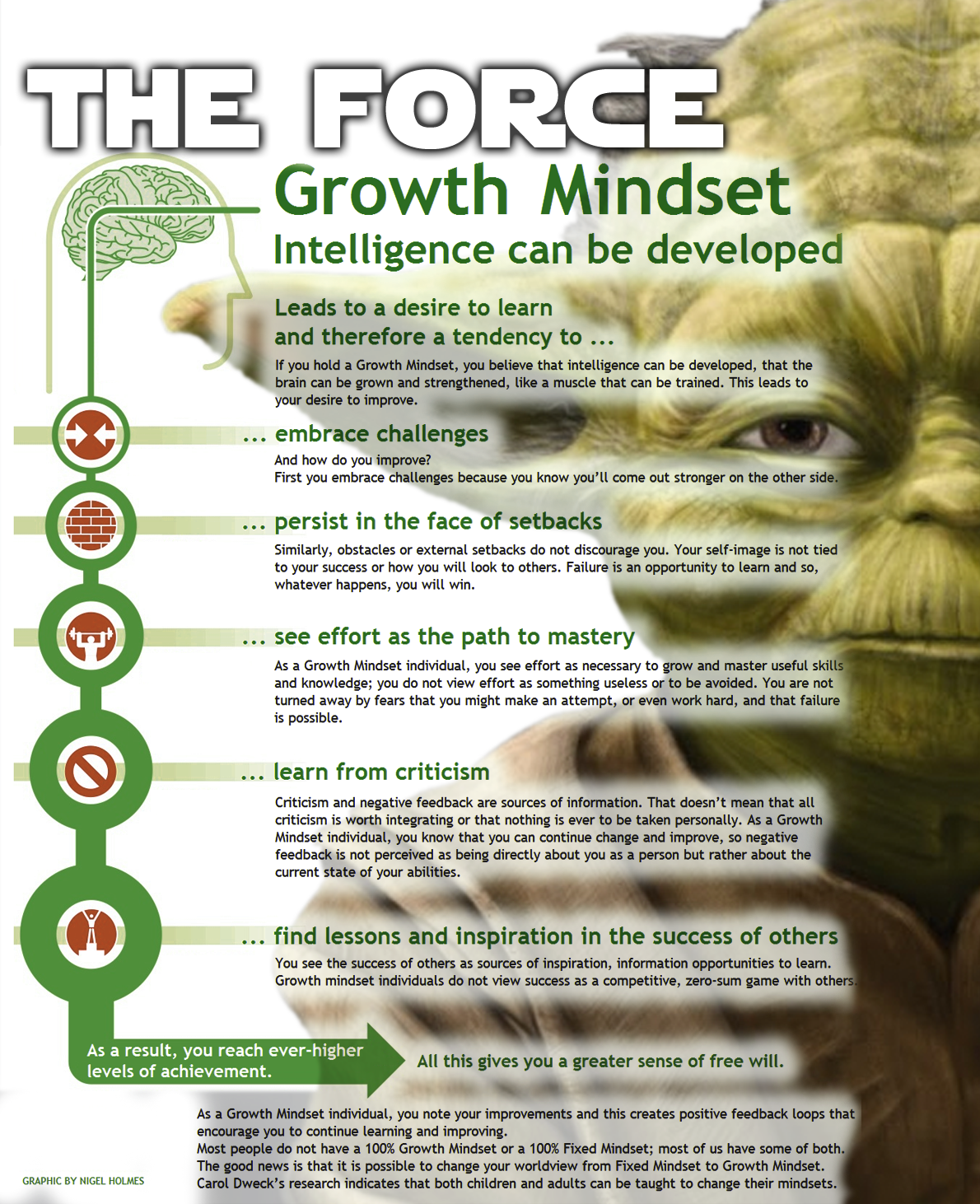
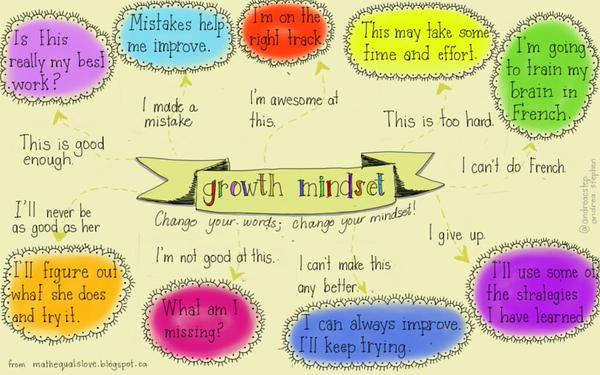
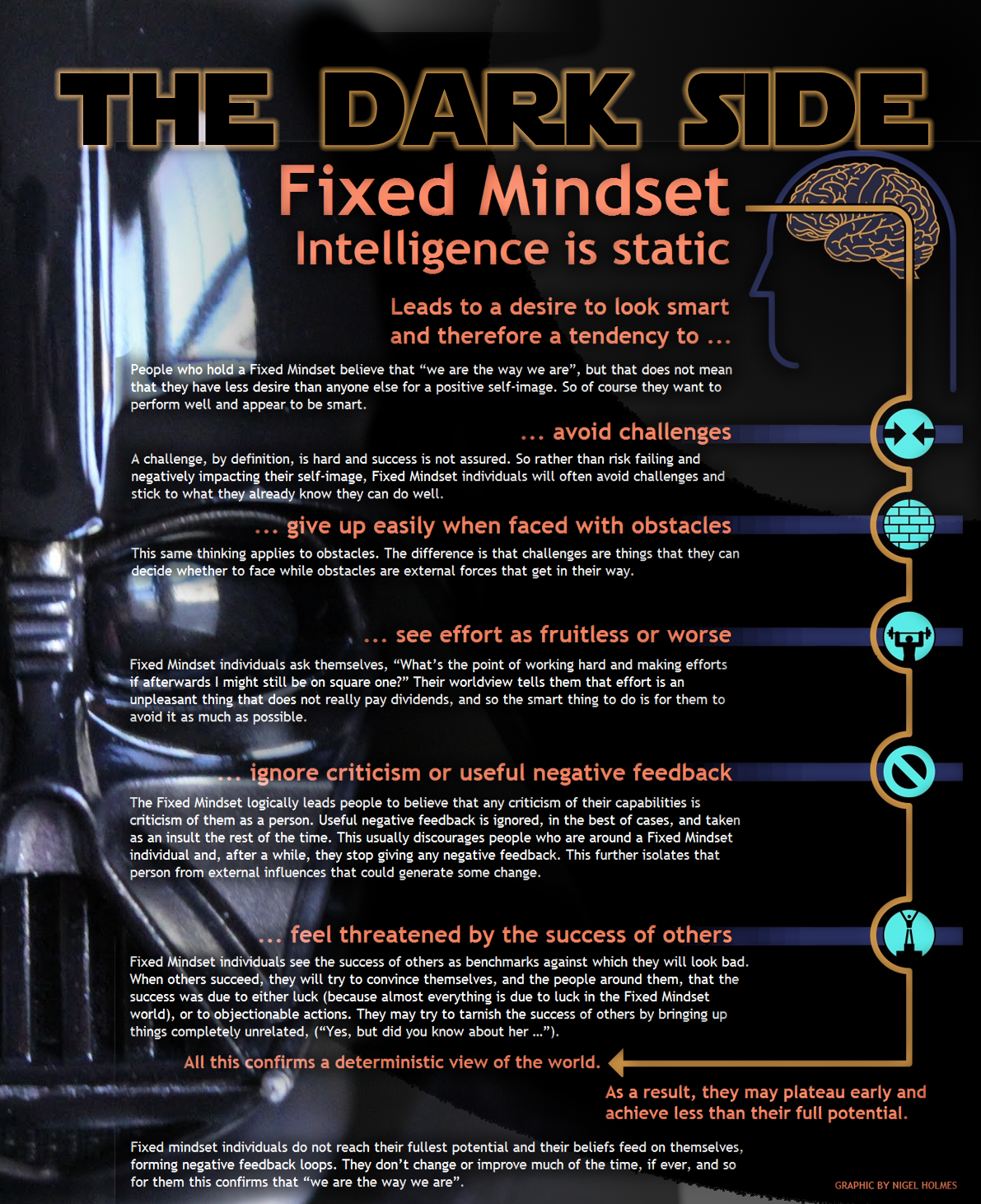
Over the past couple of years I have had several conversations with members of our school community about the idea of Fixed Mindsets vs. Growth Mindsets.  I previously shared a video featuring some of the findings of Carol Dweck.  In those conversations and in that video, the discussion is framed around how to help our students to develop a growth mindset.  What about all of us?  How do our mindsets impact the learning that takes place in our classrooms?  How might those mindsets impact our relationships with students?  As a review, I included a couple of graphics showing the difference between a Fixed or Growth Mindset. (I know the pictures below appear small – if you click on them, they will be easier to read).

https://teacherpaulp.files.wordpress.com/2014/07/darkside1.png
https://teacherpaulp.files.wordpress.com/2014/07/growth_mindset_poster1.png

According to Dweck:

In a fixed mindset students believe that their basic abilities, their intelligence, their talents, are just fixed traits.  They have a certain amount and that’s that, and then their goal becomes to look smart all the time and never look dumb.  In a growth mindset students understand that their talents and abilities can be developed through effort, good teaching, and persistence.  They don’t necessarily think everyone’s the same or anyone can be Einstein, but they believe everyone can get smarter if they work at it.

What if you reread that statement, but you replace students with teachers?  Where do you fall?  Are your abilities as a teacher a fixed trait, or do you believe that your talents and abilities can be developed through effort?  Are you somewhere in the middle?  Draw a continuum with Fixed on one end, and Growth on the other.  Put an X where you think you are, and then ask if you are comfortable with that location on the continuum.  If the answer is no, how can you move that X to where you want it to be?

Yes, even you have permission to fail! Just make sure that you learn and grow from those failures! https://www.flickr.com/photos/126588706@N08/14826069893/in/album-72157645530010989/

One of the things that concerns me most for teachers comes from the second sentence of Dweck’s definition above.  Is it your goal to “look smart all the time and never look dumb”?  What does that show our students?  If we tell them that they should see failure as a first attempt in learning, but never model for them what it looks like to fail and then improve, what message are we sending our students?  Do we really want to have an attitude of “do as I say, but not as I do”?

I’ll admit, it’s never fun to make a mistake in front of a group of students.  But let’s think about the concept of gradual release – I do, we do, you do.  We would never assign our students something they have never done before without modeling it and expect them to be successful on their first try.  Instilling a growth mindset in our students means we have to be willing to take risks, and sometimes fall flat on our face.  Then, we can model for our students what it looks like to get back up, dust yourself off, make an adjustment, and do better the next time.

If you look at yourself as a learner first, and a teacher second, you will recognize that this craft we carry out is something that we are all learning.  Every day that I’m here at school, I see someone doing something that I’ve never seen before.  When I scroll through my Twitter feed in the evening I often end up reading education related blog posts that provide me with new ideas or ways of thinking.  I see things my friends share on Facebook, and I get new ideas.  Hopefully you see your experiences here at school, and those outside of school, as something that you can learn and grow from as well.  Hopefully you’ll be looking for ways to shift your own mindset further down that continuum towards the ideas of growth.

Throughout this month I hope to use this forum as a way to look further at the Growth Mindset continuum, and in particular focus in on how our mindsets can affect our relationships with the students sitting in our classroom.

In the comments below, feel free to share with us a time that you may have fallen flat on your face.  What steps did you take to correct it?  What did your students learn from your failure?  Or you can share something that you plan to try that you aren’t quite sure how it will work out.  What are you nervous about?  What’s the worst that could happen?  I look forward to hearing from you!

Reflection

To set the scene, imagine that you are in your classroom.  You are getting the kids started on one of your standing assignments that everyone in the room knows will come each week:

You: All right, let’s all get started on (insert that assignment that your students hate to do).

Class: Collective groaning.  From the back you can hear one student say “Why do we always have to do this?”

You find yourself wondering why the reaction is like this – you might think to yourself “they loved doing this earlier in the year!”  Fast forward to the due date.  As you are collecting the assignment, you see that the students who play school well completed the assignment, but it’s clear that they put forth the minimum amount of effort possible.  You also notice that some of your students did not complete the assignment, and no amount of effort from you is going to get them to finish the task – you could have them work in the hall, take away recess, call parents, etc. – nothing is going to make a difference for those students.

As a teacher we have all experienced this.  So here’s the question – why do we keep asking our students to complete assignments that they hate?  Why do we keep giving assignments that students don’t put forth much effort, or simply don’t do the assignment at all?  Why do we keep giving assignments that put the effort on us to run down the missing assignments when the students are putting no effort into the assignment?

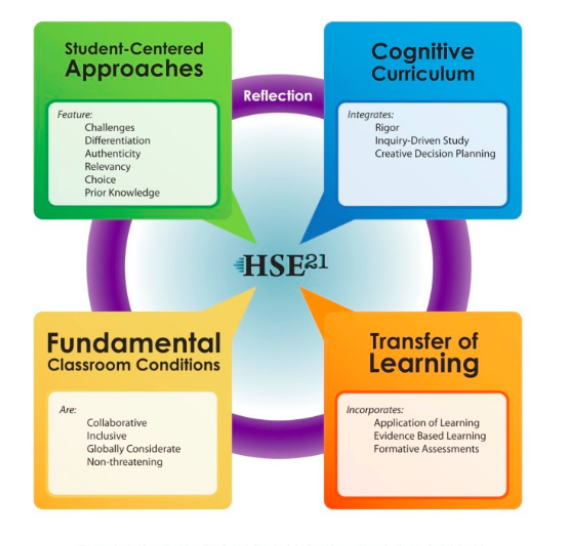
HSE21 Best Practice Model

When I was writing last week’s post, I inserted the HSE21 Best Practice Model.  As I put it into the post, something jumped out to me in a different way than ever before.  Look at the Best Practice Model above – in this blog I have spent a lot of time talking about the boxes on the outside: Student-Centered Approaches; Cognitive Curriculum; Fundamental Classroom Conditions; and Transfer of Learning.  Last week for some reason, the purple circle that connects them all jumped out at me – in particular the word at the top “Reflection.”  Given that New Year’s Day is approaching, I would guess that a lot of us are taking time to reflect on the last year, and many of us think first of our personal life, however reflection is an important aspect of teaching as well.  What better time to take a few moments for reflection than to do so over the 2 week winter break?

Think about how your year has gone so far.  What’s working well?  What isn’t?  Do you often have situations like the one that I referenced at the top?  How could you adjust your assignments so that they don’t get stale?  Even the most engaging activity today may get old and stale to our students if we do the same thing every day or every week over a long period of time.  Find some ways to mix up what you are doing in your classroom to increase student engagement.  For me, an important part of reflection is also getting feedback and ideas from my colleagues.  If you have an activity that has gotten stale, talk with your colleagues – see if anyone has an idea of how you could spice up that activity and make it more engaging to your students.  Or maybe you will just decide to let that activity go for a while – replace it with something else that might serve the same purpose.

New Years ResolutionIf you never take the time to reflect, you may miss out on opportunities for growth as a teacher, as well as opportunities to help your students grow.  As I reflect on this school year, one of the things I am most disappointed in is the amount of time I have had to spend in my office rather than out and about during the school day.  One of my resolutions for the new school year is to spend more time out in our classrooms seeing the awesome things that you all do on a daily basis with our students.  Please help hold me accountable to this goal!

What resolutions have you set for yourself?  Personal or professional, share them in the comments below.  We can all help hold each other accountable to our goals and resolutions.

Reading as a way of learning

ReadingWhen posting on the blog this year, I have mentioned several books that I have read in connection to my topics.  A few of you have asked me questions along the lines of “how do you find time to read that much?”  The reality is that I, much like any of you, have a pretty busy schedule with lots of things to do.  If I wanted to, I could work all day on things in my office and never truly feel done, however if I did that, I would be stressed, overworked, and unhappy.  Outside of school I have responsibilities too; my family, my friends, and my own fitness and health.  With all of these things, it would be easy to say that I don’t have time to read, but I’m not willing to do that!  I love reading!

Reading is one of the things I really really love!

So, with all those responsibilities, how do I find the time to read as much as I do?  There are a couple of ways.  First is at the beginning of the day.  Most days I arrive here at school, log into my computer, and before doing anything else, I pick up a book and read for 10-15 minutes.  I try to make sure that reading is professional in nature.  If you expand that over the course of a school year, 10-15 minutes a school day turns into 30-45 hours of reading in a school yer!  Give me that much time and I can knock out a ton of books and learn so much!  In addition to those 10-15 minutes, I always have a book in iBooks that I am reading.  That means I have it on my phone and I can pick it up anytime – waiting at the shop for them to finish my oil change?  I could waste my time on Facebook or Twitter, or I could read some of my book.  I also try to take a little bit of time at the end of the day before bed to read.  It helps me wind down my day and clears up any stress I may have previously felt.  I know a lot of people love to get on their favorite social media site at the end of the day, but that just doesn’t do it for me.  I’m intentional in my practice of finding time to read.  I could watch a random basketball game, or another episode of whatever I’ve been watching on Netflix, and sometimes I do, but often I end up feeling like I’m wasting my time.

I'd love to have a room that looks like this!
I’d love to have a room that looks like this!

So then the question comes, how do you pick a new book?  I’m always looking for book ideas.  One book I am currently reading was mentioned during a conference I was at.  Another book I saw on a colleague’s bookshelf, and a third book I’m reading because I heard an awesome interview of the author on the radio.  I get book ideas from people I follow on Twitter, blog posts I read, conversations with friends and colleagues, or just going to Amazon and looking at the “Customers who bought this item also bought” for books that I might like.

Ultimately I see my reading as my own best form of PD.  While many of the books I read are not tied directly to education, I can often find connections in my reading.  Below I’m going to list a few of the books that I am currently reading, as well as some of the ones I have finished reading recently.  Maybe it will inspire you to pick up a new book over Thanksgiving Break, or add it to your wish list.  The books I read are things that I am interested in, but also things that I feel help me grow as an educator.  And they help me keep my sanity!

My current reading list:

  1. Thinking Fast and Slow by Daniel Kahneman.  In his research, Kahneman has studied how the human brain works, and he breaks it down into 2 systems.  System 1 is our fast, intuitive, and emotional part of the brain, while system 2 is slower, more deliberative, and more logical.  Most of us would believe that the slower more deliberate part of the brain rules most of our choices, but based on the research, System 1 is much more in control than we might realize.  Understanding the 2 systems and how they interact can help us be more intentional in our thought processes.
  2. Great by Choice by Jim Collins & Morten T. Hansen.  In this follow up to Good to Great and Built to Last, Collins looks at why some companies are able to thrive in times of chaos and uncertainty when others are not.  In the book Collins compares companies that find the way to be successful in difficult times with comparison companies were not able to be as successful (think Intel vs. AMD, or Microsoft vs. Apple, or Progressive vs. Safeco).  While there are no direct ties to education, some of his theories on success could be used in creating the mission or vision for our schools.
  3. The Food Lab by J. Kenji Lopez-Alt.  This book combines 2 of my personal passions: Science and Cooking; and it has proven to me that you can truly “read” a cookbook.  This book is much more than just a cookbook.  Each chapter or section talks first about the science of cooking – a couple of nights ago I read about the pros and cons of brining a turkey, and have decided that I am going to try a dry brine for our bird this year – and then it gets into the recipe.  I love understanding the science behind the steps I am taking, and seeing new ways to achieve some of my family’s favorite recipes!

And now for some of my recent reads (I included some fiction too, because sometimes you just have to read for fun!):

  1. Ditch that Textbook by Matt Miller
  2. Teach Like a Pirate by Dave Burgess
  3. David & Goliath by Malcolm Gladwell
  4. Hatching Twitter by Nick Bilton
  5. Gray Mountain by John Grisham
  6. The Wright Brothers by David McCullough
  7. King and Maxwell by David Baldacci
  8. Gods of Guilt by Michael Connelly
  9. A Song of Ice and Fire (series) by George R. R. Martin

I’m curious!  What books are you reading?  What have you read?  What are you learning about from your reading?  Share in the comments below so that others can add your ideas to their reading list!

Mindsets


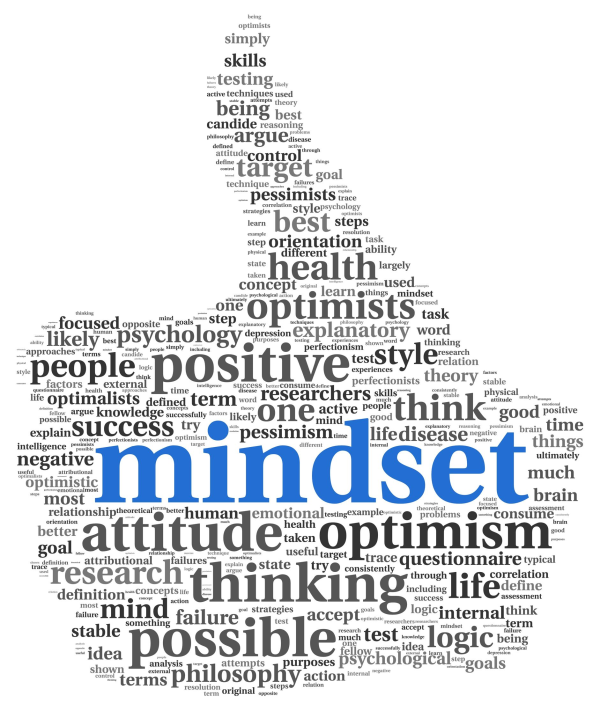
growth word cloud

What is your mindset?  Do you see the glass as half empty, or half full?  Attitude and mindset are two of the greatest determinants of success.  Having our minds open to new approaches can allow huge changes in schools, which in turn could make life easier for all of us.  In the coming weeks we’ll be talking about various mindsets that may be affecting us in our classroom, and by extension be affecting our students.

Growth Mindset

Today I wanted to share a short YouTube video that shares the results of a study on praise and mindset.  The video has a run time of just under 5 minutes.


Something like this could help our students change their fixed mindset ideas into growth mindset thoughts.

If you’d like to see the TED Talk that relates to the research by Carol Dweck on growth mindsets, here you go:

A swift kick in the butt

How can this knowledge of mindsets impact your teaching right now?  Share something that you might do differently based on these videos.