Self-Assessment

In the most recent post of the blog Teaching and Learning in HSE, Phil included a link to a short (under 2 minutes) video clip from Tom Guskey.  I’ll include the link below if you didn’t watch the clip yet.
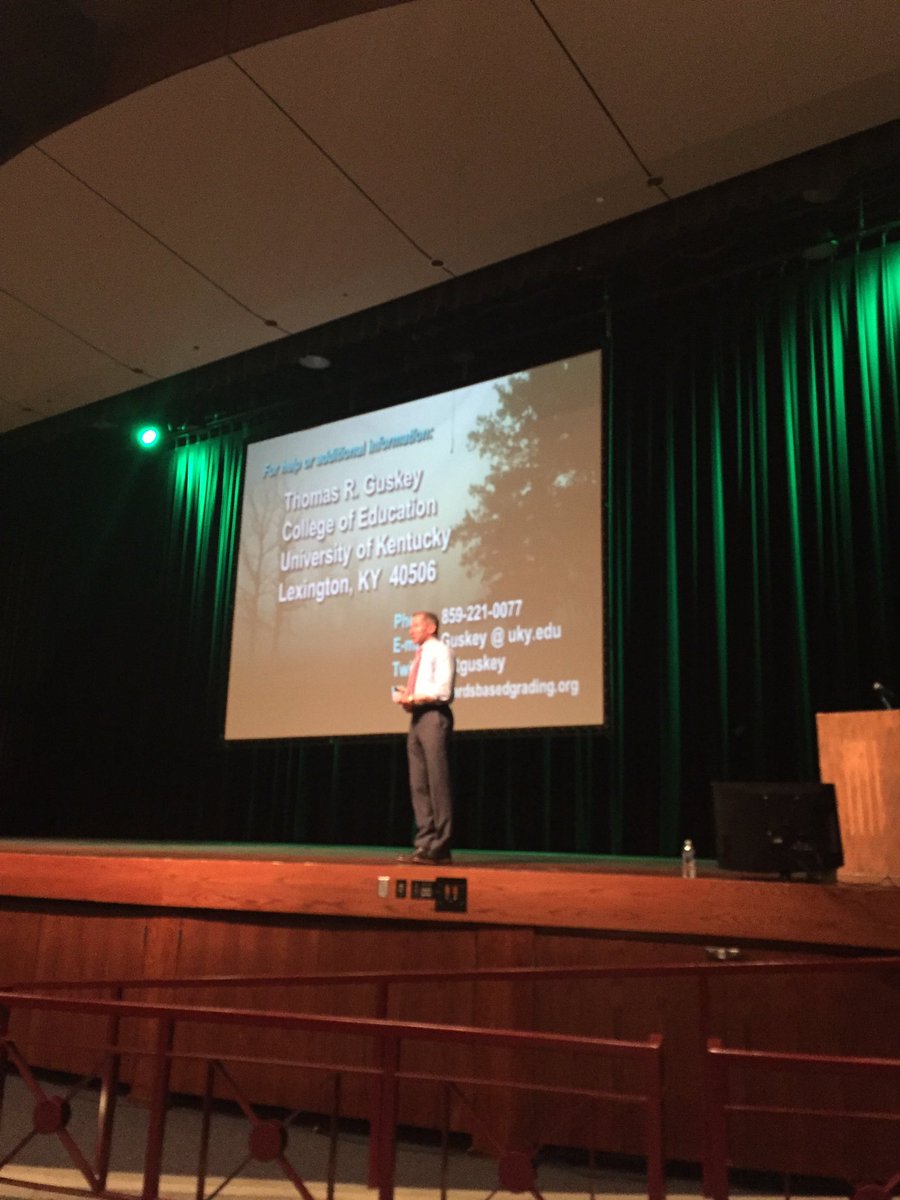
guskeyThere were a couple of quotes that were intriguing to me.  At the very beginning, Guskey states “Every time an assessment is given…that is an opportunity to learn.”  However, he’s not talking only about an opportunity for the students to learn.  He’s also talking about the assessment as an opportunity for us to learn.  One of the best ways to assess the job that we are doing is on the consistent performance of our students.  Don’t just look at standardized scores like the ISTEP or NWEA, look at anything that you treat as an assessment, whether formative or summative, as something that is also assessing you.

I loved the strategy that he suggests of keeping a tally of the problems that students have missed.  He shares that “If every kid missed a question, that is not a kid learning problem.  That is a teacher problem.”

If you are using good planning methods, with backwards planning of your units of study, and you start with the end in mind, and you get to that end and the kids missed something that you feel you taught, take a moment to reflect on how you taught that skill.  The easy out is to say “the kids didn’t get it”.  The much harder reflection for any of us to make is to say “maybe I didn’t do a great job of teaching this”.  When that is the reflection we make, it allows us to use the assessment as a way to improve our own teaching.

hl-podcast-cover-large-1024x1024As I watched this clip from Guskey, the comments about self-assessment made me think of a recent episode of the Hack Learning Podcast titled How One Simple Tool Helps Uncover Your Biases (you can follow this link to go to a page where you can listen to this episode).  Hack Learning is a podcast that was created by Mark Barnes, a classroom teacher, author, and publisher of the Hack Learning Series.  While the topic in this podcast is a different form of self-assessment, I feel it is worth sharing.

As you know, we all have biases.  If you have never taken an implicit bias test, google it and give it a shot – you might be shocked by the results.  Our biases can creep into our conversations in the classroom with students.  What we have to remember though is that those biases can have an impact on the learning that happens in your classroom.
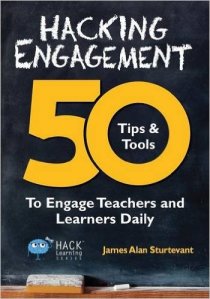
hacking-engagementIn this episode of Hack Learning, Barnes shares a portion of the book Hacking Engagement by Jim Sturtevant.  In the book Sturtevant shares a story from early in his teaching career where, as a world history teacher, he professed his position on what might be considered a controversial subject.  He felt that the majority of the class was on board with him, there were some head nods, and they agreed.  After the lesson, one student came up and said “You should be careful about promoting your views so passionately.  I don’t agree with you, and I’m not alone.”

Sturtevant’s initial reaction was that it was no big deal – this is the opinion of one student.  Who cares?  But as he reflected further, he came to the realization that by sharing his controversial beliefs, he was erecting barriers between himself and students.  As he goes on to say in the text “Why in the world would I want to alienate certain kids who may not agree with me on an issue.”

Think about your own interactions with peers, in person or on social media.  When someone expresses a bias that you don’t agree with, what do you do?  You might choose to avoid that person, you might end your friendship, or you might choose to block the person on social media (this is something that I definitely saw happening on Facebook during the most recent election cycle – I saw several friends share that they had blocked or unfriended everyone who’s beliefs opposed their own).  Our students will do the same things if we express our own biases, especially if they do not view things the same way as us.  We might even end up alienating the families of those students as well.

So, what can we do to help us identify our biases and avoid building those barriers between ourselves and our students?  What Sturtevant did was to create a Teacher Disposition Assessment (TDA).  As a world history teacher, there were several aspects of his curriculum that could be seen as controversial.  He identified those things that had the greatest potential to be controversial, and then created a statement from it.  Here is an example of one question on his TDA:

“Muslims should be restricted from entering the United States”

  1. Sturtevant strongly agrees
  2. Sturtevant somewhat agrees
  3. Sturtevant somewhat disagrees
  4. Sturtevant strongly disagrees
  5. Sturtevant’s opinions on this issue are unclear

Every statement included the same five options as a response.  He then took the statements and created a SurveyMonkey to be able to allow students to respond anonymously to the TDA.  As he says “It’s fine to be provocative; such statements will engage your audience.”  Sturtevant uses the TDA as an exit ticket at the end of the semester, but he feels that it could be used at any time of the year.

Sturtevant suggests debriefing after you receive the responses.  You can share the results with your class and ask students what it says about you and their perceptions of you.  He has even gone so far as to create an anonymous Google Form where students can give advice a feedback on times that biases pop up in the classroom.  Finally, Sturtevant asks his students to monitor their own actions moving forward.  He has found that completing the TDA has led students to think about their own actions and behaviors, and has led to some amazing in class conversations.

Talk about a strong self-assessment.  Asking your students to assess your biases based on statements and action in your class – that takes some guts.  But think about what that says to your students.  You are telling them that you are aware of the fact that you might have some biases, and based on your results, it may even lead you to make adjustments to your own statements and actions.  You are also showing them that you want to prevent the barriers that we might accidentally create when we let our biases creep into our teaching.  It’s important to remember that we all have biases, and those biases can impact teaching and learning.

I’m curious if there are any out there who have had issues with biases creating barriers.  Maybe it happened when you were a student and a teacher or professor said something that didn’t sit well with you.  Or maybe you realized later that something you had said or done had created a barrier between you and one of your own students.  If you’re willing, share your experience in the comments below.

How do we respond to student behaviors?

In last week’s post we discussed the role of trauma in student behaviors we see.  Each one of us can think of one or two students who manage to get under our skin and push our buttons.  What we have to remember is that for some of these students, they are acting out due to something that we cannot control – they have been through some type of trauma in their life.  It leads to behaviors we don’t understand, and that makes it difficult for us to respond in the appropriate way.  The goal of this post is to think carefully about how we respond to those students so that we are intervening in a way that offers support.

Imagine for a moment that you were to look up from your computer right now, and see this:

Imagine this bear walked into the room you’re in right now. What would you do?

What would you do?  How would you react?

For our students who have been impacted by trauma, every adult that they meet is a bear like the one you see above.  That includes their teachers!  For these students, they are constantly watching for the dangerous bear.  They may not be able to interpret an innocent or neutral look, action, or touch from their teacher or others at school as being benign.  The brains of our traumatized youth lose the ability to understand the difference between safety and danger, and will falsely signal danger and hostility EVERYWHERE.  As a result, these students behave in ways that are not considered appropriate in the normal school environment.  They lack the language skills to be able to describe how they feel, so they act out in ways that we might describe as reactive, impulsive, aggressive, withdrawn, or defiant.  These challenging behaviors have become coping skills that help them survive in abusive or neglectful situations.  Remember from last week’s post, children who have dealt with trauma are living with their focus on the survival portion of the brain (fight, flight, or fright).  Since all of life is about survival for these students, they generalize the behavior to all other environments – even school where we think they should feel safe.

So when students are acting out, especially students that we believe (or possibly even know) have lived through one of the traumas addressed last week, we need to shift our perspective in how we react.  Oftentimes we see this behavior as willfully acting out or disrupting class, or consciously refusing to engage with learning.  Instead, we need to see that:

  1. These responses are based on personal experiences
  2. Students are seeking to meet their needs
  3. They have difficulty regulating emotions
  4. They lack some of the important skills to be successful in school
  5. They believe that adults cannot be trusted

troubled-childrenWe need to put into place supports and other interventions to address these issues.  Instead of seeing the behavior and asking (or even thinking) “What’s wrong with you?” we need to shift our mindset to “What happened and how can I help?”  In order to be sensitive to trauma, we must recognize the prevalence and impact of trauma in our students’ lives and create a framework that provides support, is sensitive to the unique needs of students, and is mindful of avoiding re-traumatization.  I’m sure that some of you are looking now for a list of exactly what to do in each situation.  It doesn’t exist.  Each child is different, their needs are different.  You must take the time to offer your support, your help, and let these children know that you truly care for them.  You do this through paraverbals (tone of voice, body language, volume, and cadence of speech).  Deliberately slow your speech, soften your voice, choose a kind tone, and be supportive of the student.  Students who feel supported are more likely to feel safe.

I think we can all agree that when students feel safe, they are more likely to act in ways that are safe, so how can we support that?  First, we need to ask ourselves if the student is fearful, anxious, frustrated, or tense.  Next, our responses to inappropriate behaviors need to be predictable, and our students who struggle need to have an agreed upon safe haven (maybe the resource room, maybe the counselor’s office, maybe with another teacher) where they can go to work through their complex emotions.  Finally, when that student is ready to return to class, we must find an opportunity to rebuild rapport with that student (this step is quite possibly the MOST important in helping students to feel supported).  Continue to let them know you care, and that you are here to help.  Ask them to let you know how you can help.  They may not have an answer today or tomorrow, but eventually they may have an idea that will support them.  We also have to remember – for students to behave appropriately, we must model and teach the behavior we want to see (this is not the same as telling students what we expect).

In order to help students feel connected in schools, we should work hard to build relationships – especially with the students who struggle the most.  Greet each student at the door of your classroom every day.  Be aware of your student’s likes and interests (these can be used as a distraction in times of crisis).  As I’ve said before, know your kids and love them for who they are.

While we can’t protect our students from all the evils of the world, we can be allies, mentors, and role models.  The relationships we build with our students will help them as they grow, recover, and begin to heal from their trauma.

What experiences have you had with students who have been through trauma?  Have you found strategies that seem to be successful?  Let us know what has worked for you in the comments below.


The role of trauma in student behavior

We’ve all been there, you’re in the middle of class, things seem to be going well, and then you notice what one student is doing.  Maybe they have completely shut down, maybe they are talking to a neighbor, or maybe they are acting out in some way that draws the attention of other students from the current activity to the student who is misbehaving.  The natural (and often simplest) reaction is to redirect, sign a behavior card, raise our voice, or maybe even submit an office referral.

In my personal opinion, a lot of the time that acting out behavior stems from something that has absolutely nothing to do with you, your class, or the students in your classroom, but from something that we as teachers have no influence over.

A couple days ago, I was at a PBIS (Positive Behavioral Interventions and Supports) training with several other members of the PBIS team in my school, as well as some of the other PBIS teams in our district.  We spent a portion of time discussing the role that trauma plays in student behavior and learning.  So, as a working definition, here is how we’re going to define trauma for this post:

Trauma refers to extreme or chronic stress that overwhelms a person’s ability to cope and results in feeling vulnerable, helpless, and afraid.  The event(s) that led to trauma may be witnessed or experienced directly.  Trauma often interferes with relationships, self-regulation, and fundamental beliefs about oneself, others, and one’s place in the world.

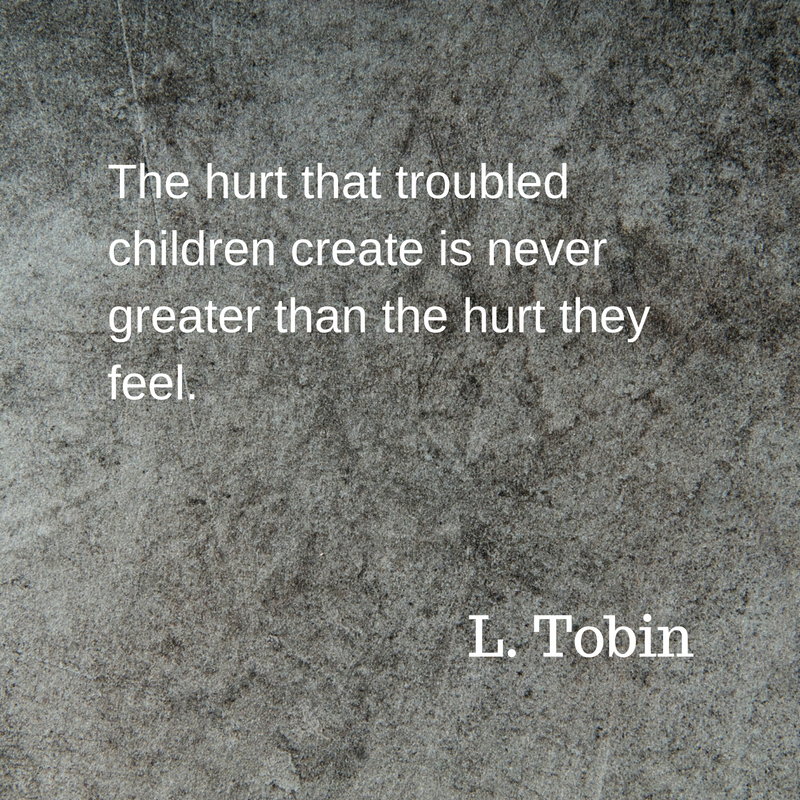
the-hurt-that-troubled-children-create-is-never-greater-than-the-hurt-they-feelTrauma can occur from lots of different things – there is simple trauma (serious accident, disaster, one-time physical assault); complex/developmental trauma (witness domestic violence, death of a parent / caretaker, ongoing physical or emotional abuse, ongoing neglect, homelessness, living with family members with untreated mental illness or substance abuse, or having a family member deployed in the military); and finally historical / generational trauma.  Children who have been through traumas like those listed above can have various levels of stress, but those who are living with high levels of stress spend much of their life in the fight, flight, or fright mode.  These children respond to the world as a place of constant fear.

All this stress leads to issues with brain functions and development, and make it very difficult for students to focus on learning.  Oftentimes these students fall behind in school; fail to develop healthy relationships with peers; and/or create problems in classrooms and at school because they are unable to trust adults.

So now that we know a little about where this trauma and stress comes from, we need to examine what it may look like in the classroom.  Let’s first look at the development of the brain.  For typical children, who do not have toxic levels of stress in their lives, they are able to spend very little of their time focused on survival, and as a result are able to spend much more of their time devoted to cognition and social-emotional functions.  For the children who have experienced developmental trauma, the majority of the brain’s attention is focused on survival skills (the fight, flight, or fright reactions), which means there is little time or energy to devote to cognition or the social-emotional functions.

When students have experienced trauma, you may notice some of the following traits:

  • Day dreaming
  • Impaired social & emotional function
  • Difficulty retaining information
  • Labeled as learning disabled
  • Can sit in classroom and not learn
  • Less mature problem solving
  • Use violence as a tool
  • Feel the need to control their environment

These traits can lead to various effects on learning, including the ability to: acquire language & communication skills; understand cause and effect; take another’s perspective; attend to classroom instruction; regulate emotions; engage in the curriculum; and utilize executive function (make plans, organize work, follow classroom rules).

So now we’ve talked a bit about what trauma is, what may have caused trauma in our students, and some of the traits that may happen as a result.  Next week we will look at how our responses can play a role in student behavior, especially those who have experienced some form of trauma in their lives.

In the comments below share your thoughts on this topic.  Have you had experiences working with students who have lived through trauma?  What worked?  What didn’t work?

What our students see

Today I was walking the around our school thinking about the fact that in less than 2 weeks the halls will be full of almost a thousand 5th and 6th grade students.  Many of the classrooms that I walk past are still in various stages of preparation for all of those students.  Thinking about those students got me excited!  But as I walked through the halls today, I tried to look around with a different perspective.  Instead of walking around with the eyes of an adult, an educator, or an administrator, I tried to look around and see what our students might notice.  What do the things that are posted on the walls say to the 10, 11, and 12 year old students who will be walking these halls?

Many times as educators, we put things up in the hallway or our classroom because we like them.  We might intend to share something of ourselves with a student, we might intend to be funny, or we might intend to set up expectations that we have for our class and our students.  Unfortunately, our students can’t read our mind and know our intentions.  Sometimes your students may see that sign that you think is setting expectations, and instead see it as harsh, judgmental, or possibly even confrontational.  Think about what you have hanging up both outside and inside your classroom. How will it make your students feel when they walk into the room?  Are they going to feel welcome, or are they going to feel intimidated?  Does your room encourage them to be a part of the learning process, or does your room discourage their participation?

From The Thinker Builder: http://www.thethinkerbuilder.com/

I saw a recent post on the blog The Thinker Builder that had a pretty cool idea (at least I thought so).  Instead of covering his bulletin boards with amazing decorations to set up a classroom, the author begins his year with a blank bulletin board and puts a reserved sign on it (I have a screenshot of the sign to the right).  If you’d like to see his post, or be able to download the sign, check out this post – “Reserved” Signs: A Bulletin Board Stress Reliever.  What does a sign like this say to the students and parents that walk into your room?  To me, it shows that you value the thoughts and opinions of the students who will be in your classroom.

Remember, your students will notice what you have posted on the walls both inside and outside of your classroom before you have said one word to them.  Based on what they notice, they are going to form opinions about you.  They will create expectations about what this school year is going to be like.  They will also decide whether they feel that the classroom is a place that they are safe to express themselves and become part of the learning community.

One of my takeaways from the book Mindset by Carol Dweck was that a person’s environment can play a role in what mindset they take.  Posters that use terms that make us think in a fixed way, or make us think that we don’t have any choice or control will generally lead us to behave in a manner that shows a fixed mindset.  On the other hand, things we display that show phrases that encourage a growth mindset will lead us to behave in a manner that shows a growth mindset.

Kids Deserve ItThis year, as you are preparing your classroom, take a few moments to take stock of what kids will see in the hallway outside of your room, as well as when they walk into your room.  Do the words on those posters have a positive connotation, or are they negative?  Are they giving your students an idea of what they will be doing, or of what they will not be allowed to do?  We only get one chance to make a first impression!  Make sure that the impression that you make sets the students up for their best possible year!
Continue the conversation in the comments below.  What are some things you are planning to do to help your students feel welcome in your classroom?  How will they know that they are a valued member of the learning community?  Let me know your thoughts in the comments below!


Teachers vs. Students

It’s the beginning of class, and you are checking to see what students came to class prepared, and you get to “that” student (admit it, a name just came to your mind!), and of course, they are not prepared for class today.  This is the third time this week, and who knows how many times this month…

All of us have been there at one time or another.  It can be so hard not to take it personally.  In your mind you may think about the amount of time you have invested in that student, or the help that you provided yesterday to make sure that student was organized and prepared to be able to finish the homework, or maybe you think of the assurances you had from the parents who told you they would help make sure work was being completed.  How can we not take it personally?

Of course, the reality is that for the vast majority of our students, they are not doing this purposely (although on the day I am writing this, I did see a student with a t-shirt that said “I’m just here to annoy you!”).  In fact, you are probably the furthest thing from their mind when a student does not complete his work.  Instead, the lack of completion could be for a lot of reasons (maybe they didn’t understand how to do the assignment, maybe they didn’t want to do it, maybe they thought it was boring, or maybe there was nobody at home to make sure they did it – you get the idea, there are lots of possible reasons).  I think logically all of us understand that students are not intentionally coming to class unprepared in an effort to drive us crazy, and yet we can’t help but feel that way.

no significant learningOne of the great beliefs I have about education is that relationships are one of the keys to success for our students.  I know that many of you feel the same way.  We take the time to build relationships with all our students.  We feel invested in each of them.  We can’t help but believe that the feeling is mutual.  Unfortunately, our students don’t always feel the same way.  Sometimes even with our best effort, it is hard to help all our students to feel connected here at school.

When “that” student comes to class unprepared, the simple solution is often to get angry or frustrated.  It is much more difficult to figure out the answer to the key question – why?

Finding the answer to the question of why is not easy.  The answers that students will give run the gamut – I forgot, I had a basketball game last night, my parents couldn’t help me, etc.  A lot of time we see these answers as excuses.  Instead, maybe we should look at them as clues.  If they say they forgot, are they disorganized?  Do they need additional support so that they won’t forget in the future?  Could you help them set an alert on the iPad or phone to go off in the evening to remind them of the work they have to do tonight?  If they say that they had another activity, can we assess what they do have done to see if they understood the concept?  Do they need more work time here at school?  We can’t control how their time is scheduled outside of school hours, but we can help control how that student uses their time here at school.  If they say they didn’t have a parent to help them, then do they need to have the concept retaught to them?  If a student needs a parent’s help to be able to complete a homework assignment, then they don’t really understand the material.

In last week’s post we discussed growth mindset in teachers.  An argument could be made that situations like the one described at the beginning of this post could be the perfect opportunity to use some of what we learned about having a growth mindset.  Instead of taking it personally when a student isn’t prepared for class, look at it as a puzzle to be solved.  Try to understand why the student isn’t prepared.  Once you understand the why, it will be much more likely that we can approach a solution.  If you don’t have an idea of how to help the student, talk to your colleagues, counselors, or administrators to see what ideas they may have (collaboration = more opportunities for growth!).

If you’re still struggling to come up with a way to motivate the student, come at the problem from a PBIS perspective.  Most of our kids who struggle simply want attention of some kind.  Getting negative attention is easy, but when given a choice between a positive and a negative consequence, most kids will choose the positive (it’s amazing what I used to get kids to do for a sticker or a jolly rancher!).  And if you show them that it is possible to earn that positive consequence, then they find success.  Once they show a pattern of success, you can make it more difficult to earn that positive feedback, and hopefully the student will begin to learn that the feeling of success from a job well done is a good enough reward (I know that this process takes longer than we like, but it does work!).

Instead of looking at the unprepared student as the enemy, spend some time thinking about them as a puzzle.  If you don’t know what will motivate him, spend some time to get to know him (2 for 10 strategy).  Look back on one of our earlier posts: Know your kids – Love you kids for a little more on how a 2 minute conversation can help you learn about your kids.

What success have you had in motivating the unmotivated or reaching the unreachable?  Spread the wealth!  Share some of your experiences in the comments below.

Growth Mindset for Teachers

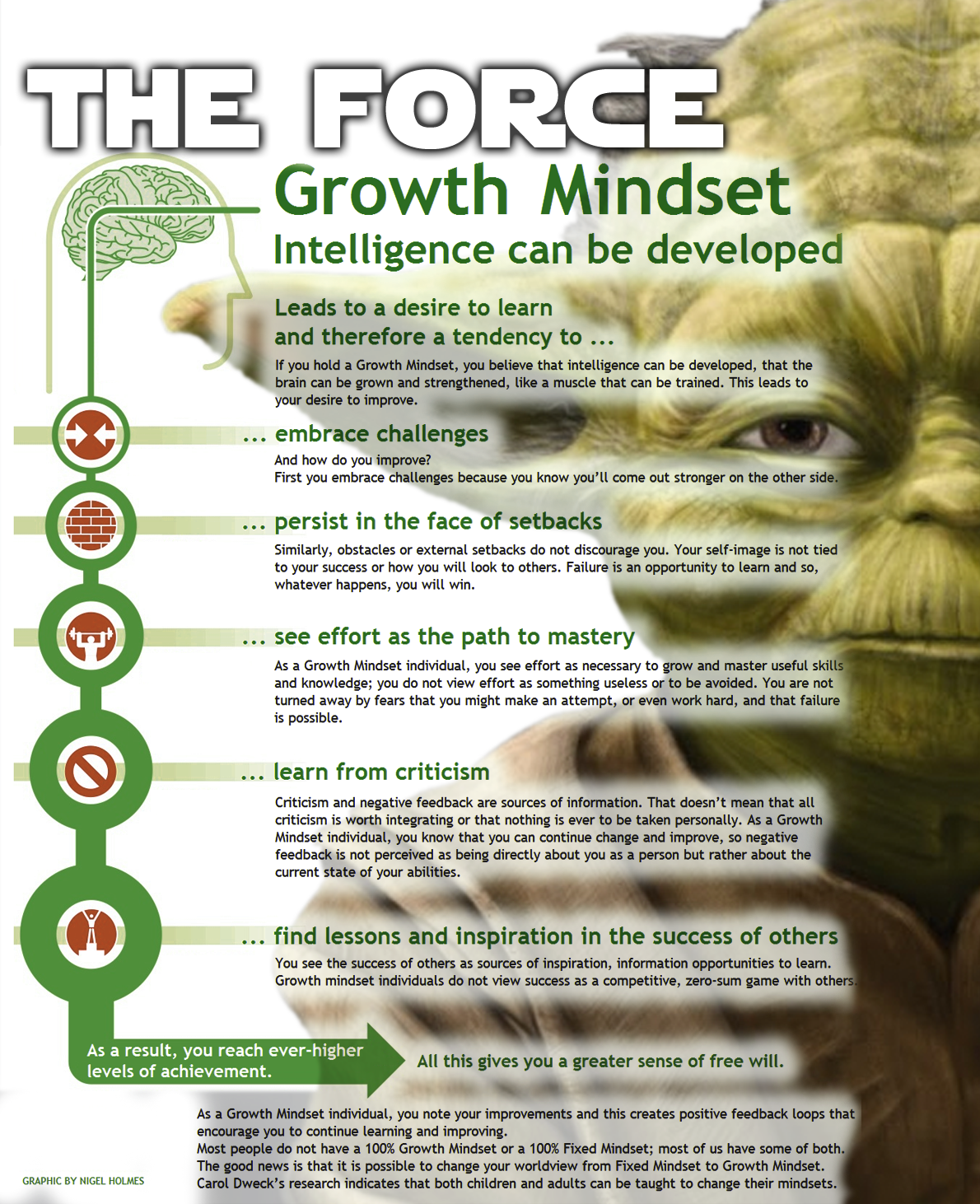
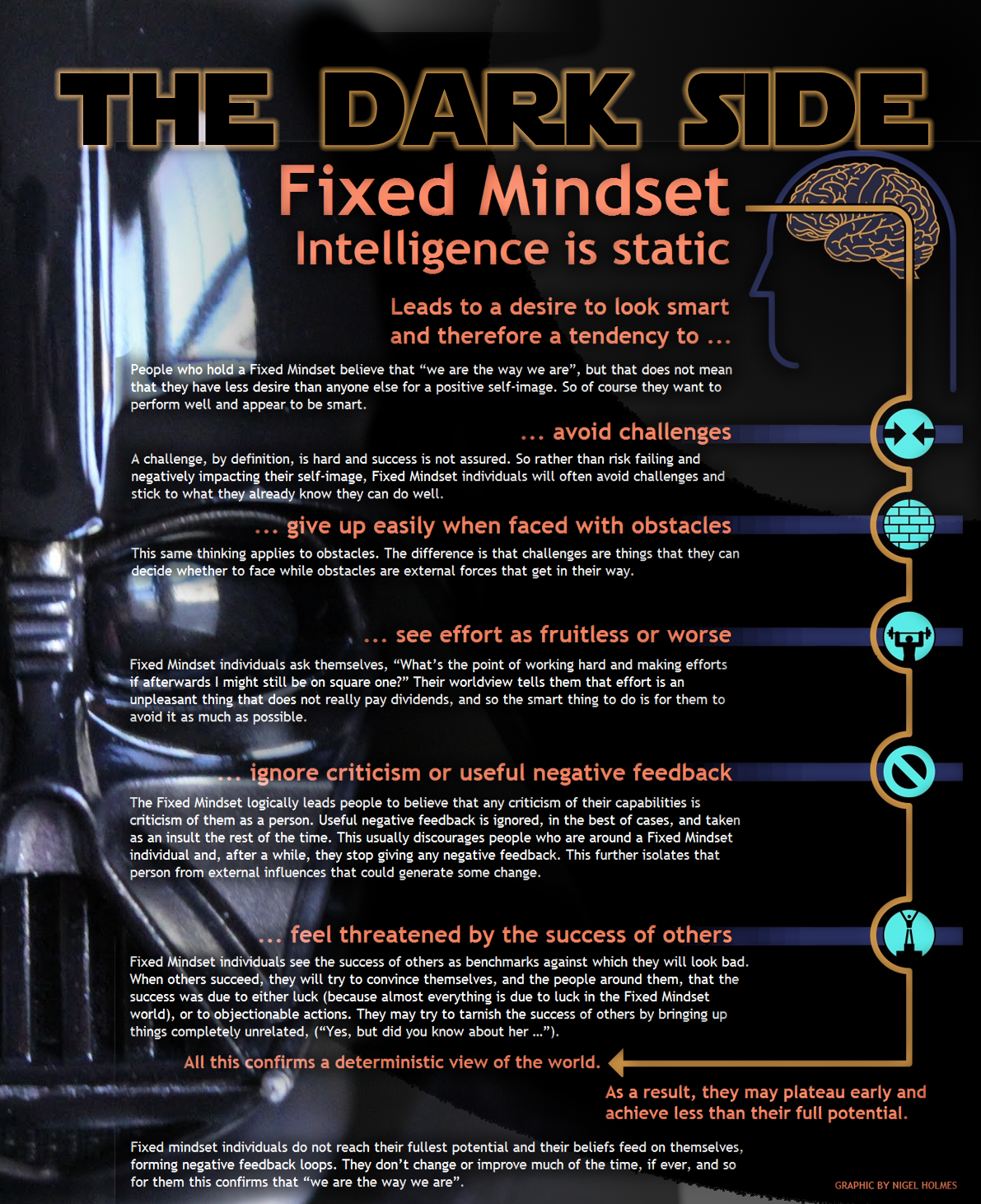
Over the past couple of years I have had several conversations with members of our school community about the idea of Fixed Mindsets vs. Growth Mindsets.  I previously shared a video featuring some of the findings of Carol Dweck.  In those conversations and in that video, the discussion is framed around how to help our students to develop a growth mindset.  What about all of us?  How do our mindsets impact the learning that takes place in our classrooms?  How might those mindsets impact our relationships with students?  As a review, I included a couple of graphics showing the difference between a Fixed or Growth Mindset. (I know the pictures below appear small – if you click on them, they will be easier to read).

https://teacherpaulp.files.wordpress.com/2014/07/darkside1.png
https://teacherpaulp.files.wordpress.com/2014/07/growth_mindset_poster1.png

According to Dweck:

In a fixed mindset students believe that their basic abilities, their intelligence, their talents, are just fixed traits.  They have a certain amount and that’s that, and then their goal becomes to look smart all the time and never look dumb.  In a growth mindset students understand that their talents and abilities can be developed through effort, good teaching, and persistence.  They don’t necessarily think everyone’s the same or anyone can be Einstein, but they believe everyone can get smarter if they work at it.

What if you reread that statement, but you replace students with teachers?  Where do you fall?  Are your abilities as a teacher a fixed trait, or do you believe that your talents and abilities can be developed through effort?  Are you somewhere in the middle?  Draw a continuum with Fixed on one end, and Growth on the other.  Put an X where you think you are, and then ask if you are comfortable with that location on the continuum.  If the answer is no, how can you move that X to where you want it to be?

Yes, even you have permission to fail! Just make sure that you learn and grow from those failures! https://www.flickr.com/photos/126588706@N08/14826069893/in/album-72157645530010989/

One of the things that concerns me most for teachers comes from the second sentence of Dweck’s definition above.  Is it your goal to “look smart all the time and never look dumb”?  What does that show our students?  If we tell them that they should see failure as a first attempt in learning, but never model for them what it looks like to fail and then improve, what message are we sending our students?  Do we really want to have an attitude of “do as I say, but not as I do”?

I’ll admit, it’s never fun to make a mistake in front of a group of students.  But let’s think about the concept of gradual release – I do, we do, you do.  We would never assign our students something they have never done before without modeling it and expect them to be successful on their first try.  Instilling a growth mindset in our students means we have to be willing to take risks, and sometimes fall flat on our face.  Then, we can model for our students what it looks like to get back up, dust yourself off, make an adjustment, and do better the next time.

If you look at yourself as a learner first, and a teacher second, you will recognize that this craft we carry out is something that we are all learning.  Every day that I’m here at school, I see someone doing something that I’ve never seen before.  When I scroll through my Twitter feed in the evening I often end up reading education related blog posts that provide me with new ideas or ways of thinking.  I see things my friends share on Facebook, and I get new ideas.  Hopefully you see your experiences here at school, and those outside of school, as something that you can learn and grow from as well.  Hopefully you’ll be looking for ways to shift your own mindset further down that continuum towards the ideas of growth.

Throughout this month I hope to use this forum as a way to look further at the Growth Mindset continuum, and in particular focus in on how our mindsets can affect our relationships with the students sitting in our classroom.

In the comments below, feel free to share with us a time that you may have fallen flat on your face.  What steps did you take to correct it?  What did your students learn from your failure?  Or you can share something that you plan to try that you aren’t quite sure how it will work out.  What are you nervous about?  What’s the worst that could happen?  I look forward to hearing from you!

Importance of student feedback

A couple weeks ago I had a post on how to influence students (click here to see it again).  This weekend I was reading a post by A.J. Juliani on his blog titled “The Future of Learning” and I saw an article that related to my previous post, but he looked at things from a slightly different perspective.

What are the best ways to give feedback to our students?

Through reading Juliani’s blog, I ended up reading a research paper written by a team of psychologists from Stanford, Yale, Columbia, and several other well known schools to look at the type of feedback that is given to students.  In this study the authors were testing to see if the type of feedback given on an essay written by 7th graders could result in greater effort (as measured by an increased number of revisions), and improved quality of final drafts.

While there have been many studies on how to provide praise to our students, there has been limited research in how to provide meaningful criticism that will result in improvements for students.  Many of us place our criticism in the format of 3 stars and a wish (or something of this nature) to boost self-esteem before delivering the criticism.

The reality is, self-esteem is not the key to being able to hear criticism, but rather trust is the key.  Boosting self-esteem will not always boost trust.  When trust exists, we are able to see criticism as information to help us improve.

In the experiment, some students received “wise feedback” while other students received “neutral feedback” on their papers.  Simply through the type of feedback that was given to a student, there was a marked improvement in students choosing to revise their paper (a 40% increase in student effort) and improvement in overall performance on the final paper (you can see the study here).

So, what was the magical feedback that led to such extreme improvements?  What note was written on the top of each paper with similar feedback below?  The experimental phrase was:

“I’m giving you these comments because I have very high expectations and I know that you can reach them.”

That’s right – 19 words written on the top of the paper.  In other aspects of the study, these words helped develop greater trust between the student and the teacher, which in turn provided students with a sense of belonging and connection.

For the students who were in the control group, the note at the top of the page looked very different.  It simply said “I’m giving you these comments so that you’ll have feedback on your paper.”

Remember that feedback tells us about the relationship that we hold together.  Feedback like what you see in bold above gives the students some clear messages: you’re part of this group; we have high standards; and I believe you can reach those standards.  So what lessons can we as teachers take away from this?  In the post from Juliani that led me to this research study, he referenced an article by Daniel Coyle, the author of The Talent Code.  His lessons from this study are as follows:

  1. Connect: As John Wooden said, they can’t care how much you know until they know how much you care.
  2. Highlight the group: Seek ways (traditions, mantras, fun little rituals) to show what it meas to belong in your crew.
  3. Don’t soft-pedal high standards: Don’t pretend that it’s easy – do the opposite.  Emphasize the toughness of the task, and your belief that they have what it takes!

Have you found success in sharing feedback in this manner?  If so, share with us how you let students know that they are part of the group, the group has high standards, and your belief that the students can reach those standards.

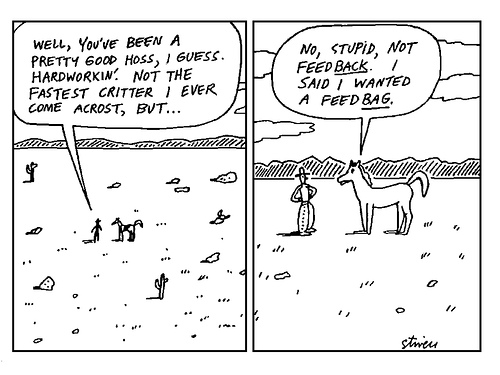
Sometimes our feedback can be a little misguided...
Sometimes our feedback can be a little misguided…

Know your kids – Love your kids

Growing up, the mother of one of my closest friends was an elementary school teacher.  When I graduated from college with a brand new teacher’s license in hand, she gave me a couple of books and some unsolicited advice.  One of the books was The First Days of School by Harry and Rosemary Wong.  The advice was “don’t smile until at least Thanksgiving.”

From Amazon: http://www.amazon.com/The-First-Days-School-Effective/dp/0962936022

The First Days of School was a great resource in setting up my first classroom, and knowing that this person was a great teacher, I tried to follow that advice.  The only problem…  I really like kids!  I couldn’t not smile at them.  They were curious, they were funny, and most of all, I knew they were going to be with me for a whole year.  Building a relationship with them was really hard if I couldn’t smile!

Some of you may be of the opinion that if you are a good teacher, it doesn’t matter whether or not the kids like you, as long as they respect you.  Let me ask you this…  How many people that you don’t like do you truly respect?  Kids don’t learn from people they don’t like.  Kids will learn from people they feel a strong relationship with.

Matt Miller: https://www.flickr.com/photos/126588706@N08/14726101996/in/album-72157645530010989/

Going back to our belief statements, building positive relationships is one of our top priorities.  It’s easy to have a relationship with the kids who do really well in your class and seem motivated to learn.  Those are the kids who know how to play school and probably have the most positive relationships.  Those kids are probably the ones who need you the least because they can build relationships easily.  The ones who need you the most are the ones who seem to not be motivated, or seem to not do well.  What have you done to build relationships with those students who don’t play school well?

The next time you look at your class, see who it is that you know the least about.  Seek out an opportunity to learn something about them.  Have a 2 minute conversation that has nothing to do with school or your class.  What are their interests?  What do they like to eat?  What did they do last night?  What do you know about their family?  Do this as often as possible until you know a few new things about each of your kids, then start again!

Remember the first day of school this year.  I asked you to do 2 things – Know your kids, and love your kids for who they are.  What steps have you taken this year to be able to know your student better?  Share in the comments below some of your successes.

Matt Miller: https://www.flickr.com/photos/126588706@N08/14746751544/in/album-72157645530010989/

CPI Refreshed!

http://www.crisisprevention.com/

Today I had my annual refresher in CPI – Crisis Prevention Intervention.  The focus of the refresher training this year was on Goals, Power, and Relationships.  As I was sitting in the training, I kept thinking how important these ideas are for all the teachers in the building I work in.  It seems that some people think that CPI is all about how to put our kids who are in danger of hurting themselves or others into some sort of restraint.  Unfortunately there are times that this is part of the process.  The reality is that if you are using the strategies put forth in CPI in the best way possible, you are able to avoid getting to the point of using any restraint.

In those early stages of escalation, when students are becoming anxious or defensive, it is all about how we handle the behavior.  The analogy that my trainer used today was that it’s like approaching a fire with 2 buckets, one of gasoline, and one of water.  The things we say to the escalated student, and how we say those things can act as either the gas or water on the fire.

Sometimes as teachers we get caught up in our own feelings and emotions.  We have to remember the Q-TIPs: Quit Taking It Personally!  Instead, as a person who is skilled in deescalation techniques, you need to focus on a goal for every intervention, using the power you hold in a positive way, and building relationships with trust and respect.

In a situation of crisis, there are 3 possible outcomes – things can stay the same, get better, or get worse.  What we say and how we act can control what outcome we see.  If the outcome we seek is for improvement, we have to enter each situation with a goal in mind.  As we all know, there are different types of goals – short term, intermediate, and long term.  Our short term goal must always be focused on safety.  The intermediate goal should be focused on learning opportunities for the student, and our long term goal should be on autonomy.  But how do we get to those goals?

Part of the way that we get to our goals is through our use of power.  Sometimes power is seen in a negative light, but in the crisis situation, not only is the power that you hold important, but also the power that you give to others is important.  By gradually releasing power to our students, we show them that we trust them, and we help them feel empowered to take control of their own situation.  Compliance alone should not be what you are looking for, rather you should be seeking cooperation.

Another skill at reaching a positive outcome is that of relationship building.  When you have a solid relationship with your students, it is much easier to influence their choices and behavior due to the rapport you have with them.  Instead of focusing on rules and regulations, build a positive relationship that makes it easier to have a meaningful learning opportunity for your student.  We all know pretty quickly who our difficult students will be.  Use something like the 2 for 10 strategy, spending 2 minutes per day for 10 days talking to the student about something that is not directly related to school, or something that they care about.  The deposits that you make in a relationship at the beginning of the year will make your life easier later in the school year.

Think about the student that you sense may cause you trouble this year.  What steps can you take today, or this week, to build a rapport with that student?  At the beginning of the school year this year, I encouraged the teachers in my building to know their kids, and love them for who they are.  When they feel valued and loved, its amazing what they will do for you!

What are some of the successes that you have experienced from relationship building?  What strategies have helped you to deescalate a student who was feeling anxious or defensive?  Share some in the comments below.