What is the “average” student? (Part II)

Last week I shared with you a little bit about the idea of averages.  From astronomers in the 16th century, to the work of Quételet in the 1800s, to Lincoln’s efforts to standardize the military during the Civil War, averages have a long history of being used to understand humans both physically and mentally.  During World War II, the research of Gilbert Daniels showed that averages were not a great idea for design of the cockpits of airplanes because no pilot fit the mold of the average man.  As a result, the Air Force banned the use of average for design, and began demanding design to the jagged edges.  This led to adjustable foot pedals, helmet straps, flight suits, and seats (things that seem like a no-brainer today).

airforce-dimensionsThrough the choice to move to flexible design, our Air Force was able to move forward in ways that they were not able to do when design was based on the average.  Now I know that some of you probably read last week’s post and may not have seen an immediate connection to education.  If you recall, in last week’s post I mentioned Todd Rose, a Harvard professor and a high school dropout, who is doing some interesting research in the science of individuality.

During a TEDx Talk titled The Myth of Average (if you have a chance, this is a really good TED Talk with some real implications for the education of all students), Rose talked about the educational repercussions of using average to design learning.  Sometimes our classrooms are like the airplane cockpits at the beginning of World War II.  There aren’t a lot of options for adjustments, and because of that, there are students who struggle.  Here’s the dirty little secret though – it’s not just the kids at the bottom who struggle in school.  When you look at dropout rates, a significant portion of high school and college dropouts aren’t leaving because it’s too hard, they’re leaving because it’s too easy and they aren’t challenged or engaged.

Over the summer I had a video post to the blog titled “An Open Letter to Educators.”  More recently I have been reading the book The Boy Who Played with Fusion, the story of Taylor Wilson, a 22-year-old who built a fusion reactor at the age of 14.  Both talked about a need to embrace new formats of education in an effort to be more individualized and prepare our students for the real world.  The implication I saw was that this individualization isn’t just for the kids that we identify on the low end of the spectrum, or those on the high end of the spectrum, but also for the kids we identify as the “typical” student.

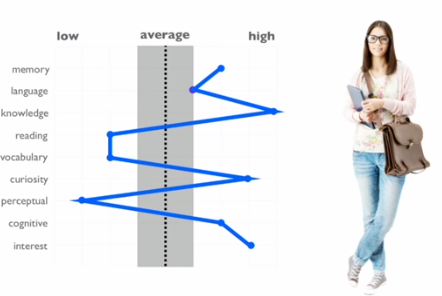
No matter how we might identify our students (typical, below average, above average), our students come to us with jaggedaverage-student learning profiles.  Some are strong in math, but struggle in ELA.  Others have a talent for memorizing facts in social studies or science, but when you try to get them to think deeper, and solve the problems of our scientific world, they just can’t do it.  What if our education system was designed to adapt to the jaggedness of our students instead of expecting our students to adapt to the school setting?
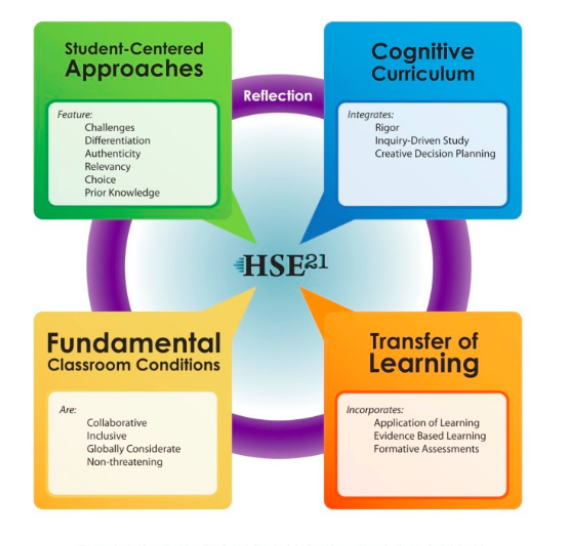
The HSE21 Best Practice Model is a great method to get there.  Through student-centered approaches, transfer of learning, cognitive curriculum, and fundamental classroom conditions, we can develop an environment that accepts students where they are, and helps to move them further.

As you continue to design your classroom conditions for your students, be thinking about their jagged profile of learning.  How are you making the learning environment more flexible?  What are you doing for that science genius who struggles with the reading?  They may be awesome with the hands-on portion of science, but when it comes time to read and learn about theories, they just don’t get there because the textbook is too challenging for them.  Our goal has to be one of constant incremental growth, both for the kids who are struggling in a lot of areas, as well as those who seem to have it all together.  Remember, we’re all jagged!

Technology can help us to get there.  With an iPad, each of your students has the ability to translate text, look up vocabulary, or even have text read aloud to them.  With programs like NEWSELA or Achieve 3000, we are able to have our students read materials that are at the appropriate level for them, be able to understand what they have read, and in turn have an opportunity to grow.

Flexible design in learning is the school equivalent to adjustable seats!  These adaptations will nurture the potential of each individual in your classroom.  And remember, adaptations aren’t just for those on either end of the spectrum.  That kid that you think of as average probably has a jagged profile of learning too, with strengths that we can tap into, and weaknesses that we can target for growth.  The adaptations that we’d make for anyone with a label can work for those without any specific label too – and as the teacher, you are allowed to make the choices of what is best for your students!

What might flexible design in education look like in practice?  Here are a few ideas:

  • Get rid of specific numbers on assignments (3 pages, 5 paragraphs, 4 signposts, etc.) and shift to requiring quality work instead.
  • Allow modifications on assignments.
  • Create a loose structure for projects to allow more student autonomy in what they are creating and how they are making it.
  • De-emphasize standardized test scores or other systems where averages are used to judge students.
  • Let students select the strategies that work best for their own learning (that student who struggles with reading might be able to listen to a podcast or watch a video on YouTube and think just as deeply as that star reader who can learn from the text).
  • Change the pace so that certain students can finish earlier and have enrichment opportunities and others who are behind can have more time to work and not feel like all they are doing is to catch up.

Now, I know some of these ideas sound crazy, or scary, or hard to put into practice.  We can’t change everything at once, but we can move incrementally to try to develop an environment that our students will be able to have more success.  Just like setting goals for students to grow, we have to set goals for our own growth, and then take steps to get there.

But isn’t it worth it?  Who knows, that kid who is struggling in your class right now might be on the path to dropping out, but they may have the potential to be a professor at Harvard – or any one of millions of other successful paths.  They just need to have the opportunity to embrace their individuality!

So what are your thoughts?  What successes have you had when adapting to be better suited to the individuality of your students?  What challenges do you see in this way of thinking?  Let us know in the comments below!

Active learning

the-only-source-of-knowledge-is-experience

The HSE21 Best Practice Model is such a great tool because it reminds us of the fundamental classroom conditions that will help our students be ready for their future.  I was recently reading the book Learn Like a Pirate by Paul Solarz and he spent a lot of time talking about active learning.  In active learning, we see differentiation, authenticity, relevancy, choice, and collaboration – all important pieces of the best practice model.  Think back to your favorite moments when you were in school.  What stands out?  It’s probably an example of active learning.

When I was in elementary school, both of the 6th grade classes in our building collaborated to write, produce, and perform a musical.  I vividly remember working with classmates to write the script, to advertise the show, and to plan the costumes and props for the show.  The skills and strategies that I developed in activities like this were ones that I believe helped set me up for success in middle school, high school, and beyond.  While I remember moments of passive learning when I was in sixth grade (one of my teachers was the queen of having us copy notes from her beloved transparencies), I can’t recall any details that I may have learned in that format of lesson.

So, how can we integrate more active learning into our classrooms?  Here are just a few ideas based on Learn Like a Pirate book:

  • Simulations – What’s a better way to learn about the Boston Tea Party?  Read about it, or take your classroom back to 1773 and have your students simulate the circumstances that led the Sons of Liberty to throw cases of tea into the Boston Harbor?  Or you could integrate some science into your social studies by having your students set up a colony in outer space.  They can experience creating a government for their colony while also learning about the needs for their planet.
  • Debates – The collaboration that goes with a debate can be amazing. If you pick a topic that would have more than 2 sides, you can break your class up into several different groups with different topics, keeping the groups small enough that all play a role, while also large enough that you can put mixed ability students together.  Solarz does alternative energy debates with his students.  He plays the role of President, while his students are the advisors trying to convince him that their energy plan is the best.  While this topic may not resonate with you or your curriculum, there are many other debatable topics that could tie to your standards.
  • Science Fair – This is something that has gone out of style, but why? In a time where we are shifting to STEM classes, and at a period in time when so many of our kids don’t do hands on science projects like previous generations, this seems like a no brainer.  The issue I had with the science fair’s old style was that it was typically done as homework.  The last time I had my students do a science fair, we did everything at school.  Students were asked to bring in poster boards, but I tried to provide most of the other resources they needed (sometimes we had to get creative).  Kids assisted one another on their projects, and were truly excited to share their findings at the end.  I was able to provide feedback, help with data collection, and teach mini-lessons as necessary.  The best part – I knew it was all done by the student on a relevant topic of their own choosing.  A variation on this could be an invention fair, or a coding fair, or anything else you might imagine that lets students be actively involved in inquiry.
  • Project-Based Learning – A trend in education, and one that I was guilty of when I was still in my classroom, is that we teach a unit, and then at the end of the unit students complete a project to show their learning. What PBL asks is that we teach through the project.  Once you have your basic idea planned, students choose their more specific project and dig in.  Throughout the unit, mini-lessons can be taught on content, procedures, or skills that students need to go further in the process.  As a teacher, you are continuously checking in with students, seeing where they are and where they are going next, providing feedback, and deciding if there are topics that you need to build a mini-lesson around.  While we’re giving students choice and freedom, you are allowed to set some parameters up front.  PBL doesn’t mean setting the students free to do whatever they want, there have to be some class norms and expectations in place first.  Think of these expectations as the guardrails to keep your students in the right lane, and heading in the correct direction!  If you’re looking for good PBL resources, the Buck Institute for Education (bie.org) is a great resource!
  • Technology – Sometimes integrating some tech into a passive lesson is just what it takes to up the level into an active learning opportunity. Don’t just use technology for the sake of saying that you’re using technology.  Use technology when it is the best tool for the job.  Remember, HSE21 is not, and has never been, about technology, the iPad, OneDrive, or any of the many apps that are used around school.  However, when we find technology that truly improves or transforms what we’ve been doing, don’t hesitate to add it to your lessons.
  • Reader’s Theater – This is such a great way to work on oral reading fluency.  Students get to practice their part several times with their group.  During that time they can practice pronouncing difficult words, learn to project their voice, add inflection, and enunciate.  Depending on your goals, it could be a single day activity, although students don’t have as many opportunities to practice and they may not be able to create props to go with their performance.  On the other hand, you could do a multi-day activity where students are put into groups and roles one day, have time for rehearsals and planning for the performance (props, costumes, etc.) on a second day, dress rehearsals where you can give feedback on props and costumes that aren’t appropriate or necessary on a third day, and then performance day on the last day.  If you’re really brave, you could record the performances to put on a YouTube page so that parents can see what their kids are up to at school.

This is not intended to be an all-inclusive list of active learning activities, but is meant to give you some ideas of how to create more active learning opportunities for your students.  What am I missing?  Are there active learning examples that you use that I didn’t mention?  Have you tried (or are you thinking about trying) any of the ideas above?  Tell us about your experiences, your thoughts, or your plans in the comments below!
What our classrooms need

Summertime is one of my favorite times of the year.  I’m able to spend more time with my family, play with my kids more, and have the freedom to do some of the things that there just isn’t time for during the school year.  With all of that fun, I also make it a point to spend some time learning too.  During the school year I don’t always have the time to read the books that have been piling up on my desk, or delve deeply into new ideas and ways of thinking.  Luckily, the summertime allows just that.

HSE21 Best Practice Model

This summer, in addition to the learning that I did on my own, I was able to participate in a couple of different conferences, and the learning opportunities that were provided to me there continued to reaffirm that we are on the right path.  Throughout the posts that I have made to this blog in the past year, I have constantly referenced the Best Practice Model.  When we look at the HSE21 homepage, we see the following statement to describe learning in HSE:

We must ensure that our students develop a strong academic edge through experiences with rigorous academic content and effective information, communication, and technology skills. Our students’ future education and career choices require critical thinking, creative problem solving, and the ability to work together with others to successfully compete in today’s world. In HSE classrooms, students think deeply and critically about content knowledge and complex issues. Students regularly collaborate and actively investigate real-world problems. Hamilton Southeastern Schools is dedicated to implementing curriculum and learning opportunities that build the skills and abilities necessary for our connected society. When students graduate from HSE Schools, they will be ready for their future and equipped for excellence. (from http://www.hse.k12.in.us/ADM/academics/hse21/)

So…  What does that mean for our classrooms?  Here are some things that I think we all should expect to see in a classroom:

  • Voice – In the summer before my senior year at IU, I took a class, and the mantra of my professor was “Learning is social!” This is just as true today as it ever was.  Our students need the time to co-construct their knowledge.  They need time to share their learning, and to learn from one another.  Empower your students to speak up in your classroom so that they are able to use their voice when they move beyond the classroom.
  • Choice – Students need as much choice as possible. Allow your students times to choose what they learn, how they learn, what they produce as a result of their learning, etc.  How many of you struggled early in your undergrad years, only to do much better as you moved along in college?  Why does this happen to so many?  It’s because as a freshman or sophomore in college, so many of your courses are prerequisite, not something you chose, rather something you are required to take.  What happened as you got into classes that were more directly related to your degree?  If you’re anything like me, you did much better.  These are the things you were interested in and the learning was more relevant for you.  The choices we give students helps make their learning more relevant!
  • Time for Reflection – John Dewey is quoted as having said “We do not learn from experience; we learn from reflecting on experience.” That time for reflection is so important!  We need to be intentional in building that time in for students, and we also need to build it into our own practice!  I know classrooms are busy places, and we are busy people, but a few minutes of reflection allows us to really think about and understand what we have learned.
  • Opportunities for Innovation – When our students are passionate about something, the learning never stops. If our students are playing a video game and get stuck, they aren’t going to give up – they’ll find a way to beat it (maybe a YouTube video, help from a friend, a cheat code, etc.).  How can we create that attitude for learning?  Help students to find the curiosities in your subject matter, or give the students the time to explore their curiosity, and then let them innovate in that space!
  • Critical Thinkers – One of the hallmarks of the educations system has been the idea of compliance – this came about as part of the factory model of education. This factory model and expectation of compliance does not allow our students to be critical thinkers.  Our students need to be taught how to respectfully ask questions and challenge ideas of others for the sake of helping us all move forward. Hemingway once said that “Every man should have a built in automatic crap detector operating inside him.”  Our students need this skill in these days of social media and internet hoaxes.
  • Problem Solvers/Finders – While at a Pure Genius workshop this summer I heard a story of a high school student who saw that families who were part of the Supplemental Nutrition Assistance Program (SNAP) who were often unable to use their benefits to purchase healthy food for their family. The student began working with the Noblesville Farmers Market to find a way to allow families to use their SNAP benefits at the farmers market.  As part of her project, the student created wooden coins that she designed and printed using technology available to her at Noblesville High School.  Now families can take their SNAP card to the farmers market, swipe the card for the amount of benefits that they wish to use, and receive market currency in that amount to be spent on items at the farmers market.  One thing I know about most kids – they recognize things that they feel are not just.  Allow them to identify those problems, and create learning opportunities in the classroom that allow students to find solutions to the problems they see in our world!  Then, help them take that learning outside of the classroom.
  • Self-Assessment – Earlier I talked about the importance of reflection – on the day to day level, that reflection allows us to better understand new information, but on a long term level, that reflection allows us to see our own growth. A portfolio is just one way that students can look back and see their own growth.  Students can see where they were and how far they have come.  It is a valuable skill for all of us to be able to identify our own strengths and weaknesses.  We need to provide students with opportunities to assess themselves.  What might a digital learning portfolio look like for your class?  If you’re struggling to visualize it, let me know and we can try to come up with a plan that would work for your classroom!
  • Connected Learning – When we encourage students to be problem finders, we might run into some issues. What if the problem that students want to solve is something you know nothing about?  You might feel there is no way you can guide them to a solution.  That may be true, but in today’s connected world we can use technology to connect to experts who are able to support your student’s learning.  Though Twitter, Skype, FaceTime, Google Hangouts, and others, our students can create connections that allow them to learn.  Imagine if your students were connected with students at other levels with more background knowledge, or maybe even with people who have gone much further.  Who would you rather learn about space from?  A teacher or an astronaut?  With social media like Twitter, that astronaut is only 140 characters away!  With technology we can teach students how to facilitate their own learning.

In addition to all these factors, there is at least one other factor to success for our students in the future.  Our students need to be good people.  I don’t care how smart you may be, if you are unkind and disrespectful you will never find the same level of success.  In most schools we talk to students about their actions as a choice.  Remind them that it is always important to choose kind (if you follow me on Twitter, you will see the hashtag #choosekind a lot this year!).

What have I missed?  What can you expand upon?  Keep the discussion going in the comments below!  Enjoy your remaining weeks of summer, and be thinking about what you can do to make your classroom the best environment possible for your students!

Engaging & empowering our students

Last week I shared with you some data on student mental health issues, anxiety, and student engagement.  I closed the post with these three points:

  1. Mental health concerns in our students are rising.
  2. Levels of engagement decline as our students grow older.
  3. Even with increased focus on standards, performance on standardized testing has remained stagnant.

So what can we do?  I’m sure that all of you have noticed these patterns in our own classroom, but knowing the pattern is only part of the task of finding a solution.  In last week’s post I shared the work of two college professors.  Going back to their work, I hope to share a couple ways we might be able to help fight anxiety and lack of engagement.

Peter Gray, the psychology professor from Boston college, feels that the key to learning and growth for our students is free play:

Children today are less free than they have ever been.  And that lack of freedom has exacted a dramatic toll.  My hypothesis is that the generational increases in externality, extrinsic goals, anxiety, and depression are all caused largely by decline, over that same period, in opportunities for free play and the increased time given to schooling.

So as a school, what does play look like?  For one it means we have to be sure to value recess/physical activities during the school day.  There is clear research that one of the benefits of physical activity is increased student engagement.  Think about your classroom on an afternoon where we did not have outdoor recess due to weather.  What are the engagement levels like?

Several recent research studies have looked into increased free play time in the school day, and the results suggest that students with regular recess behave better, are physically healthier and exhibit stronger social and emotional development.

Knowing these facts, does that lead you to think about changing what you do when you return to the classroom on a day when we are unable to go outdoors for recess?  Hopefully you can think about finding a way to squeeze in some free play on those days.  If not free play, then a few short brain break activities to get the kids out of their seat and moving.

And what about the days that students already get their recess?  Does that mean we don’t need to look for other opportunities for play?  Many of our teachers have been doing outdoor activities here at school this week.  I’m sure that they would share that the students are loving the activities they’ve been doing – they are active, engaged, and empowered in this learning environment.  My question though: Do we only save activities like this for the end of the school year?  Or do we try to integrate play into our lessons throughout the year?  How can we make use of our outdoor space, our small and large group instruction rooms, or even just the hallway to get the kids up and playing as they are learning?

Next we have the issue of engagement.  For the purpose of this piece, I am defining engagement in school based on the Schlechty’s Center for Engagement definition:

  • The student sees the activity as personally meaningful.
  • The student’s level of interest is sufficiently high that he/she persists in the face of difficulty.
  • The student finds the task sufficiently challenging that she believes she will accomplish something of worth by doing it.
  • The student’s emphasis is on optimum performance and on “getting it right.”

Is it engagement when we work hard to get students into content that we have selected for them?  You may be able to get their attention, but if it’s based on extrinsic goals (like a grade) the motivation may not last.  So here are some ways you might be able to increase motivation in your classroom:

  1. Students are more motivated academically when they have a positive relationship with their teacher.
  2. Choice is a powerful motivator in most educational contexts.
  3. For complex tasks that require creativity and persistence, extrinsic rewards and consequences actually hamper motivation.
  4. To stay motivated to persist at any task, students must believe they can improve in that task.
  5. Students are motivated to learn things that have relevance to their lives.
HSE21 Best Practice Model

As you spend time thinking about bringing more inquiry into your classroom, as you work to better incorporated the HSE21 Best Practice Model, you will begin to notice increases in your student engagement.  When we provide our students with challenges, with activities that are relevant to their lives, when learning is rigorous and based on inquiry-driven study, when students are able to apply their learning in collaborative ways, when we work to incorporate more of the HSE21 Best Practice Model we will see increases in student engagement.  In fact, if we work towards truly relevant and rigorous study students will not only be engaged, but actually will be empowered to take their learning to levels that we can’t possibly imagine!

As we approach the end of the year, take some time to reflect on things you have tried that have been new.  What activities have led to increased levels of engagement?  What ways have you been able to get a kid truly excited about what they are learning?  Now, think ahead – how can you take the things that have been successful and expand on them for next school year?  Share your thoughts in the comments below.

All means all

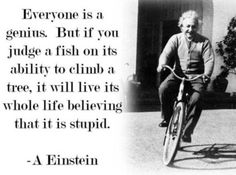
Einstein genius

How many times when talking with others in our school do you hear the phrase “We have to get them ready for ____”?  You can fill in the blank with all kinds of different phrases – things like 6th grade, junior high, ISTEP, or any one of the other things we are trying to get our students prepared for.  It is a valid thing to think about because we do have to prepare our students for the future.  However…

This is how some of the students in HSE are starting their experiences in our kindergarten classrooms.

How often do you hear the words “We have to be ready for the students that are coming to us.”?  In most schools, the environment of the school is set up for one specific developmental stage.  I know through conversations with many of you that we have at least a cursory understanding of the fact that our 10, 11, and 12 year old students fall all over the developmental spectrum.  It’s one of the things I love about working with 5th and 6th grade students, but it can also be one of the greatest challenges.  While not being intentional, sometimes schools set up a system that expect all students to fit within a certain box, and when they don’t fit, it creates struggles for students, teachers, and parents.  So the question begs to be asked, is our system set up to meet our students wherever they are in terms of developmental needs?

Think about this for a moment: Should we be worried about whether the kids are ready for the school, or should we be worried about whether the school is ready for the kids?

Next week’s post will share with you my recent experiences visiting a few elementary classrooms.  I am sharing these not to say that we need to try to mirror their methods or strategies, but to help us understand the types of classrooms our students will be coming to us from.  One of the things that I feel sometimes happens in education is that teachers of older grades sometimes “look down upon” the teachers of younger grades.  I think there can be great value in learning from the ways that teachers in grades below us meet the developmental needs of their students.

As we move forward, let’s work towards building our expectations for our students based on where they are when they get to us.  We can still strive to move them to where they need to be, but we need to be open to the fact that some of our students do not fit in the box that we have created for them.   Some of those outliers may need us to provide extra support, while others may just need us to get out of the way and let them learn.

What strategies and methods do you use to meet the needs of the student who walks into your classroom on a daily basis?  Are there methods that seem to help your students who are less mature than the rest of your class?  Or, on the other end of the spectrum, what do you do with the students that are much more mature than the others in your classroom?  Share your thoughts in the comments below!


Be a Connected Educator (Part 2)

https://plus.google.com/+SylviaDuckworth/posts/61rTzdcJ1yG?pid=6097161572876797314&oid=114228444007154433856

In last week’s post I shared a little about the value that connectedness can provide to educators.  This week I want to share some of the ways that you can use social media for personalized PD.  As I shared last week, online educator communities provide you with 24/7 access to people, ideas, resources, philosophies, and opportunities that can expand your world (and the world of our students).  So here are some of the reasons I get excited to connect online:


  • Inspiration: Many of the new things that I try here at school are because of something I have learned through a tweet, blog post, or somewhere online.
  • Motivation: Several of the twitter accounts I follow are educators who love to tweet out pictures and quotes that motivate me to try to be better. That little bit of motivation can be such an awesome help!
  • Challenge: I intentionally follow some people because they have different opinions than me. I do this because I want to have a full background.  Every once in a while something that someone shares truly challenges my thinking in a way that makes me reflect on my beliefs.
  • Camaraderie: I have been able to find connections with many other teachers and administrators all over the country/world!
  • Apps: You can use your digital connections to learn about new apps for a specific purpose, or ideas for better ways to use the apps you already have.
  • Humor: Just like our Friday funnies, there are funny things that happen in schools every day. Some of those things show up in my timeline and give me the opportunity to laugh.
  • Collaboration: Through online connections you can work with almost anyone in the world. You can find teachers all over the world teaching the same material, and create connections that allow you to learn from them, and they can learn from you.

So how do we connect?  And how do we find the time?  That’s total up to you, but there are a couple of options that you could try, and the amount of effort you put into them is totally up to you!

Our connections on social media allow us to connect with educators like never before!  Matt Miller - https://www.flickr.com/photos/126588706@N08/14562418440/in/album-72157645530010989/
Our connections on social media allow us to connect with educators like never before!
Matt Miller – https://www.flickr.com/photos/126588706@N08/14562418440/in/album-72157645530010989/

Social Media: For me, this is the best way to connect.  Twitter is my favorite choice, but Facebook, Instagram, and Pinterest are good ones as well.  My favorite thing about Twitter is that every post is 140 characters or less.  It’s amazing how much info can be packed into such a short amount of space.  The biggest thing to know on Twitter is how to use a hashtag.  A couple of my favorites are #edchat and #edtech.  Tons of great ideas get shared, and if you post something with one of those hashtags, you will get a ton of people to see your post.  (For more education hashtags, take a look at the links in last week’s post)

Blogs: There are thousands of blogs about education out there!  Most of my favorite blogs that I follow are because of connections I have made on Twitter.  I use Feedly.com as an RSS aggregator that keeps all my blogs in one place.  Each time a new blog that I follow posts, it shows up in my feed.  When I have time, I’ll peek at it.  If my day is too busy, I’ll skip it.  Feedly can also help you find other blogs based on topics you are interested in.  In addition to reading blogs, you can also start writing a blog.  Share the things you know – creation is one of the highest levels of thinking.  It can also be a huge time commitment – these posts don’t write themselves!  Some post daily, some are a few days a week, some are less regular than that.

Being a connected educator will make it easier to transform education in your classroom.  You will find new ideas, you will be able to ask questions, and you will be able to share your own thinking and give back to the community!  Invest the time that makes sense to you.  There are days I don’t get on Twitter at all, and there are days where I have extra time and might spend an hour or two reading, adding, and building connections.

What tools have allowed you to connect and change the way you teach?  Share with the rest of us below!

Be a connected educator (Part 1)

How often have you felt that you were “alone” in your classroom?  You plan for your students – nobody else’s class is quite like yours.  You plan for your content – nobody else is at quite the same place as you.  It’s easy to build up walls and confine yourself to them.  But think for a second…  Is that what’s best for you?  Is that what’s best for the kids in your class?

When we provide more students the opportunities to share in the classroom, we are building bridges to the world instead of placing them in a silo. https://www.flickr.com/photos/126588706@N08/14749002232/in/album-72157645530010989/
When we provide more students the opportunities to share in the classroom, we are building bridges to the world instead of placing them in a silo.
https://www.flickr.com/photos/126588706@N08/14749002232/in/album-72157645530010989/

If the answer you find yourself coming to is no, then it’s time to think about how to connect beyond the walls of you classroom.  I think we all know that there is a wealth of information out there on the internet.  Can you imagine what teaching was like before Google? (I’m sure some of you are saying “Yes!  I lived it!”).  I think we all know that we can find great resources with a simple web search, but sometimes we find a lot of junk too!  Taking the time to sift through it all can be time consuming!  What if there was a way to connect with others who did have students similar to ours, or who were sharing something that was just right for your class to do as well.

14746748124_db83c93b04_b
One of the best ways to connect with other educators is through Twitter! Matt Miller: https://www.flickr.com/photos/126588706@N08/14746748124/in/album-72157645530010989/

In addition to websites, there are also other educators out there waiting and eager to help you!  Or they might be looking for the help that you can provide them.  The community of educators on Twitter grows every week.  According to one report from Twitter, about 1 in every 100 tweets are related to education, and there are about a half-billion tweets a day!  You can tweet at someone, or just to a hashtag, and get a response in moments.  For an overwhelmingly long list of education hashtags, check out this link: http://cybraryman.com/edhashtags.html.  Some of those hashtags are related to education twitter chats – you can see a calendar of what’s out there here: Education Chat Calendar.

You can also connect with other schools and teachers for your students benefit.  Earlier this year, my daughter’s first grade class did a Skype session with a class in New Hampshire to learn about geography and discuss a book from the Global Read Aloud.  This was the third Skype session (that I’m aware of).  Their online connections included chatting with the author of a book they read, and talking with another class in Colorado.

Last week Barbara tried out a Mystery Skype with her class (she can tell you more about how it went), and once the technology was working correctly, it was a cool experience for the kids in her class.  All over HSE, there are elementary classrooms participating in mystery Skype’s to learn about new places and things.  Want to know more about the idea behind a Mystery Skype, click here!

It’s also important to point out that here at RSI, we have several staff members who already use Twitter from their classroom.  If you want to know more about it, just ask Jenna, Mary Lynn, Barbara, Christian, Samantha, Mary, or Krista and Jennifer (you can also click on their name to go to their Twitter page) about how they use Twitter to connect with the world beyond our walls.  As a parent I also feel that Twitter enriches my understanding of what is happening in my daughter’s class.  I have followed and subscribed to Lainey’s teacher, Courtney Gibson, and I get alerts whenever she posts a tweet (typically just once or twice a week).  Sometimes she shares what they are doing, sometimes there is a picture, but always it tells me something about what the class has been doing which in turn allows me to have a conversation with Lainey about her learning.  If you want to see how it’s used by her teacher, click here.

Online educator communities provide you with 24/7 access to people, ideas, resources, philosophies, and opportunities that can expand your world (and the world of our students).  In next week’s post, I’ll talk a little more about some of the benefits of an online presence.

How have you used digital connections to improve learning opportunities for your students?  What new things have you learned or tried?  Share with us below!

Teachers vs. Students

It’s the beginning of class, and you are checking to see what students came to class prepared, and you get to “that” student (admit it, a name just came to your mind!), and of course, they are not prepared for class today.  This is the third time this week, and who knows how many times this month…

All of us have been there at one time or another.  It can be so hard not to take it personally.  In your mind you may think about the amount of time you have invested in that student, or the help that you provided yesterday to make sure that student was organized and prepared to be able to finish the homework, or maybe you think of the assurances you had from the parents who told you they would help make sure work was being completed.  How can we not take it personally?

Of course, the reality is that for the vast majority of our students, they are not doing this purposely (although on the day I am writing this, I did see a student with a t-shirt that said “I’m just here to annoy you!”).  In fact, you are probably the furthest thing from their mind when a student does not complete his work.  Instead, the lack of completion could be for a lot of reasons (maybe they didn’t understand how to do the assignment, maybe they didn’t want to do it, maybe they thought it was boring, or maybe there was nobody at home to make sure they did it – you get the idea, there are lots of possible reasons).  I think logically all of us understand that students are not intentionally coming to class unprepared in an effort to drive us crazy, and yet we can’t help but feel that way.

no significant learningOne of the great beliefs I have about education is that relationships are one of the keys to success for our students.  I know that many of you feel the same way.  We take the time to build relationships with all our students.  We feel invested in each of them.  We can’t help but believe that the feeling is mutual.  Unfortunately, our students don’t always feel the same way.  Sometimes even with our best effort, it is hard to help all our students to feel connected here at school.

When “that” student comes to class unprepared, the simple solution is often to get angry or frustrated.  It is much more difficult to figure out the answer to the key question – why?

Finding the answer to the question of why is not easy.  The answers that students will give run the gamut – I forgot, I had a basketball game last night, my parents couldn’t help me, etc.  A lot of time we see these answers as excuses.  Instead, maybe we should look at them as clues.  If they say they forgot, are they disorganized?  Do they need additional support so that they won’t forget in the future?  Could you help them set an alert on the iPad or phone to go off in the evening to remind them of the work they have to do tonight?  If they say that they had another activity, can we assess what they do have done to see if they understood the concept?  Do they need more work time here at school?  We can’t control how their time is scheduled outside of school hours, but we can help control how that student uses their time here at school.  If they say they didn’t have a parent to help them, then do they need to have the concept retaught to them?  If a student needs a parent’s help to be able to complete a homework assignment, then they don’t really understand the material.

In last week’s post we discussed growth mindset in teachers.  An argument could be made that situations like the one described at the beginning of this post could be the perfect opportunity to use some of what we learned about having a growth mindset.  Instead of taking it personally when a student isn’t prepared for class, look at it as a puzzle to be solved.  Try to understand why the student isn’t prepared.  Once you understand the why, it will be much more likely that we can approach a solution.  If you don’t have an idea of how to help the student, talk to your colleagues, counselors, or administrators to see what ideas they may have (collaboration = more opportunities for growth!).

If you’re still struggling to come up with a way to motivate the student, come at the problem from a PBIS perspective.  Most of our kids who struggle simply want attention of some kind.  Getting negative attention is easy, but when given a choice between a positive and a negative consequence, most kids will choose the positive (it’s amazing what I used to get kids to do for a sticker or a jolly rancher!).  And if you show them that it is possible to earn that positive consequence, then they find success.  Once they show a pattern of success, you can make it more difficult to earn that positive feedback, and hopefully the student will begin to learn that the feeling of success from a job well done is a good enough reward (I know that this process takes longer than we like, but it does work!).

Instead of looking at the unprepared student as the enemy, spend some time thinking about them as a puzzle.  If you don’t know what will motivate him, spend some time to get to know him (2 for 10 strategy).  Look back on one of our earlier posts: Know your kids – Love you kids for a little more on how a 2 minute conversation can help you learn about your kids.

What success have you had in motivating the unmotivated or reaching the unreachable?  Spread the wealth!  Share some of your experiences in the comments below.

Importance of student feedback

A couple weeks ago I had a post on how to influence students (click here to see it again).  This weekend I was reading a post by A.J. Juliani on his blog titled “The Future of Learning” and I saw an article that related to my previous post, but he looked at things from a slightly different perspective.

What are the best ways to give feedback to our students?

Through reading Juliani’s blog, I ended up reading a research paper written by a team of psychologists from Stanford, Yale, Columbia, and several other well known schools to look at the type of feedback that is given to students.  In this study the authors were testing to see if the type of feedback given on an essay written by 7th graders could result in greater effort (as measured by an increased number of revisions), and improved quality of final drafts.

While there have been many studies on how to provide praise to our students, there has been limited research in how to provide meaningful criticism that will result in improvements for students.  Many of us place our criticism in the format of 3 stars and a wish (or something of this nature) to boost self-esteem before delivering the criticism.

The reality is, self-esteem is not the key to being able to hear criticism, but rather trust is the key.  Boosting self-esteem will not always boost trust.  When trust exists, we are able to see criticism as information to help us improve.

In the experiment, some students received “wise feedback” while other students received “neutral feedback” on their papers.  Simply through the type of feedback that was given to a student, there was a marked improvement in students choosing to revise their paper (a 40% increase in student effort) and improvement in overall performance on the final paper (you can see the study here).

So, what was the magical feedback that led to such extreme improvements?  What note was written on the top of each paper with similar feedback below?  The experimental phrase was:

“I’m giving you these comments because I have very high expectations and I know that you can reach them.”

That’s right – 19 words written on the top of the paper.  In other aspects of the study, these words helped develop greater trust between the student and the teacher, which in turn provided students with a sense of belonging and connection.

For the students who were in the control group, the note at the top of the page looked very different.  It simply said “I’m giving you these comments so that you’ll have feedback on your paper.”

Remember that feedback tells us about the relationship that we hold together.  Feedback like what you see in bold above gives the students some clear messages: you’re part of this group; we have high standards; and I believe you can reach those standards.  So what lessons can we as teachers take away from this?  In the post from Juliani that led me to this research study, he referenced an article by Daniel Coyle, the author of The Talent Code.  His lessons from this study are as follows:

  1. Connect: As John Wooden said, they can’t care how much you know until they know how much you care.
  2. Highlight the group: Seek ways (traditions, mantras, fun little rituals) to show what it meas to belong in your crew.
  3. Don’t soft-pedal high standards: Don’t pretend that it’s easy – do the opposite.  Emphasize the toughness of the task, and your belief that they have what it takes!

Have you found success in sharing feedback in this manner?  If so, share with us how you let students know that they are part of the group, the group has high standards, and your belief that the students can reach those standards.

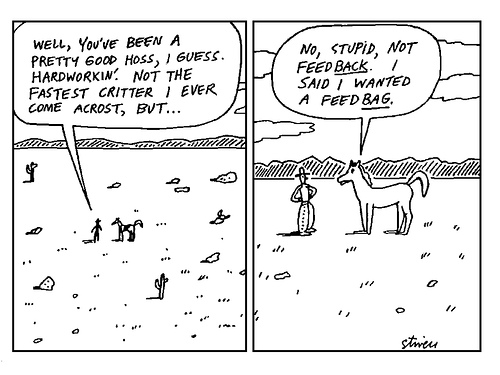
Sometimes our feedback can be a little misguided...
Sometimes our feedback can be a little misguided…

Know your kids – Love your kids

Growing up, the mother of one of my closest friends was an elementary school teacher.  When I graduated from college with a brand new teacher’s license in hand, she gave me a couple of books and some unsolicited advice.  One of the books was The First Days of School by Harry and Rosemary Wong.  The advice was “don’t smile until at least Thanksgiving.”

From Amazon: http://www.amazon.com/The-First-Days-School-Effective/dp/0962936022

The First Days of School was a great resource in setting up my first classroom, and knowing that this person was a great teacher, I tried to follow that advice.  The only problem…  I really like kids!  I couldn’t not smile at them.  They were curious, they were funny, and most of all, I knew they were going to be with me for a whole year.  Building a relationship with them was really hard if I couldn’t smile!

Some of you may be of the opinion that if you are a good teacher, it doesn’t matter whether or not the kids like you, as long as they respect you.  Let me ask you this…  How many people that you don’t like do you truly respect?  Kids don’t learn from people they don’t like.  Kids will learn from people they feel a strong relationship with.

Matt Miller: https://www.flickr.com/photos/126588706@N08/14726101996/in/album-72157645530010989/

Going back to our belief statements, building positive relationships is one of our top priorities.  It’s easy to have a relationship with the kids who do really well in your class and seem motivated to learn.  Those are the kids who know how to play school and probably have the most positive relationships.  Those kids are probably the ones who need you the least because they can build relationships easily.  The ones who need you the most are the ones who seem to not be motivated, or seem to not do well.  What have you done to build relationships with those students who don’t play school well?

The next time you look at your class, see who it is that you know the least about.  Seek out an opportunity to learn something about them.  Have a 2 minute conversation that has nothing to do with school or your class.  What are their interests?  What do they like to eat?  What did they do last night?  What do you know about their family?  Do this as often as possible until you know a few new things about each of your kids, then start again!

Remember the first day of school this year.  I asked you to do 2 things – Know your kids, and love your kids for who they are.  What steps have you taken this year to be able to know your student better?  Share in the comments below some of your successes.

Matt Miller: https://www.flickr.com/photos/126588706@N08/14746751544/in/album-72157645530010989/