The purpose of reading (part 2)

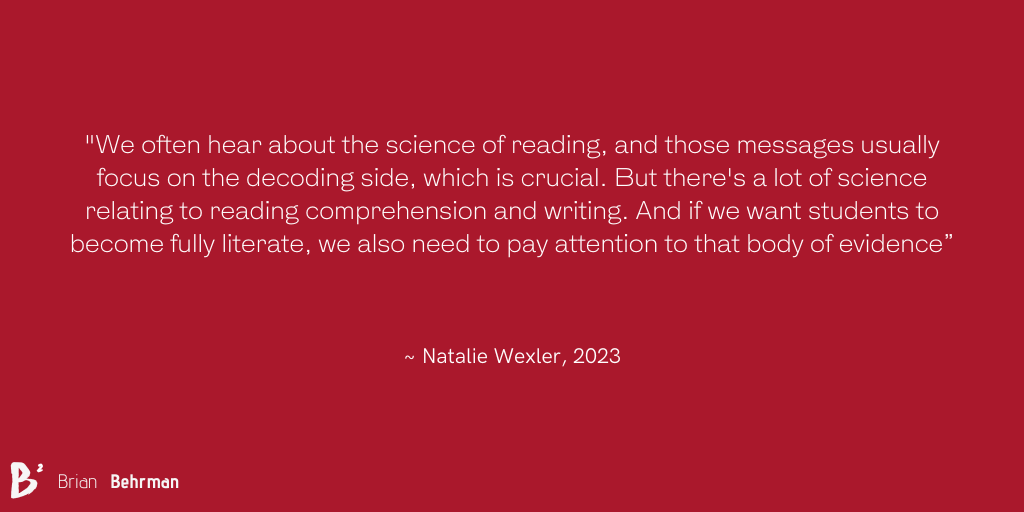
In last week’s post, I began to really dig into the concept of the purpose of reading. With our work around Science of Reading, we have really spent a lot of time, especially in our early grades, focused on structured literacy and skills like phonemic awareness, phonics, and decoding, but as Natalie Wexler reminds us:
What I was focused on in my last post (which you can see here) is digging into the idea that the ultimate purpose of reading is to comprehend the words that are on the page. At a conference I recently attended, Anita Archer shared the four things that all students must be able to do in order to comprehend:

  • Read the words accurately and fluently.
  • Understand the meaning of the words.
  • Have adequate background knowledge.
  • Focus attention on critical content.

Last week, I focused on the idea of accuracy and fluency. Today I’ll be digging into the idea of understanding words. In future posts, we’ll dig into building background knowledge and focusing on critical content.

As you know, I always love to understand the why behind what we do, so what does the research say about understanding the meaning of the words in relation to comprehension? I think we can all agree that vocabulary is related to reading comprehension. In fact:

“…one of the most eduring findings in reading research is the extent to which students’ vocabulary knowledge relates to their reading comprehension.”

~Osborn & Hiebert, 2004

I think we’d all agree that for our students to be able to read fluently, they need to know the words that they are reading. When our students don’t know the meaning of a word they are decoding during text reading, they must use context to figure out what the words mean. This added cognitive load takes away from fluency – one of the things that must be in place for solid reading comprehension.

There are several ways we can make sure that our students have that strong foundation in their vocabulary. Anita Archer suggests the following checklist to help build vocabulary:

  1. Use high-quality classroom language.
  2. Consistently use academic language.
  3. Read narrative and informative read-alouds in primary grades.
  4. Promote wide independent reading.
  5. Teach word learning strategies (context clues, morphemes, and resources like dictionaries, thesauruses, etc.).
  6. Explicitly teach critical vocabulary terms.

Over the years, I’ve spent time sharing about the work of John Hattie. His research says that vocabulary programs have an effect size of 0.67 (that’s pretty high, and definitely above the “hinge” point). In fact, Bob Marzano says:

“Direct vocabulary instruction has an impressive track record of improving students’ background knowledge and comprehension of academic content.”

So, what might a vocabulary instructional routine look like? This is the format that Archer suggests – just like with any other part of the five pillars of reading, it should be systematic and explicit. To do that, we should introduce the word, introduce the word’s meaning, illustrate the word with an example (and non-examples when it’s helpful), and then check for understanding. Let me take you through those steps a little more in-depth:

Step 1: Introduce the pronunciation of the word: You should display the word in some way, maybe on the screen, written on the board, or on chart paper. Then, read the word to the students and have students repeat it. With multi-syllabic words or more difficult words, repeat it several times. You might also have students read the word by parts, tap the word, etc.

Step 2: Present a student-friendly explanation: Tell the students an explanation, or have the students read an explanation with you. This might include using the word in a sentence, providing synonyms or antonyms, etc.

Step 3: Illustrate the word with examples: You might use concrete examples like having an object or acting the word out. You might use a visual example like an image or picture. Or you might use a verbal example to explain the word.

Step 4: Check students’ understanding: You might choose to do this in a few ways. You could ask deep processing questions, give the students think time, and then ask partner A to tell partner B. You might have students discern between examples and non-examples, so you might share a sentence and then ask students to say whether it is an example of the word or not. A third way you might check for understanding is to have students compare the vocabulary term with another term. You might have partner A share examples of ways the words are similar, and partner B share examples of ways the words are different.

Linnea Ehri tells us that if words have been read before and stored in memory, prediction strategies are not required for a reader to decode. When we can introduce difficult vocabulary words to our students in an explicit way before teaching, then our readers are better able to focus on their primary task in reading, comprehension.

What strategies have you tried in building vocabulary with your students? What has worked well? What hasn’t? Let us know your thoughts in the comments below!
What is the purpose of reading?

In the past few months, I have been deeply engaged in learning a lot about reading. What it takes to support our students in their reading growth, how do we create a foundation for learning to read, how do we assess where our students are as readers, and what do we do when a student is struggling. But even with all that learning, I don’t think I’ve taken a lot of time to reflect on the true purpose of reading. What would you say if you were asked? Pause and reflect on that for a second…

There are several things you might say. Some of the ideas that pop into my head have to do with gaining information about a topic, connecting information in the text to knowledge the reader already has or for the purpose of entertainment. Personally, I love to sit down with a good book and get lost in the words on the page, although I know this is not the case for everyone. But I think we can all agree that whether or not a reader sees reading as a joyful task, it is definitely a necessary task. Ultimately though, whatever the purpose of reading may be, it’s meaningless without comprehension of the words on the page.

In a recent post, I shared a little of what I had learned from Pamela Snow during my time at The Reading League’s Annual Conference (you can see that post on the connection between oral language and literacy here). But her presentation went even deeper than that connection, it also dug into the importance of comprehension in reading. She shared the following about reading comprehension:

Comprehension will suffer if a word has been incorrectly recognized, if the text includes words that are not in the reader’s oral vocabulary, if the linguistic structure of the text is overly complex, or if the topic of the reading material is so unfamiliar that the reader cannot make inferences (“read between the lines”) that are necessary to understanding the text. (Emphasis added by Snow)

Snow, Scarborough, & Burns (1999). What speech-language pathologists need to know about early reading. Topics in Language Disorders, (20)1, 48-58. (p.51)

While I agreed with the concepts of this statement and much of what Snow shared during her presentation, I was left hoping for a bit more on the how. I get the why of reading comprehension, but what can we do in practice to support readers in this area? That’s why I appreciated the afternoon session I attended that same day with Anita Archer. Her session that afternoon was titled Comprehension is an Outcome, not a Strategy. I’ll be honest, I wasn’t immediately familiar with Anita Archer’s name, however, I was mesmerized by her presentation. First, any presenter who can keep a room full of adults fully engaged for an entire one-hour presentation has my utmost respect. Most of the time I’m at a conference, I find myself tweeting out (X-ing out now… that just doesn’t have the same ring!) highlights of almost any session I’m in. I didn’t tweet once during this session. Not because there was nothing worthy of sharing, but because I was so engaged I didn’t want to look away. If you ever have the opportunity to hear Archer in person, you should absolutely take it!

Archer’s simple definition of comprehension is the act of understanding what you have read. But as educators, what do we need to do to make sure this happens? In Archer’s opinion, there are 4 things that all students must be able to do. The student:

  • Reads the words accurately and fluently
  • Understands the meaning of the words
  • Has adequate background knowledge
  • Focuses attention on critical content

What I loved about the presentation was that for each of these sections, she gave a little information on the research of why that skill is important, a checklist of things that we as educators should do to make sure that our readers are able to carry out these skills, and then a way you might go about teaching at least a piece of that skill. Today’s post is going to dig into the way we make sure that our students can read the words accurately and fluently.

First, though, why is this important? Here are a few pieces of research that help explain why our students need to read accurately and fluently:

Cognitive science has shown beyond a doubt that fluent, accurate word recognition is a hallmark of skilled reading with comprehension.

Adams, 1990; Rayner et al., 2001

…poor readers are almost always limited by their ability to use letter-sound skills (e.g., phonics skills) to identify unfamiliar words.

Ehri, 1998; Rack, Snowling, & Olson, 1992

Based on this research, it is imperative that ALL students get to the point of reading fluently and accurately. And it’s also important to remember that reading fluency is about more than just the rate of reading. There are actually three key aspects of reading fluency: Accuracy (decoding and recognizing words correctly), Rate (the pace of reading), and Prosody (use of intonation, stress, and phrasing). But how do we help all our students read fluently? Archer put together a checklist of what we should think about in order to be sure that our students have these skills (and it’s important to remember that these skills apply to all grade levels). If we are committed to making sure that all our students can read accurately and fluently, here are the things that Archer suggests we must do at our school:

  • Teach foundation skills to ALL students to mastery (print skills, phonemic awareness, letter-sound associations, decoding, fluency)
  • Teach advanced decoding of multi-syllabic words
  • Provide systematic interventions on foundational skills for struggling readers
  • Preteach the pronunciation of unfamiliar words before passage reading

A huge part of fluency instruction revolves around modeling, practice, and feedback. Strategies that can support fluency in reading might include scaffolded repeated reading, choral reading (teacher and class read together), echo reading (teacher or partner reads a sentence, and then students read the same sentence), recorded reading (have students record themselves reading a passage, then listen and self-reflect), read-alouds, and performance reading (like a reader’s theater).

When choosing to use a passage for repeated reading or any fluency work, previewing the text as the teacher is important. Are there print structures that might be difficult for students? Are there multi-syllabic words that students need support in decoding? Are there words that students might need to have pronunciation modeled? Once you identify those challenges, take a moment to pre-teach those structures or words. For pronunciation practice, you might read the word, show it to students, and have the class echo it back to you.

When we take the time to practice fluency routines, we set students up for success. When students are more successful in their fluency, they are able to better comprehend their reading. As you begin working toward that purpose of helping your students read more fluently and accurately, you are bound to notice higher levels of comprehension.

What are some of the specific things that you have found support the fluency work in your classroom? Do you have favorite tools or activities? Share with us in the comments below!

The connection between oral language and reading instruction

At the beginning of the month, I had the privilege to attend The Reading League’s 7th Annual National Conference in Syracuse, NY. I went with several others from our district. The goal of the conference is to develop a deeper understanding of the science of reading and learn about the implications for teaching and learning. In the coming weeks/months, I look forward to sharing with you some of my key takeaways from this conference. There were several amazing presenters!

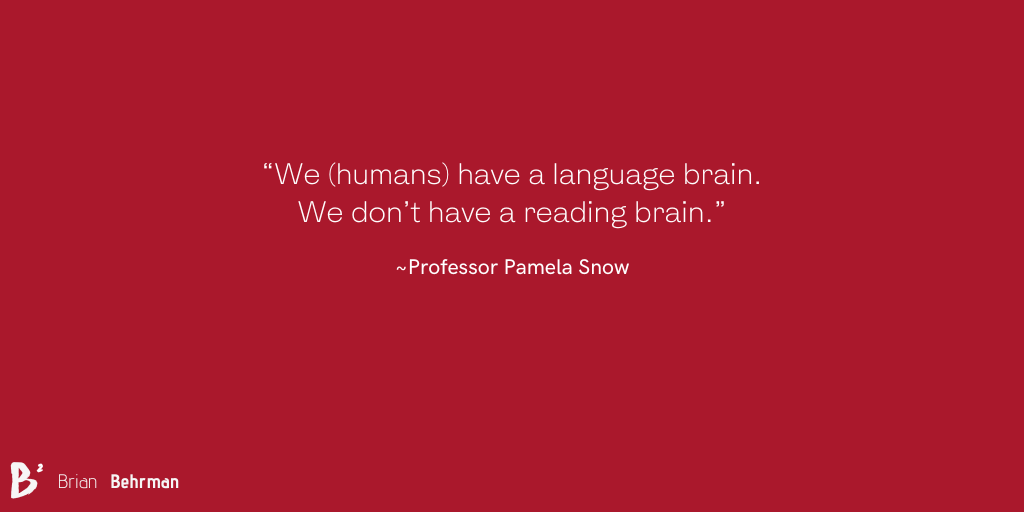
One of the first sessions I attended was led by Pamela Snow. She is a Professor of Cognitive Psychology Much of her work is centered around the early transition from language to literacy and the ways this transition is supported in the classroom. In that session, she reminded me of something that I shared in our recent PD on the Science of Reading – Human brains weren’t originally meant to be a reading brain. 

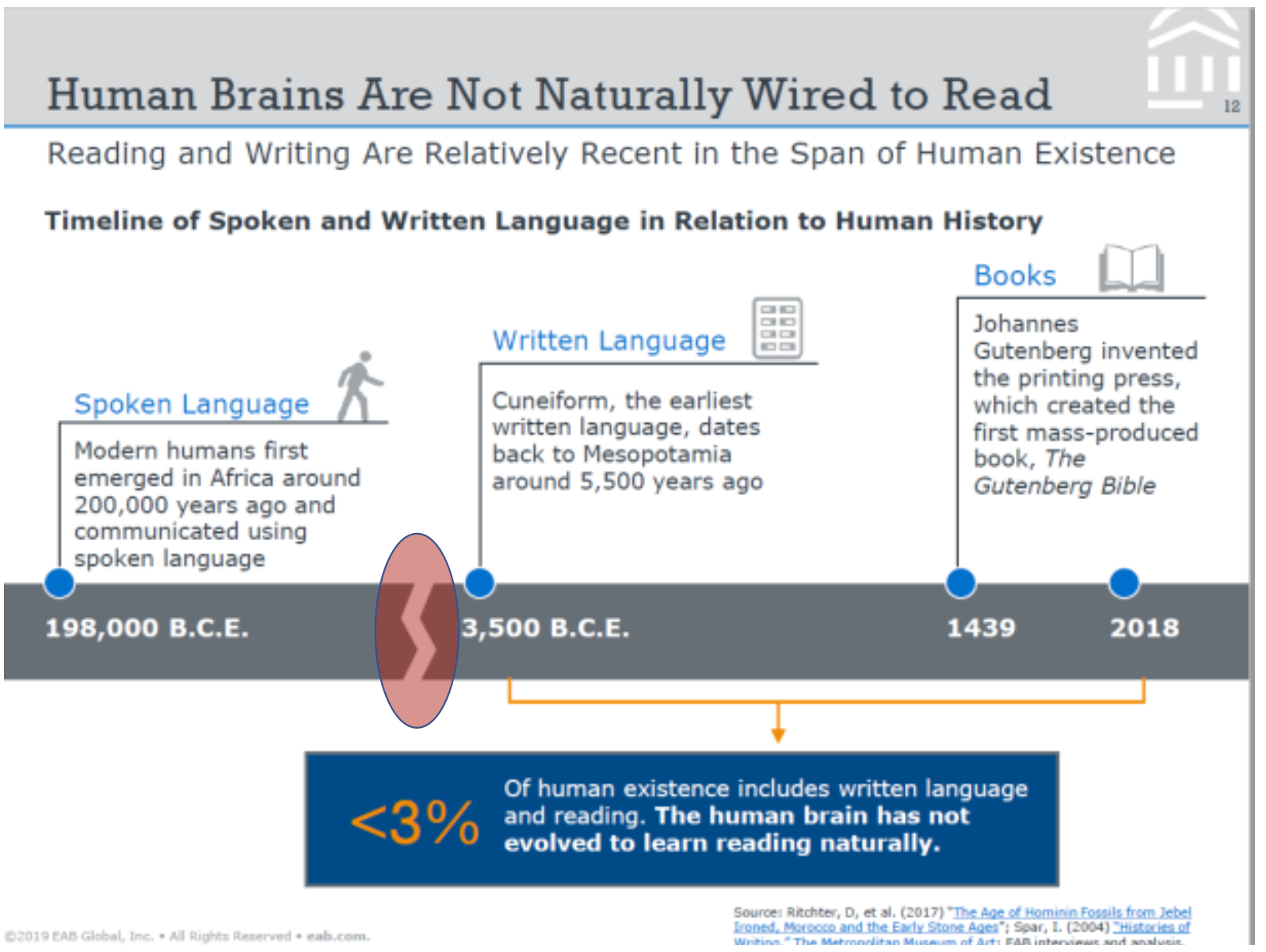
The chart below was one she shared during her presentation and served as a good reminder that less than 3% of human existence includes the use of written language.

What’s important for us to keep in mind given this information is the reminder that Language is a paradox (this theory comes directly from Pamela Snow) – “Humans have evolved a special facility for oral language, such that it is innate (biologically primary). We have a “language instinct.” However, it is highly vulnerable to a range of developmental conditions (e.g. hearing impairment, intellectual disability, autism spectrum disorder, brain injury, or developmental language disorder). For humans, language is highly sensitive to environmental exposure.”

At times, when a reader is struggling with transitioning from an oral language structure to learning to read a written language structure, or as a student expands their reading skills beyond the oral language skills they have been exposed to, students may struggle with their reading. Literacy (reading and writing), builds upon oral language skills (vocab, speaking/conversation skills, syntax, phonological/phonemic awareness). When students lack language comprehension (remember the reading rope?), they will struggle to read fluently, which will impact their reading comprehension.

Readers with strong oral language abilities are more likely to develop strong reading abilities. Those strong reading abilities in turn will increase a reader’s vocabulary and background knowledge, which will further strengthen their reading abilities.

So what does this mean in practice? It means that our classrooms need to not only be a literacy-rich environment (lots of reading and writing), it also needs to be an oral language-rich environment (listening and speaking). Whenever possible, for all levels of readers, we can strengthen oral language skills by building opportunities for conversation, narrative discourse (think storytelling), procedural discourse (explaining a procedure), and expository discourse (informative or persuasive). Ultimately we can think of the oral language as the engine of literacy skills, while high-quality instruction in language development and reading is the fuel for success.

What are some of the ways you support oral language in your classroom? Share your thoughts and ideas in the comments below!

Thinking about reading

Thinking about reading

Not that long ago, I wrote a post called Science or craft (you can see that post here). One of the things I talked about in that post was the fact that I felt as an educator, being involved in a series of “Reading Wars” was not beneficial to the concept of learning and growth. In my view, one of our goals as an educator should be to learn as broadly as we can on the topics that matter to us. As an educator who has an impact on some of the earliest learners, literacy must be a big part of my focus, and therefore it must be an area I am seeking continual growth. That has in turn led me to ongoing learning about the Science of Reading.

In the post referenced above, I shared that it felt as though there are some who view the teaching of reading as having two sides, and neither one saw value in the other. It made me a bit uncomfortable because I had taught in a Balanced Literacy Classroom for years of my career as an educator, and while that format had worked for me as a learner, and felt comfortable to me as a teacher, I could also see that there were kids who were not learning to read at the level they needed to. You see, I spent all my teaching career as a fifth or sixth-grade teacher. Once students reach that level, for the most part, they are no longer learning to read, rather they are reading to learn. As a content area teacher – teaching both science and social studies over the years as an intermediate school teacher, I expected students to come with me ready to use their reading skills to learn about our topics and standards. I did not feel equipped at that level to intervene and support their reading skills.

Over the years of working with some talented colleagues, I eventually better understood how to support my students who came to the classroom without strong reading skills – finding lower-level texts on the same topics, providing students with read-aloud recordings of the text, and more.

But in my current role, I now feel the challenge of how I help ensure that the students who leave my school are prepared to read to learn in their intermediate school classroom. I began to look for ideas that supported my beliefs about a learning environment, while also fulfilling the needs of students as learners. Luckily, I have a wonderful coach who I work with that recommended the book Shifting the Balance: 6 Ways to Bring the Science of Reading into the Balanced Literacy Classroom by Jan Burkins and Kari Yates. I’ve been digging into that book for a little while and found myself texting our coach on the evening I started the book telling her that I had lots of things to talk to her about.

Based on my reactions to the short time I’ve been reading this book, I’m guessing that this will not be the last time you see me referencing it here, but I want to share with you one of my biggest aha moments so far. And it has to do with how the human brain has developed.

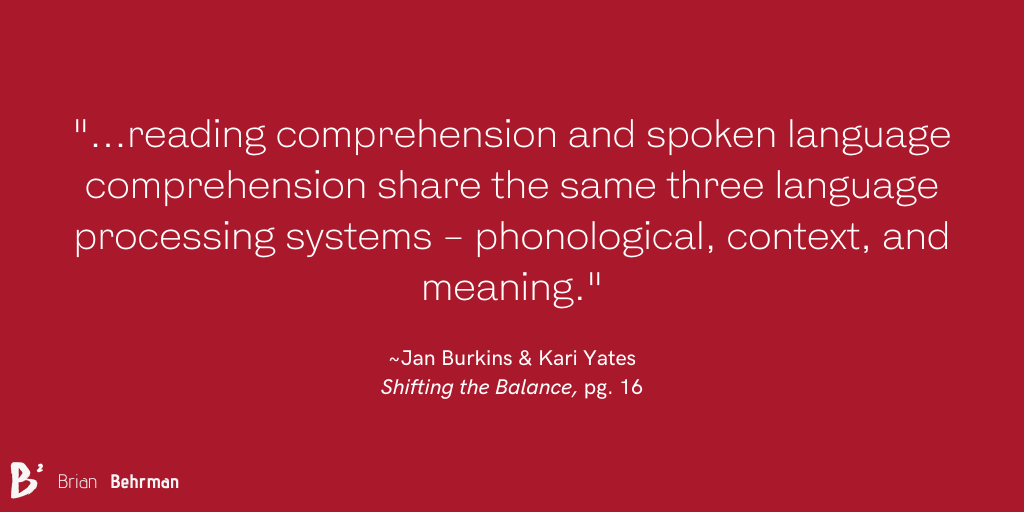
Going back to the earliest humans, the only way to share information was through the passing of stories verbally. What this means is that our brain got good at listening to what others said (this happens in the phonological processing system) and being able to respond with our own words and sounds. Hearing someone else speak would then cause our brain to retrieve the meaning of the words we hear (this happens in the meaning processing system). Then our brain uses our background knowledge to help us understand what meaning fits the context of what’s being shared (this happens in the context processing system). I imagine these different parts of the brain as something of a triangle, with information passing back and forth through each of these processing systems.

These three processing systems are genetically wired into the human brain and are a part of the system of thinking that we are all born with. It’s why a young child can often understand words before being able to say them. It’s why, even though I haven’t taken a Spanish class in over 20 years, when I hear someone speaking it, I am able to make meaning of pieces of that conversation.

This combination of processing systems has developed in the homo sapien brain over the last 150,000 to 200,000 years. So what that means is that our brain has adapted over that time to make comprehension of spoken language to be a natural skill that our brains can do. But written language has been around a lot less time than that. You see, most scholars generally agree that humans began utilizing written language about 5,500 years ago. Let’s think about what that means – for a little more than 97% of the history of modern humans, words only existed in their verbal form. After being spoken, they would disappear into thin air. Then, somewhere around 3,400 BCE, in Mesopotamia (modern-day Iraq), some of the earliest written language was developed. Now, the things that one person said could be recorded, exactly as they had said them, in the form of symbols, and be shared over and over again.

The huge aha moment for me comes from this point – written language is spoken language saved for later retrieval. Once retrieved, written words are put back into spoken language. I’m assuming that when you read, you can hear your own reading in your head. The speaking part of your brain is saying the words, and the listening part of your brain is hearing the words. What this means is that if our students cannot understand words and language when they are spoken, they will not be able to comprehend those same words and sentences when they read them.

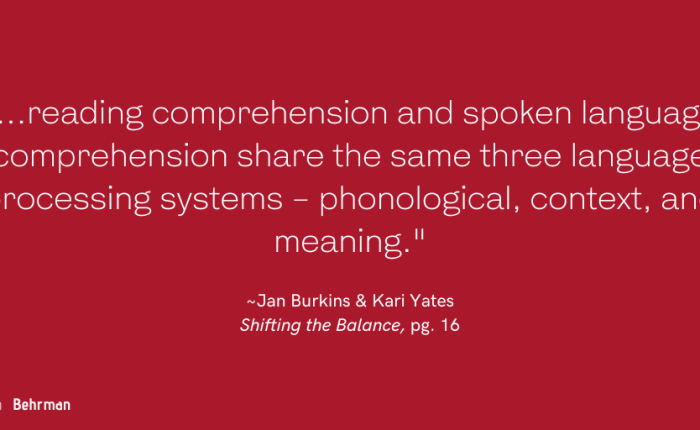
As Burkins and Yates point out:

What Burkins and Yates go on to point out is that opportunities to grow oral language actually help develop the comprehension mechanisms of reading. Now, let me be clear, just because a student has strong verbal comprehension does not automatically mean that they will be strong in reading comprehension, but it is definitely a stepping stone along the way. So, what does that mean for us in practice in the classroom? The following bullet points are ideas shared by Burkins and Yates, along with some of my thoughts relating to them:

  • Have a way to support language comprehension in your classroom – This would include utilizing read-alouds with rich language, things that will stretch your students’ thinking. Next, think about gathering text sets on a topic or theme representing multiple levels. Finally, have instructional routines to build and extend language (this includes conversations started by the teacher in a one-on-one or small group setting, questions to get students to explain their thinking, wait time for students to think and process, and repeating back to students what you heard them say so that they might be able to expand on it).
  • Use interesting words – One of my favorite things used to be encouraging students to notice and share interesting words they came across in their reading. We would use these words to create a list of interesting words that we kept in our writing notebook. Depending on your level, you could do something similar, or you could help students notice interesting words in your read-alouds to create your own list.
  • Engage in dialogic conversations – In their book, Burkins and Yates share a graphic on dialogic conversations. Check out the graphic below for a little more about what this might look like.

Ultimately, as teachers, one of the best ways we can help improve the three processing systems above is to create time and space for language within your classroom. This might be during a gentle entry time where students can play and talk, it might be in a daily community circle where students speak to one another and respond to interesting topics, or it could be through one-on-one or small group conversations happening during learning time either with the teacher’s support or with peers (think a turn-and-talk or small group discussion). The more work we do to support students in language comprehension, the more we help those processing systems be better prepared for reading skills.

Next week I hope to take a look at the next step – what happens in the brain when we start to feed written language into it, and how that has changed the processing systems that developed in the brain.

What strategies do you use to bring language into your classroom? Share with us in the comments below.

The power of the rerun

I try not to spend too much time sharing about the #educelebrities that I follow, or have had the privilege to meet, but for this week’s post, I’m back again with some more thoughts based on the day I spent recently with Cornelius Minor. One of the things he talked about was something he phrased as “The Power of the Rerun.” As a child of the 80s (I try not to date myself too much, but it’s my reality), reruns were a regular occurrence. Saturdays would often mean getting up, grabbing a bowl of cereal, and turning on cartoons. Unlike you millennials who might be reading or the Gen Z / post-millennials that we’re teaching, when you turned the TV on, you watched what was available. There were no streaming options. We couldn’t find what we wanted to watch on YouTube. Sometimes that meant watching an episode of GI Joe that you’d seen what felt like hundreds of times.

I have to be honest; I’ve always enjoyed reruns of shows. There are episodes of Friends that I have literally seen more than a hundred times, and yet I still laugh (pivot). I don’t know if I want to admit how many times I have watched the entire Breaking Bad series (probably still my favorite series of all time!), but I will share that it’s a lot!

What I love about rewatching a show is that often, I notice things I didn’t notice the first time. Maybe there’s a character that didn’t seem that important on the first watch that I now know is important later in the show. Or I might notice something that I missed in the background of a shot because I was so focused on the main action the first time. The rewatch allows me to dig a little deeper.

Now, I’m sure there are some that are wondering what in the world reruns of TV shows have to do with an education blog. This is where Cornelius comes in. While talking to us about ways we might model specific skills, he talked about the benefit of doing a reread of a text that was previously shared in class. The first pass of a story is a great time to introduce a concept or idea. If you are doing a lesson on character analysis, you might read a text where you want your students to notice what characters do over and over, so you read that text and ask students to pay attention to the actions of a specific character and ask them to think about what this teaches them about this character. That may meet a standard for you, but you recognize that your class seems to show clear understanding, or maybe even mastery right away. That might mean a reread of the book is a great time to do some deeper thinking about the text.

You see, once you’ve read a text one time, you have done most of the heavy lifting. The understanding of the story is already there. Vocabulary words have been defined and used in context. All your students have an initial understanding of what will happen in the story, so now we can go deeper.

Recently in our building, we’ve been spending a lot of our time in Professional Development focused on the power of the PLC. We’re really digging into each of the 4 key questions of the PLC. If you aren’t sure what those questions are, these are them:

  1. What do you want your students to know? (This one’s about knowing our standards, having a map, and identifying priorities)
  2. How will we know they know it? (This is all about how we formatively assess our students along the way, or how we summatively assess at the end of a unit so that we are ensured of student learning)
  3. What will we do if they don’t know it? (This is about what strategies might we try during a reteach to reach a student who didn’t understand the first time)
  4. What will we do if they do know it? (This is about how will we enrich the learning of students who seem to have already mastered the standard or skill)

So, when we think about the rerun of a text, it’s a great opportunity to approach skills that will enrich our students. What is the next level of the standard you are trying to teach? You might check the vertical alignment of your standard so that you know what your students will be expected to know or be able to do next year. During a rerun, you can push your students to a higher depth of knowledge because there is already an initial understanding.

I’d love to hear about other ideas related to the concept of a “rerun” in reading. Have you ever used this strategy? How did it go? What worked well? What would you think about differently? Share your thoughts in the comments below!
Literacy as the foundation of everything

About a month ago, the Indiana Department of Education put on the Get Your Lead On (GYLO) conference for leaders all over the state. I heard about it, thought it looked interesting and signed up as soon as possible. I am a big fan of the learning that happens at events like this – there are keynote-style presentations, break-out sessions, and then a closing session. And of course, there’s also the time to chat with others in between sessions – those are some of my favorite moments (and best learning moments) at any conference! The first thing that I’ll say about GYLO is that it was fun!

One of the speakers that day was Todd Nesloney. I first heard of Todd as an author when I was introduced to the book Kids Deserve It! He was a teacher, elementary principal, and is now the Director of Culture and Strategic Leadership for the Texas Elementary Principals and Supervisors Association. He led the second session of the day all about Literacy.

As an elementary principal, I see literacy as the key to everything we do at school, which was in line with what he had to share. In today’s post, I want to share with you some of what I learned from Todd, as well as some next steps that I want to lead in our building.

First and foremost, Todd made it quite clear that he sets the expectation that he will celebrate reading in all that he does. Let’s take a moment to reflect on how much we use reading and writing in our daily lives – from the start of my day check-in with my to-do list to some bedtime reading, text is something that I see constantly, and it’s going to be something that our students will use throughout their lives as well. Even more reason to put literacy front and center in our schools! One of the ways that he celebrated literacy during the day was that he took small moments out of each of his presentations to do a quick book talk. He’d share a title, a bit about the author, and a bit about the story. I walked out of the day with several new items in my Amazon cart!

Next, he talked about ways that he would celebrate reading as a leader. The bullet points below are just a few of the ideas he had. I encourage you to think about how/what you might implement in your setting to celebrate reading.

  • What we’re reading – When Todd was an administrator, he created a graphic in Canva that he then printed out for every staff member. At the top it said “What is Mr. Behrman reading?” then there was some space, and then at the bottom, it said, “What are you reading?” The document was laminated. If you wanted to, you could print out a picture of the book cover, or you could just use a dry-erase marker to write the title of the book. This was for all staff members, not just teachers. He included secretaries, custodians, cafeteria staff, and more! This is something I hope to get rolling at my school soon!
  • Book Talks – Todd started adding short book talks to the morning announcements. In time, he asked teachers to share their own little book talks for the announcements. Eventually, they got to the point that students were creating book talks on the things they were reading. What better way to celebrate the reading that was happening than allowing students to share the books they loved!
  • Reading Photo Wall – Each time a student finished a book, they could bring their book down to Todd’s office. He’d take their picture, print it out, and then hang it on the reading wall in the cafeteria. It made reading visible to all students. What if you did this within your own classroom? Or on the wall right outside of your classroom?
  • Guest Readers – Anytime someone visited Todd’s school, they were asked to bring a book along. Before they did anything else, Todd would take them to a classroom and have them read their book. If someone forgot, they’d go to the library to pick out a book! A variation of this is the mystery reader. As a teacher, you can ask parents to sign up for a day to come and read. Have them share a few clues about who they are so the class can try to guess. Then, on the day of the reading, the class can find out of their guesses were correct or not.
  • Email signature – Those of you who are reading this blog and who receive emails from me may have noticed I already implemented this. At the bottom of my email signature, I added a place that says “What I’m currently reading:” Then I went online, copied an image of the cover of the book, and pasted it into my signature. If you notice that the same book is in my email signature for more than a few weeks, let me know you noticed! That means I’m not reading enough!

There were a ton of other ideas shared during this hour-long session, and while I’d love to share more of them, I think this is a great place to stop for now. One thing I would leave you with was what Todd shared about high-interest books:

One of the most difficult conversations for me to have with a student is when we are in the library, and I offer to help a student find a book, and when I ask them what they want to read they say something like “I need a level L book.” Where is the celebration for reading that comes from that? As a fifth grader, I read Garfield books like crazy, but wouldn’t challenge myself. My 6th-grade teacher allowed us to pick what we wanted, and I read a ton of Stephen King books. Something about the suspense kept me engaged, and I read more that year than I ever had before. Because my teacher allowed me to pick a book I loved, I became a reader who always had at least one book to read at any given time (currently I’m reading 4 different books, and will pick up a different title depending on my mood).

What are your thoughts? Do you have ways to celebrate reading that are not included here? Let us know in the comments below. We can all learn from one another!

The Global Read Aloud

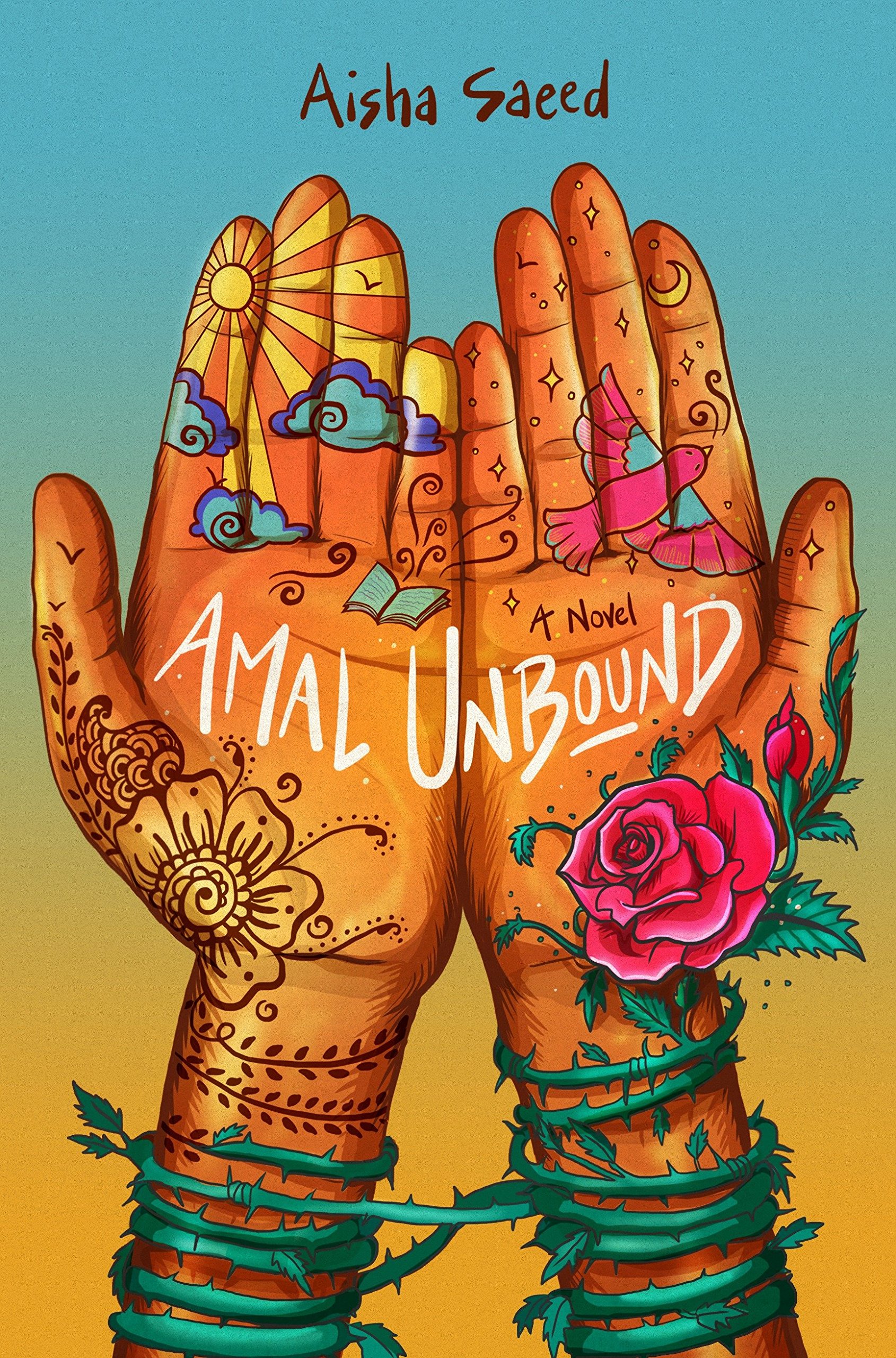
This summer, my Twitter feed was blowing up with pictures and quotes from a couple of books that sounded really interesting – Amal Unbound by Aisha Saeed and Refugee by Alan Gratz. Each post also had the hashtag #GRA18. For me, when the same hashtag or same topic keeps showing up in my Twitter feed, it’s time to do some research. I quickly learned that #GRA18 was the hashtag for the 2018 version of the Global Read Aloud.

I recall hearing something about the Global Read Aloud in the past, but I always thought it was based on picture books and related more to younger students. However this year I noticed that the titles I was seeing were books that I knew our students would be interested in.

Basically, the Global Read Aloud was a project created by Pernille Ripp, a 7th grade teacher and author who lives in Wisconsin. On the Global Read Aloud website, she explains why she started a project like this:

Global collaboration is necessary to show students that they are part of something bigger than them. That the world needs to be protected and that we need to care for all people. You can show them pictures of kids in other countries but why not have them speak to each other? Then the caring can begin.

I’m assuming we have all participated in a book study of some sort or another. You might have read a professional book with some colleagues, you might have a neighborhood reading group, or connect in some other way. What I love about reading a book as part of a group is the opportunity to hear the perspective of people with a wide variety of experiences. Each person’s perspective may allow them to connect to the story in a different way. Through learning about their impressions from the story, we learn about how others may be similar, or different than us. In a recent interview of Matt Miller, he shared that he feels part of the power of global conversations is that “we want our students to understand that though it may seem like we don’t have a lot in common with people across the world, we actually do.”

Hopefully, some of you are interested in participating in this great experience, and you might be wondering how you go about getting started.  First, you have to sign up. You can do that at the Global Read Aloud website – you can sign up by clicking here!

Amal Unbound

Next, you have to choose your book.  There are two books that I think would be age appropriate for our students.  The first book, Amal Unbound, is the story of a girl named Amal, a typical Pakistani girl pursuing her dream of becoming a teacher one day. The other book that some of you might consider is Refugee, a story of three children – Josef is a Jewish boy living in 1930s Nazi Germany, Isabel is a Cuban girl in 1994, and Mahmoud is a Syrian boy in 2015. All three go through amazing journeys in search of refuge from their homeland. RefugeeBoth of these books are available on Amazon, although you can probably find them at any bookstore!
Once you have chosen your novel, you would then decide what level of connection you’d like to have. On the most basic level, you might choose to connect with another class in our school that is participating. If you’d like to connect with classes outside of our school, there are lots of ways you could do that. Searching the hashtag #GRA18 on Twitter will connect you with tons of others who are participating. If you’d prefer, there is also a Facebook connection through The Global Read Aloud Main Group, as well as groups that are specific to each of the books. Here I’ve seen posts of people seeking connections, sharing resources they have created, and communicating about their ideas.

If you are considering participating, and would like a ton of information about the Global Read Aloud, click here.

If you are looking for the schedule for the Global Read Aloud, you can click here.

If you do choose to participate, let me know! I read both of the books, and would love to talk with your students about their thoughts!

The innovators

I’ve recently been reading a book called The Innovators by Walter Isaacson.  If you don’t know anything about Isaacson, he’s written biographies about Ben Franklin, Henry Kissinger, Albert Einstein, and Leonardo Da Vinci, but several of his other books are more about groups of people who have played a role in some way – one book, titled American Sketches, is about some of the great leaders and creative thinkers of our society.

The InnovatorsThe Innovators has the subtitle “How a group of hackers, geniuses, and geeks created the digital revolution.”  This book caught my attention for a couple of reasons – first, I’ve always been something of an early adopter of technology.  I love to check out new and exciting innovations.  A second reason that this caught my attention is that I’m always curious about how people made the leaps to take us from the earliest computers (devices that took up entire rooms in the basement of college buildings or at military bases), to the technology that I can hold in my hand every time I pick up my iPhone.
Innovation is something that we often think of in terms of those big leaps.  When I was in sixth grade, my elementary school was renovated, and one of the classrooms was converted into a computer lab.  The first time we walked into the computer lab as a class, we saw a room with about 30 IBM computers.  The only thing that I remember being able to do on those computers was a keyboarding program that began the process of teaching me to type.  For me, this felt like a HUGE innovation.  Little did I know how much more our students would be able to do in the future.

The chapter that I am reading right now is all about software, and one of the big names in the development of computer software was Bill Gates.  Early in the chapter is a quote from him about what an innovator is:

An innovator is probably a fanatic, somebody who loves what they do, works day and night, may ignore normal things to some degree and therefore can be viewed as a bit unbalanced.

Reading about Gates, and many of the others who appear in the book, I can see how this definition certainly applies to innovators.  Here’s the thing though – I think there are times that you could substitute the word teachers for innovators and that definition would still work (I know my friends think I’m a little unbalanced to spend so much of my time with 10, 11, and 12 year olds!).  We are all something of a fanatic about what we do – we’re fanatics for our kids.  We love them, we want to help them learn and grow, and we want them to be successful.  I know that our efforts to get there make us all feel a little unbalanced at times.

One of the things that I have taken away from the book The Innovators is that the transition to the digital revolution was NOT made up of several giant leaps.  Instead, the innovations that have led to the amazing technology that I am able to carry in my pocket has happened because of little steps layered on top of one another.  And more often than not, those innovations were not made by any one person.  People such as Ada Lovelace, Alan Turing, Robert Noyce, Grace Hopper, Bill Gates, Steve Jobs, and Larry Page (along with so many others) all played important roles in the digital revolution, but the steps of each of these people built on the ideas of others.

We as teachers need to remember that as fanatics, it may not always be easy to get our students to learn and grow as quickly as we want them to.  They may not be immediately successful, but if we continue to innovate in our teaching, if we continue to try to reach kids in new and exciting ways, we are going to be able to reach more of them.  We also need to remember the value in teamwork for our students to learn.  Just as so many of the innovators mentioned above found success by building on the ideas of others, you may find success with a student through strategies others share with you. Whether it be a teammate, your PLC team, someone down the hall, or any one of the multitude of other people in the building, there are others who might have an idea that helps you get that kid to move forward.

What are some of the things that you are fanatical about?  Have you ever tried something new that seemed to be the key to reaching that kid?  Share you experiences in the comments below!

What did you do this summer?

It’s that time of year – my summer break has ended and I am back in the office preparing for a new school year and the new group of Hawks that will be coming into our building.  As I’ve been at school, I’ve been running into a lot of people that I haven’t seen much during the summer.  Invariably one of us ends up asking “What did you do this summer?”  It’s exciting to get to hear about the awesome things that my friends have been doing, or to share the fun things that I did with my family.

In all my years as an educator, there is one other thing that I have done consistently every summer – it’s been an opportunity to learn.  I always have a stack of professional reading that I want to complete (currently there are 12 books in that stack).  At the beginning of the summer, I grabbed a couple of books from the stack that I really wanted to read, and they came home for the summer.  When someone asks about what I did during the summer, this isn’t something that I always think to share in those conversations, but I think there’s great value in sharing our learning.

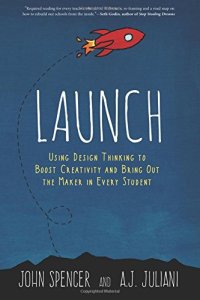
The first book in that stack was one that I had started reading prior to the end of the school year.  Launch: Using Design Thinking to Boost Creativity and Bring Out the Maker in Every Student by John Spencer and A.J. Juliani was so intriguing that I ended up putting together a PD session to share at Launching Inquiry.  Design Thinking is all about creating the conditions to allow students to use their curiosity to find things that they can make and share with a real audience.  Innovative activities like this will empower our students to find problems in their own world, and then seek out meaningful solutions – we can help to give them the tools.

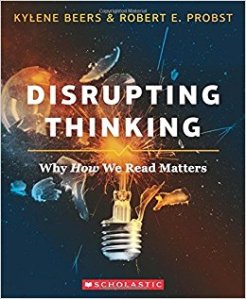
My second book this summer was Disrupting Thinking: Why How We Read Matters by Kylene Beers & Robert E. Probst.  In this book, the authors lay out a framework (called Book, Head, Heart) to help us all understand that there are multiple types of thinking going on when they are reading.  While it is important that kids know what’s happening inside of the book (able to summarize, notice what the author is doing, and understand the theme of the book) Beers & Probst also point out how important it is to recognize what you’re thinking about in your head, and how the book makes you feel.  Each piece is an important part of the interaction that takes place between a reader and the text.

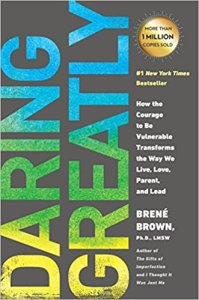
The third professional book, and one that I haven’t yet finished, is Daring Greatly by Brene’ Brown.  In this book, Brown pushes us to understand that vulnerability, or the willingness to put ourselves out there, is part of what brings meaning to our lives.  Without being vulnerable, and willing to dare to do great things, we risk not really living.  It’s scary to make ourselves vulnerable, but only through going out on that ledge can you accomplish great things.

I look forward to continuing my learning – it truly never stops.  As you think about what you did this summer, I’m curious – what did you learn about?  As educators, we’re all committed to being lifelong learners.  Sharing with others, including our students, is a great way to further our own learning.  Share below anything that you learned this summer!

#BookSnaps

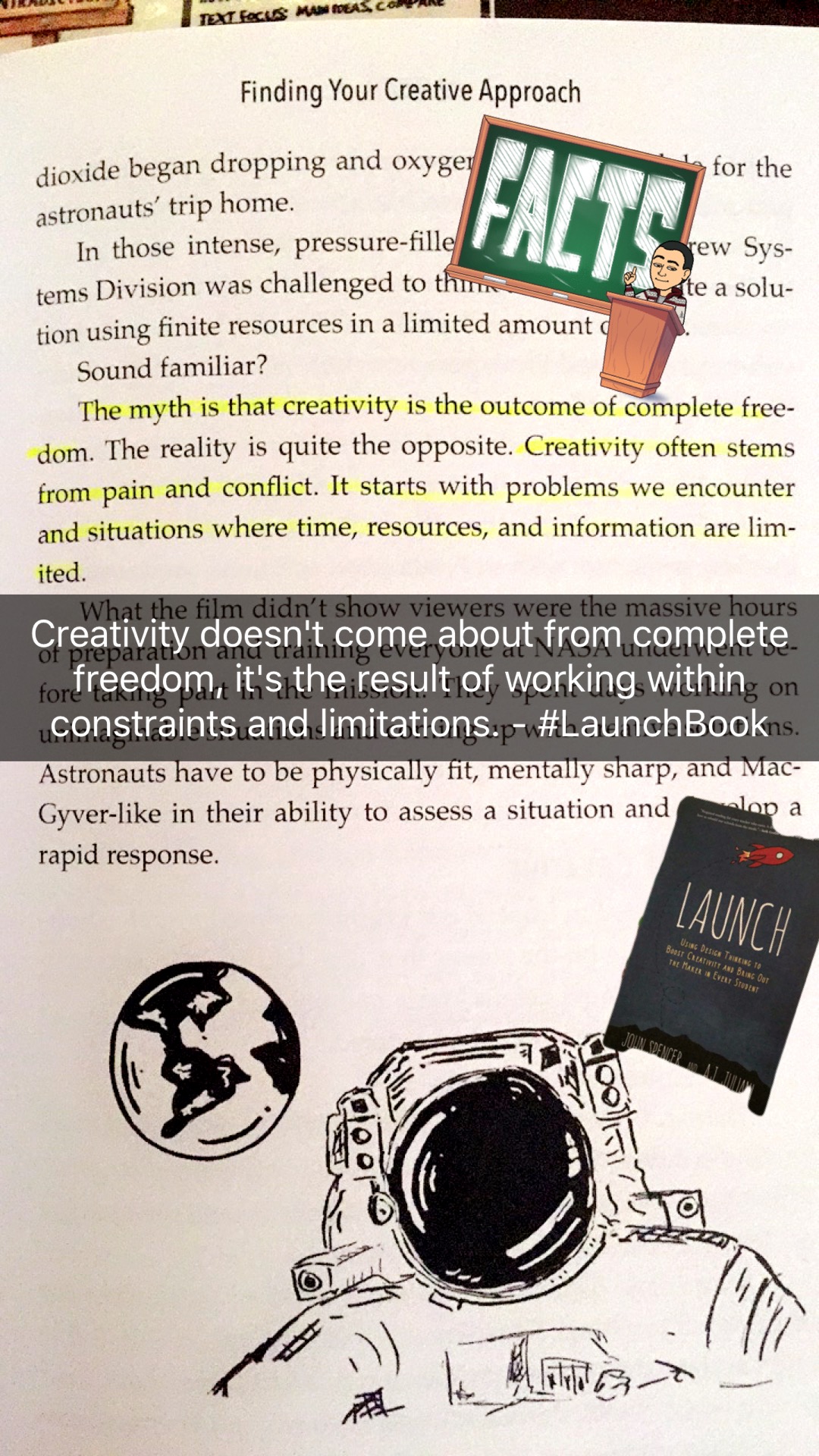
This is a BookSnap I created while reading the second chapter of the book Launch by John Spencer and AJ Juliani

If you are on Twitter and follow any of the same people that I do, you have probably noticed people posting pictures of text, sometimes with highlighting, adding emojis, bitmojis, or text, and then posting it on Twitter with their own comments.  Normally if you look at the comments, you will see the hashtag #BookSnaps linked to it.  Even if you aren’t on Twitter, you can see what people are posting by clicking this link: Twitter #BookSnaps

If you go to Twitter and check this out, you will probably notice that most of the posts here are educators who are sharing their personalized professional reading with their Twitter followers.  If you look closely though, some of what you will find is teachers sharing BookSnaps that students created in their classroom.  It got me started thinking about how some of you might be able to use them in your classroom.  Check out this student created BookSnap that the teacher then added some additional comments to:

This BookSnap was created by a student on SeeSaw and then shared by a teacher.

Most of the ones that you see are using SnapChat in order to create and share.  For those of you that know what technology your students are using, SnapChat is a pretty popular app.  But here’s the thing, there are ways that BookSnaps could be created using other apps that don’t involve the social network aspect of SnapChat.  Any app that allows you to pull in your own pictures and add text, drawings, and emojis could be used in the same way.  The student created example to the left was created using SeeSaw.  Some other examples that come to mind are Skitch, Google Drawings, various PDF annotating apps, and even Instagram.

Think of the potential engagement for your students if you asked them to create their own BookSnaps.  Could you imagine what they would say if you told them to open SnapChat or Instagram in class?  In ELA classes, you could have students create a BookSnap when they run into a Notice and Note signpost.  You could have them create one to identify the climax in the book they’re reading, or create one based on their own writing, identifying specific plot points.

And don’t say “I’m not an ELA teacher, this doesn’t apply.”  I could see real potential for BookSnaps in nonfiction reading as well – identifying the main idea in a science article.  Sharing things that surprised them as they are reading about some historical figure.  Responding to the 3 Big Questions from Reading Nonfiction by Beers and Probst.

I could even see integration into math class – MathSnaps could be a thing (acutally I just checked, and it is a real thing on Twitter)!  You could have a kid snap a picture of the answer to a problem and then add text describing how they came to that answer.  Or there could be ArtSnapsMusicSnaps, or GymSnaps.  The limitations are only bound by the creativity of how to integrate this technology.

As for how to share, again, the options are probably endless.  If you’re already using SeeSaw, that’s an easy option.  Other ideas I’ve seen include Google Slide Decks, a class shared PowerPoint (these options allow everyone can see what BookSnaps other kids have created based on the same reading assignment), or even something as basic as emailing it to you (although a way to share with classmates would make the audience so much more authentic and meaningful).  Once kids have shared them with you, find a way to share beyond the walls of your classroom.  If you’re on Twitter, tweet it out with the #BookSnaps hashtag – others will see it.  You could also put it out on Instagram or Facebook – both have people actively using this hashtag.  If you don’t have social media, you could have students print them out and put on their locker, or create a BookSnaps bulletin board.

If you are still at a loss for how you even create a BookSnap, there are some great resources from Tara Martin.  You can find her on Twitter at @TaraMartinEDU or @BookSnapsREAL.

On Martin’s blog, she’s also created some how to videos that could be useful to see how she puts a BookSnap together.  Check it out here: http://www.tarammartin.com/resources/booksnaps-how-to-videos/

I know I’ve got some creative people in my audience.  If you have an idea for how BookSnaps could be used in the classroom, please share in the comments below.  My ideas above are simply ones that have come to me in the past couple of days.  You might have something that I haven’t thought of – or possibly never would.  Let us know!

If you begin using BookSnaps in the classroom, please share them!  Use the #RSIHawks or #RSIReads hashtag in your post!