Sometimes it’s ok to ditch the tech too!

WritingIn a previous post I talked about the misconception that some have about HSE21 being all about the device.  Just a reminder here – IT’S NOT!  Technology can allow us to do some really cool things, it can help us be more efficient, we can collaborate more easily, you can create and carry out awesome formative assessments, and you can use technology to help you grade papers more quickly.  There are many more things that technology can help us with, but there are also times it gets in the way.  Remember that the HSE21 best practice model is about so much more than an iPad.  It’s also important to remember that just because you are using an iPad for an activity, it doesn’t mean you are “doing” HSE21.

Sometimes an app doesn’t work the way we expect it to.  Sometimes wifi issues prevent our students from being able to access what we need them to get to.  If you’re using a computer in the lab, the amount of time it takes for a student to log in can take away from their ability to be productive.

Ultimately, our pedagogy must drive our technology, not the other way around.  Good teaching will always trump a good tool.  Someone could put me in a wood shop with every imaginable tool, but without the knowledge of how to use those tools, anything I built would not be something I would want to put into my room (except maybe in the back corner of the garage!).

Avoid the $1000 Pencil

You all know that I love technology.  I consider myself an early adopter of most types of technology, quick to try things out to see if it can fit into my life.  Anymore I can’t go for a run, bike ride, or sometimes even a walk, without my GPS enabled device to tell me how far I went, what my average heart rate was, and the average speed or pace I was traveling.  However, when we look at the classroom, learning has to be the focus.  While I would love to see a classroom where everything is being done digitally, sometimes due to challenges that method is not efficient.  There is nothing wrong with an exit slip that is actually on paper, or a quick formative assessment of thumbs up or down.  Don’t be afraid to try to integrate tech where it works, but don’t do it at the sacrifice of helping our students to learn and grow into the best they can be.

What are some times you have chosen to ditch your tech and had a positive outcome?  Share a few of your experiences in the comment section below!

What I’m thankful for…

ThankfulAround this time of year, I think it is natural for all of us to take a moment or two to reflect on the things that we are thankful for.  As I was thinking about a post for this week, I decided that the most sensible thing to do was to share some of the things that I am thankful for.

  1. The staff at RSI – First and foremost, I want everyone here at RSI to know how much I appreciate all that they do!  I’m consistently amazed by the commitment, time, and passion that you all put into everything that you do.  It is a rare day that I am the first person here, or the last person to go home.  When I come in on the weekends, I often see several of you here.  The dedication to your craft and your students shows in all that you do, and it makes me happy to be able to come here and be a part of that!
  2. Our students – Here in HSE we have some awesome students.  Every day that I’m here, something happens with a student that makes my day.  Whether it be watching something click in their learning while they are in a classroom, counseling them through a difficult situation, or providing them with tools that will allow them to learn and grow more successfully, I love it!  One of the consistent messages of my posts this year has been the importance of relationships with our kids.  I look forward to the opportunity to continue to build meaningful relationships with the kids who walk through our doors each day.
  3. Our families – It is rare that I have anything but positive interactions with the families of our students.  Most of the time I am able to pick up the phone, have a positive conversation about their student, and come up with a strategy that will allow them to learn and grow.  I always remind myself that the kids I’m talking to are just as important to someone as my kids are to me.  If I keep that in mind, and help the family understand that my goal is to help the kids in our school learn and grow, we tend to end up with a positive outcome.
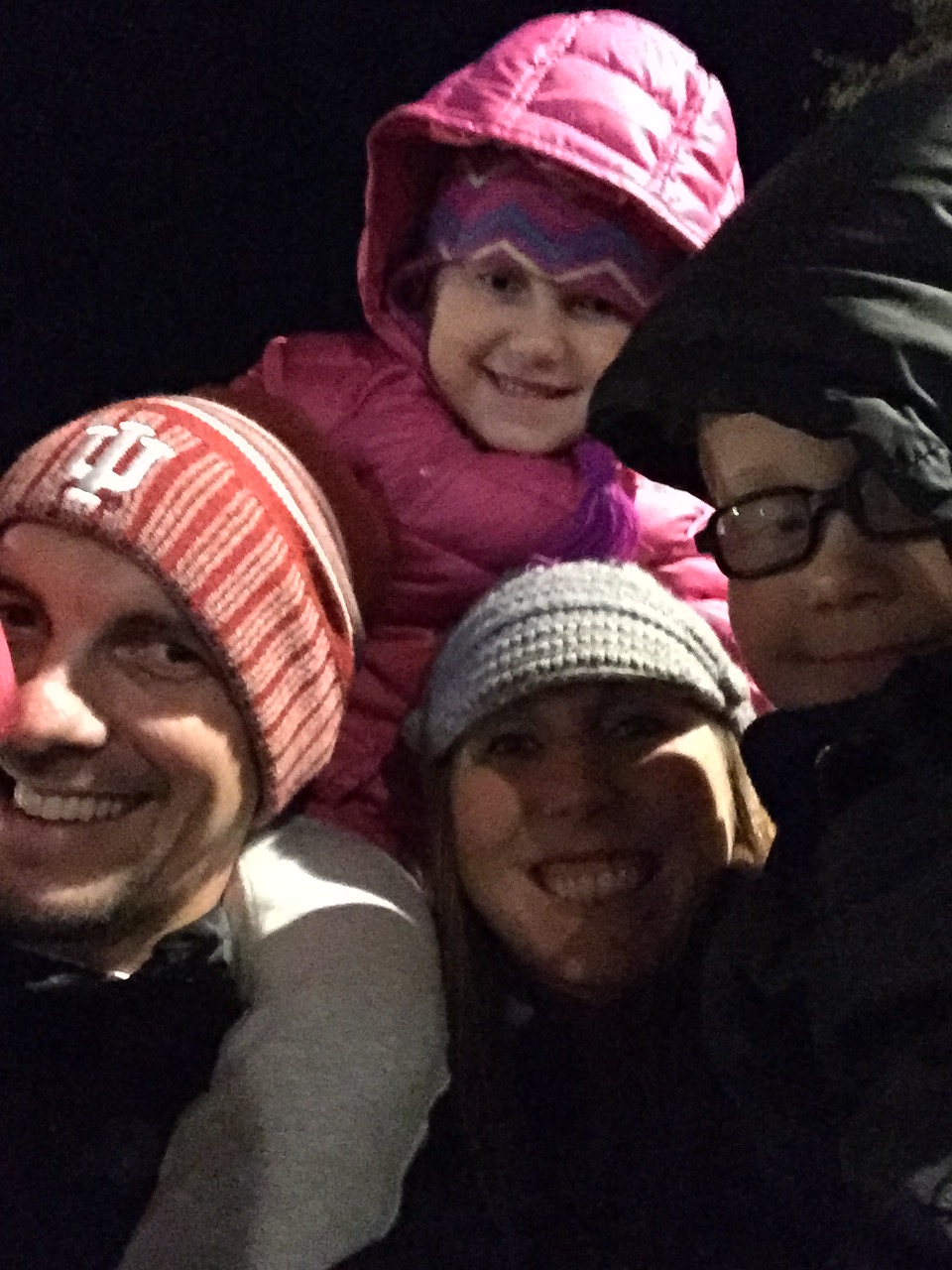
  4. FamilyMy family – I wouldn’t be the person I am today without my family at home.  They help keep me centered.  No matter how difficult a day is here at school, I know that I can go home and see my wife and kids, and that stress just melts away.  The support they give me, the laughs we have, and simply time together is such an important part of my life!

I could probably continue this list, but it is almost Thanksgiving, and I don’t want to take too much of your time!  I hope you all have a wonderful Thanksgiving break that allows you to get just what you need to recharge for what’s left of the first semester.

What are some of the things you are thankful for?  Feel free to share in the comments below!

How to influence students

Why did you become a teacher?  Why do you choose to spend your days with kids?  Money and fame don’t generally go hand in hand with education, so that was probably not the motivator.  For most of us, we do what we do because of a desire to make a difference in the lives of children.  We want to be a positive influence on their lives.

Matt Miller - https://www.flickr.com/photos/126588706@N08/15133710045/in/album-72157645530010989/
Matt Miller – https://www.flickr.com/photos/126588706@N08/15133710045/in/album-72157645530010989/

One of the most well-known books on influencing people was written in 1936 by Dale Carnegie.  In his book How to Win Friends and Influence People there are 6 lessons that could help you to be able to better make a difference in the lives of your students.

  1. Make the other person feel important – and do it sincerely – “good job” isn’t quite enough here. Give true feedback that helps students know that you value the work they are doing.  Remember that an assessment is ultimately about feedback, especially formative assessments.  Let students know what they are doing well , and let them know where you are seeing their struggles.  Work together to set goals to improve in the area they are struggling!
  2. If you are wrong, admit it quickly and emphatically – given that each of our students has an iPad with easy access to Google, the odds of making a mistake and being caught in it are high. Admitting to it shows students how to take responsibility for mistakes will help them do better in their own future.  Also remember that mistakes aren’t always just about the content.  Sometimes our mistakes are in how we might react or treat our students (or others for that matter).  I can’t tell you the number of times I have apologized to kids because I didn’t have the full story, or was acting on assumptions.  If the apology is heartfelt and emphatic, it will smooth over the conflict that may have existed otherwise.
  3. Get the other person saying “yes, yes” immediately – the more times someone says yes, the more positive of a mindset they are in. Ask some simple questions with yes as the answer to get your kids in a positive frame of mind.  I’m currently reading Thinking Fast and Slow by Daniel Kahneman.  He discusses the idea of priming the brain.  In one study, people were asked to hold a pencil in their mouth.  Different groups were told to hold the pencil in different ways.  Some held the pencil with the eraser pointing to the right.  Others were told to hold the pencil so that the tip was pointing away from them.  Try it!  You’ll find that one way causes you to frown, while the other way causes you to smile.  People were then asked to look at The Far Side comics while holding the pencil in their mouth.  People who were smiling while looking at the comics reported that the comics were funnier than those who were frowning.  What’s happening?  The fast part of your brain is taking over and telling you that if you are smiling, you must be happier, the comics are funnier, etc.  We all have probably experienced a time where we were having a tough day and we just tried to smile through it, and things actually got better.  That old adage of “grin and bear it” may actually hold some water!  If you can prime your students to a positive state of mind at the beginning of class, they will be in a better mood, more likely to work, and more likely to report that they enjoy school.  All are wins!
  4. Talk about your own mistakes before criticizing others – did you struggle with your math facts? Could you never correctly diagram a sentence?  Share your struggles with your students so that they know they aren’t the only ones to make a mistake.  Not only does it show that others have challenges too, it is another way to connect with your kids!  I can’t tell you how many times I’ve shared with students about the time I got busted cheating on a timed test in math in 3rd grade (Sorry Mrs. Langhoff!).  The kids always have a laugh, but then we are able to come up with a strategy so that they can feel successful!
  5. Ask questions instead of giving direct orders – adding the words “would you” to any request makes it seem to our students as if they have a choice. It’s a small change, but it allows them to feel as though they have a choice, even if they don’t really.  The 2 + 2 method can also help with this: If you do this then…, if you do that then…  When we list the positive choice and the positive consequence first, most kids make the choice that we want them to make.
  6. Dramatize your ideas – a visual lesson will stand out to our students much better than any lecture.  If you want your kids to learn something well, act it out!  Or, even better, have a student or group of students act it out!  It accesses a different part of the brain and leads to more long term memory transfer!

Have you ever used any of these methods without intentionally or unintentionally?  What have been your results?  Share some of your thoughts in the comments below.

Reading as a way of learning

ReadingWhen posting on the blog this year, I have mentioned several books that I have read in connection to my topics.  A few of you have asked me questions along the lines of “how do you find time to read that much?”  The reality is that I, much like any of you, have a pretty busy schedule with lots of things to do.  If I wanted to, I could work all day on things in my office and never truly feel done, however if I did that, I would be stressed, overworked, and unhappy.  Outside of school I have responsibilities too; my family, my friends, and my own fitness and health.  With all of these things, it would be easy to say that I don’t have time to read, but I’m not willing to do that!  I love reading!

Reading is one of the things I really really love!

So, with all those responsibilities, how do I find the time to read as much as I do?  There are a couple of ways.  First is at the beginning of the day.  Most days I arrive here at school, log into my computer, and before doing anything else, I pick up a book and read for 10-15 minutes.  I try to make sure that reading is professional in nature.  If you expand that over the course of a school year, 10-15 minutes a school day turns into 30-45 hours of reading in a school yer!  Give me that much time and I can knock out a ton of books and learn so much!  In addition to those 10-15 minutes, I always have a book in iBooks that I am reading.  That means I have it on my phone and I can pick it up anytime – waiting at the shop for them to finish my oil change?  I could waste my time on Facebook or Twitter, or I could read some of my book.  I also try to take a little bit of time at the end of the day before bed to read.  It helps me wind down my day and clears up any stress I may have previously felt.  I know a lot of people love to get on their favorite social media site at the end of the day, but that just doesn’t do it for me.  I’m intentional in my practice of finding time to read.  I could watch a random basketball game, or another episode of whatever I’ve been watching on Netflix, and sometimes I do, but often I end up feeling like I’m wasting my time.

I'd love to have a room that looks like this!
I’d love to have a room that looks like this!

So then the question comes, how do you pick a new book?  I’m always looking for book ideas.  One book I am currently reading was mentioned during a conference I was at.  Another book I saw on a colleague’s bookshelf, and a third book I’m reading because I heard an awesome interview of the author on the radio.  I get book ideas from people I follow on Twitter, blog posts I read, conversations with friends and colleagues, or just going to Amazon and looking at the “Customers who bought this item also bought” for books that I might like.

Ultimately I see my reading as my own best form of PD.  While many of the books I read are not tied directly to education, I can often find connections in my reading.  Below I’m going to list a few of the books that I am currently reading, as well as some of the ones I have finished reading recently.  Maybe it will inspire you to pick up a new book over Thanksgiving Break, or add it to your wish list.  The books I read are things that I am interested in, but also things that I feel help me grow as an educator.  And they help me keep my sanity!

My current reading list:

  1. Thinking Fast and Slow by Daniel Kahneman.  In his research, Kahneman has studied how the human brain works, and he breaks it down into 2 systems.  System 1 is our fast, intuitive, and emotional part of the brain, while system 2 is slower, more deliberative, and more logical.  Most of us would believe that the slower more deliberate part of the brain rules most of our choices, but based on the research, System 1 is much more in control than we might realize.  Understanding the 2 systems and how they interact can help us be more intentional in our thought processes.
  2. Great by Choice by Jim Collins & Morten T. Hansen.  In this follow up to Good to Great and Built to Last, Collins looks at why some companies are able to thrive in times of chaos and uncertainty when others are not.  In the book Collins compares companies that find the way to be successful in difficult times with comparison companies were not able to be as successful (think Intel vs. AMD, or Microsoft vs. Apple, or Progressive vs. Safeco).  While there are no direct ties to education, some of his theories on success could be used in creating the mission or vision for our schools.
  3. The Food Lab by J. Kenji Lopez-Alt.  This book combines 2 of my personal passions: Science and Cooking; and it has proven to me that you can truly “read” a cookbook.  This book is much more than just a cookbook.  Each chapter or section talks first about the science of cooking – a couple of nights ago I read about the pros and cons of brining a turkey, and have decided that I am going to try a dry brine for our bird this year – and then it gets into the recipe.  I love understanding the science behind the steps I am taking, and seeing new ways to achieve some of my family’s favorite recipes!

And now for some of my recent reads (I included some fiction too, because sometimes you just have to read for fun!):

  1. Ditch that Textbook by Matt Miller
  2. Teach Like a Pirate by Dave Burgess
  3. David & Goliath by Malcolm Gladwell
  4. Hatching Twitter by Nick Bilton
  5. Gray Mountain by John Grisham
  6. The Wright Brothers by David McCullough
  7. King and Maxwell by David Baldacci
  8. Gods of Guilt by Michael Connelly
  9. A Song of Ice and Fire (series) by George R. R. Martin

I’m curious!  What books are you reading?  What have you read?  What are you learning about from your reading?  Share in the comments below so that others can add your ideas to their reading list!

Know your kids – Love your kids

Growing up, the mother of one of my closest friends was an elementary school teacher.  When I graduated from college with a brand new teacher’s license in hand, she gave me a couple of books and some unsolicited advice.  One of the books was The First Days of School by Harry and Rosemary Wong.  The advice was “don’t smile until at least Thanksgiving.”

From Amazon: http://www.amazon.com/The-First-Days-School-Effective/dp/0962936022

The First Days of School was a great resource in setting up my first classroom, and knowing that this person was a great teacher, I tried to follow that advice.  The only problem…  I really like kids!  I couldn’t not smile at them.  They were curious, they were funny, and most of all, I knew they were going to be with me for a whole year.  Building a relationship with them was really hard if I couldn’t smile!

Some of you may be of the opinion that if you are a good teacher, it doesn’t matter whether or not the kids like you, as long as they respect you.  Let me ask you this…  How many people that you don’t like do you truly respect?  Kids don’t learn from people they don’t like.  Kids will learn from people they feel a strong relationship with.

Matt Miller: https://www.flickr.com/photos/126588706@N08/14726101996/in/album-72157645530010989/

Going back to our belief statements, building positive relationships is one of our top priorities.  It’s easy to have a relationship with the kids who do really well in your class and seem motivated to learn.  Those are the kids who know how to play school and probably have the most positive relationships.  Those kids are probably the ones who need you the least because they can build relationships easily.  The ones who need you the most are the ones who seem to not be motivated, or seem to not do well.  What have you done to build relationships with those students who don’t play school well?

The next time you look at your class, see who it is that you know the least about.  Seek out an opportunity to learn something about them.  Have a 2 minute conversation that has nothing to do with school or your class.  What are their interests?  What do they like to eat?  What did they do last night?  What do you know about their family?  Do this as often as possible until you know a few new things about each of your kids, then start again!

Remember the first day of school this year.  I asked you to do 2 things – Know your kids, and love your kids for who they are.  What steps have you taken this year to be able to know your student better?  Share in the comments below some of your successes.

Matt Miller: https://www.flickr.com/photos/126588706@N08/14746751544/in/album-72157645530010989/

Make it fun

What makes one professional development opportunity great, while another may be bland and boring?  Some of the best PD that I’ve had felt that way because the presenter somehow made things fun.  In your classroom, the students are the audience, and while making sure they are having fun is not your primary goal, we all know they are going to pay a lot more attention if the activities that we are doing are more fun.  What are some ways we can incorporate fun into our classrooms?

Kevin Jarret - https://www.flickr.com/photos/kjarrett/7070563247
Kevin Jarret – https://www.flickr.com/photos/kjarrett/7070563247
Scott West
Scott West
  • STICKERS – I am continually amazed by what a fifth or sixth grader will do for a sticker (haven’t you noticed the Ham & Cheese stickers that end up on our students foreheads?). Want some more participation?  Pull our the foil stars, ask a question, and give out a star for good answers, or to integrate tech, give a foil star to the best response or question on Today’s Meet (see the post on Getting ALL our students to participate in the classroom).
  • Make it silly – before students hand in a paper, have them do something silly, make a sound like a pirate, do a little dance, etc. Adding a little silliness will up the fun factor by at least 10% (and even more important – if you are being silly with them, they will be even more engaged!).
  • In a content area, retell a story and make your students the stars of the story (think about last week’s post on titled Put your students into your materials).

When kids walk out of this building, the fun they want is pretty much on demand.  Between social media, streaming video and music, video games, and more, our students have tons of ways to do something fun.  If we want them to be as engaged in our room as they are with their Minecraft world, we have to be willing to bring in some of the fun.

Matt Miller: https://www.flickr.com/photos/126588706@N08/14562457739/in/album-72157645530010989/

Think of some lesson you have done in the past that was a bust (even the best of us have had one!).  How could you add some fun and silliness to help the students be more engaged?  What things have you included that were fun and did help students remain engaged?  Share some of your ideas in the comments section below.

Put your students into your lessons

Look guys! It's me! In the yearbook!!!
Look guys! It’s me! In the yearbook!!!

What is the first thing you look at when you get your yearbook?  What is the first thing our students look for when they get their yearbook?  For most of us, the answer is most likely ourselves.  Don’t lie – you know that includes you! 🙂  When our students post something to Instagram, what is it that they are concerned with?  The number of likes they get!  How can we use that knowledge to increase engagement in our classes?

Have you ever put your students into the materials you use in class?  In language arts you could insert a student or group of students into a story you are modeling.  When you create an assignment in word, make your students the stars of that content.  Then through the use of find and replace it is easy to adjust your activities to different classes or different rosters of students.  The main idea of the assignment is the same, but each class will have students and friends from that class who appear in the assignment.  It’s even better if you can integrate a student’s interests into the assignment.  If you know that Sarah plays soccer, and Michael plays the violin, use that knowledge to pull them in even more!

Group of school children in the classroom - http://blog.selectmytutor.co.uk/wp-content/uploads/2014/07/happy-little-math-students-uk.jpg
Group of school children in the classroom – http://blog.selectmytutor.co.uk/wp-content/uploads/2014/07/happy-little-math-students-uk.jpg

Getting personal with students also allows us to build relationships with them.  You can add your own personality and interests into the assignments alongside your student’s interests.  They will feel a connection (just don’t allow your interests to overpower the kids!).  Building relationships is one of our school improvement goals.  By working to make classes more personal and relevant, students will be more connected to the content, which will help them internalize the content and how it matters to their lives.

What have you done differently this year to connect with kids?  Share some of the strategies that seem to be successful for you this school year.

Student Behaviors

Robert Temple Ayers - https://www.flickr.com/photos/42787780@N04/4975296555
Robert Temple Ayers – https://www.flickr.com/photos/42787780@N04/4975296555

I have recently been reading the book David and Goliath: Underdogs, Misfits, and the Art of Battling Giants by Malcolm Gladwell.  I’m not sure if any of you have ever read anything by him, but he often picks a story to share, and then spends the rest of the book talking about the psychology behind what “really” happened.  He does a ton of research, interviews a wide variety of people on a wide variety of topics, and then puts it all together in a way that ties back to his original message.

If you remember the story of David and Goliath from ancient Palestine, you will remember that David miraculously felled a mighty warrior with nothing more than a pebble and a sling.  Now, any rivalry game where one team is hugely favored and the underdog wins is often referred to as a battle of David and Goliath.  What I have taken away as one theme of the book is that sometimes there are times that the win by David is not as improbable as you might have suspected.

Let's hope your class doesn't look like this!!! http://gatheringbooks.org/2011/05/10/miss-nelson-is-missing/
Let’s hope your class doesn’t look like this!!!
http://gatheringbooks.org/2011/05/10/miss-nelson-is-missing/

In one portion of the book, Gladwell is talking about classroom management skills.  He describes walking into a classroom that appears to be absolutely in chaos.  The teacher is at the front of the room doing a read aloud.  One student is standing next to her and they are taking turns reading from the story.  Kids are making faces, one girl is doing cartwheels, and several students have turned their back on the teacher.  The situation is unpacked a little more greatly in the book, and it becomes obvious that the teacher in this situation is using some very poor classroom engagement strategies which lead to the classroom management issues, but something that Gladwell said struck a chord with me:

“We often think of authority as a response to disobedience: a child acts up, so a teacher cracks down.  Stella’s classroom, however, suggests something different: disobedience can also be a response to authority.  If the teacher doesn’t do her job properly, then the child will become disobedient.” (Gladwell, pg 339)

A view of some of the projects in Brownsville - https://upload.wikimedia.org/wikipedia/commons/2/22/Qbridgenycha.JPG
A view of some of the projects in Brownsville – https://upload.wikimedia.org/wikipedia/commons/2/22/Qbridgenycha.JPG

In the same chapter, Gladwell then shifts to a story about a program based in Brownsville, a residential neighborhood in eastern Brooklyn, NYC.  If you were to visit, you might be inclined to refer to this area as the projects.  In 2003, a police officer took charge of the city’s Housing Bureau, and their primary responsibility was the Brownsville projects.  In an effort to try something new, they started trying to help the troubled youth in the area.  They identified all the juveniles in Brownsville who had been arrested in the previous year.  They reached out to those kids and their families.  Kids who were brought into the program were told that the cops in this group (called the Juvenile Robbery Intervention Program – J-RIP) would do everything in their power to help.  They would get them back in school to get a diploma, bring them needed services for their family, find out what’s needed in their household, provide job opportunities, educational opportunities, medical – everything they could.  The program would work with the kids, but there was one circumstance.  The criminal conduct had to stop.  Kids were told that if they got arrested for anything, the cops would do all they could to keep them in jail.

The cops in the J-RIP program seemed to be everywhere these 106 kids went.  They’d show up at their home, find them hanging out in other parts of the city, walk up to Facebook friends and talk to them about what they’ve been up to.  These cops lived in the world of these kids.  Initially things did not go well.  The kids didn’t want to interact, the families didn’t want to interact.  The cops had the best of intentions, but they weren’t getting anywhere.  Finally they had a breakthrough one November.  One of the cops decided it would be a great idea to help out one of the kids they were most worried about losing.  One the Wednesday before Thanksgiving this officer went out and bought a Thanksgiving dinner for the kid’s family and delivered it.  They knew they might not be able to get through to the main target, but maybe they’d have a breakthrough with the kid’s seven siblings.  That year, through the efforts of the commander of the unit, they were able to get funds to be able to deliver a turkey to the home of every kid that was on their list for Thanksgiving.

The reason they were so persistent in trying to meet the families was because police in Brownsville were not seen as legitimate.  A large percentage of the families in Brownsville had only had negative interactions with the police, and multiple people in most families had spent time behind bars.  By taking turkeys to the families of the J-RIP kids, the cops were saying to the families “we really do care about you and your family, and we want to help you make the most of yourself, and most important, we want you to have a good Thanksgiving.”

After this, things in Brownsville began to turn around.  The trend line on all crime in Brownsville dropped significantly in the following 5 years.  Kids who were in the J-RIP program went from a total of over 350 arrests in the year before being added to the program, to less than 40 arrests.  Gladwell argues that what this proves is that

“the powerful have to worry about how others think of them – that those who give orders are acutely vulnerable to the opinions of those whom they are ordering about.” (Gladwell, pg. 356)

As teachers, we are clearly in a role of power.  Some of our parents are scared to be involved in school because they may have had bad experiences when they were in school, or maybe their child has had bad experiences in the past.  Some of our students are nervous in the classroom because of things beyond our control, maybe a bad experience in another class, or their perception of the teacher.  As people in power, what actually matters are the hundreds of small things that we as the powerful do – or don’t do – to establish legitimacy.  When power is not seen as legitimate, it can often have the opposite of the intended effect.

https://allthingslearning.wordpress.com/tag/trends-in-education/

We are dealing with the minds of 10, 11, and 12 year olds.  Sometimes they struggle to understand the things we say, the jokes we make, or the ways we interact with them.  Things like sarcasm and a sense of humor that may make perfect sense to the adults in our building will fly right over the heads of our kids, and instead they will feel that you are actually being serious, or possibly making fun of them.  For some of our kids, the direct approach doesn’t work because it only leads to a shutdown.

Think about what you do to build legitimacy with our students.  Keep in mind that what works with one kid may not work with another.  Also keep in mind that without legitimacy, our students may not see us as people who care for them, but rather as the person who’s trying to keep them down.  If you want to build better legitimacy with your kids, give them a voice.  Also, give them the time to talk about their interests.  Think about the J-RIP program – they took a small group of kids living in Brownsville and truly showed those kids that the cops cared about them, and many of them changed their ways.  It also had a larger effect of changing the culture of crime in the entire neighborhood.  Who are the kids that you would identify as needing to know you care?  How can you show them that you care?  How can you build greater legitimacy so that your power has the intended effect, and doesn’t lead to unintended consequences?

Mindsets


growth word cloud

What is your mindset?  Do you see the glass as half empty, or half full?  Attitude and mindset are two of the greatest determinants of success.  Having our minds open to new approaches can allow huge changes in schools, which in turn could make life easier for all of us.  In the coming weeks we’ll be talking about various mindsets that may be affecting us in our classroom, and by extension be affecting our students.

Growth Mindset

Today I wanted to share a short YouTube video that shares the results of a study on praise and mindset.  The video has a run time of just under 5 minutes.


Something like this could help our students change their fixed mindset ideas into growth mindset thoughts.

If you’d like to see the TED Talk that relates to the research by Carol Dweck on growth mindsets, here you go:

A swift kick in the butt

How can this knowledge of mindsets impact your teaching right now?  Share something that you might do differently based on these videos.

Preparing our Students for the Great Unknown

lennon-quote-with-photoWhen you were in 6th grade, what did you want to be?  When you talk to our students, what jobs do they want to have some day?  The amazing thing is that some of the jobs that my classmates are in did not exist when I was in 6th grade.  How many jobs that our students will end up doing don’t even exist yet?  In a previous post I shared the following quote from Thomas Friedman:

“Today’s workers need to approach the workplace much like athletes preparing for the Olympics, with one difference. They have to prepare like someone who is training for the Olympics but doesn’t know what sport they are going to enter.”

Matt Miller - http://ditchthattextbook.com/wp-content/uploads/2015/02/jobs-that-didnt-exist.jpg
Matt Miller – http://ditchthattextbook.com/wp-content/uploads/2015/02/jobs-that-didnt-exist.jpg

A quick search of the top jobs for 2015 lists things like computer systems analyst, software/app developer, information security analyst, and IT manager.  These are all relatively new jobs.  A couple weeks ago, I talked about the importance of being able to learn, unlearn, and relearn.  What does this look like when we don’t even know what jobs may exist when our students enter the job market?

To me, there are a few skills that will always be valuable.  These are the skills that are most important for our students to learn.  Here is a list that Matt Miller shared of a few skills that will help our students be better prepared for the real world when they get there:

  • Adding value
  • Creating content online
  • Continuously listening and watching for new ideas
  • Glamorizing hard work
  • Turning wasted time into productive time
  • Cultivating relationships
  • Being financially responsible
  • Staying on the cutting edge
  • Maintaining a balance between professionalism and being a real person
  • Becoming a twenty-four-hour worker

Some of these may be hard to visualize in practice in the school building.  If you’re looking for further description on any of these skills, let me know and I can share a more detailed explanation.Peanuts-happy

Are there any skills that you feel are left off of the list above?  What would you add?  Share in the comments below!