
8 years ago when my daughter was born, we planted a tree in our backyard. It was a Japanese Maple, and at the time of planting it only came up to about my waist. Unfortunately, we no longer live in that same house, so I am not quite sure exactly how tall that tree is now, but based on what I know about the growth rate of trees like the one we planted, it’s probably no taller than me. Given that amount of growth, I’m sure it only provides shade for a small section of the lawn. As any of you know, planting trees for your own benefit is a long-term project. The Chinese have a proverb that I believe says it best:

Education can be a lot like planting trees. When our kids first come to kindergarten, they are a like a seed, and before long they begin to sprout. The amount of change that takes place in that kindergarten year can be truly impressive. Throughout elementary school, students develop much like that sprout, and by the time they hit the intermediate grades, they are a bit like a sapling. Those saplings are more developed, and beginning to look a little like a tree, but saplings still have a lot of development to do in order to provide meaningful shade.
One of our roles in education is to be like the gardener, and help each of our seeds grow into a mature tree over the life of their education career. There is an important thing to remember though – trees don’t completely mature in just a year. It takes time and effort to get them to grow.
In the house we live in now, there are 3 maple trees in the backyard. Two of them were already there when we moved in, and a third was added last summer. The tallest of the three is not even as tall as our house, and I didn’t even have to rake the leaves that were produced this year, I just ran over them with a mower. They don’t give off a ton of shade yet. At times that can be frustrating – especially on a hot summer day. Each year I have to trim back a little on the branches, but I know that trimming them back is sometimes the key to new growth.
I know that in time, those trees will grow and provide our backyard with plenty of shade. Two of them are close enough together that I may even be able to hang a hammock between them for some relaxation.
Just like those trees, our students don’t always come along quite like we would hope. Some of them are challenging, and we need to do work to help them to learn and grow as we would want them to. Some of them don’t seem to grow as quickly as we’d like them to. It’s easy to become frustrated when our students don’t get to where we “think” they should be, but we have to remember that the education of each of our students didn’t start with us, and it won’t finish with us. We get the opportunity to do the best we can with each of our students, help them to learn and grow the best that we can, and have the confidence that through our best efforts, they will continue to develop into the mature tree that we want them to be.
As I know I’ve shared before, I believe that every one of our students has a path to success inside of them. Sometimes it isn’t easy to see that path, but it is there. All we can do is to guide them along their path of development.


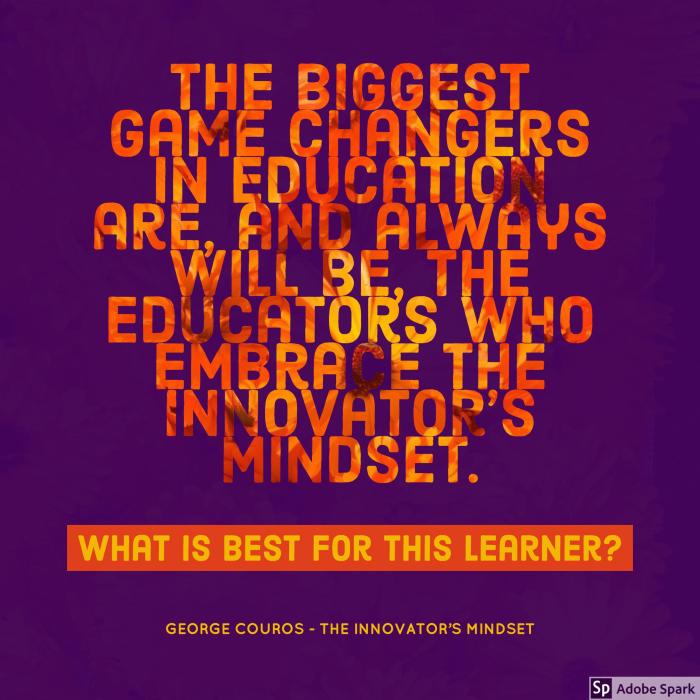
 As we think about innovating in education, it’s always valuable to spend some time thinking about why we do what we do. As I begin my participation over the next 6 weeks in #IMMOOC (Innovator’s Mindset Massive Open Online Course), I’m driven to think more intentionally about why we innovate, and what innovation means in education. Below are 3 reasons that stand out to me as why we need innovation in education.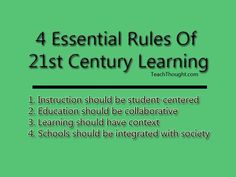
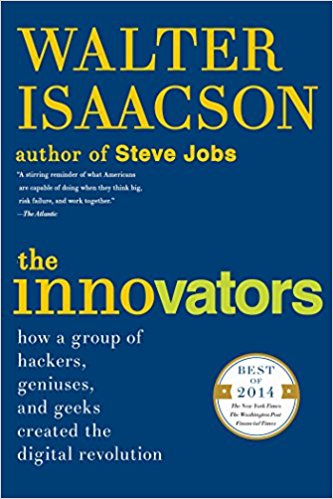 The Innovators has the subtitle “How a group of hackers, geniuses, and geeks created the digital revolution.” This book caught my attention for a couple of reasons – first, I’ve always been something of an early adopter of technology. I love to check out new and exciting innovations. A second reason that this caught my attention is that I’m always curious about how people made the leaps to take us from the earliest computers (devices that took up entire rooms in the basement of college buildings or at military bases), to the technology that I can hold in my hand every time I pick up my iPhone.
 So that brings us to the bigger question: What is school for? While some of our students may consider a role in manufacturing, the factories of today are way different than the ones of the early to mid 1900s that led to this factory model of education. Many of our students will not be heading down the path of manufacturing, so that factory model of school definitely doesn’t apply. If you believe that innovation is going to keep happening (and why wouldn’t it?), then we’re preparing our students for an ever changing world! That is so different from the traditional model of school as a factory. In an excellent TED Talk by Seth Godin, he gives 8 examples of things school should be doing: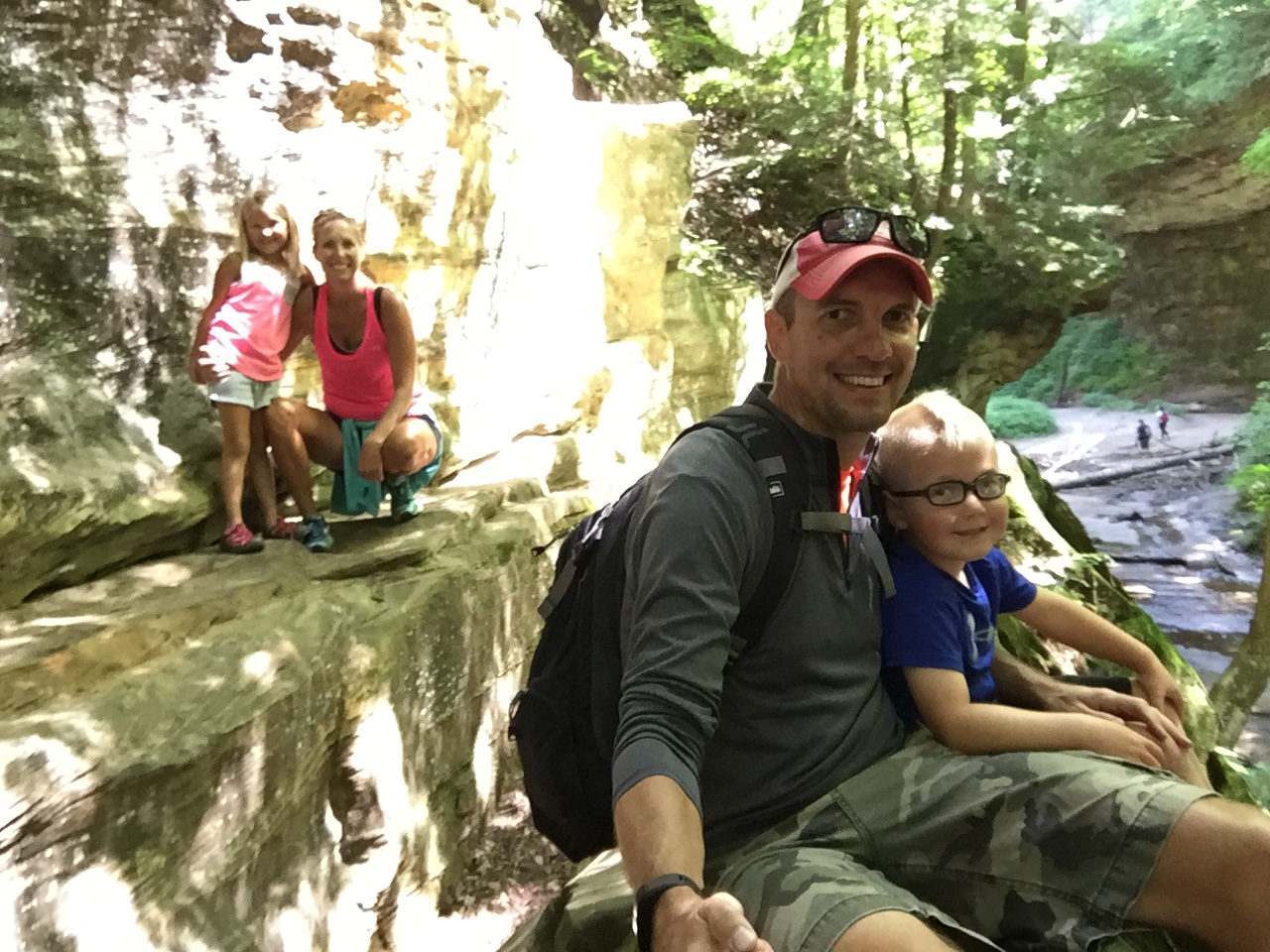
 Parts of this quote come from Todd Rose, author of The End of Average. I read the book last fall, and wrote a couple of posts on the ideas learned from the book here:
 Earlier in the spring semester, I was participating in a massive open online course led by the author of The Innovator’s Mindset –
  For me, when I think about what brought me into education, there are a few moments in my lifetime that stand out. I remember my fifth-grade teacher, Mrs. Gromer. With her, the Maya Angelou quote to the right comes to mind. There aren’t very many specific things I remember happening in her classroom, but I remember that I always felt welcome, and valued, and important. I felt that if I wasn’t there, someone missed me, and some value was lost from the class. While I had great teachers before her, and great teachers after, nobody ever made me feel as important in the classroom setting as Mrs. Gromer.
 I have hopes and dreams for these two. I want the best for them. And I know that if that is the way that I feel, then the parents who trust each of us with their children have similar types of hopes and dreams. The faces that sit in our classrooms each day are their everything, and they want the best for their kids as well.
 The View from 518