
At the beginning of this school year we held a back to school retreat. One of the slides was based on something that Aaron Hogan, author of Shattering the Perfect Teacher Myth, had shared in his Twitter feed this summer.

We have talked over the years about the value of relationships. We all know that there are some students who are EASY to get to know. At the same time, we all know that there are some students that are very difficult to get to know.
Getting to know about the things that are tied directly to school is what teachers do. Test scores, homework completion, attentiveness in class… I think all of us are good at that. To have a true and meaningful relationship with a student, we need to have a knowledge of all the aspects of the child’s life, not just their ability to “play school.” To know this, we have to be excellent watchers and listeners. This watching and listening has to come from the idea that the only way to create solid learning environments for our students is through truly knowing a student.
Do you have a system of tracking what you know about kids? Whether you have a spreadsheet that you type info into, a stack of notecards with one for each kid, a class list with simple notes, sticky notes in a binder, or whatever works for you, there needs to be some way to keep track of the things you know about those kids. If you haven’t done this yet, take a few moments in the coming week to assess your own knowledge of your students. What do you know about their life outside of school? What interests do they have? What did they do over the weekend? What do you know about their family?
As you assess your own knowledge, are there any kids who stand out as someone you don’t know much about? If you don’t know much about that child, how can you be sure that you are creating a learning environment that meets that child’s needs?
The good news, it’s still very early in the school year! If there are kids you want to get to know better, there’s plenty of time for that. Make it a goal to learn what you can about those kids you aren’t able to write much about. Use strategies like the 2 for 10 method (spending 2 minutes every day for 10 days talking about something that has nothing to do with school) can help you learn a lot in a very short time. Conversations in the hallway or at recess can be a great chance to get to know kids too.
Caring about kids can have a huge impact. The kids who drop out of school in 9th or 10th grade don’t decide one random Monday morning that they are going to sleep in and never come back. Dave Brown and Trudy Knowles share in What Every Middle School Teacher Should Know that:
“The decision to drop out is a reflective process that begins during the middle level years based primarily on the relationships they have at school with classmates and particularly with teachers.”
In the book Canaries Reflect on the Mine: Dropouts’ Stories of Schooling, Jeanne Cameron interviewed several high school dropouts. One of the things that stood out in the comments from those students was the belief that they needed teachers to notice them and care about them. That care doesn’t come just from looking at students grades and test scores. It comes from the recognizing the difficulties that each of our students have in their lives.
If that isn’t enough of a motivator for you to try to get to know those quiet kids a little bit better, I don’t know what would be. Do you know there are kids that you don’t know much about? What do you know about the quietest kid in your class? What are you going to do in the next week to get to know those kids? Share your thoughts in the comments below!
 Basically, Voxer works like a walkie talkie, but also has the ability to send text, photos, and videos within the app. After setting up my account, I was sitting on my deck while Jeff was driving home from school in Texas, and we had a conversation about the Superheroes of AMCMS. At the end of the conversation, he asked me to send him my email address, and he was going to email me some additional resources for continued learning.
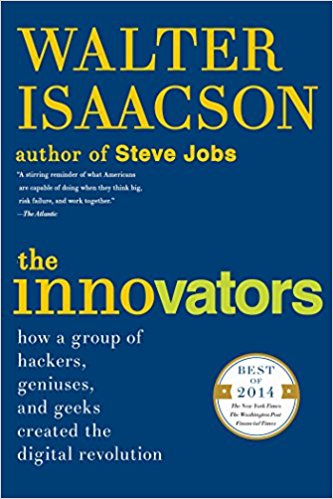 The Innovators has the subtitle “How a group of hackers, geniuses, and geeks created the digital revolution.” This book caught my attention for a couple of reasons – first, I’ve always been something of an early adopter of technology. I love to check out new and exciting innovations. A second reason that this caught my attention is that I’m always curious about how people made the leaps to take us from the earliest computers (devices that took up entire rooms in the basement of college buildings or at military bases), to the technology that I can hold in my hand every time I pick up my iPhone.

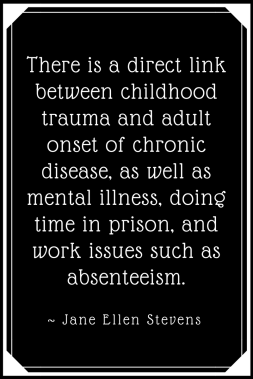 Eventually, Dr. Harris learned from a colleague of a study called the Adverse Childhood Experiences Study (ACEs Study). This ongoing study is a collaboration of Kaiser Permanente and the Centers for Disease Control and Prevention. I believe that every educator needs to be aware of the ACEs Study. The study shows a correlation between ACEs that occurred prior to reaching the age of 18 and many health and social problems as an adult. Here are some basic stats from the ACEs Study:
 Why does this happen? For the normally developed brain, when it encounters a stressful situation the adrenal gland kicks in and releases adrenaline and cortisol, which gets the body ready for fight, flight, or freeze. For a child living in trauma, those adrenal glands are constantly being triggered, which causes their brain to have bottom up control, and prevents the upper part of the brain (those that control reasoning, self-control, learning, and understanding), from being able to take control. And what are the triggers for our trauma students? You may never know. It could be walking into their home, it could be a loud voice, it could be a simple as a facial expression. These triggers are so frequent that the trauma brain is constantly in fight, flight, or freeze mode.
 In their book The Trauma-Informed School, Jim Sporleder and Heather T. Forbes identified a few strategies that we can all use to interact with students (and I would suggest that these strategies work for all kids, not just those who have been through trauma). Here’s a few of them:
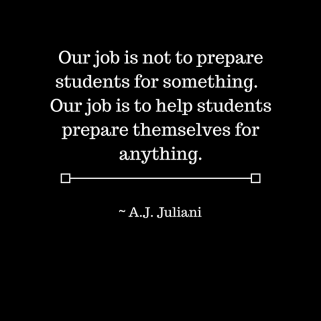 So that brings us to the bigger question: What is school for? While some of our students may consider a role in manufacturing, the factories of today are way different than the ones of the early to mid 1900s that led to this factory model of education. Many of our students will not be heading down the path of manufacturing, so that factory model of school definitely doesn’t apply. If you believe that innovation is going to keep happening (and why wouldn’t it?), then we’re preparing our students for an ever changing world! That is so different from the traditional model of school as a factory. In an excellent TED Talk by Seth Godin, he gives 8 examples of things school should be doing:
 The View from 518