The role of trauma in student behavior

We’ve all been there, you’re in the middle of class, things seem to be going well, and then you notice what one student is doing.  Maybe they have completely shut down, maybe they are talking to a neighbor, or maybe they are acting out in some way that draws the attention of other students from the current activity to the student who is misbehaving.  The natural (and often simplest) reaction is to redirect, sign a behavior card, raise our voice, or maybe even submit an office referral.

In my personal opinion, a lot of the time that acting out behavior stems from something that has absolutely nothing to do with you, your class, or the students in your classroom, but from something that we as teachers have no influence over.

A couple days ago, I was at a PBIS (Positive Behavioral Interventions and Supports) training with several other members of the PBIS team in my school, as well as some of the other PBIS teams in our district.  We spent a portion of time discussing the role that trauma plays in student behavior and learning.  So, as a working definition, here is how we’re going to define trauma for this post:

Trauma refers to extreme or chronic stress that overwhelms a person’s ability to cope and results in feeling vulnerable, helpless, and afraid.  The event(s) that led to trauma may be witnessed or experienced directly.  Trauma often interferes with relationships, self-regulation, and fundamental beliefs about oneself, others, and one’s place in the world.

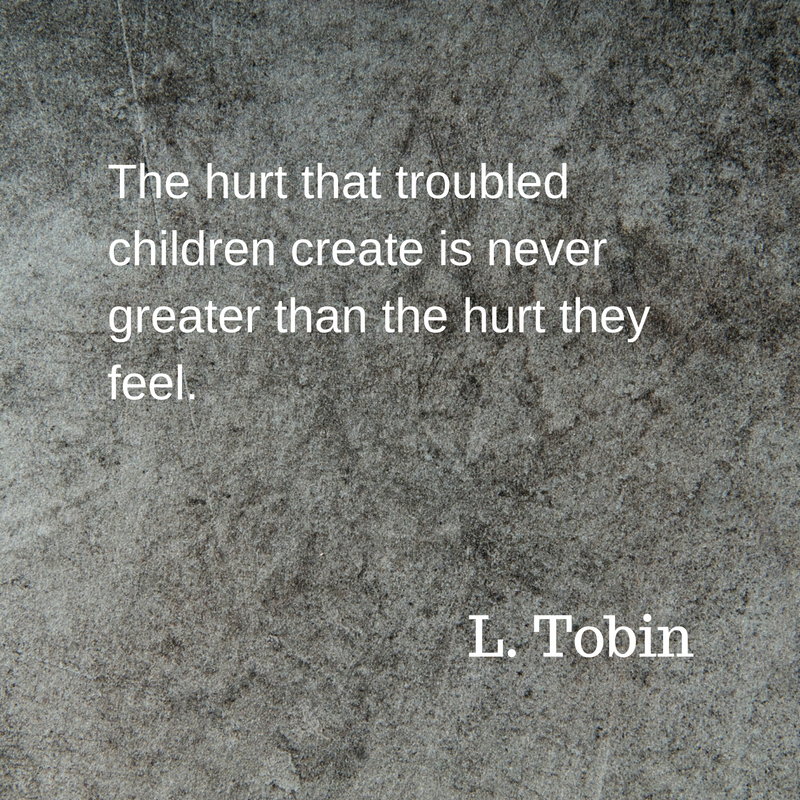
the-hurt-that-troubled-children-create-is-never-greater-than-the-hurt-they-feelTrauma can occur from lots of different things – there is simple trauma (serious accident, disaster, one-time physical assault); complex/developmental trauma (witness domestic violence, death of a parent / caretaker, ongoing physical or emotional abuse, ongoing neglect, homelessness, living with family members with untreated mental illness or substance abuse, or having a family member deployed in the military); and finally historical / generational trauma.  Children who have been through traumas like those listed above can have various levels of stress, but those who are living with high levels of stress spend much of their life in the fight, flight, or fright mode.  These children respond to the world as a place of constant fear.

All this stress leads to issues with brain functions and development, and make it very difficult for students to focus on learning.  Oftentimes these students fall behind in school; fail to develop healthy relationships with peers; and/or create problems in classrooms and at school because they are unable to trust adults.

So now that we know a little about where this trauma and stress comes from, we need to examine what it may look like in the classroom.  Let’s first look at the development of the brain.  For typical children, who do not have toxic levels of stress in their lives, they are able to spend very little of their time focused on survival, and as a result are able to spend much more of their time devoted to cognition and social-emotional functions.  For the children who have experienced developmental trauma, the majority of the brain’s attention is focused on survival skills (the fight, flight, or fright reactions), which means there is little time or energy to devote to cognition or the social-emotional functions.

When students have experienced trauma, you may notice some of the following traits:

  • Day dreaming
  • Impaired social & emotional function
  • Difficulty retaining information
  • Labeled as learning disabled
  • Can sit in classroom and not learn
  • Less mature problem solving
  • Use violence as a tool
  • Feel the need to control their environment

These traits can lead to various effects on learning, including the ability to: acquire language & communication skills; understand cause and effect; take another’s perspective; attend to classroom instruction; regulate emotions; engage in the curriculum; and utilize executive function (make plans, organize work, follow classroom rules).

So now we’ve talked a bit about what trauma is, what may have caused trauma in our students, and some of the traits that may happen as a result.  Next week we will look at how our responses can play a role in student behavior, especially those who have experienced some form of trauma in their lives.

In the comments below share your thoughts on this topic.  Have you had experiences working with students who have lived through trauma?  What worked?  What didn’t work?

Incremental improvement

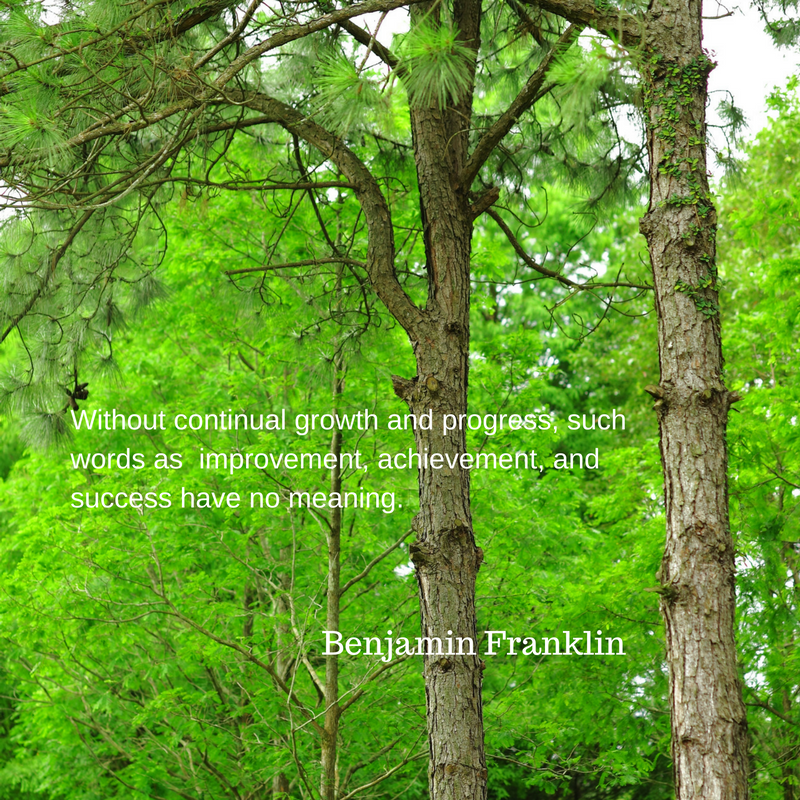
without-continual-growth-and-progress-such-words-as-improvement-achievement-and-success-have-no-meaning

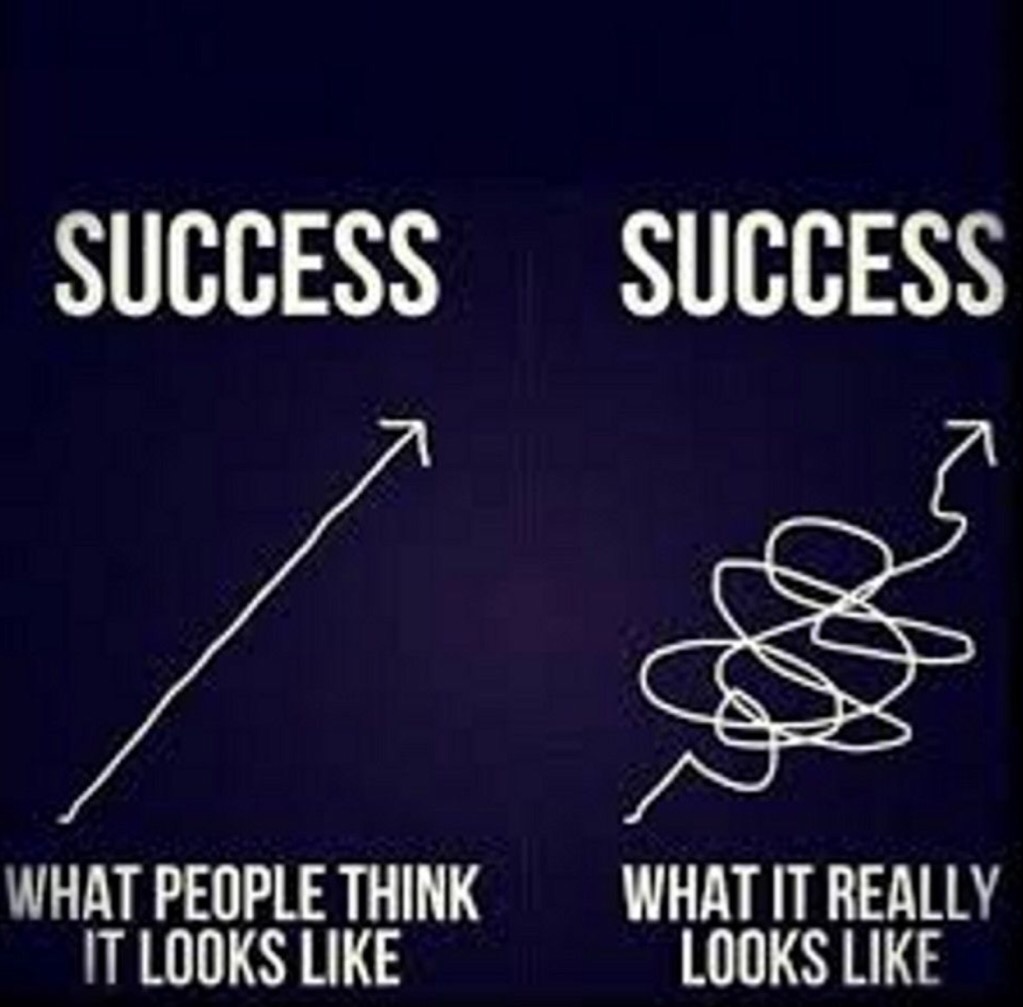
If you were to draw a path to success, what do you think it might look like?  I recently saw this visual, and it made a lot of sense to me:3dd260bf-ecde-4bdd-b88d-ebdcd9bbc539

I think we all would agree that the path to success is not a straight line.  We’ve all had bumps in the road on our own path to where we are.  In the version of success that appears on the right, there are some ups, some downs, and some times in the totally opposite direction of where you want to go. When you understand that this is what the path to success looks like, you also understand the concept of incremental growth.  These are the small steps we take to get closer to our goals.  When we focus on incremental growth, we don’t care as much about the external factors, and instead focus on the things that we can control.  Hopefully you will see the benefit of the rest of this post if you hear questions like this in your classroom:

  • How many points is this worth?
  • Can I earn extra credit?
  • Did you grade the tests yet?

Questions like these are a sign that students care only for an extrinsic motivator – the grade.  The problem with our students having this mindset is that when students are motivated solely by a grade, they will find ways to get the work done and earn the credit, but they will completely miss the educational value of the lesson, and will not retain anything.  The best way to get them past these extrinsic motivators is to shift the mindset of your students.  Work to get them to focus less on the external motivation, and more on the internal motivators.

The first step – make sure that students understand that grades are just another data point, nothing more or less, that tells teachers and parents a little about where students are right now.  When you attach rewards or consequences to a grade, you train the students who do well to expect an external motivator, and you completely miss that kid who might be doing everything in their power just to keep their head above water, and never getting anything for it.  When you talk about report card grades, make sure students know that you are much more concerned with their day to day efforts than you are with their overall grade.

So what are some of the ways that you can give this message to your students?  Check out the points below:

Improving through effective feedback

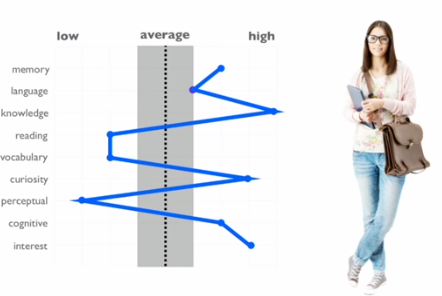
If you want your students to value growth, you have to give them feedback that shows you recognize their growth.  Normally this can’t be shown just in the grade on a paper, but rather through the words you speak to a student.  During work time, be walking around, observing what students are doing, ask questions of them, and sharing your thoughts.  Since we all know that our students have a jagged learning profile (see the last post on “Average” students), we should also be aware that every child is at a different place, with different goals and different needs.  Our feedback should focus on what’s most important to THIS child at THIS time.

One of the other keys to effective feedback – focus on the future, not the past.  Instead of saying “You shouldn’t have done it this way; you should do it this way…” you might want to try saying “Next time, I’d like you to do it this way because…”  Our words totally change the feedback and focus on incremental growth moving forward.

Improving Results

One of the best ways for students to be able to see their improvement is to have a way to reflect on their learning process easily.  A great way to do this is through portfolios.  In this day and age, the portfolio can be totally digital, and easily viewed, shared, and managed.  Apps like SeeSaw, or a blog, can allow students to share their work and create a reflection in writing, audio, or video of what they have learned in their work.

Depending on the task, what you might ask students to include in their portfolio may vary, but some of the things that would probably be valuable to include would be:

  • A title that describes the Big Idea or concept
  • A picture or video of the process or final product from the activity
  • Answers to reflection and synthesis questions that guide each child to successfully demonstrate their understanding of the concept.

The reflection questions should vary depending on the activity and be based on your learning goals, but the idea is to get students to reflect on their learning.  If nothing else, ask them “What did you learn?”  If they can reflect and articulate that, their retention will be that much stronger.

If you feel that students are lacking in their answers to the reflection questions, there is a simple solution.  Follow up their answer with “Tell me more.”  This simple statement gets students to think a bit deeper, and if you model this enough, your students will eventually begin answering your questions in a more complete way without you having to ask.

Critical Peer Feedback

If you are the only person in the classroom who is able to provide feedback, some things might get missed.  We all know there’s only so much time in the day!  The key is to get students to understand that when they are looking at each others work, they are not being judgmental, rather they are looking for specific things that could be improved.  In order to help students understand how to do this, here are some steps you could introduce to them:

  1. Tell your peer that you have an idea of where they might improve. This way they know that you are just trying to help them make their work better.
  2. Start or end with a specific compliment! Let them know what you like and why you like it – when they know you appreciate something they have done, it’s easier to take some critical feedback.
  3. Give your suggestion as a question rather than a statement. Instead of telling your peer what to say, you could ask “have you thought about doing this…” or “I wonder if others might understand it better if you…”

Hopefully you see a couple of ideas here that you could implement in your classroom to help your students move towards an attitude of incremental improvement.  Maybe you noticed that a big key to incremental growth for students is feedback.  Meaningful feedback is the key to incremental growth for all of us!

If you decide to try out any of these strategies in your class, I’d love to hear how it goes!  If you’ve tried anything like this, tell us about it in the comments below.  What worked well?  What were your sticking points?

What is the “average” student? (Part II)

Last week I shared with you a little bit about the idea of averages.  From astronomers in the 16th century, to the work of Quételet in the 1800s, to Lincoln’s efforts to standardize the military during the Civil War, averages have a long history of being used to understand humans both physically and mentally.  During World War II, the research of Gilbert Daniels showed that averages were not a great idea for design of the cockpits of airplanes because no pilot fit the mold of the average man.  As a result, the Air Force banned the use of average for design, and began demanding design to the jagged edges.  This led to adjustable foot pedals, helmet straps, flight suits, and seats (things that seem like a no-brainer today).

airforce-dimensionsThrough the choice to move to flexible design, our Air Force was able to move forward in ways that they were not able to do when design was based on the average.  Now I know that some of you probably read last week’s post and may not have seen an immediate connection to education.  If you recall, in last week’s post I mentioned Todd Rose, a Harvard professor and a high school dropout, who is doing some interesting research in the science of individuality.

During a TEDx Talk titled The Myth of Average (if you have a chance, this is a really good TED Talk with some real implications for the education of all students), Rose talked about the educational repercussions of using average to design learning.  Sometimes our classrooms are like the airplane cockpits at the beginning of World War II.  There aren’t a lot of options for adjustments, and because of that, there are students who struggle.  Here’s the dirty little secret though – it’s not just the kids at the bottom who struggle in school.  When you look at dropout rates, a significant portion of high school and college dropouts aren’t leaving because it’s too hard, they’re leaving because it’s too easy and they aren’t challenged or engaged.

Over the summer I had a video post to the blog titled “An Open Letter to Educators.”  More recently I have been reading the book The Boy Who Played with Fusion, the story of Taylor Wilson, a 22-year-old who built a fusion reactor at the age of 14.  Both talked about a need to embrace new formats of education in an effort to be more individualized and prepare our students for the real world.  The implication I saw was that this individualization isn’t just for the kids that we identify on the low end of the spectrum, or those on the high end of the spectrum, but also for the kids we identify as the “typical” student.

No matter how we might identify our students (typical, below average, above average), our students come to us with jaggedaverage-student learning profiles.  Some are strong in math, but struggle in ELA.  Others have a talent for memorizing facts in social studies or science, but when you try to get them to think deeper, and solve the problems of our scientific world, they just can’t do it.  What if our education system was designed to adapt to the jaggedness of our students instead of expecting our students to adapt to the school setting?

The HSE21 Best Practice Model is a great method to get there.  Through student-centered approaches, transfer of learning, cognitive curriculum, and fundamental classroom conditions, we can develop an environment that accepts students where they are, and helps to move them further.

As you continue to design your classroom conditions for your students, be thinking about their jagged profile of learning.  How are you making the learning environment more flexible?  What are you doing for that science genius who struggles with the reading?  They may be awesome with the hands-on portion of science, but when it comes time to read and learn about theories, they just don’t get there because the textbook is too challenging for them.  Our goal has to be one of constant incremental growth, both for the kids who are struggling in a lot of areas, as well as those who seem to have it all together.  Remember, we’re all jagged!

Technology can help us to get there.  With an iPad, each of your students has the ability to translate text, look up vocabulary, or even have text read aloud to them.  With programs like NEWSELA or Achieve 3000, we are able to have our students read materials that are at the appropriate level for them, be able to understand what they have read, and in turn have an opportunity to grow.

Flexible design in learning is the school equivalent to adjustable seats!  These adaptations will nurture the potential of each individual in your classroom.  And remember, adaptations aren’t just for those on either end of the spectrum.  That kid that you think of as average probably has a jagged profile of learning too, with strengths that we can tap into, and weaknesses that we can target for growth.  The adaptations that we’d make for anyone with a label can work for those without any specific label too – and as the teacher, you are allowed to make the choices of what is best for your students!

What might flexible design in education look like in practice?  Here are a few ideas:

  • Get rid of specific numbers on assignments (3 pages, 5 paragraphs, 4 signposts, etc.) and shift to requiring quality work instead.
  • Allow modifications on assignments.
  • Create a loose structure for projects to allow more student autonomy in what they are creating and how they are making it.
  • De-emphasize standardized test scores or other systems where averages are used to judge students.
  • Let students select the strategies that work best for their own learning (that student who struggles with reading might be able to listen to a podcast or watch a video on YouTube and think just as deeply as that star reader who can learn from the text).
  • Change the pace so that certain students can finish earlier and have enrichment opportunities and others who are behind can have more time to work and not feel like all they are doing is to catch up.

Now, I know some of these ideas sound crazy, or scary, or hard to put into practice.  We can’t change everything at once, but we can move incrementally to try to develop an environment that our students will be able to have more success.  Just like setting goals for students to grow, we have to set goals for our own growth, and then take steps to get there.

But isn’t it worth it?  Who knows, that kid who is struggling in your class right now might be on the path to dropping out, but they may have the potential to be a professor at Harvard – or any one of millions of other successful paths.  They just need to have the opportunity to embrace their individuality!

So what are your thoughts?  What successes have you had when adapting to be better suited to the individuality of your students?  What challenges do you see in this way of thinking?  Let us know in the comments below!

What is the “average” student? (Part I)

99piI’m not sure how many of you listen to podcasts, but for me, it’s almost all that I listen to – in the car, on a run, working on the yard – if my earbuds are in, I’m probably listening to a podcast.  I used to love to listen to talk radio, but the commercials drove me crazy, not to mention that I had to put up with topics that didn’t interest me to get to the interesting stuff.  One of the great things about podcasts – you only have to download the ones you find interesting.  If you don’t like a topic, don’t download it.  There are a couple of podcasts that I listen to no matter what the topic is.  The other day I was listening to one of my favorite podcasts, 99% Invisible.  It’s a show all about design, but looks at it from all kinds of perspectives – sometimes architecture and infrastructure, sometimes history, sometimes visuals, even a series on vexillology, which is the study of flags (I know, I’m a geek!).

the-end-of-averageOne of the most recent episodes was titled “On Average.”  Much of this episode is based on the work of Todd Rose, author of The End of Average.  One of the things that I found most interesting was that Rose, who is a professor at Harvard, is also a high school dropout.  His research on the science of individuality is based on his learning that nobody truly fits the average – more on that later.

So where does the idea of average come from?  While there are some mathematical references that go back to ancient history, the first scientific documentation of the idea of averages comes from astronomers in the 16th century.  In tracking the orbits of planets, astronomers would scratch the lens of a telescope in 2 spots and keep track of the amount of time it took the planet to move.  Astronomers realized that individual measurements could be highly inaccurate based on who was taking them, and other factors.  However, by taking many measurements and finding the average, the data seemed more accurate among multiple astronomers.

Fast forward to the 1800s, and a Belgian mathematician named Adolphe Quételet.  He decided to take a tool primarily used by astronomers and apply it to people.  He started with a data set of thousands of Scottish soldiers, and found that the average chest size of the soldiers was 39 and three-quarters inches.  He considered this to be the “true” size of a soldier.  Quételet extrapolated this data to say that if all lived in optimal conditions, they would be average.  Over time Quételet’s ideas expanded to find the normal rates based on all kinds of data sets – marriages, murders, suicides, etc.  Quételet went so far as to say that the individual person was synonymous with error, while the average person represented the true human being.

One of Quételet’s fans was none other than Abraham Lincoln.  During the Civil War, Lincoln had the army take data on soldiers to assess them both physically and mentally.  The data sets were then used to decide on appropriate food rations, design of weapons, even the size of uniforms.  Prior to the Civil War, every soldier received a uniform that was custom made.  With the number of uniforms necessary, this was no longer feasible, so the soldiers were broken into average sizes (small, medium, and large) so that uniforms could be mass produced.  Today we buy clothes based on sizes that relate back to these measurements from the armed forces.

Average based design became the way for the military, and from the time of the Civil War until World War II, everything built for the military was designed based on the average size of the soldiers.  Whether we’re talking about uniforms, bedding, food rations, weapons, vehicles, and as they came into use, airplanes, all were built to specifications that matched the average size data.

During World War II, the Air Force noticed a huge decline in the performance of pilots.  As the first air based war, this was a problem.  Initially blame was placed on the pilots, then on the trainers.  In time, the Air Force realized the issue was the size of the cockpit.  The cockpit didn’t fit the pilots.  As a fighter pilot, when split second decisions can make a difference between survival, the Air Force saw that they needed to find a new average.

Researchers at Wright Air Force base in Ohio were tasked with finding new averages.  Members of the team traveled from base to base taking measurements of pilots on 140 dimensions (some were the obvious – height and weight – while others were much more unique – length of the thumb or the distance from a pilot’s eye to his ear).  One of the members of the team was Gilbert Daniels, a recent graduate from Harvard in the field of anthropology.  As he was taking the measurements, Daniels started to wonder how many of the pilots truly were average.

Daniels took the data from a set of just over 4,000 pilots.  He found averages on the 10 measurements that would be considered the most important in terms of the design of an airplane cockpit and set up norms based on a 30 percent range (the average height in the study was 5-9, so the range was 5-7 to 5-11).  He then he went back to the individual data.  The assumption going in was that most pilots would fit the definition of the average pilot.  When he compared the individual measurements of all the pilots in the data set, he was stunned to find that not one of the pilots fell within the average range on all 10 dimensions.  When they narrowed the study to only 3 dimensions, less than 4% of the pilots met all 3.

The research showed that there was no such thing as the average pilot.  Instead the data looked a little like this:

airforce-dimensions
Rose describes the variation that shows in these measurements as Jaggedness – which represents that fact that everyone has variations from the norm or average.

In response, the Air Force made significant changes to their design process.  No longer would they buy airplanes that had cockpits that were designed to the average.  The Air Force banned the average for design of airplanes!  Instead they needed planes to be designed to the edges.  Prior to World War II, the pedals, seats, helmets, controls, and anything else in a plane was static, it could not be adjusted.  Following the results of this study, the Air Force demanded adjustable seats, foot pedals, helmet straps, and more.

When the change was made, guess what happened?  Pilots got better!  No longer did they have to adapt to the size of the plane.  Now all planes can be adapted to the size of the pilot.  Think about it, how many of you would purchase a car that did not have adjustable seats, mirrors, or steering wheel?  These adjustable features came about thanks to the Air Force’s research on averages.

I know that this post hasn’t gotten into the education implications yet – I promise that’s where I’m going next week.  To help next week’s post make more sense, we needed some background information about averages.  Next week we’ll get into how the research on the science of the individual translates into the classroom, and what we can do to design education to the edges, not just to the average.

What thoughts do you have?  Do you already see a connection between this backstory and your students today?  Share your thoughts in the comments below.

Active learning

the-only-source-of-knowledge-is-experience

The HSE21 Best Practice Model is such a great tool because it reminds us of the fundamental classroom conditions that will help our students be ready for their future.  I was recently reading the book Learn Like a Pirate by Paul Solarz and he spent a lot of time talking about active learning.  In active learning, we see differentiation, authenticity, relevancy, choice, and collaboration – all important pieces of the best practice model.  Think back to your favorite moments when you were in school.  What stands out?  It’s probably an example of active learning.

When I was in elementary school, both of the 6th grade classes in our building collaborated to write, produce, and perform a musical.  I vividly remember working with classmates to write the script, to advertise the show, and to plan the costumes and props for the show.  The skills and strategies that I developed in activities like this were ones that I believe helped set me up for success in middle school, high school, and beyond.  While I remember moments of passive learning when I was in sixth grade (one of my teachers was the queen of having us copy notes from her beloved transparencies), I can’t recall any details that I may have learned in that format of lesson.

So, how can we integrate more active learning into our classrooms?  Here are just a few ideas based on Learn Like a Pirate book:

  • Simulations – What’s a better way to learn about the Boston Tea Party?  Read about it, or take your classroom back to 1773 and have your students simulate the circumstances that led the Sons of Liberty to throw cases of tea into the Boston Harbor?  Or you could integrate some science into your social studies by having your students set up a colony in outer space.  They can experience creating a government for their colony while also learning about the needs for their planet.
  • Debates – The collaboration that goes with a debate can be amazing. If you pick a topic that would have more than 2 sides, you can break your class up into several different groups with different topics, keeping the groups small enough that all play a role, while also large enough that you can put mixed ability students together.  Solarz does alternative energy debates with his students.  He plays the role of President, while his students are the advisors trying to convince him that their energy plan is the best.  While this topic may not resonate with you or your curriculum, there are many other debatable topics that could tie to your standards.
  • Science Fair – This is something that has gone out of style, but why? In a time where we are shifting to STEM classes, and at a period in time when so many of our kids don’t do hands on science projects like previous generations, this seems like a no brainer.  The issue I had with the science fair’s old style was that it was typically done as homework.  The last time I had my students do a science fair, we did everything at school.  Students were asked to bring in poster boards, but I tried to provide most of the other resources they needed (sometimes we had to get creative).  Kids assisted one another on their projects, and were truly excited to share their findings at the end.  I was able to provide feedback, help with data collection, and teach mini-lessons as necessary.  The best part – I knew it was all done by the student on a relevant topic of their own choosing.  A variation on this could be an invention fair, or a coding fair, or anything else you might imagine that lets students be actively involved in inquiry.
  • Project-Based Learning – A trend in education, and one that I was guilty of when I was still in my classroom, is that we teach a unit, and then at the end of the unit students complete a project to show their learning. What PBL asks is that we teach through the project.  Once you have your basic idea planned, students choose their more specific project and dig in.  Throughout the unit, mini-lessons can be taught on content, procedures, or skills that students need to go further in the process.  As a teacher, you are continuously checking in with students, seeing where they are and where they are going next, providing feedback, and deciding if there are topics that you need to build a mini-lesson around.  While we’re giving students choice and freedom, you are allowed to set some parameters up front.  PBL doesn’t mean setting the students free to do whatever they want, there have to be some class norms and expectations in place first.  Think of these expectations as the guardrails to keep your students in the right lane, and heading in the correct direction!  If you’re looking for good PBL resources, the Buck Institute for Education (bie.org) is a great resource!
  • Technology – Sometimes integrating some tech into a passive lesson is just what it takes to up the level into an active learning opportunity. Don’t just use technology for the sake of saying that you’re using technology.  Use technology when it is the best tool for the job.  Remember, HSE21 is not, and has never been, about technology, the iPad, OneDrive, or any of the many apps that are used around school.  However, when we find technology that truly improves or transforms what we’ve been doing, don’t hesitate to add it to your lessons.
  • Reader’s Theater – This is such a great way to work on oral reading fluency.  Students get to practice their part several times with their group.  During that time they can practice pronouncing difficult words, learn to project their voice, add inflection, and enunciate.  Depending on your goals, it could be a single day activity, although students don’t have as many opportunities to practice and they may not be able to create props to go with their performance.  On the other hand, you could do a multi-day activity where students are put into groups and roles one day, have time for rehearsals and planning for the performance (props, costumes, etc.) on a second day, dress rehearsals where you can give feedback on props and costumes that aren’t appropriate or necessary on a third day, and then performance day on the last day.  If you’re really brave, you could record the performances to put on a YouTube page so that parents can see what their kids are up to at school.

This is not intended to be an all-inclusive list of active learning activities, but is meant to give you some ideas of how to create more active learning opportunities for your students.  What am I missing?  Are there active learning examples that you use that I didn’t mention?  Have you tried (or are you thinking about trying) any of the ideas above?  Tell us about your experiences, your thoughts, or your plans in the comments below!

Finding the author’s purpose

AuthorsPurpose

This post is the final post in a three-part series based on my learning from the book Reading Nonfiction as well as recent PD that I attended that was led by Kylene Beers and Bob Probst.  In the first post, “How do we take them further?” I talked about those 3 questions that should guide our thinking when reading nonfiction:

  • What surprised me?
  • What did the author think I already knew?
  • What changed, challenged, or confirmed what I knew?

When we get our students to think about these three questions as they are reading nonfiction, they will notice more, question more, and dig deeper into the text.

In last week’s post, “Defining Nonfiction” I wrote about how we define nonfiction.  I first shared a word cloud based on our own definitions of nonfiction reading:

Nonfiction_definition_wordle

But we then transitioned to a much deeper definition of nonfiction:

Nonfiction is that body of work in which the author purports to tell us about the real world, a real experience, a real person, an idea, or a belief.

To be able to truly dig deeply into a nonfiction text, we must understand the author’s purpose.  In this post I’m going to be sharing with you a couple of the signposts that Beers and Probst recommended as a starting point to really get our students thinking about the author’s purpose.

The first signpost that Beers and Probst shared with us specifically during our PD was the concept of Contrasts and Contradictions.  For those of you who have been using the Notice and Note to teach fiction reading strategies, this one should sound familiar.  In fiction you look for things that the characters do that contrasts or contradicts what you might expect.  In nonfiction we should notice if the author shows us “a difference between what you know and what is happening in the text, or a difference between two or more things in the text.”

Think about it for a second.  If you are reading a news story, and it contradicts something that you have seen in a different story, or something that you believe you already know, that is going to give you pause.  When you stop to think about those differences, you might come to the conclusion that an author is trying to change your opinion – this is a hint of what the author’s purpose might be.  Remember, our students can’t just think of nonfiction as not fake.  Our students have to have that questioning stance so that they can be a bit skeptical of the opinions being shared.

Once we recognize the signpost for contrasts and contradictions, students then need to take it a step further – just noticing the signpost doesn’t get the level of inquiry we want.  Next we need our students to ask themselves a question about that signpost.  I love the chart on page 121 of Reading Nonfiction because it shows anchor questions for different levels of students, or questions that could be asked in the content areas.  The most basic anchor question for this signpost would simply be “What does this make me wonder about?” while a deeper anchor question might be “What is the difference and why does it matter?”

The other signpost that Beers and Probst said was so important in finding the author’s purpose was Extreme or Absolute Language.  This is defined as language that “leaves no doubt about a situation or an event, allows no compromise, or seems to exaggerate or overstate a case.”  Virtually any statement that includes the words all or none would be an example.  It seems this year that you can’t listen to a political speech or read an article about the presidential race that doesn’t include some form of extreme or absolute language.  The extreme language can range from obvious and probably harmless to the subtle and potentially dangerous.  Take the following 3 statements that many of us may have heard at some point:

  • It’s freezing out there!
  • You have to let me go to that party! Everyone is going to be there!
  • Simply stated, we know that Saddam Hussein has weapons of mass destruction.

As you can see, the first statement is probably pretty harmless, the second might give the parent of a teenager pause to think about whether or not it is appropriate for their child to attend the party, but that last one is an example that led to the loss of many lives and history has come to show us it was not accurate.  We need our students to understand that when they encounter language that is extreme or absolute, they need to “be alerted either to the strength of the author’s feelings or to the possibility that the writer is exaggerating and may even be deceiving or misleading the reader.”

Just like with any other signpost, simply noticing it is not enough.  We need to continue to remind our students to stop and think about the anchor question.  Just like with the contrasts and contradictions signpost, the most basic anchor question is “What does this make me wonder about?” while a deeper version could be “Why did the author use this language?”  Again, you can see content specific anchor questions on the chart on page 121.

Between teaching our students about the importance of a questioning stance when reading nonfiction, a true and accurate definition of nonfiction, and at least a couple of the signposts, our students will have the tools they need to be able to read deeply, think deeply, and understand an author’s purpose.  It is so important for our students to develop these skills not only so that they will be successful in school, but also so that they can be productive members of a democratic society.  If we don’t teach our students to have a questioning stance, they will believe whatever they see on the news, no matter whether it is ABC, CBS, NBC, CNN, Fox News, MSNBC, or any of the other multitude of news outlets that are out there.  I love this following quote from page 32 in Reading Nonfiction:

“Far more important than the ability to capture a teacher’s information and thoughts is the ability to acquire information on ones’ own, to test ideas against one another, and to decide for one’s self what notions have merit and which should be rejected or abandoned.”

We need thinkers who can listen to political speeches and read political writings and decide who will best serve their needs.  We need students who can look at the writings of a so-called nonprofit and decipher if a donation will be used in a meaningful way.  Instead of accepting what they are told, our students “need to develop intellectual standards that open them up to new possibilities and challenging ideas and give them the courage and resilience to change their minds when they see persuasive reasons to do so.”

Share with us your thoughts on the importance of nonfiction reading.  Why do you feel understanding nonfiction is important for our students?  What have you noticed about student’s thinking as you push out a questioning stance and the nonfiction strategies?  Let us know about them in the comments below!

How do we take them further?

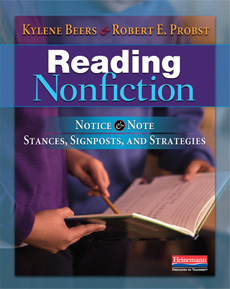
Reading NonfictionOn Monday I was able to attend a PD session that was led by Kylene Beers and Bob Probst, and one of the things they said early in our day struck a chord with me:

“Some teachers don’t realize that if they just stay out of the way, the kids who do well will keep doing well.  How do we take them further?”

This is such a challenge in our district.  Most of our classes are filled with compliant students who generally do what we ask them to do, they show gains in the normal way, and then they move on to the next grade.  But is that what we want for our students?  Show gains in the normal way?  Don’t we want them to gain spectacularly in the time we have them?  For most of these students, they will hit a wall sometime.  It might be a high school AP class, it might not be until college, and there may be some who can get by until they are out in the “real world” in their job/career.  But eventually their act of going through the motions won’t be enough because they won’t be able to truly think deeply and problem solve.

I think we can all agree that nonfiction reading skills are important.  But research shows us that strong nonfiction reading skills are one of the highest indicators of success.  Unless you’re a literary critic, a novelist, or a teacher (I know, we’re teachers), you probably only read fiction as an escape, but you read nonfiction every day.  That means our kids need the tools to be able to dig deep in the text, think through the text, and figure it out.

And here’s one of the amazing things – if you teach the kids the tools, and you give them the time to read a text, think deeply about it, and talk with each other, they will start asking themselves the same questions (or possibly even better questions) than the ones you would be asking.  During the PD, Probst said “Our goal should be to get our students to be able to have deep conversations about their reading without needing our help.”  Don’t you love the idea of students walking out of the building at the end of the day so tired because of all the deep thinking they have been doing, and you walk out with a smile on your face?  Our students should be doing the hard work, not us.

Too often as teachers we spend our time filling in the blanks for our students, and that is hard work!  We give them the background knowledge, we ask the questions, and then what do we get back?  Low level answers without much deep thinking.  When you ask the question, that leads our students to believe that there is one answer, and if they’re lucky they can find it in the back of the book – that’s how school works, and we all know our students can play school.  But if students were to ask those same questions, on their own, the conversations will be so much deeper.

Sound good?  I think so, but where do we start?  Beers and Probst suggested that the initial starting point would be with their 3 main questions:

  1. What surprised me?
  2. What did the author think I already knew?
  3. What changed, challenged, or confirmed what I knew?

As your students are reading, have them code what they read (this means you need something that they can write on, some post its, or a digital format that they can annotate).  Beers recommended using an exclamation point for question 1, a question mark for question 2, and the letter c for question 3.  Then, after they have read, have them talk in small groups about their thinking.

Next week I plan to go a little deeper with some more of the information that Beers and Probst shared on Monday, but as you get your year rolling, start with the 3 questions.  These 3 simple questions will make the reading more personal and relevant.  It will push thinking and learning to a much deeper level! (If you want to see a great video of where these questions can push students, scan the QR code on page 88 of your copy of Reading Nonfiction – it’s a 3 minute video clip of 6th graders in a 1:1 classroom).

If you haven’t yet read the book Reading Nonfiction by Beers and Probst, I can’t recommend it highly enough.  There is so much there to take your reading instruction to a greater level, and this instruction can take place in ALL classrooms.  We all use nonfiction reading skills in our lives, no matter what subject we teach, to help ourselves increase our knowledge and understanding.  Let’s help our students develop the skills to be more successful nonfiction readers.

Share your thoughts in the comments below.  Have you used the 3 questions in your nonfiction instruction?  What changed for your students?  What things were great?  What struggles did you have?  As a community of teachers, we are also a community of learners, and we can learn most from one another!

Teaching Conflict Management

Last year when we surveyed teachers on the topics they would like to look into as part of the Professional Development for the 2016-2017 school year, some of you chose to “write-in” a topic that you would like to learn more about.  One of the write-ins was:

“Problem solving social situations, especially with friends, recess, lunchtime, specials, etc.”

Learn Like a PirateWhile there are ways that we could probably take that idea and turn it into a PD Topic, I thought that I would give some tools that you might be able to use in the classroom the first time that you see a situation of conflict develop – my goal here is to provide you with a right now strategy.  I can’t claim this idea – the majority of this post is based on ideas from the book Learn Like a Pirate by Paul Salarz (@PaulSalarz).  Mr. Solarz is a fifth grade teacher in the Chicago area and runs a student-led classroom.  There are so many tips in the book to help guide students to collaborate, be empowered, and take leadership in their own learning.  I highly recommend it!!!  The following ideas come from the Teaching Strategies for Dealing with Conflict section on page 56.

In a classroom where you are integrating student voice and student choice and allowing opportunities for students to collaborate there will invariably be some type of disagreement.  We’ve all seen it happen – Tommy and Jeff partner up.  Everyone (including them) knows this is a bad idea.  One strategy would be to break them up before they even have a chance to start working.  However, in a collaborative community, everyone needs to learn how to work with everyone.  Not only will it help your classroom run more smoothly, it’s an important lifelong skill!

We all know what happens next…  If you allow them to work, before long there’s a disagreement.  Our reaction can make or break this situation.  Instead of saying that this is what you knew would happen, and separate them, what if you gave them the tools to find a solution on their own?  What an awesome opportunity to turn this situation into a teachable moment – not just for Tommy and Jeff, but for the whole class.  Here’s what you could do:

  1. Get the entire class’s attention – “Give me five!”, hands up, or whatever strategy you use in your classroom.
  2. With a sincere smile on your face, look at Tommy and Jeff and thank them for having a little bit of trouble because it gives you the opportunity to teach everyone how simple it can be to get through conflicts.
  3. Ask the boys to describe what happened, then teach the whole class the following strategies (you might even consider making an anchor chart for this skill to post in the room – or even better, have the students make the anchor chart!):

Lets settle thisRock-Paper-Scissors: Do you know how many arguments my friends and I have avoided with a simple game of rock-paper-scissors?  When your students can’t decide who gets what job, or what color the background should be on a poster, a single round of rock-paper-scissors can be just the perfect way to find a solution!

Compromise: Take a portion of each person’s idea and combine them together.  (“I want to watch the video clip first.” “But I think we need to plan our poster design.” “Why don’t we plan our poster design right after we watch the video!?”).  Hopefully they can find a solution that makes them both happy!

Choose Kind: Sometimes the best solution to conflict is just to do what the other person wants because it’s also a good idea!  As the quote from Dr. Wayne Dwyer goes: “When given a choice between being right and being kind, choose kind.”  Winning an argument while also hurting a classmate does not help the class win.  This summer I began using the phrase Choose Kind with my children (7 and 4 years old). It’s amazing to see how often they have been choosing kind to solve their disagreements.

The earlier you can teach these strategies to your class, the sooner they can begin to implement them.  Once students understand the process, these steps can be used even when you aren’t there – the lunch room, hallways, recess, etc.  If you don’t run into a conflict after a few days, then you might want to role play a scenario.  The sooner these strategies are introduced, the better!

As with any other strategy, we have to be ready to reinforce the use.  You can’t just introduce it once and then assume they all know it and will be successful.  Every time you notice a conflict, make sure students know you are aware (proximity, a concerned smile, etc.), but don’t just jump in and solve the problem.  Give them a little time to see if they will come to a resolution on their own.  For this strategy to truly be effective, the students have to come to use it on their own.

After you witness students come to a resolution, let them know how proud you are of how they handled it, and see if they would be willing to share their experience with the class.  If they are, have them act it out so the whole class can learn from the situation.  If students don’t want to share, that’s ok too!  They may be shy or embarrassed by what happened.

If students can’t get past the conflict on their own, then you might have to gently remind them of the conflict-management strategies to help them move on (this is where that anchor chart could be really handy!).  It’s also ok if another student steps in to help with finding a solution.  What a sign of good collaboration!

Continue the conversation in the comments below.  Could these strategies work in your room?  What else have you done that’s been successful?  Conflict can be such a distraction and sticking point that we can all use some good new ideas!

What our students see

Today I was walking the around our school thinking about the fact that in less than 2 weeks the halls will be full of almost a thousand 5th and 6th grade students.  Many of the classrooms that I walk past are still in various stages of preparation for all of those students.  Thinking about those students got me excited!  But as I walked through the halls today, I tried to look around with a different perspective.  Instead of walking around with the eyes of an adult, an educator, or an administrator, I tried to look around and see what our students might notice.  What do the things that are posted on the walls say to the 10, 11, and 12 year old students who will be walking these halls?

Many times as educators, we put things up in the hallway or our classroom because we like them.  We might intend to share something of ourselves with a student, we might intend to be funny, or we might intend to set up expectations that we have for our class and our students.  Unfortunately, our students can’t read our mind and know our intentions.  Sometimes your students may see that sign that you think is setting expectations, and instead see it as harsh, judgmental, or possibly even confrontational.  Think about what you have hanging up both outside and inside your classroom. How will it make your students feel when they walk into the room?  Are they going to feel welcome, or are they going to feel intimidated?  Does your room encourage them to be a part of the learning process, or does your room discourage their participation?

From The Thinker Builder: http://www.thethinkerbuilder.com/

I saw a recent post on the blog The Thinker Builder that had a pretty cool idea (at least I thought so).  Instead of covering his bulletin boards with amazing decorations to set up a classroom, the author begins his year with a blank bulletin board and puts a reserved sign on it (I have a screenshot of the sign to the right).  If you’d like to see his post, or be able to download the sign, check out this post – “Reserved” Signs: A Bulletin Board Stress Reliever.  What does a sign like this say to the students and parents that walk into your room?  To me, it shows that you value the thoughts and opinions of the students who will be in your classroom.

Remember, your students will notice what you have posted on the walls both inside and outside of your classroom before you have said one word to them.  Based on what they notice, they are going to form opinions about you.  They will create expectations about what this school year is going to be like.  They will also decide whether they feel that the classroom is a place that they are safe to express themselves and become part of the learning community.

One of my takeaways from the book Mindset by Carol Dweck was that a person’s environment can play a role in what mindset they take.  Posters that use terms that make us think in a fixed way, or make us think that we don’t have any choice or control will generally lead us to behave in a manner that shows a fixed mindset.  On the other hand, things we display that show phrases that encourage a growth mindset will lead us to behave in a manner that shows a growth mindset.

Kids Deserve ItThis year, as you are preparing your classroom, take a few moments to take stock of what kids will see in the hallway outside of your room, as well as when they walk into your room.  Do the words on those posters have a positive connotation, or are they negative?  Are they giving your students an idea of what they will be doing, or of what they will not be allowed to do?  We only get one chance to make a first impression!  Make sure that the impression that you make sets the students up for their best possible year!

Continue the conversation in the comments below.  What are some things you are planning to do to help your students feel welcome in your classroom?  How will they know that they are a valued member of the learning community?  Let me know your thoughts in the comments below!


What our classrooms need

Summertime is one of my favorite times of the year.  I’m able to spend more time with my family, play with my kids more, and have the freedom to do some of the things that there just isn’t time for during the school year.  With all of that fun, I also make it a point to spend some time learning too.  During the school year I don’t always have the time to read the books that have been piling up on my desk, or delve deeply into new ideas and ways of thinking.  Luckily, the summertime allows just that.

HSE21 Best Practice Model

This summer, in addition to the learning that I did on my own, I was able to participate in a couple of different conferences, and the learning opportunities that were provided to me there continued to reaffirm that we are on the right path.  Throughout the posts that I have made to this blog in the past year, I have constantly referenced the Best Practice Model.  When we look at the HSE21 homepage, we see the following statement to describe learning in HSE:

We must ensure that our students develop a strong academic edge through experiences with rigorous academic content and effective information, communication, and technology skills. Our students’ future education and career choices require critical thinking, creative problem solving, and the ability to work together with others to successfully compete in today’s world. In HSE classrooms, students think deeply and critically about content knowledge and complex issues. Students regularly collaborate and actively investigate real-world problems. Hamilton Southeastern Schools is dedicated to implementing curriculum and learning opportunities that build the skills and abilities necessary for our connected society. When students graduate from HSE Schools, they will be ready for their future and equipped for excellence. (from http://www.hse.k12.in.us/ADM/academics/hse21/)

So…  What does that mean for our classrooms?  Here are some things that I think we all should expect to see in a classroom:

  • Voice – In the summer before my senior year at IU, I took a class, and the mantra of my professor was “Learning is social!” This is just as true today as it ever was.  Our students need the time to co-construct their knowledge.  They need time to share their learning, and to learn from one another.  Empower your students to speak up in your classroom so that they are able to use their voice when they move beyond the classroom.
  • Choice – Students need as much choice as possible. Allow your students times to choose what they learn, how they learn, what they produce as a result of their learning, etc.  How many of you struggled early in your undergrad years, only to do much better as you moved along in college?  Why does this happen to so many?  It’s because as a freshman or sophomore in college, so many of your courses are prerequisite, not something you chose, rather something you are required to take.  What happened as you got into classes that were more directly related to your degree?  If you’re anything like me, you did much better.  These are the things you were interested in and the learning was more relevant for you.  The choices we give students helps make their learning more relevant!
  • Time for Reflection – John Dewey is quoted as having said “We do not learn from experience; we learn from reflecting on experience.” That time for reflection is so important!  We need to be intentional in building that time in for students, and we also need to build it into our own practice!  I know classrooms are busy places, and we are busy people, but a few minutes of reflection allows us to really think about and understand what we have learned.
  • Opportunities for Innovation – When our students are passionate about something, the learning never stops. If our students are playing a video game and get stuck, they aren’t going to give up – they’ll find a way to beat it (maybe a YouTube video, help from a friend, a cheat code, etc.).  How can we create that attitude for learning?  Help students to find the curiosities in your subject matter, or give the students the time to explore their curiosity, and then let them innovate in that space!
  • Critical Thinkers – One of the hallmarks of the educations system has been the idea of compliance – this came about as part of the factory model of education. This factory model and expectation of compliance does not allow our students to be critical thinkers.  Our students need to be taught how to respectfully ask questions and challenge ideas of others for the sake of helping us all move forward. Hemingway once said that “Every man should have a built in automatic crap detector operating inside him.”  Our students need this skill in these days of social media and internet hoaxes.
  • Problem Solvers/Finders – While at a Pure Genius workshop this summer I heard a story of a high school student who saw that families who were part of the Supplemental Nutrition Assistance Program (SNAP) who were often unable to use their benefits to purchase healthy food for their family. The student began working with the Noblesville Farmers Market to find a way to allow families to use their SNAP benefits at the farmers market.  As part of her project, the student created wooden coins that she designed and printed using technology available to her at Noblesville High School.  Now families can take their SNAP card to the farmers market, swipe the card for the amount of benefits that they wish to use, and receive market currency in that amount to be spent on items at the farmers market.  One thing I know about most kids – they recognize things that they feel are not just.  Allow them to identify those problems, and create learning opportunities in the classroom that allow students to find solutions to the problems they see in our world!  Then, help them take that learning outside of the classroom.
  • Self-Assessment – Earlier I talked about the importance of reflection – on the day to day level, that reflection allows us to better understand new information, but on a long term level, that reflection allows us to see our own growth. A portfolio is just one way that students can look back and see their own growth.  Students can see where they were and how far they have come.  It is a valuable skill for all of us to be able to identify our own strengths and weaknesses.  We need to provide students with opportunities to assess themselves.  What might a digital learning portfolio look like for your class?  If you’re struggling to visualize it, let me know and we can try to come up with a plan that would work for your classroom!
  • Connected Learning – When we encourage students to be problem finders, we might run into some issues. What if the problem that students want to solve is something you know nothing about?  You might feel there is no way you can guide them to a solution.  That may be true, but in today’s connected world we can use technology to connect to experts who are able to support your student’s learning.  Though Twitter, Skype, FaceTime, Google Hangouts, and others, our students can create connections that allow them to learn.  Imagine if your students were connected with students at other levels with more background knowledge, or maybe even with people who have gone much further.  Who would you rather learn about space from?  A teacher or an astronaut?  With social media like Twitter, that astronaut is only 140 characters away!  With technology we can teach students how to facilitate their own learning.

In addition to all these factors, there is at least one other factor to success for our students in the future.  Our students need to be good people.  I don’t care how smart you may be, if you are unkind and disrespectful you will never find the same level of success.  In most schools we talk to students about their actions as a choice.  Remind them that it is always important to choose kind (if you follow me on Twitter, you will see the hashtag #choosekind a lot this year!).

What have I missed?  What can you expand upon?  Keep the discussion going in the comments below!  Enjoy your remaining weeks of summer, and be thinking about what you can do to make your classroom the best environment possible for your students!