
I was recently having a conversation with a teacher. We were talking about her efforts to integrate more creative, outside the box style of learning activities in her class. She knows that for future success, her students don’t need to simply be able to regurgitate facts – Google can do that for anyone. It’s about what students can do with that knowledge, and she’s struggling with how to get there. You see, some of her students just don’t seem to be able to “think” in a creative way. They seem to prefer to have an activity with direct questions and correct answers. If given a choice between a creative activity that forces thinking in depth of knowledge level 3 or 4 or a worksheet with depth of knowledge level 1, her students would choose the worksheet.
This teacher however, understands that things that are depth of knowledge level 1 may not be what students ultimately need to be successful in the future. Check out this short video that will show why:
If you search for Siri, Alexa, or Google Home homework help, you will find videos of students going down their worksheet and asking their “smart speaker” the problems they have to solve, and then copying down the answer. If there are other kids who have figured this out, you can guess that your students have too. Personally, I don’t have any problem with students using the tools around them to help them with their homework – I mean, what do most of us do with a question we don’t immediately know the answer to? But I recently read a quote from Yong Zhao, a Foundation Distinguished Professor in the School of Education at the University of Kansas gave me pause and made me think about the types of questions we’re asking students:
If all children are asked to master the same knowledge and skills, those whose time costs less will be much more competitive than those with higher costs. There are many more poor and hungry people in the developing world willing to work for a fraction of what workers in developed countries need. To be globally competitive, developed countries must offer something qualitatively different, that is, something that cannot be obtained at a lower cost in developing countries.
In this quote, Zhao was talking about the standardization of curriculum and teaching methods, and the fact that our standardization fails our students in the long term. You see, when our students from a developed country move into the workforce, they will be too expensive for the jobs that take a low level of thinking. The students from developed nations need to be able to do things with their knowledge, and developing those skills can’t be done from DOK 1 questions on a worksheet.  If a student can turn to Google, Siri, Alexa, or whatever smart tool comes out next to find the answer to your question, then maybe we aren’t asking the right questions.
So here’s the challenge for this teacher. She knows that students will get more out of learning opportunities that push into higher level thinking. She knows that activities that require more creativity are inherently more “sticky” when it comes to student learning. But her students are have not been successful in doing this so far this year. Does that mean we give up? My answer would be no – just as with anything else, we have to keep trying.
 The students in our school in general are very compliant. Compliant students sometimes struggle with creative tasks because they want specific directions to follow. They may not remember what it feels like to be creative or curious. Years of compliance in the school setting seems to suck creativity and curiosity out of our students. I think that sometimes students lose that ability to be creative and curious because they have grown accustomed to the amount of scaffolding that we provide for learning activities. That scaffolding can begin to feel a bit like a cage, and students forget how to get out.
I’m not sure how many of you have had the opportunity to be around a kindergarten classroom. I get to visit one on occasion because my wife is a kindergarten teacher. When I walk into the room and listen to what’s going on, all the students have questions, and comments, and wonders. All those students feel creative and love to color, draw, paint, write, tell stories, and so much more! When I talk to the fifth and sixth grade students in my own building, many of them have a hard time identifying their own curiosities, their own interests, their own what ifs.
So how do we bring a little bit of that creativity and curiosity back to our students? One suggestion that seems promising is the idea of a Wonder Day. In a recent blog post by John Spencer (you can access it here) he talks about the idea of a Wonder Day where students spend the day immersed in research on something they are curious about, with an end goal of a multimedia presentation – it could be a blog post, podcast, video, or whatever other multimedia format that the students choose.
If you’d like to see a short intro of what a wonder day project might look like, here’s a 2 minute intro from John Spencer.
And if you’re not sure when you’d have the time for something like this, I love the suggestion that I’ve seen elsewhere that one of the best times to try something new and innovative is when the schedule is a little wacky. In my school, next week is the week of ISTEP, our annual state assessment. Because of the test, we run on a different schedule on each of the test days. I would encourage teachers to think about a time like this as the ideal time to try something new. If it doesn’t work for you to try during your testing window, then maybe you try it right before or after an upcoming break, or on the day of a school assembly, or just because it’s a Tuesday!
Our students need to be able to think. They need to identify their curiosity because, as Ken Robinson shares in his book Creative Schools, “Human achievement in every field is driven by people’s desire to explore, to test and prod, to see what happens, to question how things work, and to wonder why and ask, what if?” If we have the goal of students who are college and career ready, we have to help them develop that wonder.

What do you think? Have you seen similar issues to the teacher above? What’s worked for you to spark that curiosity in your students? Share your thoughts in the comments below. Or, if you decide to try a Wonder Day – or something like it – share you experience with us! We’d love to hear about it!
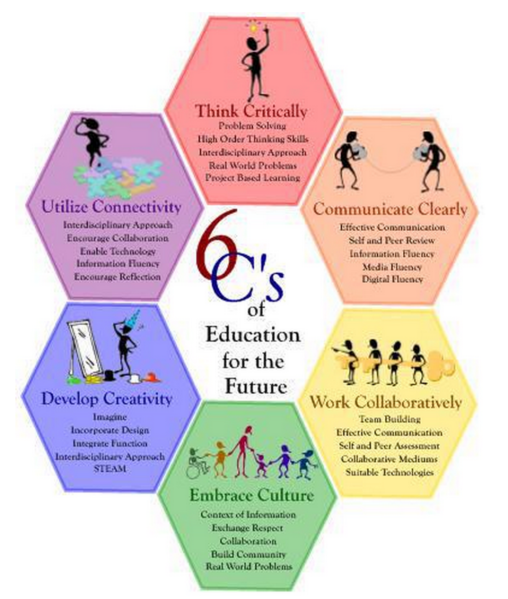
 So how do we add relevancy to the things that we are teaching our students? I’ve had this conversation with several people recently, and my best suggestion is that we need to help our students see how the thing that they are learning about in class actually applies to their life. Recently in my school, many of the science classes have been learning about outer space. Can we tie last week’s amazing launch of Falcon Heavy into their studies of our solar system? What research could be done on the potential and kinetic energy of a rocket launch? Or what about the fact that there is research on the angle of release of a basketball shot being related to it’s likelihood of going in the hoop? Or maybe there are amazing connections that our students can make to our content that we would never even think of – we just have to get out of the way and let them share!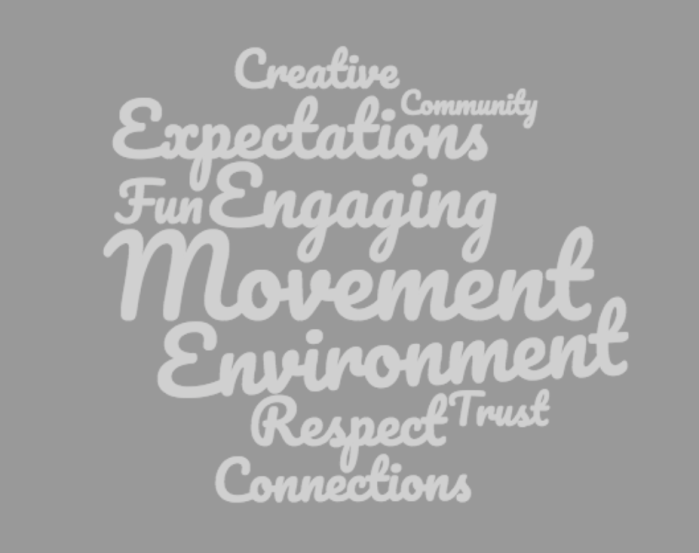


 Basically, Voxer works like a walkie talkie, but also has the ability to send text, photos, and videos within the app. After setting up my account, I was sitting on my deck while Jeff was driving home from school in Texas, and we had a conversation about the Superheroes of AMCMS. At the end of the conversation, he asked me to send him my email address, and he was going to email me some additional resources for continued learning.
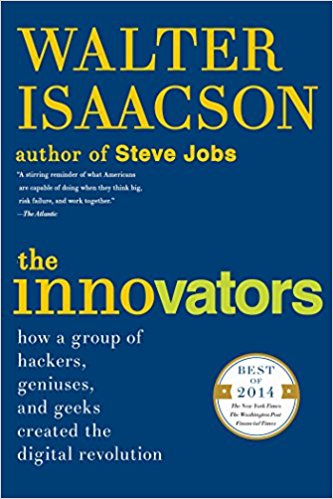 The Innovators has the subtitle “How a group of hackers, geniuses, and geeks created the digital revolution.” This book caught my attention for a couple of reasons – first, I’ve always been something of an early adopter of technology. I love to check out new and exciting innovations. A second reason that this caught my attention is that I’m always curious about how people made the leaps to take us from the earliest computers (devices that took up entire rooms in the basement of college buildings or at military bases), to the technology that I can hold in my hand every time I pick up my iPhone.
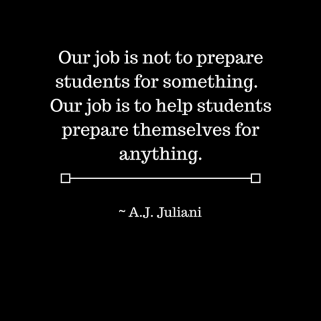 So that brings us to the bigger question: What is school for? While some of our students may consider a role in manufacturing, the factories of today are way different than the ones of the early to mid 1900s that led to this factory model of education. Many of our students will not be heading down the path of manufacturing, so that factory model of school definitely doesn’t apply. If you believe that innovation is going to keep happening (and why wouldn’t it?), then we’re preparing our students for an ever changing world! That is so different from the traditional model of school as a factory. In an excellent TED Talk by Seth Godin, he gives 8 examples of things school should be doing:
 The View from 518