Reaching all our students

One of the challenges of teaching kids in the middle grades (I’m calling that 5th through 8th grade for the purpose of this post) is that physical maturity and social emotional maturity do not always match up.  A couple days ago I was talking with a teacher about the immature behavior of a student.  A comment that stuck with me after I walked away was “But he’s the biggest one in the class…”

Sometimes there is a misconception that the tallest kids are going to be the most mature and therefore capable of doing the most, and that the smallest ones are the least mature.  But in my experience, that expectation doesn’t always work hold true.

The next chance you get, just scan your room.  As you look, you will see a huge variety in physical differences among the kids that are sitting in your room.  Not only are each of those kiddos physically different, they all have differences in their cognitive, social, and emotional needs.  While it’s easy to recognize those physical differences, perceiving what’s going on inside a child is much more difficult.  With all of these differences, how do we try to meet those needs?
Meeting the needs of all learners by differentiating instruction begins with accepting the fact that your students are all cognitively different than one another.

The Center for Applied Special Technology has been focusing their work on the Universal Design for Learning (UDL).  There are three main principles of UDL, and thinking about these principles as you design learning experiences will help you better to reach the diverse needs of your students.

  • Principle 1: Provide multiple means of representation: We can all agree that our students all learn in different ways.  This means it is so important for us to present and represent learning in multiple ways.  Some students would learn best from a video clip.  Others might learn best from a reading assignment.  Others might need graphic organizers to help them to capture their learning.  The key is to remember that if you only provide one entry point for learning, you probably will not reach all your students.
  • Principle 2: Provide multiple means of action and expression: We all have our preferred ways to be able to express our knowledge.  For me, I love to share my learning through written expression. Others might prefer to record a quick video clip, while still others might want to create a presentation through Power Point. The same is true of our students.  While we can have our big ideas and learning targets that we want students to reach, they don’t all have to show what they know in the exact same way. The more choices we offer students in expressing their learning, the more likely we are to meet the needs of every student.
  • Principle 3: Provide multiple means of engagement: We all know that if learners are not engaged, they are not going to be learning.  Students are most engaged when they are given the opportunity to participate in authentic learning experiences that are responding to their questions, concerns, or interests.  If we can give students opportunities to develop they questions or look into their concerns and interests within the scope of our learning goals, they will be more engaged, and feel empowered

Ultimately, our goal for all students is that they learn and grow.  Through the use of these 3 principles, you can design learning experiences that allow our students to feel engaged and invested in their learning, and in turn you will be more likely to move our students forward in their learning.  What are your thoughts?  Have you seen these principles help your students find more success in the classroom?  Are there any principles that you would add to this list?  Share your thoughts in the comments below!

#IMMOOC Week 1: Innovate… why?

Innovate!As we think about innovating in education, it’s always valuable to spend some time thinking about why we do what we do.  As I begin my participation over the next 6 weeks in #IMMOOC (Innovator’s Mindset Massive Open Online Course), I’m driven to think more intentionally about why we innovate, and what innovation means in education.  Below are 3 reasons that stand out to me as why we need innovation in education.
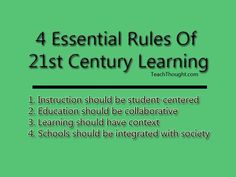
  • The Factory Model of Education – Let me describe something, and you tell me if it sounds familiar: a publicly funded system where groups of about 28 students who are about the same age are taught by one teacher in a room of about 800 square-feet. This is the system of education that developed as a result of the free public education movement put into place in Massachusetts over 150 years ago.  Pieces of today’s curriculum can be tied directly back to decisions that were made about the initial curriculum in the late 19th  In today’s classrooms we continue to teach skills to kids that the iPad they carry can do for them, and then seem surprised that they don’t find value in it.  To give you some ideas of what 21st Century Education might look like, TeachThough.com created a great graphic:

4 essential rules

  • Growth Mindset – Last school year I read the book Mindset by Carol Dweck. While there were many parts of the book that had great value to me as an educator, my favorites came from chapter 7: “Parents, Teachers, and Coaches: Where Do Mindsets Come From?” How we interact with the children in our lives can have such an impact on the mindsets that they develop.  In the portion on parents, I took away the appropriate ways to praise children.  When we give praise that is focused on a child’s intelligence (“you’re so smart!” “you did such a good job on this paper.”), we may harm their long term motivation and performance, because taking a risk would mean possibly not getting that same praise.  Instead our praise should be focused on a child’s efforts and achievements (“I can tell you worked very hard on this!” “I love the effort you put in, but let’s work together on this part to figure out what you didn’t understand.”).  As the chapter continues, it talks about the importance of the words that teachers can use regarding learning.  I think we all know that at times learning is hard.  We need to let our students know that the hard things help us to learn, but only when we put forth effort.  I love watching some of the teachers in my building who are teaching the concepts of growth mindset directly to their students.  The kids in those rooms understand that ideas like struggling and failure help us to continue to grow.


  • Risk Taking – Intuitively I think all educators understand that risk taking is an important part of the learning process. Whether we realize it or not, our students are taking risks every day.  For some, simply talking in the classroom is a risk, for others the risk is in trying something new.  But what about us?  How do we model our own risks to our students?  Recently I was in a classroom and there was an issue with technology.  I overheard the teacher say “I never should have done this” and then shift gears into something entirely different.  What message do we send to our students when we give up at the first sign of failure?  How can we expect them to continue to take risks if we have modeled our own hesitancy to take any kind of risk?  We have to shift our own mindset and be willing to take risks for our student.  If that innovation works, then you may have created a truly meaningful learning opportunity for your student.  If the innovation doesn’t work, you have a real-life lesson on mindsets and how we deal with adversity.  By making ourselves vulnerable in our classrooms, we will show our kids that it’s ok to be a little vulnerable themselves.

These are just a couple of thoughts on reasons why we need to innovate.  What thoughts might you have?  Share your own additions or thoughts in the comments below!

What do you know about each of your students?

At the beginning of this school year we held a back to school retreat.  One of the slides was based on something that Aaron Hogan, author of Shattering the Perfect Teacher Myth, had shared in his Twitter feed this summer.

My Challenge

We have talked over the years about the value of relationships.  We all know that there are some students who are EASY to get to know.  At the same time, we all know that there are some students that are very difficult to get to know.

Getting to know about the things that are tied directly to school is what teachers do. Test scores, homework completion, attentiveness in class…  I think all of us are good at that.  To have a true and meaningful relationship with a student, we need to have a knowledge of all the aspects of the child’s life, not just their ability to “play school.”  To know this, we have to be excellent watchers and listeners.  This watching and listening has to come from the idea that the only way to create solid learning environments for our students is through truly knowing a student.

Do you have a system of tracking what you know about kids?  Whether you have a spreadsheet that you type info into, a stack of notecards with one for each kid, a class list with simple notes, sticky notes in a binder, or whatever works for you, there needs to be some way to keep track of the things you know about those kids.  If you haven’t done this yet, take a few moments in the coming week to assess your own knowledge of your students.  What do you know about their life outside of school?  What interests do they have?  What did they do over the weekend?  What do you know about their family?

As you assess your own knowledge, are there any kids who stand out as someone you don’t know much about?  If you don’t know much about that child, how can you be sure that you are creating a learning environment that meets that child’s needs?

The good news, it’s still very early in the school year!  If there are kids you want to get to know better, there’s plenty of time for that.  Make it a goal to learn what you can about those kids you aren’t able to write much about.  Use strategies like the 2 for 10 method (spending 2 minutes every day for 10 days talking about something that has nothing to do with school) can help you learn a lot in a very short time.  Conversations in the hallway or at recess can be a great chance to get to know kids too.

Caring about kids can have a huge impact.  The kids who drop out of school in 9th or 10th grade don’t decide one random Monday morning that they are going to sleep in and never come back.  Dave Brown and Trudy Knowles share in What Every Middle School Teacher Should Know that:

“The decision to drop out is a reflective process that begins during the middle level years based primarily on the relationships they have at school with classmates and particularly with teachers.”

In the book Canaries Reflect on the Mine: Dropouts’ Stories of Schooling, Jeanne Cameron interviewed several high school dropouts.  One of the things that stood out in the comments from those students was the belief that they needed teachers to notice them and care about them.  That care doesn’t come just from looking at students grades and test scores.  It comes from the recognizing the difficulties that each of our students have in their lives.

If that isn’t enough of a motivator for you to try to get to know those quiet kids a little bit better, I don’t know what would be.  Do you know there are kids that you don’t know much about?  What do you know about the quietest kid in your class?  What are you going to do in the next week to get to know those kids?  Share your thoughts in the comments below!

A cool new app (for me)


I recently came across a hashtag on Twitter that I found pretty interesting: #PersonalizedPD.  As I was going through some of the tweets with this hashtag, I saw this tweet:

It caught my attention for a couple of different reasons – first there was the #PersonalizedPD idea that I was interested in.  Second, there was some gamification to the learning that was happening which sounds cool and potentially highly motivating.  I decided to send Jeff Mann a reply to the tweet saying that I had a few questions.  Later in the afternoon I got a response from him asking if I was on Voxer.  I had heard of it, but never set up an account, but I really wanted to learn more about the Superheroes of AMCMS.

Twitter is great for learning in a lot of ways, but if you want to be able to have a real conversation with someone, it’s not ideal.  Just like a text chat, you can only type so fast, and you lack the tone of voice that goes with a true conversation.  Plus you’re limited to 140 characters in a tweet.  So, I downloaded Voxer, set up an account, and told Jeff I was in business.

VoxerBasically, Voxer works like a walkie talkie, but also has the ability to send text, photos, and videos within the app.  After setting up my account, I was sitting on my deck while Jeff was driving home from school in Texas, and we had a conversation about the Superheroes of AMCMS.  At the end of the conversation, he asked me to send him my email address, and he was going to email me some additional resources for continued learning.
While this chance encounter was cool, I could see Voxer being used within a school building for a group chat with members of a PLC team, or having the account of your teammate to be able to chat.  I know we’re all comfortable and used to texting, but I noticed that the back and forth that Jeff and I were able to have happened much faster than trying to text back and forth with one another.

Do you have any ideas for additional ways that you could use Voxer within your classroom?  What about with your colleagues?  Share your thoughts in the comments below.

What is school for?

Put yourself back in one of your childhood classrooms – at the beginning of the day what was it that your teacher always said?  If it’s anything like my childhood experience, it was something like “Good morning class.” Then what would happen?  The whole class would respond “Good morning…”  And what happened if you weren’t loud enough, or respectful enough?

I think we all have lived that situation – and I may even have been guilty of fulfilling the teacher role (as recently as the first day of school… THIS YEAR!!!).  But here’s the question, what are we teaching with that call and response open to the day?  It’s mostly about teaching obedience.  Traditionally, the common school was built to prepare children to become the factory workers of the future.  Implicitly, and sometimes explicitly, schools taught students to be obedient, to hold a little back, to do the work assigned and nothing more.

Our job is not to prepare students for something. Our job is to help students prepare themselves for anything.So that brings us to the bigger question: What is school for?  While some of our students may consider a role in manufacturing, the factories of today are way different than the ones of the early to mid 1900s that led to this factory model of education.  Many of our students will not be heading down the path of manufacturing, so that factory model of school definitely doesn’t apply.  If you believe that innovation is going to keep happening (and why wouldn’t it?), then we’re preparing our students for an ever changing world!  That is so different from the traditional model of school as a factory.  In an excellent TED Talk by Seth Godin, he gives 8 examples of things school should be doing:
  1. Homework during the day, lectures at night – flipped learning
  2. Open note and open book all the time – if it’s important enough to memorize, it’s also ok to have to look it up
  3. Access – any course at any time – programs like Kahn or MOOCs can achieve this
  4. Precise focused education – not a one size fits all model
  5. No multiple choice – life isn’t multiple choice
  6. Experiences instead of test scores – learning is focused on the experiences that take place inside (and outside) of our classroom
  7. End of compliance as an outcome – while compliance may be needed at times, it shouldn’t be our end goal
  8. Cooperation instead of isolation – the ability to work with others

I could go into more detail on each of these, but I can’t do any better than what Godin did in his talk, so if you’d like to know more about any of these things, check out that TED Talk here.

So here’s my answer to the question “What is school for?”: I want our students to be equipped to go out into the world and make something that has an impact on their lives and the lives of others.  And I want them to know that if they get stuck, to ask for help and support.  While we might not always have all the answers, hopefully we can help our student to find the answers.

I’m curious to hear your answers – for you, what is school for?  Share your thoughts in the comments below!

Using outdoor spaces

Today I was reading a recent blog post by John Spencer about the ways that nature helps us to be more creative (check it out here).  Personally I love to be out in nature, so the post really caught my attention.  The gist of the post was about the fact that time in nature can lead us to greater levels of creativity.  His 5 ways that nature makes us more creative are listed in bold below, with my own thoughts added:

  1. Nature creates positive disruptions – Life draws us into the natural hustle and bustle of our world. Being in nature helps us get away from technology, current events, and everything else that makes it hard for our brain to stay focused.  That time away from all those distractions allows our brains to think more deeply.
  2. Nature encourages problem-solving – Almost every time I go for a hike, or spend some time in nature, I’m inspired to write a new blog post, or solve a problem, or be creative.
  3. Nature helps us embrace deep work – When do you do your best thinking? There is a lot of research that says that simply being active can lead to deeper thinking.  Simply going for a walk helps us activate our brain in different ways.  According to some research, throw nature into the mix and you multiply that effect.  So what does that mean for you?  Before teaching a particularly important skill, take your class for a walk in the woods outside of school.  Your students brains will be better prepared for deeper thinking when you return.
  4. Nature humbles us while also expanding our worldview – I’m not sure how many of you know this about me, but I was a 10 year 4-H member. I didn’t show animals (we weren’t on the farm), but I did lots of other projects over the years.  One of the projects I did required me to take multiple observations of a natural environment every day over multiple weeks.  I chose a small wooded area with a trail just a little over a mile from my home.  I had to observe at different times in the day, and I began to notice changes in what seemed like an untouched environment.  Some animals were more or less active at certain times of the day, some plants looked different depending on various factors.  The time I have spent in the natural world helps me realize that there are so many things happening in the world around us that we miss when we are in our cars, or on our devices.  Sometimes you really do have to slow down, look around, and smell the flowers in order to be aware of what’s happening in our world, and to realize how little control we have over so much of what’s around us.
  5. Nature can spark innovation – Did you know that Velcro was designed by a Swiss engineer after his dog was covered in burdock burrs after going on a hike? Or that the design of the nose of Japanese high-speed trains was meant to mimic the beak of a kingfisher?  These are just a couple of examples of innovations that came about because of things that people noticed in nature.  Imagine what the future scientists of the world (our students) may be able to develop if they learn to look to nature for ideas and solutions to our problems.

Reading Spencer’s post got me thinking about the natural wonders just waiting to be explored outside of our school.  By walking out the doors of our building, you can access a variety of outdoor environments.  Between the trails in the wooded areas, the stream running through the woods, the untended plain near the baseball fields, or the river, there are so many ways for us to access nature.  And the benefit doesn’t just stop with the kids being out in nature away from their devices.  Something they see while they are with you may inspire creativity and wonder in a way that is totally unexpected.

What have you done with your class in our outdoor areas?  Have you seen increased levels of creativity as a result of the time you have spent outside?  Share your thoughts in the comments below.

What does John Wooden have to do with teaching?

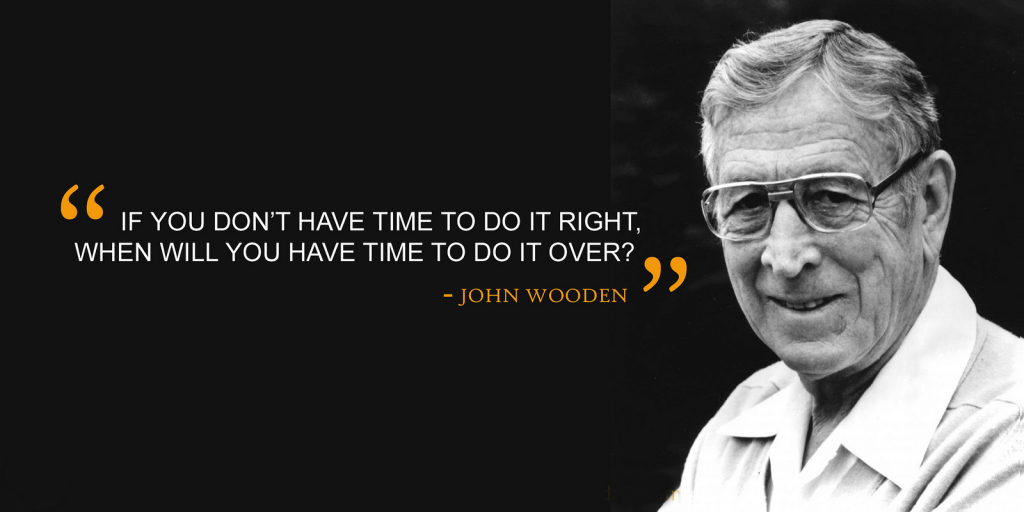
As many of you know, when I was still teaching, I also coached basketball.  In one of the first seasons I was coaching, I attended a coaching clinic.  I learned a ton that day, but one of the things that has stuck with me even beyond my time as a coach was probably a throw away comment by one of the assistant coaches about John Wooden – one of the greatest college basketball coaches of all time.  During the clinic we were talking about a variation on Coach Wooden’s famous secondary break, and someone mentioned one of Wooden’s books.  I jotted a note to myself, and ordered it from Amazon later.  When it arrived, I expected a book with information about various plays and strategy – after all it is a book on coaching.  What I found however, was that the majority of the book was on coaching philosophies.

To me, this was valuable information as well, I mean the guy is one of the most successful college basketball coaches of all time, coaching his UCLA teams to 10 national championships, including a stretch of 7 consecutive national championships.  During his years as the coach at UCLA, he was able to get some of the best basketball players in the country to come and play for his team.  One of the things that I found most intriguing as I read about Wooden’s coaching was in how he began his season.  He was bringing in some of the best recruits in the country, there were many players who went on to careers playing in the NBA, and yet every season, no matter who was on the team, Wooden would start the first practice in the locker room talking about how players should correctly put on their socks and shoes.  He felt that you had to start at the absolute beginning with everything in order to make sure that the players on his team knew the expectations and procedures that were part of success for UCLA Bruins basketball players.

Every year at the beginning of the school year a new group of students walk into your classroom.  We have to look at each of those kids as our top recruits – we know that they are in the eyes of the parents who trust us to help their children learn and grow while they are here with us.

When Wooden got his top recruits, he could have easily gone straight to the basketball court to start working on offenses and defenses that the team would run throughout the year – I mean these guys all knew how to put on their socks and shoes, they had to have been successful players in high school to end up at UCLA.  But Wooden knew that expectations and procedures were the key to a successful season.  He started with the small things – socks and shoes.  Once they made it to the basketball court, much of their time in the early part of the season were on fundamentals – dribbling, passing, footwork.  Wooden understood that if you had a solid base of expectations, teaching players to play the game the way they needed to in order to be successful would be so much easier.

So, how do you spend your time at the beginning of the school year?  I know that it can be tempting to think that our students, most of whom have been “in school” for 5-6 years, know what is expected.  It can be easy to skip over the base level procedures.  Just like Wooden could have said that his players knew how to put on their socks and shoes, or they knew how to dribble, pass, and move their feet, we could assume that our students know how to line up, how (and when) to sharpen a pencil, how to work in a small group, etc.  But here’s the thing – it’s possible that the way you expect students to do some of these things is different than the way that a past teacher expected things to be done.

I am writing this post in late April, knowing that I’m not going to post it until the beginning of the school year.  In my role I have the privilege of visiting lots of different classrooms, seeing how different people spend their time, and seeing what people value.  One thing that I notice in April is that the teachers who have invested time throughout the year with the basic expectations – like Wooden did with socks and shoes – are currently (in April) having the most success with student behavior.

So, what are the things we need to teach on the most basic level?  Here are just a few ideas that come to mind:

  • Transitions
  • What to bring to class every day
  • Small group time / collaboration time
  • Lunch
  • Recess
  • Restroom expectations

What might you add to your list?  There might be expectations that are specific to your content area, or there might be things that don’t apply for your class structure.  In the last couple of years I was in the classroom, I created a 1 slide power point for each of these situations along with a few that were directly connected to my content area, and I would display them every time that it fit at the beginning of the year.  As the year went on, I would spend less and less time on the review, unless I noticed a pattern of issues.  Then we might review for a few days.  We would also spend some time reviewing each of the expectations after any break from school.  While this did not always solve every single issue, it helped in the long run, and by taking the time to create these slides in advance, it was easy for me to pull one up and display for my students.

As you prepare for your school year, what are the socks and shoes type of procedures that your students need to know about in order to be successful in your classroom?  After creating a list of expectations, think about the method that might work best for you to be able to teach your students those expectations.  It can be easy to assume that our students will know what to do, but they might not.  Maybe you will share your procedures in a power point slide like mine, maybe it’s something more involved like a student created video.  Whatever the plan is, take the time to think about how you can share your expectations with your students so that they truly know what to do.

For your students to be truly successful, they have to have a solid foundation.  What pieces of the foundation do you think you need to work on the most for your students to learn and grow in your class?  Share your ideas in the comments below – maybe your thoughts and ideas will spark an idea for others!

What did you do this summer?

It’s that time of year – my summer break has ended and I am back in the office preparing for a new school year and the new group of Hawks that will be coming into our building.  As I’ve been at school, I’ve been running into a lot of people that I haven’t seen much during the summer.  Invariably one of us ends up asking “What did you do this summer?”  It’s exciting to get to hear about the awesome things that my friends have been doing, or to share the fun things that I did with my family.

In all my years as an educator, there is one other thing that I have done consistently every summer – it’s been an opportunity to learn.  I always have a stack of professional reading that I want to complete (currently there are 12 books in that stack).  At the beginning of the summer, I grabbed a couple of books from the stack that I really wanted to read, and they came home for the summer.  When someone asks about what I did during the summer, this isn’t something that I always think to share in those conversations, but I think there’s great value in sharing our learning.

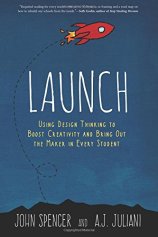
The first book in that stack was one that I had started reading prior to the end of the school year.  Launch: Using Design Thinking to Boost Creativity and Bring Out the Maker in Every Student by John Spencer and A.J. Juliani was so intriguing that I ended up putting together a PD session to share at Launching Inquiry.  Design Thinking is all about creating the conditions to allow students to use their curiosity to find things that they can make and share with a real audience.  Innovative activities like this will empower our students to find problems in their own world, and then seek out meaningful solutions – we can help to give them the tools.

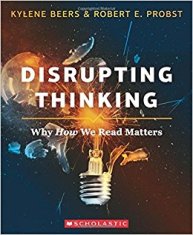
My second book this summer was Disrupting Thinking: Why How We Read Matters by Kylene Beers & Robert E. Probst.  In this book, the authors lay out a framework (called Book, Head, Heart) to help us all understand that there are multiple types of thinking going on when they are reading.  While it is important that kids know what’s happening inside of the book (able to summarize, notice what the author is doing, and understand the theme of the book) Beers & Probst also point out how important it is to recognize what you’re thinking about in your head, and how the book makes you feel.  Each piece is an important part of the interaction that takes place between a reader and the text.

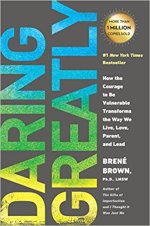
The third professional book, and one that I haven’t yet finished, is Daring Greatly by Brene’ Brown.  In this book, Brown pushes us to understand that vulnerability, or the willingness to put ourselves out there, is part of what brings meaning to our lives.  Without being vulnerable, and willing to dare to do great things, we risk not really living.  It’s scary to make ourselves vulnerable, but only through going out on that ledge can you accomplish great things.

I look forward to continuing my learning – it truly never stops.  As you think about what you did this summer, I’m curious – what did you learn about?  As educators, we’re all committed to being lifelong learners.  Sharing with others, including our students, is a great way to further our own learning.  Share below anything that you learned this summer!

The why

This week was one of the most exciting learning opportunities that I will have all summer.  On Wednesday and Thursday of this week, my home school district held an event called Launching Inquiry.  This 2-day event had a keynote speaker both mornings, and then multiple breakout sessions throughout the day.  Today I’ve been reflecting on my learning from the event, rereading my notes, highlighting things, and thinking about next steps for all of the learning that happened while I was there.  I find myself repeatedly returning to one quote from the event:

This quote came from a breakout session with Will Richardson (@willrich45).  I’ve posted before on a description of my “why” for education (What’s your why?), but after sitting through Richardson’s keynote, and a couple of breakout sessions with him, I find myself re-examining my why.  In my original post, I identified my kids as the primary catalyst for growth, along with each of the students who set foot in my school.

For a fuller context of the quote above, in the breakout session we were talking about new literacies, and the role they may play in self-determined / self-directed learning.  Based on a question from one of the other participants in the breakout session, we began talking about the topics that today’s kids need to know to be able to actively participate in society.  If we let student learning be self-determined, some worry that they will only learn about the things that they are passionate about – so they might only study baseball, or animals, or whatever it might be that draws their attention, and never learn about the things that they aren’t passionate about.  If that’s all they “know” and all they learn, how will they be able to participate in dinner conversations that branch into other topics? (maybe it’s politics, maybe it’s history, etc.)

The issue with this idea of topics that kids “need to know” is that depending on who you talk to and what their background is, that list of things kids need to know is a moving target.  In the session, the example that was brought up was the idea of World War II.  While I consider myself to be a person who is well rounded, and a guy that likes learning about history, I don’t know how much I’d truly be able to offer to a conversation about the intricacies of World War II.  I could share my surface knowledge, but to be able to get into an in-depth conversation, I might need my brain hard wired into Google.

Think about it like this: if you were to put a math teacher, science teacher, English teacher, and history teacher together to create a list of the 3 most important things that all students need to know, odds are it would be impossible for them to come to consensus.  Each would likely put higher value on their own content, and lower value on the content of others.

As I processed this quote, and other aspects of the conference, I wonder if we might be having a hard time seeing the forest through the trees.  The research is solid, kids don’t maintain our “content” for a long period of time.  If you give a kid an end of course assessment in June, and then the exact same kid takes the exact same test in September, you are going to see a significant decline.  The content doesn’t stick – no matter how great a teacher you are, or how great a student you give it to.

So, what are the implications for each of us?  For most of us, when someone asks us what we teach, our answer is our grade level, or our content area.  I’m starting to think that the content area is the individual tree.  But the beauty of the forest is all of the trees together, along with all the other things that are living and growing (or sometimes decomposing) there.  And for me, that forest has to be the concept of learning.  If we know that content doesn’t stick, if we know that kids are probably going to forget a portion of the content that we teach them, then I guess the forest – the thing we need to focus on – isn’t so much what our students learn, but simply that they know how to learn, and have a desire to learn.


In Richardson’s keynote, he used the phrase productive learning.  Seymour Sarason says:

“Productive learning is where the process engenders and reinforces wanting to learn more.  Absent wanting to learn, the learning context is unproductive.”

After processing these thoughts, it’s time to come back to my why.  It’s going to continue to be my kids, and it’s going to continue to be the students that walk into my school building in August, but it’s also going to be about productive learning.  It’s going to be about creating situations where our students want to learn more.

What are your thoughts?  Do you have ideas on how you’re going to help get your kids have the desire to learn?  Share them in the comments below.

Make it meaningful

I was recently directed to an interesting article by Zachary Johnson titled “Bored Out of Their Minds” (click here to access the article).  While there were several aspects to the article that I connected with, and lots of interesting data and statistics about students’ engagement, one passage in particular stood out to me.

“But the biggest shift we need,” Rose believes, is much more elemental. “We need to get away from thinking that the opposite of ‘bored’ is ‘entertained.’ It’s ‘engaged.’” It’s not about pumping cartoons and virtual reality games into the classroom, it’s about finding ways to make curriculum more resonant, personalized, and meaningful for every student. “Engagement is very meaningful at a neurological level, at a learning level, and a behavioral level. When kids are engaged, life is so much easier.”

Parts of this quote come from Todd Rose, author of The End of Average.  I read the book last fall, and wrote a couple of posts on the ideas learned from the book here: Part 1; and here: Part 2.  The idea of the book is that the “average person” just doesn’t exist – there is jaggedness to us all.  The implications of this jagged profile for educators is that we have to remember that no matter what label a student may carry, they all have strengths and weaknesses.  We can’t expect our students to fit into specific characteristics that we place on them.

What leads kids to disconnect as they grow older?  One of the things that Johnson brings up is that as students grow older, they have less and less choice in what they do.  I think back to my own educational career – in elementary school we were given great leeway to dig into the topics that interested us.  I was free to choose what books I wanted to read (my sixth grade reading log would show lots of Stephen King novels), what topics I wanted to research for the science fair, and how I wanted to share my learning as we discussed European explorers visiting the “New World” – these are just a few of the choices I got to make.

This photo was titles “Boring Lecture, 1940s”
https://www.flickr.com/photos/dukeyearlook/2076633334/in/photostream/

By the time I got to high school free choice was mostly gone, most classes were lecture based.  Many of my class syllabi were the exact same as the ones that were used for the students before me, and the students before them.  I remember being checked out of my trigonometry class (sorry Mr. Petry), putting forth just enough effort to get through biology, and being bored out of my skull by the filmstrips that were shown on a daily basis in world geography (at least I could get extra credit by bringing in a box of Kleenex anytime we were running low).

So how do we help our students to stay connected to the learning that happens in our room?  The HSE21 Best Practice Model helps us to get there.  We can help provide the relevance for our students to see why it’s important to learn whatever it is that we’re doing in our classroom.  We can give our students choices in how they express their learning.  We can push our students to ask questions and wonder once they have seen the relevance in their learning – getting us to that inquiry driven study that we’re looking for.

As the summer approaches, take some time to reflect on the things that your students have done this year.  What are the things that worked best?  What are the things that fell flat?  With those things that were best, what was it that got the kids excited about learning?  And with those things that may not have been so great, how can you add more relevance and choice so that students may be better engaged?  Remember, as Johnson says above, engagement isn’t about entertainment, it’s about finding ways to make the curriculum more meaningful for every student.  I’d love to help you on that path!  If you have an idea and want someone to brainstorm with, let me know.  Two brains are always better than one!

What are some of your best engagement strategies?  How have you been able to get your students highly engaged in learning in your classroom this year?  Share with us in the comments below!