

Ever since seeing the animated version of Ken Robinson’s “Changing education paradigms” TED Talk, I’ve been thinking a lot about the things we do in school. I’ve definitely noticed, and at times have been a part, of the factory model version of school. In this model, kids come in, we give them what we believe they need, and then we move them along to the next level. I feel the biggest shift in my beliefs about education began around the time my oldest child was born. Throughout my career, I have run into the occasional student who made comments like “I hate school,” or “School’s boring.” Early in my career, the typical response to these types of statements might have been something along the lines of “Well, you have to be here, so you need to make the most of it.” I put the onus on the students – it was their responsibility to do school, and if they didn’t like it, well too bad.
After our daughter was born, I started to notice things in a new light. It wasn’t just the kids who were disconnected socially or the kids who were doing poorly in class that were saying that they didn’t like school, or that they thought it was boring. I started noticing kids who were really bright, kids who seemed to have great relationships with their classmates, who even seemed to like me and their other teachers, that just went through the motions in the classroom. They did what they had to in order to keep the adults in their lives happy, but they would never have thought of doing anything that was above and beyond. And those kids told me about how much they didn’t like school, they shared how boring they thought some of the things we did in class were, and I began to think that if there were kids who were so on top of things and did well in class who hated school, maybe this wasn’t a student issue, but rather a teacher issue. Maybe this had to do with what I was doing in my classroom.
As a science teacher, I noticed that kids were pumped for the days we were doing hands on learning. If we were in the lab, the curiosity was there, and energy was flowing! I began trying to find more opportunities for students to be active in their learning and found that some of those more passive learners were much more excited to come into the classroom. This seemed like a win to me.
Maya Angelou has a great quote – “Do the best you can until you know better. Then when you know better, do better.” For a long time, I viewed the role of the teacher as the gatekeeper of information. I was the keeper of the knowledge in my classroom, and students got what I thought they needed when it was time. But the results were poor. Students were bored, disengaged, and there was no desire to learn. Many just went through the motions.
As my mindset shifted, I began to seek out more opportunities for students to make choices in their learning. I began integrating technology as a learning tool, checking out iPad carts and using tech to enhance learning opportunities. Little did I know that I was on the leading edge of innovative thinking in the classroom.

Currently, I’m reading Learner Centered Innovation by Katie Martin. In it she says that “Our job is not to provide the answers that can be found in a textbook or in a webpage but to create the conditions that inspire learners to continue to wonder and figure out how to learn and solve problems and seek more questions.” The most important piece of the puzzle in this process is not the technology, or access to it, but rather teachers who can help to spark that curiosity in their students. Those teachers need to be able to find the wonder that exists in all kids, and then fan the flames to help them turn that wonder into amazing learning opportunities.
I look forward to continuing to share my learning from this awesome book from Martin, it will probably be the basis of my posts over the next few weeks. But I’m curious… What have you noticed about learning when you create opportunities for your students to explore their wonders in connection with your material? Share your thoughts and experiences in the comments below!
 If a student can turn to Google, Siri, Alexa, or whatever smart tool comes out next to find the answer to your question, then maybe we aren’t asking the right questions.
 The students in our school in general are very compliant. Compliant students sometimes struggle with creative tasks because they want specific directions to follow. They may not remember what it feels like to be creative or curious. Years of compliance in the school setting seems to suck creativity and curiosity out of our students. I think that sometimes students lose that ability to be creative and curious because they have grown accustomed to the amount of scaffolding that we provide for learning activities. That scaffolding can begin to feel a bit like a cage, and students forget how to get out.
 So how do we add relevancy to the things that we are teaching our students? I’ve had this conversation with several people recently, and my best suggestion is that we need to help our students see how the thing that they are learning about in class actually applies to their life. Recently in my school, many of the science classes have been learning about outer space. Can we tie last week’s amazing launch of Falcon Heavy into their studies of our solar system? What research could be done on the potential and kinetic energy of a rocket launch? Or what about the fact that there is research on the angle of release of a basketball shot being related to it’s likelihood of going in the hoop? Or maybe there are amazing connections that our students can make to our content that we would never even think of – we just have to get out of the way and let them share!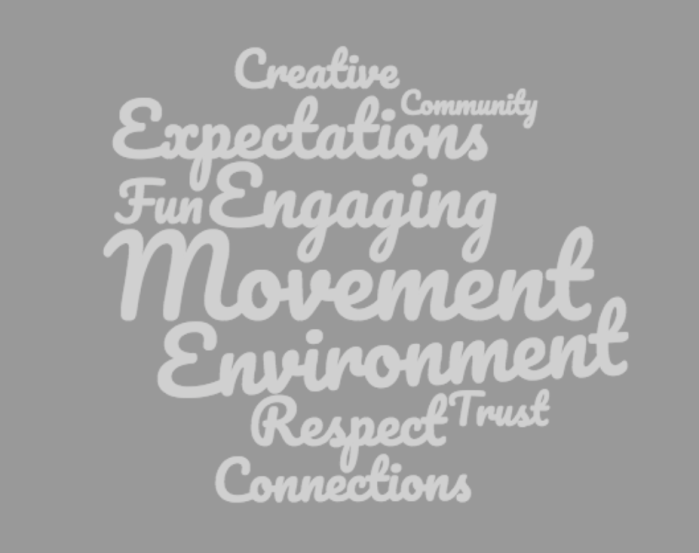


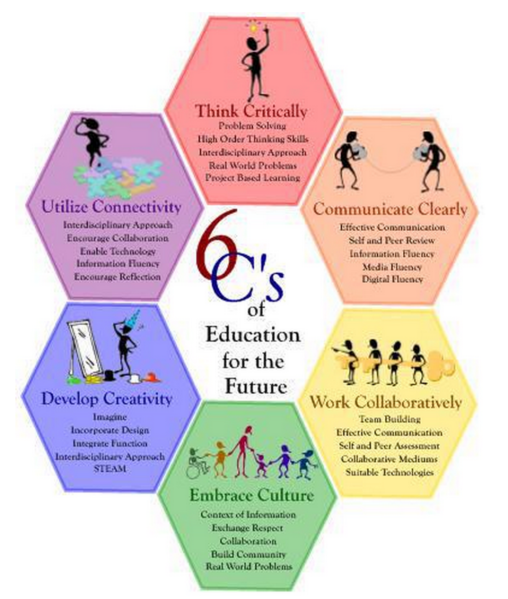
 Basically, Voxer works like a walkie talkie, but also has the ability to send text, photos, and videos within the app. After setting up my account, I was sitting on my deck while Jeff was driving home from school in Texas, and we had a conversation about the Superheroes of AMCMS. At the end of the conversation, he asked me to send him my email address, and he was going to email me some additional resources for continued learning.
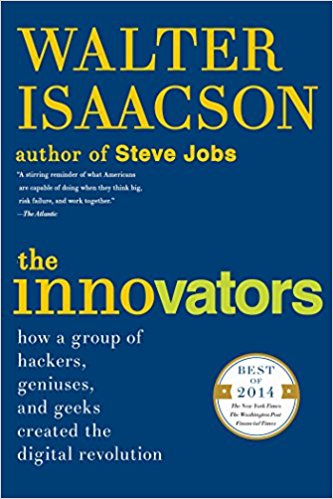 The Innovators has the subtitle “How a group of hackers, geniuses, and geeks created the digital revolution.” This book caught my attention for a couple of reasons – first, I’ve always been something of an early adopter of technology. I love to check out new and exciting innovations. A second reason that this caught my attention is that I’m always curious about how people made the leaps to take us from the earliest computers (devices that took up entire rooms in the basement of college buildings or at military bases), to the technology that I can hold in my hand every time I pick up my iPhone.
