Engaging & empowering our students

Last week I shared with you some data on student mental health issues, anxiety, and student engagement.  I closed the post with these three points:

  1. Mental health concerns in our students are rising.
  2. Levels of engagement decline as our students grow older.
  3. Even with increased focus on standards, performance on standardized testing has remained stagnant.

So what can we do?  I’m sure that all of you have noticed these patterns in our own classroom, but knowing the pattern is only part of the task of finding a solution.  In last week’s post I shared the work of two college professors.  Going back to their work, I hope to share a couple ways we might be able to help fight anxiety and lack of engagement.

Peter Gray, the psychology professor from Boston college, feels that the key to learning and growth for our students is free play:

Children today are less free than they have ever been.  And that lack of freedom has exacted a dramatic toll.  My hypothesis is that the generational increases in externality, extrinsic goals, anxiety, and depression are all caused largely by decline, over that same period, in opportunities for free play and the increased time given to schooling.

So as a school, what does play look like?  For one it means we have to be sure to value recess/physical activities during the school day.  There is clear research that one of the benefits of physical activity is increased student engagement.  Think about your classroom on an afternoon where we did not have outdoor recess due to weather.  What are the engagement levels like?

Several recent research studies have looked into increased free play time in the school day, and the results suggest that students with regular recess behave better, are physically healthier and exhibit stronger social and emotional development.

Knowing these facts, does that lead you to think about changing what you do when you return to the classroom on a day when we are unable to go outdoors for recess?  Hopefully you can think about finding a way to squeeze in some free play on those days.  If not free play, then a few short brain break activities to get the kids out of their seat and moving.

And what about the days that students already get their recess?  Does that mean we don’t need to look for other opportunities for play?  Many of our teachers have been doing outdoor activities here at school this week.  I’m sure that they would share that the students are loving the activities they’ve been doing – they are active, engaged, and empowered in this learning environment.  My question though: Do we only save activities like this for the end of the school year?  Or do we try to integrate play into our lessons throughout the year?  How can we make use of our outdoor space, our small and large group instruction rooms, or even just the hallway to get the kids up and playing as they are learning?

Next we have the issue of engagement.  For the purpose of this piece, I am defining engagement in school based on the Schlechty’s Center for Engagement definition:

  • The student sees the activity as personally meaningful.
  • The student’s level of interest is sufficiently high that he/she persists in the face of difficulty.
  • The student finds the task sufficiently challenging that she believes she will accomplish something of worth by doing it.
  • The student’s emphasis is on optimum performance and on “getting it right.”

Is it engagement when we work hard to get students into content that we have selected for them?  You may be able to get their attention, but if it’s based on extrinsic goals (like a grade) the motivation may not last.  So here are some ways you might be able to increase motivation in your classroom:

  1. Students are more motivated academically when they have a positive relationship with their teacher.
  2. Choice is a powerful motivator in most educational contexts.
  3. For complex tasks that require creativity and persistence, extrinsic rewards and consequences actually hamper motivation.
  4. To stay motivated to persist at any task, students must believe they can improve in that task.
  5. Students are motivated to learn things that have relevance to their lives.
HSE21 Best Practice Model

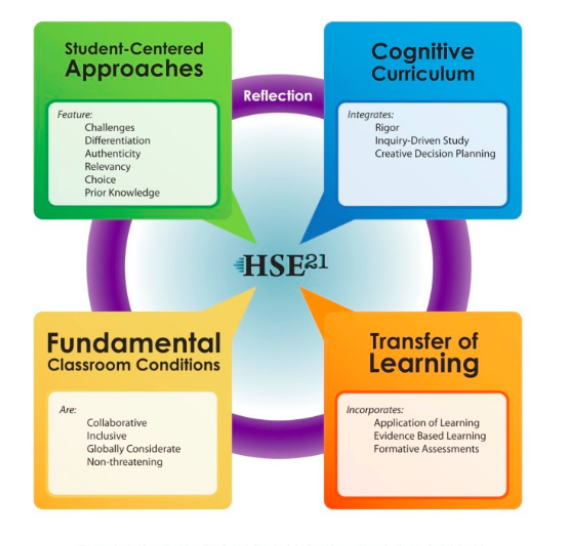
As you spend time thinking about bringing more inquiry into your classroom, as you work to better incorporated the HSE21 Best Practice Model, you will begin to notice increases in your student engagement.  When we provide our students with challenges, with activities that are relevant to their lives, when learning is rigorous and based on inquiry-driven study, when students are able to apply their learning in collaborative ways, when we work to incorporate more of the HSE21 Best Practice Model we will see increases in student engagement.  In fact, if we work towards truly relevant and rigorous study students will not only be engaged, but actually will be empowered to take their learning to levels that we can’t possibly imagine!

As we approach the end of the year, take some time to reflect on things you have tried that have been new.  What activities have led to increased levels of engagement?  What ways have you been able to get a kid truly excited about what they are learning?  Now, think ahead – how can you take the things that have been successful and expand on them for next school year?  Share your thoughts in the comments below.

Moonshot Thinking

We choose to go to the moon. We choose to go to the moon in this decade and do the other things, not because they are easy, but because they are hard, because that goal will serve to organize and measure the best of our energies and skills, because that challenge is one that we are willing to accept, one we are unwilling to postpone, and one which we intend to win, and the others, too. ~John F. Kennedy

5 Paragraph Essays & Newspaper Articles vs. Blog Posts & Copywriting

If I were to ask you to write a mission statement as a teacher, what would you write?  If it could only be one sentence, what are the things that would be most important for you to share in your beliefs about our students?  For most of us, I think somewhere in there we’d say something about preparing our students for the future.  That means we have to think about what the future may hold.  I know I’ve shared the quote below, but remember what Thomas Friedman says about today’s workers:

Daily Quotes (2)

While we may not know exactly what the future may hold, we know that there are some things that our students probably will not be doing much of in the future.  Stop and think for a minute – when was the last time you wrote a five paragraph essay?  ELA teacher please don’t hate me for saying this, but really, when was the last time you needed that skill?  I say all of this knowing that when I last taught ELA, we always had at least one research paper that was submitted in the five paragraph format.  Now, I agree that there are aspects of a five paragraph essay that are essential – being concise in our argument, having a clear structure for our writing, etc., but are there other formats of writing that could allow us to teach these same skills and at the same time be innovative?

What about another one of those writing activities that appears in many classrooms (including mine in the past) – the newspaper article.  Now, I will say that I have a subscription to the Indy Star, and while I can’t say that I ever read it cover to cover, and that there are some days that I don’t get to it at all, I do love having the option to sit down and read the paper.  However, the statistics on print media are noticeable.  I did a quick google search and found the charts below.  There’s less money coming into print media in the form of ad revenue, and the number of workers employed in newspaper publishing has been in pretty steady decline.

Now, I may be ruffling a few feathers here – and by no means am I saying that I think our students should never write a five paragraph essay or a newspaper article, but given the probable lack of a need for those skills in their future, what might be more valuable ways for our students to spend their time?  Two things that come to mind – blog posts and copy writing.

More and more, newspapers are trying to reach readers in formats other than print media.  I see IndyStar writers pop up in my Twitter feed sharing copy trying to get people to click the links and go the their site.  I see news articles online that are formatted more like a blog than a newspaper.  Two ways to help our students be able to reach the greater world would involve writing blog posts (like what you’re looking at right now), and learning a little about copywriting (the art and science of writing words used on web pages, ads, promotional materials, etc., that sells your product of service and convinces prospective customers to take action).  Now, I know that our students aren’t trying to sell things, but the skills of writing good copy will help our students be better overall writers.

HSE21 Best Practice Model

Throughout the year you have heard us talk about the HSE21 best practice model.  You’ve also seen examples of the “Less of this, more of this” charts.  Again, I’m not saying we should throw out the five-paragraph essay or the newspaper article.  But we also need to think with an eye towards the future.  What types of writing will be the most valuable for our students when they leave school and move on to a career?

Think about it, a student in your class could write a blog post on something they have been learning about.  Other students (or teachers, parents, family members, or maybe even experts in a given field of study) would be able to read and respond in the comments to their thinking.  Students would be able to share their blog site with their friends and family members.  Parents wouldn’t have to ask the dreaded “What did you do at school today?” because they could have looked at the most recent blog post and say “I saw in the most recent post to the blog that you are learning about …, tell me more about that.”

It’s also been proven through study after study that ELA scores are impacted most by reading and writing across the curriculum (teaching reading and writing skills should not only be the job of the ELA teacher).  What a valuable expression of learning it would be for our students to write a blog post about their experiences in math, art, science, or gym (or any other subject!!!).  And another great thing about blog posts – they don’t have to be just words.  WordPress (and most other blog sites out there) will allow pictures, video, and audio, and if I really wanted to, I could create an entire post from my WordPress app on my cell phone or my iPad.

What are your thoughts on student created blogs?  Can you see a way that you could enrich the learning of the students in your class through writing about it?  What about copywriting?  Curious how it could fit into the writing activities you are already doing?  Wanna talk more about this?  Share your thought below.  We can find a structure to make it work in your classroom!

The Crossroads of Creation and Consumption

What’s the last thing that you “consumed”?  Maybe it’s a new series on Netflix, or a great book, or maybe you listened to a playlist of songs you love.  All of those could be examples of consumption.  Our students are experts at consumption!  Playing a game while listening to music, and with something on the TV.  I know that often in our classrooms we are seeking to help our students to create something for the world.  In your ELA class you might expect them to create a presentation to go with their persuasive research paper.  In science it could be creating an experiment that shows some of the scientific properties that you have been studying.  In math you might ask them to create a model of some of the geometric shapes you have been learning about.  This list could go on.

Oftentimes we think of consumption as fairly low level thinking, while creating is higher level thinking.  But I want to challenge that a bit today with certain types of consumption.  Recently my family decided that we wanted to have a vegetable garden in our back yard, but didn’t know exactly what that might entail.  I consumed information from websites and blog posts to think about where we should put it, and how we would create it.  After looking at a variety of options, we decided that we were going to do a raised bed in the back yard.

Next we had to come up with a design.  Again, I consumed resources.  I jumped on Pinterest and looked at pictures of examples of raised bed gardens.  Did we want to use stone or lumber?  Once we decided on wood, then it was a question of what kind.  My searches on Pinterest took me to various websites that talked about the advantage of cedar compared to redwood compared to treated lumber.  The options (and the opinions) seemed endless.  Eventually we decided to go with treated lumber.  Check out the pictures below documenting some of our process!

I guess what I’m getting at is that all of us have to consume from time to time, and so do our students.  Part of 21st Century Learning requires consumption, but I think we would all agree that there is a difference in consumption of a series on Netflix or a book that we are reading for enjoyment as compared to the type of consumption that we do when we want to learn about a new teaching strategy or a project that we want to do at home.  That’s where we come in – through guiding our students in how to consume information, we can help make sure that consumption is for the purpose of learning and creation.

What strategies have been successful to guide your students to meaningful consumption?  What things have you consumed that have led to additional learning?  As lifelong learners, it’s important to verbalize what we are still learning about!  That’s part of what I am documenting in these weekly posts, my own learning!  Share with us in the comments below things that you have taken in that have led you to create something – for your students, your classroom, your family, or just for you.  Or share with us some of the things you students have created!

If you find the idea of creation and consumption interesting and would like to dig a little bit deeper, check out the Ted Talk by Larry Lessig titled Laws that choke creativity.  It might lead you to think about consumption a little bit differently!

All means all

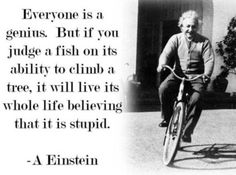
Einstein genius

How many times when talking with others in our school do you hear the phrase “We have to get them ready for ____”?  You can fill in the blank with all kinds of different phrases – things like 6th grade, junior high, ISTEP, or any one of the other things we are trying to get our students prepared for.  It is a valid thing to think about because we do have to prepare our students for the future.  However…

This is how some of the students in HSE are starting their experiences in our kindergarten classrooms.

How often do you hear the words “We have to be ready for the students that are coming to us.”?  In most schools, the environment of the school is set up for one specific developmental stage.  I know through conversations with many of you that we have at least a cursory understanding of the fact that our 10, 11, and 12 year old students fall all over the developmental spectrum.  It’s one of the things I love about working with 5th and 6th grade students, but it can also be one of the greatest challenges.  While not being intentional, sometimes schools set up a system that expect all students to fit within a certain box, and when they don’t fit, it creates struggles for students, teachers, and parents.  So the question begs to be asked, is our system set up to meet our students wherever they are in terms of developmental needs?

Think about this for a moment: Should we be worried about whether the kids are ready for the school, or should we be worried about whether the school is ready for the kids?

Next week’s post will share with you my recent experiences visiting a few elementary classrooms.  I am sharing these not to say that we need to try to mirror their methods or strategies, but to help us understand the types of classrooms our students will be coming to us from.  One of the things that I feel sometimes happens in education is that teachers of older grades sometimes “look down upon” the teachers of younger grades.  I think there can be great value in learning from the ways that teachers in grades below us meet the developmental needs of their students.

As we move forward, let’s work towards building our expectations for our students based on where they are when they get to us.  We can still strive to move them to where they need to be, but we need to be open to the fact that some of our students do not fit in the box that we have created for them.   Some of those outliers may need us to provide extra support, while others may just need us to get out of the way and let them learn.

What strategies and methods do you use to meet the needs of the student who walks into your classroom on a daily basis?  Are there methods that seem to help your students who are less mature than the rest of your class?  Or, on the other end of the spectrum, what do you do with the students that are much more mature than the others in your classroom?  Share your thoughts in the comments below!


The importance of failure (and a little about Elon Musk)

Last week I received an email from one of my favorite blogs directing me to a post titled “What Teachers Can Learn About Failure From Elon Musk” (you can click on the link if you’d like to see the original post).  The gist of the post is that as teachers and learners, we have to fail, and be willing to share those failures, as part of the learning process.  I thought of the saying “Fail Forward” as I read one of the early paragraphs.

elon-muskThe post then talked a lot about Elon Musk.  This is a guy I had heard of – I’ve seen his TED Talk, Tesla makes some pretty cool cars, and as a self described nerd, I have watched multiple SpaceX launches and attempts at landing with interest.  So as I was reading about Musk, I was curious to be directed to a series of posts about Elon Musk from the blog Wait But Why (Check it out here: Elon Musk: The World’s Raddest Man).  After going deep into some background on the history of fossil fuels, automotives, space travel, and a few other topics, I also walked away with a newfound interest in Elon Musk, as well as an understanding of why Tim Urban, the author of Wait But Why, describes Musk as such a rad dude.

As a college student what were you thinking about?  When Musk was in college, he asked himself “What will most affect the future of humanity?”  His list contained 5 things: “The internet; sustainable energy; space exploration with a goal of life beyond Earth; artificial intelligence; and reprogramming the human genetic code.”  I can tell you that as a college student, this is most certainly not what I was thinking about!

Whatever skeptics have said can't be done, Elon has gone out and made it real. Remember in the 1990s, when we would call strangers and give them our credit-card numbers- Elon dreamed upSo here’s a brief rundown of Musk’s career:

1995 – starts Zip2 – think Yelp and Google Maps in a pre-smartphone era – in 1999 at the age of 27 Zip2 sells for $307 million, and Musk’s take was $22 million.

1999 – Musk takes three quarters of his personal net worth to start X.com – an online bank (before those really existed).  X.com merged with Confinity to create a money-transfer service that we now know of as PayPal.

2000 – Musk is replaced as CEO of PayPal, but stays on the team in a senior role.

2002 – eBay bought PayPal for $1.5 billion, and Musk walked away this time with $180 million.  He was 34 years old.

Also in 2002 – Musk begins researching rocket technology and after the finalization of the sale of PayPal, he invests $100 million of his own money in a rocket company called SpaceX.  The stated goal of the company was to revolutionize the cost of space travel in order to make humans a multi-planetary species by colonizing Mars with at least a million people over the next century.

SpaceX Logo

Let that sink in for a minute…  In the span of 7 years he went from dropping out of a Stanford PhD program to starting SpaceX.

And he wasn’t done yet…

Tesla-Motors-logo-2

2004 – still in the middle of the SpaceX experiment, Musk personally invested $70 million into an electric car company called Tesla.  The last successful US car startup was Chrysler in 1925.

2006 – invests $10 million to found another company – SolarCity with the goal of revolutionizing energy production by creating a large distributed utility that would install solar panel systems on millions of people’s homes and reducing their consumption of fossil fuel generated electricity. Because, I mean, what else did he have to do?!!

Side note: As I was reading through this, especially in reading about what Musk has done since 2002, I couldn’t help thinking of someone winning the PowerBall and deciding that they are going to use their money to feed the people of Africa, only to go bankrupt before they send anything across the Atlantic!  I wonder what I would have done if I was in his shoes when PayPal sold to eBay – it would be so tempting to take that money and go live on a tropical island for the rest of my days!

So, what does this have to do with failing forward you might ask.  Looking over the list of accomplishments above, it might be hard to find the failure.  During a 2005 interview with Fast Company, Musk was quoted as saying “Failure is an option here.  If things are not failing, you are not innovating enough.”  He was speaking about the culture of business at SpaceX.

Let’s look at some of the failures in his time at SpaceX:

I'll admit - this isn't a picture of one of the failed launches, but look at it! How cool is that???
I’ll admit – this isn’t a picture of one of the failed launches, but look at it! How cool is that???

2006: First launch – failure

2007: Second launch – failure

2008: Third launch – failure

At this point, it was easy to have doubts in the likelihood of success for SpaceX.  They had yet to prove that they had the ability to be successful.  And yet, those who worked at SpaceX, Musk included, were supremely confident.  With each of the failures, that had been livestreamed to the world, the company had learned and made improvements.  The engineers and scientists at SpaceX would go back to the drawing board and try to improve.

In the fall of 2008 SpaceX only had enough money to try one more launch.  Failure here would mean failure to the entire company.  But on the fourth launch they achieved complete success.  With it came new funding in the form of funds from NASA to make multiple deliveries to the International Space Station.  So what does this have to do with education?

In reading about SpaceX, Tesla, and other companies that Musk has been involved in, the key to their success is the feedback that the company seeks from it’s failure.  They are working in fields where there has been little to no success, so there isn’t a blueprint of how to succeed.  Failure is part of the process, whether they are building a rocket, a car, a battery for the car, or some other component in the process.

We can all agree that failure is an important part of the learning process.  But for it to be a learning experience, failure can’t be the end point for our students.  We can’t just put a failing grade in the grade book and move on.  Instead we mark that section at ‘needs improvement’ and we get back to work through meaningful feedback.  At SpaceX and Tesla, that feedback is an important part of the process to innovate.

Check out this video of a launch in June of this year.  It will pick up about 10 seconds before launch.  If you watch until about 2 minutes after lift-off, you’ll see the result:

As you can see, SpaceX still has failure.  But those failures continue to result in innovation!

We need to be providing that same type of feedback for our students.  There should be a two-way feedback loop between a teacher and student.  You have to provide your students feedback on the work that they are submitting.  It must be specific and lead to action that your students can take in their learning.  At the same time, your students have to be able to provide you feedback about their learning.  They need opportunities to make choices – in what they are learning, how they are learning it, how they are showing their learning.

Students can feel defeated when they try something new and things don’t go as they hope.  We have to continue to help them to understand that the journey is just as important, if not more so, than the end point.  We all learn from our failures, and getting up and trying it again shows that we are truly working for something better.

And just to show that success in one place doesn’t mean an endpoint, it’s important to think about what Musk and SpaceX are up to now.  They’ve shown they can successfully launch a rocket a get a payload to the ISS, but now they are trying to learn how to land a rocket that has just been in orbit onto a landing pad in the ocean.  Because, duh!  Why not???

There is no such thing as a quantum leap. There is only dogged persistence - and in the end you make it look like a quantum leap.So far, no success.  All four attempts have been failures.  But think back to Musk’s earlier quote – failure is an option.  I’m guessing that before too long, we’ll see a successful landing by SpaceX on a launch pad in the middle of the ocean.  When you see that landing, remember that it didn’t just happen.  It took tons of man-hours to get the feedback necessary to learn and adapt.  In the same way, our students need our feedback in order to continue to learn and grow.

Think back to a time that you learned something from a failure.  What steps did you take to improve?  Did you eventually find success?  Share with us in the comments below.  Or share your own example of a person who has show you what it means to “fail forward.”

How can you motivate your students? (Part 2)

Last week I shared a TED Talk by Daniel Pink.  If you haven’t watched it yet, take a little time to watch it.  You can scroll down to the post below, and then come back to here.

Sometimes the things that we believe will motivate us actually hold back creativity.

How many times have you tried to incentivize your students?  You let them all know that “if you do this, then you’ll get this…”  Whatever you offer is something that you just know that your students will love, and yet they don’t fulfill your expectation, or you get a negative response.  What I love about Pink’s talk is that he realizes that since rewards and punishments often don’t work, he shares some ideas that do work.  What his research shows is that appealing to deeper motivations like autonomy, mastery, and purpose are the key.  Here’s how he defines each:

  • Autonomy: “the urge to direct our own lives.”
  • Mastery: the desire to get better and better at something that matters.”
  • Purpose: “the yearning to do what we do in the service of something larger than ourselves.”

So, how do we take these ideas and use them to help motivate our students?

Control leads to compliance;autonomy leads to engagement.Autonomy: When I was in high school, I took science all 4 years.  Biology was probably my least favorite, and Physics was the best.  The difference was not so much the subject matter, but rather the way that we learned.  My biology classroom had 30 desks with attached chairs.  It was difficult to manipulate the space, and we were always told at the end of the class to be sure that our desks were lined up correctly (she had permanent marker outlines on the tile floor for the location of every piece of furniture in the room).  On the other hand, my physics classroom was in a giant lab setting.  There were lab tables at the back, and desks arranged in groups at the front.  We didn’t have assigned seats, and could sit where we wanted every day.  I didn’t always sit in the same place, my choice depended on what we were doing.

The more choice we provide our students, the more engaged they will be (think about the HSE21 Best Practice Model – there is a whole section on Student Choice).  Look for any way you can to allow your students to have autonomy in their learning and they will be much more motivated to learn!  If you keep the goal of learning the focus, there are hundreds, if not thousands of digital tools that allow our students to reach our main objectives.  It may take a little longer to grade if everyone’s project is different, but where in the real world is every member of a team expected to produce an identical product?

The process... The journey...
The process… The journey…

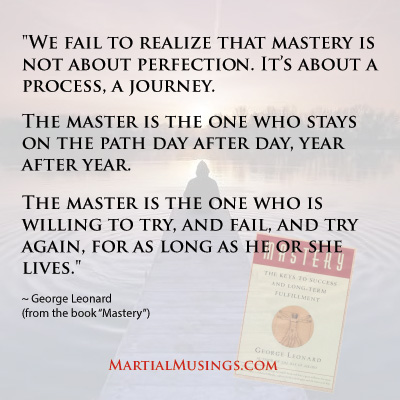
Mastery: Historically it was the role of the teacher or educator to be the master of all information in the classroom – think back to an earlier post on Gatekeepers and Travel Guides – but anymore our students may be masters of some of the technology that we have them using, while we are still learning.  It can be uncomfortable to admit that students know more about something than we do, but in this day and age, anyone can be a master of anything.

Allow your students to be the masters sometimes.  If there is someone who figured a new idea out with a tech tool, allow them to share with the class.  We as teachers can become the learners right along with our students.  What if we allowed that student to present during a staff meeting?  Think of how empowering that would be from the student’s perspective!

It's all about the purpose!
It’s all about the purpose!

Purpose: If students feel that the only reason they have to learn your material is to pass a test, that does not help the student feel like they are contributing to “something larger than themselves.”  What if their learning was part of a service project to help others?  Or what if their project solved a problem here at our school, or in our city?  Have your students find how what they are learning can connect to a local need, and they will see purpose in what they learn.

Another way to think about motivation is through the Six C’s of Engagement (Choice, Collaboration, Connection, Challenge, Communication, and Commotion).  If you want to see more, click here.  If you want your students to truly be motivated, use some of the strategies here to move beyond consequences and punishments, and move to a realm of true motivation!

What are some of your most successful motivation strategies?  Share below so that we can all have more ideas!

Teachers vs. Students

It’s the beginning of class, and you are checking to see what students came to class prepared, and you get to “that” student (admit it, a name just came to your mind!), and of course, they are not prepared for class today.  This is the third time this week, and who knows how many times this month…

All of us have been there at one time or another.  It can be so hard not to take it personally.  In your mind you may think about the amount of time you have invested in that student, or the help that you provided yesterday to make sure that student was organized and prepared to be able to finish the homework, or maybe you think of the assurances you had from the parents who told you they would help make sure work was being completed.  How can we not take it personally?

Of course, the reality is that for the vast majority of our students, they are not doing this purposely (although on the day I am writing this, I did see a student with a t-shirt that said “I’m just here to annoy you!”).  In fact, you are probably the furthest thing from their mind when a student does not complete his work.  Instead, the lack of completion could be for a lot of reasons (maybe they didn’t understand how to do the assignment, maybe they didn’t want to do it, maybe they thought it was boring, or maybe there was nobody at home to make sure they did it – you get the idea, there are lots of possible reasons).  I think logically all of us understand that students are not intentionally coming to class unprepared in an effort to drive us crazy, and yet we can’t help but feel that way.

no significant learningOne of the great beliefs I have about education is that relationships are one of the keys to success for our students.  I know that many of you feel the same way.  We take the time to build relationships with all our students.  We feel invested in each of them.  We can’t help but believe that the feeling is mutual.  Unfortunately, our students don’t always feel the same way.  Sometimes even with our best effort, it is hard to help all our students to feel connected here at school.

When “that” student comes to class unprepared, the simple solution is often to get angry or frustrated.  It is much more difficult to figure out the answer to the key question – why?

Finding the answer to the question of why is not easy.  The answers that students will give run the gamut – I forgot, I had a basketball game last night, my parents couldn’t help me, etc.  A lot of time we see these answers as excuses.  Instead, maybe we should look at them as clues.  If they say they forgot, are they disorganized?  Do they need additional support so that they won’t forget in the future?  Could you help them set an alert on the iPad or phone to go off in the evening to remind them of the work they have to do tonight?  If they say that they had another activity, can we assess what they do have done to see if they understood the concept?  Do they need more work time here at school?  We can’t control how their time is scheduled outside of school hours, but we can help control how that student uses their time here at school.  If they say they didn’t have a parent to help them, then do they need to have the concept retaught to them?  If a student needs a parent’s help to be able to complete a homework assignment, then they don’t really understand the material.

In last week’s post we discussed growth mindset in teachers.  An argument could be made that situations like the one described at the beginning of this post could be the perfect opportunity to use some of what we learned about having a growth mindset.  Instead of taking it personally when a student isn’t prepared for class, look at it as a puzzle to be solved.  Try to understand why the student isn’t prepared.  Once you understand the why, it will be much more likely that we can approach a solution.  If you don’t have an idea of how to help the student, talk to your colleagues, counselors, or administrators to see what ideas they may have (collaboration = more opportunities for growth!).

If you’re still struggling to come up with a way to motivate the student, come at the problem from a PBIS perspective.  Most of our kids who struggle simply want attention of some kind.  Getting negative attention is easy, but when given a choice between a positive and a negative consequence, most kids will choose the positive (it’s amazing what I used to get kids to do for a sticker or a jolly rancher!).  And if you show them that it is possible to earn that positive consequence, then they find success.  Once they show a pattern of success, you can make it more difficult to earn that positive feedback, and hopefully the student will begin to learn that the feeling of success from a job well done is a good enough reward (I know that this process takes longer than we like, but it does work!).

Instead of looking at the unprepared student as the enemy, spend some time thinking about them as a puzzle.  If you don’t know what will motivate him, spend some time to get to know him (2 for 10 strategy).  Look back on one of our earlier posts: Know your kids – Love you kids for a little more on how a 2 minute conversation can help you learn about your kids.

What success have you had in motivating the unmotivated or reaching the unreachable?  Spread the wealth!  Share some of your experiences in the comments below.

Growth Mindset for Teachers

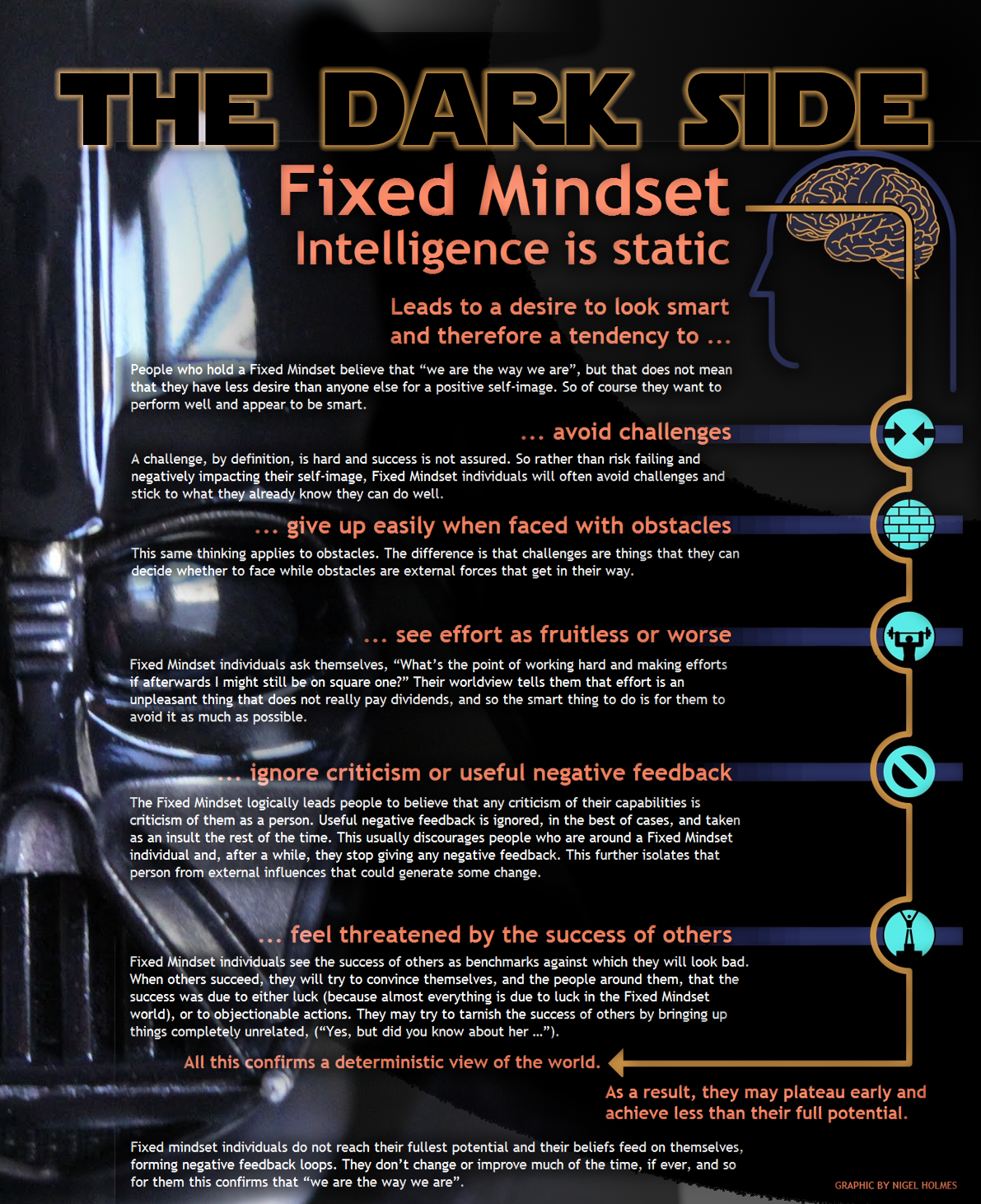
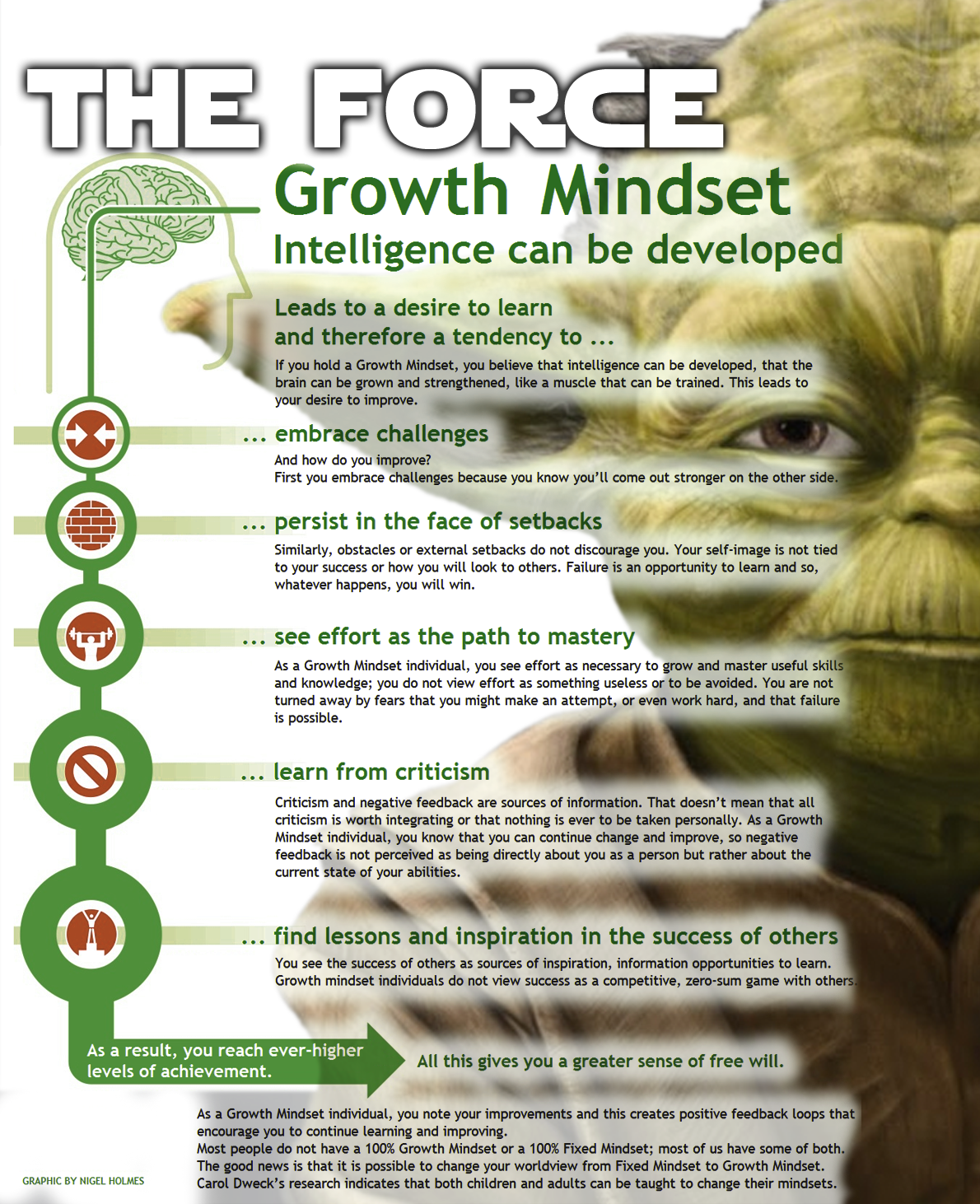
Over the past couple of years I have had several conversations with members of our school community about the idea of Fixed Mindsets vs. Growth Mindsets.  I previously shared a video featuring some of the findings of Carol Dweck.  In those conversations and in that video, the discussion is framed around how to help our students to develop a growth mindset.  What about all of us?  How do our mindsets impact the learning that takes place in our classrooms?  How might those mindsets impact our relationships with students?  As a review, I included a couple of graphics showing the difference between a Fixed or Growth Mindset. (I know the pictures below appear small – if you click on them, they will be easier to read).

https://teacherpaulp.files.wordpress.com/2014/07/darkside1.png
https://teacherpaulp.files.wordpress.com/2014/07/growth_mindset_poster1.png

According to Dweck:

In a fixed mindset students believe that their basic abilities, their intelligence, their talents, are just fixed traits.  They have a certain amount and that’s that, and then their goal becomes to look smart all the time and never look dumb.  In a growth mindset students understand that their talents and abilities can be developed through effort, good teaching, and persistence.  They don’t necessarily think everyone’s the same or anyone can be Einstein, but they believe everyone can get smarter if they work at it.

What if you reread that statement, but you replace students with teachers?  Where do you fall?  Are your abilities as a teacher a fixed trait, or do you believe that your talents and abilities can be developed through effort?  Are you somewhere in the middle?  Draw a continuum with Fixed on one end, and Growth on the other.  Put an X where you think you are, and then ask if you are comfortable with that location on the continuum.  If the answer is no, how can you move that X to where you want it to be?

Yes, even you have permission to fail! Just make sure that you learn and grow from those failures! https://www.flickr.com/photos/126588706@N08/14826069893/in/album-72157645530010989/

One of the things that concerns me most for teachers comes from the second sentence of Dweck’s definition above.  Is it your goal to “look smart all the time and never look dumb”?  What does that show our students?  If we tell them that they should see failure as a first attempt in learning, but never model for them what it looks like to fail and then improve, what message are we sending our students?  Do we really want to have an attitude of “do as I say, but not as I do”?

I’ll admit, it’s never fun to make a mistake in front of a group of students.  But let’s think about the concept of gradual release – I do, we do, you do.  We would never assign our students something they have never done before without modeling it and expect them to be successful on their first try.  Instilling a growth mindset in our students means we have to be willing to take risks, and sometimes fall flat on our face.  Then, we can model for our students what it looks like to get back up, dust yourself off, make an adjustment, and do better the next time.

If you look at yourself as a learner first, and a teacher second, you will recognize that this craft we carry out is something that we are all learning.  Every day that I’m here at school, I see someone doing something that I’ve never seen before.  When I scroll through my Twitter feed in the evening I often end up reading education related blog posts that provide me with new ideas or ways of thinking.  I see things my friends share on Facebook, and I get new ideas.  Hopefully you see your experiences here at school, and those outside of school, as something that you can learn and grow from as well.  Hopefully you’ll be looking for ways to shift your own mindset further down that continuum towards the ideas of growth.

Throughout this month I hope to use this forum as a way to look further at the Growth Mindset continuum, and in particular focus in on how our mindsets can affect our relationships with the students sitting in our classroom.

In the comments below, feel free to share with us a time that you may have fallen flat on your face.  What steps did you take to correct it?  What did your students learn from your failure?  Or you can share something that you plan to try that you aren’t quite sure how it will work out.  What are you nervous about?  What’s the worst that could happen?  I look forward to hearing from you!

Reflection

To set the scene, imagine that you are in your classroom.  You are getting the kids started on one of your standing assignments that everyone in the room knows will come each week:

You: All right, let’s all get started on (insert that assignment that your students hate to do).

Class: Collective groaning.  From the back you can hear one student say “Why do we always have to do this?”

You find yourself wondering why the reaction is like this – you might think to yourself “they loved doing this earlier in the year!”  Fast forward to the due date.  As you are collecting the assignment, you see that the students who play school well completed the assignment, but it’s clear that they put forth the minimum amount of effort possible.  You also notice that some of your students did not complete the assignment, and no amount of effort from you is going to get them to finish the task – you could have them work in the hall, take away recess, call parents, etc. – nothing is going to make a difference for those students.

As a teacher we have all experienced this.  So here’s the question – why do we keep asking our students to complete assignments that they hate?  Why do we keep giving assignments that students don’t put forth much effort, or simply don’t do the assignment at all?  Why do we keep giving assignments that put the effort on us to run down the missing assignments when the students are putting no effort into the assignment?

HSE21 Best Practice Model

When I was writing last week’s post, I inserted the HSE21 Best Practice Model.  As I put it into the post, something jumped out to me in a different way than ever before.  Look at the Best Practice Model above – in this blog I have spent a lot of time talking about the boxes on the outside: Student-Centered Approaches; Cognitive Curriculum; Fundamental Classroom Conditions; and Transfer of Learning.  Last week for some reason, the purple circle that connects them all jumped out at me – in particular the word at the top “Reflection.”  Given that New Year’s Day is approaching, I would guess that a lot of us are taking time to reflect on the last year, and many of us think first of our personal life, however reflection is an important aspect of teaching as well.  What better time to take a few moments for reflection than to do so over the 2 week winter break?

Think about how your year has gone so far.  What’s working well?  What isn’t?  Do you often have situations like the one that I referenced at the top?  How could you adjust your assignments so that they don’t get stale?  Even the most engaging activity today may get old and stale to our students if we do the same thing every day or every week over a long period of time.  Find some ways to mix up what you are doing in your classroom to increase student engagement.  For me, an important part of reflection is also getting feedback and ideas from my colleagues.  If you have an activity that has gotten stale, talk with your colleagues – see if anyone has an idea of how you could spice up that activity and make it more engaging to your students.  Or maybe you will just decide to let that activity go for a while – replace it with something else that might serve the same purpose.

New Years ResolutionIf you never take the time to reflect, you may miss out on opportunities for growth as a teacher, as well as opportunities to help your students grow.  As I reflect on this school year, one of the things I am most disappointed in is the amount of time I have had to spend in my office rather than out and about during the school day.  One of my resolutions for the new school year is to spend more time out in our classrooms seeing the awesome things that you all do on a daily basis with our students.  Please help hold me accountable to this goal!

What resolutions have you set for yourself?  Personal or professional, share them in the comments below.  We can all help hold each other accountable to our goals and resolutions.