
Last week I had the privilege to attend the Fourth Annual Indiana STEM Education Conference at Purdue University. Purdue’s College of Education sees K-12 STEM education as one of its two signature areas of focus for pre-service teachers. In this K-12 STEM path, Purdue is “preparing teachers who can weave STEM subjects throughout their curriculum and introduce the concepts through real-world application. Our focus goes beyond the specific STEM subjects – science, technology, engineering, and math – to include literacy, social studies, problem-solving, critical thinking and communication.” This belief fits well with the Indiana Department of Education’s STEM Six-Year Strategic Plan (can be found here: http://bit.ly/IndianaSTEMPlan). This plan has the stated mission to “Ensure Indiana teachers are prepared to provide every student in grades K-12 with an evidence-based, effective STEM education…”
 The opening of the conference included a guest speaker that I was super excited to see – Buzz Aldrin! It was cool to hear Aldrin talk about his experiences, as well as his hopes for continued space exploration. Aldrin is a huge supporter of getting a human being to Mars. Not to mention, there’s something pretty awesome about being in the same room as someone who actually walked on the moon.
The rest of the conference was made up of several break-out sessions, and I have to say that every one I attended was excellent. I want to share some of the tidbits I picked up while I was there.
My first session was on the connection between STEM and Project Based Learning. In that session, we began by talking a little about the Science and Engineering Process Standards (SEPS). If you look at the science standards of any grade level or science curriculum, the first two pages of the standards are made up of these process standards focusing on 8 key areas:
- SEPS.1 Posing questions (for science) and defining problems (for engineering)
- SEPS.2 Developing and using models and tools
- SEPS.3 Constructing and performing investigations
- SEPS.4 Analyzing and interpreting data
- SEPS.5 Using mathematics and computational thinking
- SEPS.6 Constructing explanations (for science) and designing solutions (for engineering)
- SEPS.7 Engaging in argument from evidence
- SEPS.8 Obtaining, evaluating, and communicating information
By looking at the specific standards for your grade level or subject area, you can see a deeper description of those process standards. Look here for more info: https://www.doe.in.gov/standards/science-computer-science


- The Paper Chain Challenge: For this challenge, students need 1 piece of paper, scissors, and tape. The challenge? Try to make the longest possible paper chain. As a constraint, you could change the materials allowed. Another variation on this was that you do not provide tape, and you had to make the longest continuous piece of paper without using tape, paperclips, or any other objects to connect the paper back together. When we did this challenge, we were only given 5 minutes, then had a 5 minute conversation to process our designs, compare the length of each chain, etc. In those 10 minutes, we hit on 5 of the SEPS!
- Drop Copter Challenge: Have you ever made a drop copter? For directions, click here: http://bit.ly/DropCopter. Once you have the students create their drop copter, then you add in the challenge. Now they have to make one modification to their copter to improve the way the copter falls to the ground. I’m sure there are a variety of ways you could define “improve”, so you can figure out what it means for you (or even better, let the students decide!). After the adjustment and testing, spend another 5-10 minutes processing the challenge with students. Again, several SEPS hit in less than a half hour!
- Parachute Challenge: Provide students with large sheets of tissue paper (like for wrapping a present), tape, 5 paperclips, and 2 pieces of string (you can decide on the length). Give students 5-10 minutes to design, build, test, and redesign a parachute. The goal is to design a parachute that takes the longest to reach the ground. When time is up, have all the students come to the front, drop from the same height, and compare the fall time. Finally, spend some time processing the challenge with the kids. Again, we’ve just hit on multiple SEPS in less than a half hour!
These are just a couple of the potential STEM Challenges that were fairly short. Another session I attended also hit on the SEPS, but they were coming at it from the Engineering Design process. I’ve seen lots of different models for the Engineering Design Process, but I liked the language that was used by Science Learning through Engineering Design (SLED). Check it out:
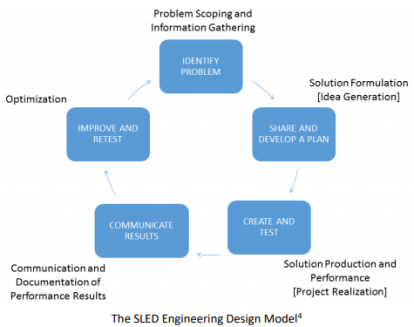
SLED has an awesome website, STEMEdhub.org, but I wanted to direct you in particular to their Design Resources page (check that out here). This page lists a multitude of activities and various grade levels. When you click on a title, it takes you to a page with more information about the project. Want to see more (like the lesson plans, materials needed, etc.)? Click the purple Download button to the right of the title. Unlike the STEM Challenges above that could be done in a half hour or less, these are more in depth, long term projects that will take your students through the design process you see above.
 I wanted to briefly touch on my final two sessions, which were on similar topics. One was about an intermediate school in Ellettsville that implemented a school-wide genius hour program. At this school, every other Friday, the entire school basically shuts down for the last hour of the day. Students then work on their genius hour projects. These projects are ungraded, student-led, and lead to a STEAM Night Showcase where students share their findings from their genius hour project. The teachers, administrators, counselors, custodians, and other adults in the building are all able to serve as advisors for students who choose projects on a topic that they have an interest or understanding in. The school has even partnered with outside professionals who can come in and help be mentors for topics students are interested in. Being located near Crane Naval Surface Warfare Center and Cook Inc. opens up the possibility of some great partnerships for this school.
 The final session of the day that I attended was put on by the innovation director and principal from New Palestine Intermediate. This year they created a new day in their related arts rotation called Innovation Hour. Other schools might call this learning clubs, or choice activity time. To create the clubs, staff members signed up with something they were passionate about. Examples include gardening, drones, coding, woodworking, etc. Students then sign up for their top three choices. Once assigned to an Innovation Hour, then they meet every 4th day from 8:30 to 9:20, and all the students are able to participate in the club they are assigned to. So far, everyone has been able to get one of their top 3 choices.
One of my current goals is to figure out how to bring something like either the Genius Hour project, or the innovation hour to Riverside Intermediate. On February 6th, our students will be participating in the Global School Play Day, and we have it set up with choice activities that students will be able to get involved in. It is my hope that this will serve as a jumping off point for one of these more long term learning opportunities for our students!
So, what are your thoughts? Anything here that you plan to use in your classroom? Anything that you already do that you can share with our readers? I’d love to hear what you have to say!
 Recently I’ve been reading the book Sapiens by Yuval Noah Harari. I’m about a third of the way through the book, but its premise is centered on the evolution of Homo sapiens as a species. In a recent chapter, I was struck by the comparison between the biological development of humans versus the cultural development of humans. In biological terms, humans have the ability to learn. Our early hunter gatherer ancestors had to learn how to identify what foods were safe to eat, what predators they needed to stay away from, or what places were safe to drink the water. On the other hand, schools are a cultural development created by humans to pass on learning to students. Traditionally, much of that culture has treated learning as the filling of a vessel, not the awakening of the biological processes that encourage learning. The types of things that we teach in schools are not directly related to the future survival of our students (we don’t directly teach them how to meet their basic needs). As with any system, the culture that surrounds it effects how the system works. My understanding of this was further impacted by my recent trip to China. The system of schooling, while there are some similarities to what we do in the US, also had some rather significant differences that are created by the cultural beliefs that Chinese society has about learning. So this leads me to the bigger question, from a biological level, what is learning? Here are my beliefs:
 Today’s post will focus primarily on the principles of restorative practices as shared by Kristina Hulvershorn of the Peace Learning Center in Indianapolis, Indiana. But before we get into the principles, let’s talk about why we should be looking at restorative practices as a piece of our plan for handling behavior and conflict.
 Restorative language (the use of affective language) – To the right you’ll see a screen shot of a document with sentence starters for affective statements (I’ve also included a link to the document at the bottom of this post). If you share this with your students, post it in your room, and begin using statements like these, the kids will too!
 In his conversation with Goins, Kohn challenges us that there is no way to measure or quantify true learning. The moment we try to put a numerical or letter-based score onto a learning task, we take away much of the motivation that students have to learn, and instead we create a system that trains our students for compliance. The things that can be easily measured in an assessment are not the things that truly matter. The example that Kohn used here was that on an assessment of a writing task, we may spend more time and effort in measuring the number of times that a student used punctuation correctly, however we don’t spend nearly as much time on whether the student expressed meaningful ideas in their writing. If we are developing learners in our world, what’s more important? I think most would agree that the ideas are the most important part, but ideas are hard to quantify, so we struggle to factor that into our assessments. As Kohn puts it “More focus on data in teaching means that we teach the trivial stuff more than the important stuff.”
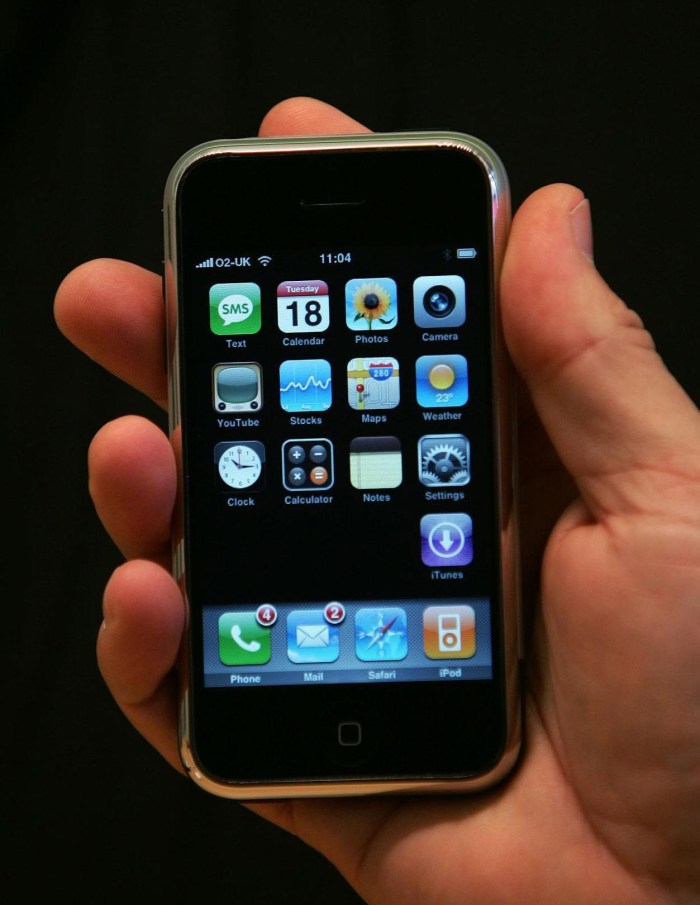
 Think for a moment about the exponential changes that have happened since the roll out of the smartphone in 2007. Then think for a moment about how exponential curves work (you can see an example to the right)… If there has been that much change since 2007, think how quickly our world is going to continue to change!
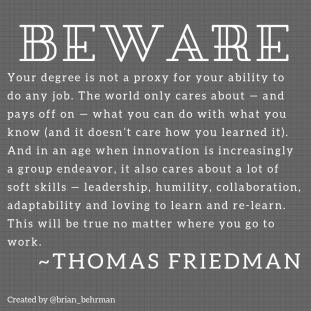 Thomas Friedman says that our students need to be capable of innovative thinking – critical thinking and problem solving should be a given for all in this day and age. He wrote about the importance of those skills in The World is Flat which was originally published in 2005. Now he’s thinking more about that idea of innovative thinking, which to him means not only are you able to do the job you are given, but you are also able to invent, reinvent, and re-engineer the skills necessary to accomplish that job.
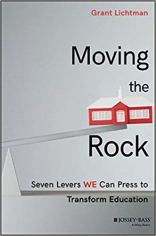 This summer a group of educators in my school district did a book study of Moving the Rock: Seven Levers WE Can Press to Transform Education by Grant Lichtman. I was not an original member of the book study, but when that group came to an end, they decided they wanted to keep meeting, and that they wanted to grow the group – so, I was invited to become a member. That group is called the Innovation Task Force. Since I felt a bit behind the other members, I decided to read the Moving the Rock. I picked it up and read it in just a couple of days (I could have finished it in a day if I let myself!).

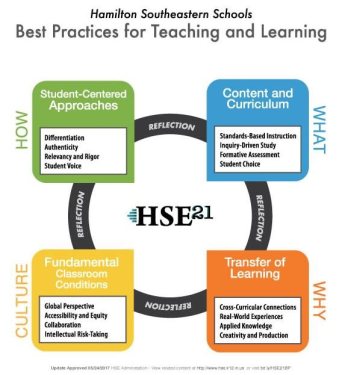 As a district, we also have our Instructional Framework, Called the HSE21 Best Practices for Teaching and Learning (it can be found to the right). As I look at this framework, and compare it to the words that we as a staff selected to define great learning, they seem very well aligned.
 Let’s contrast that just a bit with human history. I’ve recently been reading Walter Isaacson’s fascinating biography Benjamin Franklin. There were a lot of things that I knew about Franklin, his role as an inventor/scientist, his time as a member of the Continental Congress, and that he’s a writer and printer. I don’t know that I fully realized what a world traveler he was. I also did not quite realize just how curious he was – throughout his life he found wonder in the world around him, and spent time trying to learn more.


 The View from 518